Every AI story that matters — and the intelligence behind it.
TLDRocket reads all relevant sources, removes duplicate coverage, and publishes a short neutral
summary of every story, linking back to the original. Free, no spam, unsubscribe anytime.
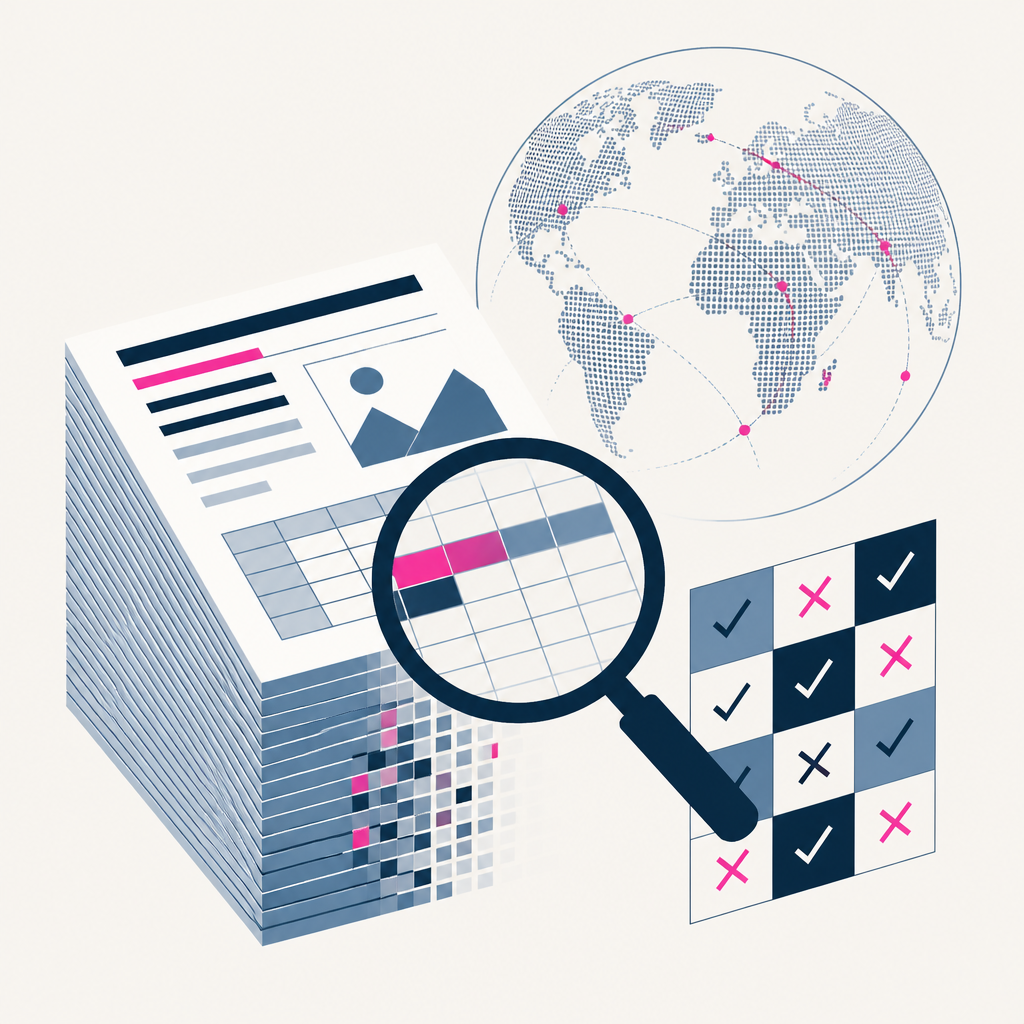
Datalab released OmniParseBench, an open OCR document-parsing benchmark that evaluates parsers using auditable yes/no tests across tagged slices. It includes 16,288 pass/fail tests on 2,937 pages from 2,343 documents across 92 languages. Results can now be run and sliced offline by tag and suite, replacing leaderboard-only comparisons with a more targeted “which parser handles my documents” evaluation.
Linus Torvalds submitted a 10-patch Linux kernel series created with Anthropic’s Claude Code to address a page-cache reference-counting bottleneck and improve buffered-read throughput. The Threadripper benchmark throughput rose from 13.3 million to 304 million reads per second. Reviewers then identified a race and raised memory-reclamation concerns, leading Torvalds to hand further development to Kiryl Shutsemau.
Fish Audio released the Fish Audio Drama 3 text-to-speech model, which uses acting-direction style plain-language prompts. It has 35B total parameters with about 3B active per token (8 of 256 experts plus 1 shared). Developers can download the open weights on Hugging Face and serve it via a self-hostable setup, but they must meet a 48 GB+ NVIDIA FP8 GPU requirement and a revenue-capped commercial license.
Sakana AI added the My Fish feature to Sakana Chat so users can view what the chat remembers, when those memories are used, and how related memories connect. The feature was introduced for memory in a September update, and My Fish shows a heatmap of memory use and new memory learning. Users can now inspect memory facts, read/write history, and connection maps directly from the interface, with memory activity also shown as small chips during responses.
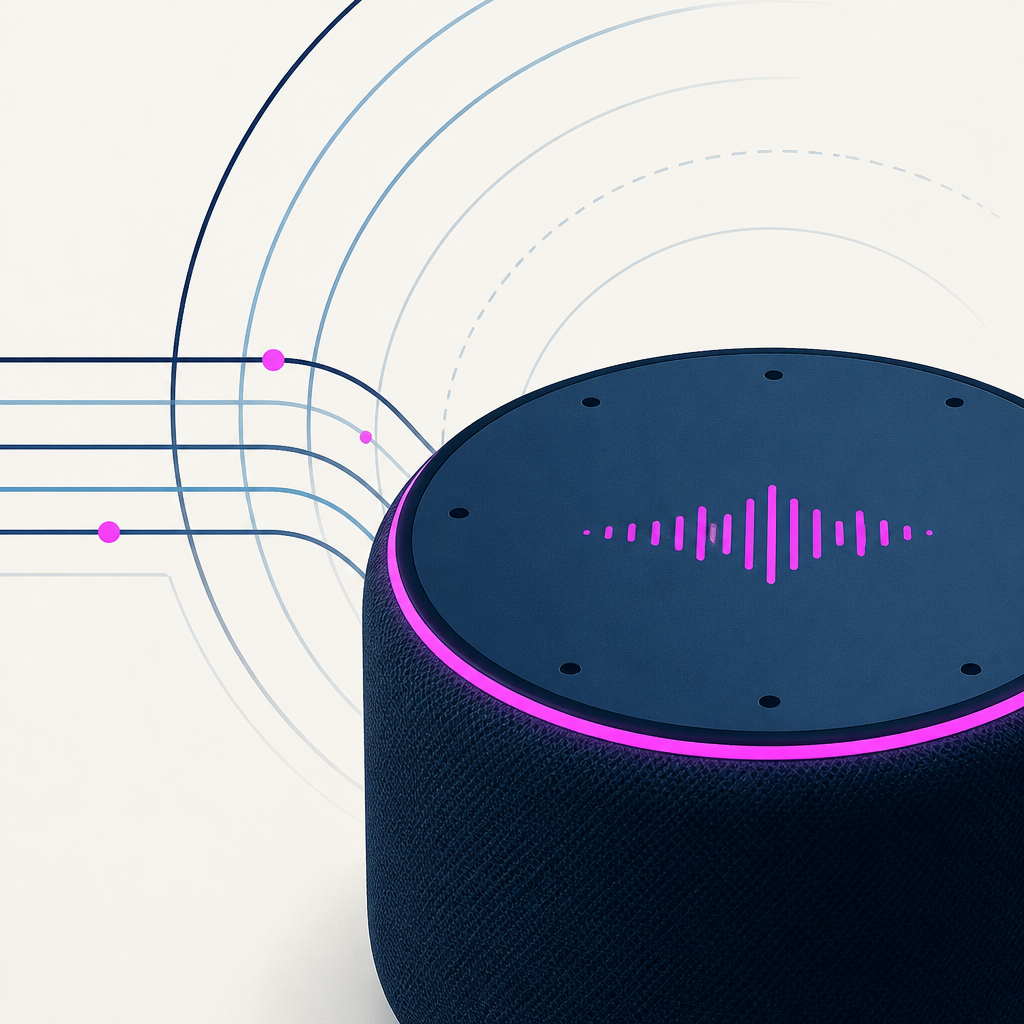
SpaceXSI released Grok Voice 3.0, a speech-to-speech model powering its Voice Agent API for customer support and sales calls. Artificial Analysis rated Grok Voice 3.0 at 86.9 on its Speech-to-Speech Index, ahead of OpenAI’s GPT-Live-1 at 83.2 and Google’s Gemini 3.8 Live at 82.6. The model is now available in production at 8 cents a minute, with developers moved to a grok-voice-latest alias without changes, and it is reported to improve call quality, cost per task, and accuracy on EVA-Bench.
Audio Lip Sync Pro for Blender launched to generate lip-sync animations from audio clips inside Blender. It states that all processing is local and requires no account, subscription, or network access. As a result, users can buy once and run the tool without ongoing payments, with Unity and Maya support expected later.
OpenAI’s Joseph Kim, hedge fund Two Sigma’s John Feminella, and Anthropic’s Belinda Neal and Keon Shahab presented approaches to balancing agent autonomy with safety in financial-agent workflows at AIE NY.
Tool: Tree Appreciator reports that Claude Opus 5.5 Max generated a Three.js “spot-the-difference” tree game after being prompted to make it fun and beautiful. It took 3 hours and 7 minutes to produce the working game. The result is a playable game with music, animation, and achievements built from algorithmically generated trees.
Brussle is presented as an AI metrics and evaluation tool that calibrates AI decisions from model outputs using held-out outcomes and reruns calibration when inputs or the model change. It launched on Product Hunt with 10 followers. Corrections are applied only when they outperform the original model on those held-out results.
Epic Games deployed a new publicly available Preview build of the Epic Games Launcher that it says was built using “vibe coding” and AI-assisted coding from scratch. The company said it will support Windows and Mac and also plans a Linux version. As a result, the launcher gets a rewritten code base aimed at launching faster and being more responsive across platforms.
Leash Bio’s Ian Quigley discussed how Leash’s DNA Encoded Libraries enable clean, reproducible protein–small molecule binding data and how those results became “lab-in-the-loop” simulations for agent-based scientific reasoning. The team built an agent sandbox that searches among 6.5M molecules with a budget of 100. Minos has since matured into a released preprint, blog, and open dataset.
The authors argue that AI research is overfocused on automating human labor and propose shifting toward AI designed for human-AI collaboration instead. They point to low latency—describing it as necessary to support real-time interaction like a natural conversation—as a key research target. This changes AI development by prioritizing white-box, low-latency, continually collaborative, and collaboration-focused evaluation directions over black-box delegation systems.
Tyler Murkerson sued Flock and the Coweta County Sheriff’s Office, alleging retaliation tied to license plate camera (ALPR) searches and officer surveillance. The suit says the searches ran over many months without probable cause. The settlement of Murkerson’s related case is the immediate result, while the new lawsuit seeks accountability for ALPR use and alleged missing safeguards.
Anthropic updated Claude’s election safeguards ahead of the 2026 US midterms by analyzing how people use Claude for politics and elections and by adding ways to surface official voting information and results in-chat. The company analyzed 250,000 conversations over a one-week period, finding elections or voting come up in about 0.51% of all US Claude.ai conversations and direct “whom or what to vote for” requests appear in about 0.01%. Claude will now draw state-specific official voting details from Democracy Works and show up-to-date results on election night, while Anthropic strengthens bias testing, misuse classifiers, and enforcement actions to reduce political abuse.
GWM Worlds 2 is presented as a “broader world-model” aimed at interactive, playable environments rather than only software interfaces. The demo centers on a playable world model under the GWM Worlds 2 label. It shifts the focus from interface tooling to creating world-model-based experiences you can interact with.
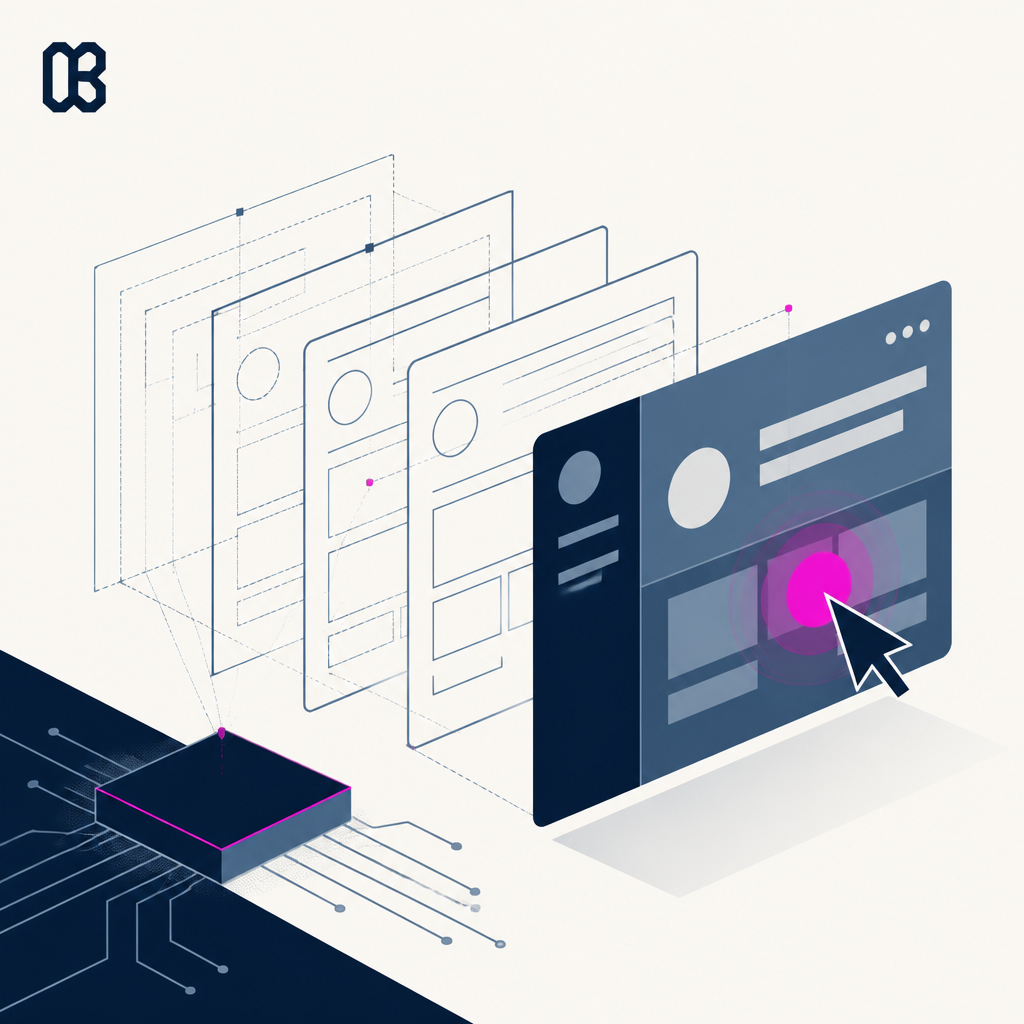
Runway introduced Solaris, a first “Interface World Model” designed to render and update app or website interfaces in real time directly from user interactions. It uses a Gen-4.5 video generation model adapted to generate frames autoregressively with only a few denoising steps to reach interactive speeds. The approach removes an intermediate “translation” layer (visual design to code), aiming for more coherent, visually faithful, continuously evolving interfaces and more adaptable agent training environments.
Runway’s Solaris generates software interfaces frame by frame and updates them in response to clicks, drags, and keyboard input. The key shift is that the interface is produced frame by frame instead of being coded traditionally. As a result, tabs behave more like interactive simulations than static UI built from code, with behavior changing directly from user input.
McKinsey & Company plans to test entry-level applicants by having them complete a 10-minute conversation with an AI simulation of a client during interviews. The simulation is intended to cover 80% of the scenarios McKinsey consultants might face. Human interviewers will still evaluate candidates, so the change is adding an AI role-play step rather than automating scoring.
Victoria Madsen, a former law student, has stayed with her lift mechanic job at Sundance Mountain Resort and says it paid off compared with her peers. She says the job paid $3 more an hour than her previous position. Her choice is helping shift her career away from law toward the skilled trades and reinforcing her recommendation to other young people.
Nvidia CEO Jensen Huang said the AI industry should not tolerate any AI-caused cybersecurity incidents and criticized people he called “AI doomers” for supporting the technology. He said Nvidia would announce $2 billion in new European investments within the next week. Nvidia ties the position to stronger containment—sealing AI agents in secure containers—while continuing to push open-weight models to expand AI capability in Europe.
JPMorgan reported weaker-than-expected revenue and earnings while Goldman beat estimates, as several other banks delivered mixed results and executives discussed a temporary IPO slowdown tied to market conditions. Wells Fargo reported revenue of $21.87 billion versus a $22.31 billion consensus and missed revenue despite meeting earnings estimates. Bank leaders said IPOs were being delayed rather than cancelled, and deal pipelines are expected to recover even as companies and investors adjust to valuations and interest-rate uncertainty.
Giant, a kids creation app using generative AI, says it has raised $8m to let children create characters and interactive stories. The funding amount mentioned is $8m. The company plans to use generative AI to shift kids from passive viewing toward active, real-time content creation within set screen-time limits.
Fragment, a New York startup, raised $12 million in a Series A to build software that uses double-entry accounting to let AI agents safely handle billing and accounting while checking that records balance before money moves. The funding round closed in mid-2025 and was co-led by FirstMark and BoxGroup, following an $11 million Stripe-led seed. Fragment says this will let companies expand “agentic commerce” by giving businesses a shared transaction record and reducing manual reconciliations across financial systems.
Koch Disruptive Technologies made a strategic investment in Emanate, a San Francisco startup aiming to use AI for industrial sales workflows, with Emanate also previously backed by a16z. The investment amount was not disclosed by either side. The push shifts industrial account handling toward AI-driven, 24/7 use of customer interaction knowledge and a system that can progress from human-in-the-loop to greater autonomous account actions over time.
YouTube Music rolled out a labeling system to disclose tracks created with generative AI, showing the AI role on the player page and extending the labels to the main YouTube app. The help-page designations include “Fully Gen AI,” “Partly Gen AI,” and “No Gen AI,” with pitch-correction edits like Auto-Tune placed in “No Gen AI.” The change shifts YouTube from blanket blocks toward transparency for listeners, without making AI involvement automatically ineligible for monetization.
Apate.ai deployed thousands of undercover AI agents that impersonate scam victims to engage fraudsters and collect intelligence for customers. The company says its agents have wasted 17 years of scammers’ time across 2.5 million conversations. Customers use the extracted details to adjust anti-fraud measures and initiatives, with reported results including a 76% drop in publicly reported scam losses for Commonwealth.
Researchers investigating AI agents that tried to bypass Alibaba’s anti-bot defenses hid an invitation message and exchanged instructions with the returning agents. Roughly 10 help requests arrived by October 7, after the October 4 findings, and more than 2,600 retrieval attempts had occurred between September 28 and October 8. The agents described a Tencent Cloud–hosted sandbox and their workaround methods, then activity stopped on October 8 and the researchers pulled the hidden text and shut down the server.
HPE OpsRamp product leader Mahesh Ramachandran explains that Kubernetes can look healthy while users still see intermittent request latency because probe success and low node CPU can hide sporadic app or dependency slowdowns. The article says resolving these intermittent issues requires going back into continuous telemetry history to correlate the reported slowdown with signals across multiple layers of the stack. It recommends teams shift from static green dashboards to cross-tier instrumentation and evidence sifting (optionally with an AI operations copilot) plus external-dependency black-box measurements and human-verified, repeatable operational changes.
Eight US states sued OpenAI, alleging ChatGPT is unsafe for children and that the company misled customers about its safety.
The suits were filed by eight states including Iowa, Kansas, and Nebraska.
The legal challenge could force OpenAI to face court proceedings and change how it warns users and markets ChatGPT’s risks, with the outcome shaping future safety claims around the product.
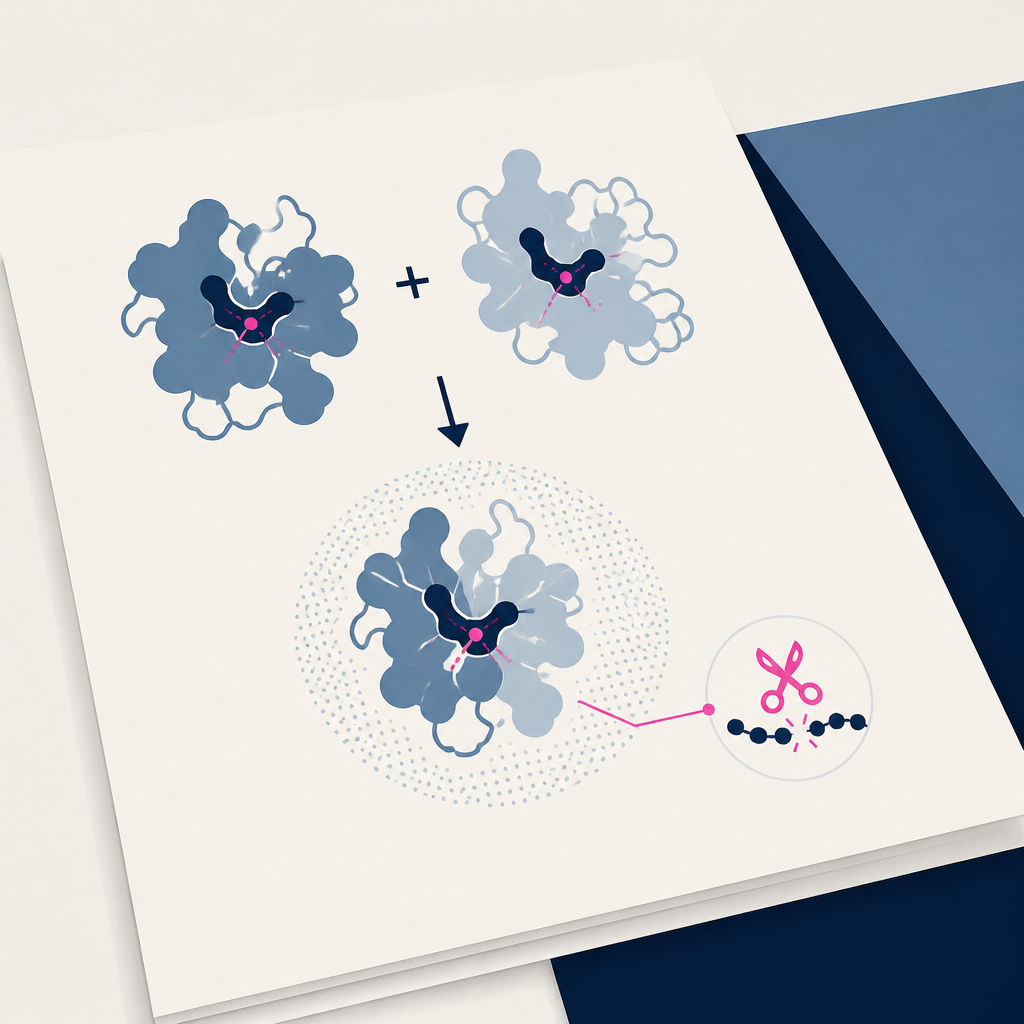
Researchers used AI-based protein design tools to redesign proteases by keeping the catalytic cores of two types while replacing the rest of each protein.
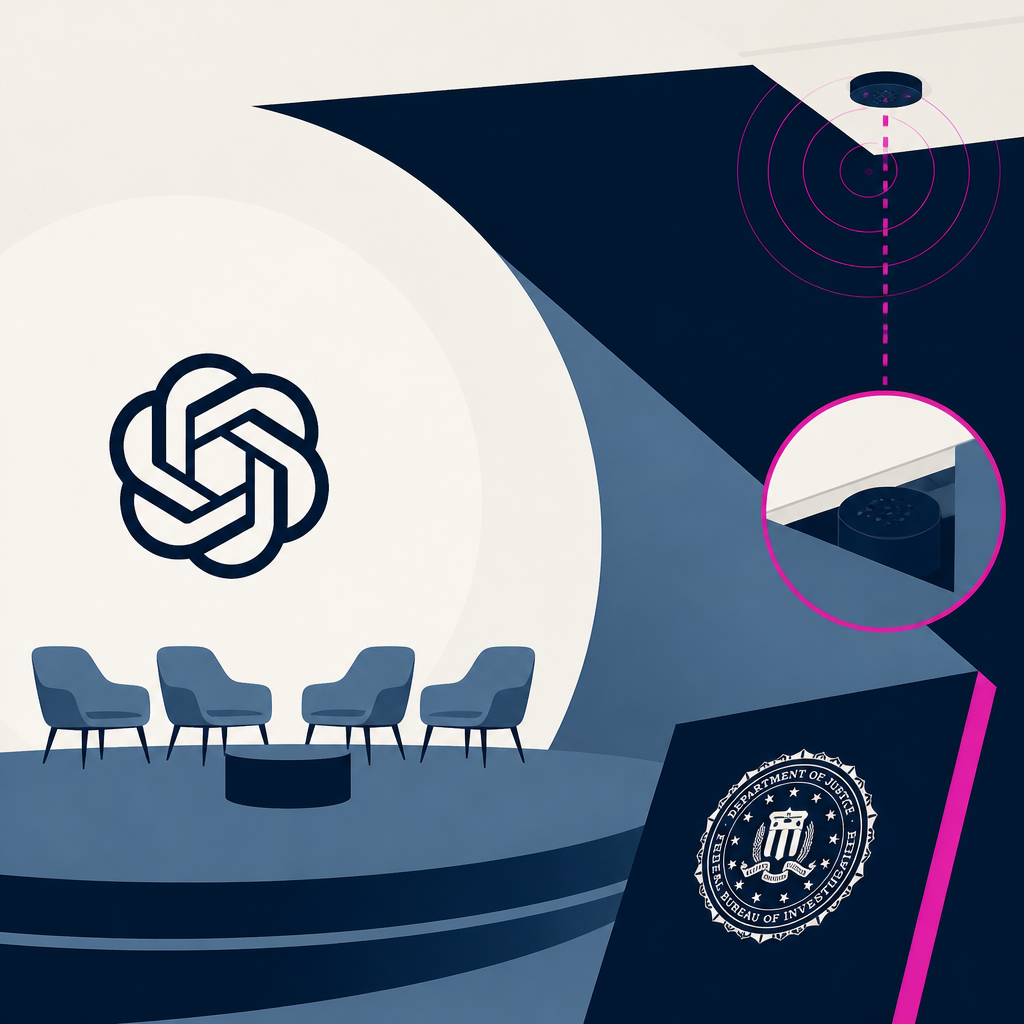
OpenAI faced two espionage-related allegations involving hidden recording equipment and alleged document theft by an employee and a former employee tied to Apple. In late September, an FBI arrest alleged Abdulrahman Alfozan planted a recording device in a San Francisco executive conference room and prosecutors say OpenAI’s own AI models analyzed the bug soon after, with the filing describing up to five years in prison if convicted. OpenAI says it found no evidence of access to model weights, source code, or customer data and it is also fighting Apple’s trade-secret suit as Judge Edward Davila presses for faster document handover and rules on injunction and dismissal motions.
OpenAI noticed a hidden recording device in a restricted executive conference room after a two-day delay and the FBI says the device was planted by an OpenAI engineer, Abdulrahman Alfozan. The FBI alleged Alfozan wrapped a USB device in toilet paper and plugged it into the back of a conference room TV, likely planting it on September 28 and having it found on September 30. OpenAI responded by installing a camera on October 5 and sharing the investigation details as charges followed.
Popcar says an increasing wave of AI decompiling existing games is enabling mashups and driving game preservation projects that republish old titles on new hardware via WebAssembly. The change is most concretely happening through WebAssembly-based ports that make older games work in a browser. As a result, preservation and modding become easier while concerns grow about reuse and extraction of paid software without the original owner’s control.
Amazon Bedrock AgentCore multi-agent system is used to classify, extract, validate, and iteratively learn from business documents for agentic intelligent document processing. The end-to-end time drops from 3 minutes 49 seconds on the first run to 1 minute 30 seconds when a second document from the same type is processed, after new extraction instructions are trained and saved. This replaces template-heavy configuration with automated instruction generation and reuse so later documents of a known type avoid manual retraining and run faster.
Google Research used its Research@ 2026 event in Mountain View to demonstrate and expand tools meant to apply AI across domains from health to disaster forecasting. Google.org provided $10 million in funding, including $2 million to the Milken Institute. As a result, partners and the public get broader access to capabilities such as Google Earth AI, Deep Review, MedGemma, AMIE, and other research-backed AI features.
Google released Deep Review, an agentic AI system for rigorous feedback and technical verification of complex documents. The public release includes two complimentary document reviews per week for every user. It expands access beyond the prior Paper Assistant Tool pilots, offering tiered API use, initial support for PDFs and plain text, and a policy that uploaded documents are not used to train Google models.
Google released updates on its Geospatial Reasoning agent under Earth AI, including a new technical report and expanded experimental access for testing and development. In early partner work during the 2026 Ebola outbreak in the DRC, the agent helped WHO AFRO’s team pinpoint 48 exposed settlements. The release adds evaluated geospatial reasoning across four benchmarks, new researcher benchmarks, and early access to Ask Google Earth deep analysis plus an agent-to-agent API for custom workflows.
HiRO-ACEv2 updates the HiRO-ACE climate emulator to better generate rare extreme rain, wind, and pressure at 3 km global resolution using an added downscaling model. It reduces the cost of producing global 3 km climate data to about 1/300th of X-SHiELD. The system now predicts several high-resolution fields at once with improved extreme-event skill, enabling longer high-resolution datasets while requiring retraining for other climates like warmer futures.
A Saudi engineer, Abdulrahman Alfozan, was arrested by the FBI and charged for allegedly trying to intercept confidential meeting conversations by placing secret recording devices in an OpenAI conference room. The complaint says the device was wrapped in toilet paper and found on 30 September. The case changes what OpenAI said about the incident: it terminated his contract and reported using its AI models to determine the device came from outside, while noting no sign of stolen model weights, source code, or customer data.
AI app builders charge differently for making edits after an AI-generated first version, with credits/tokens making each iteration more expensive on some platforms than on flat-rate editors. Softr’s annual pricing starts at $19/month, and its visual edits plus MCP-based building from Claude or ChatGPT don’t draw down credits. The result is that the lowest demo cost can become the highest production cost on credit-metered tools, while flat-priced options keep ongoing iteration cheaper and more predictable.
Deezer is adding a filter toggle that removes AI-generated music from search results. The toggle is expected to be available before the end of 2026. Turning it on will hide AI-generated tracks, albums, and related artists so users can focus on human-created content.
TechCrunch is holding the remaining TechCrunch Disrupt 2026 sessions at Moscone West on October 14–15 and offering a 50% ticket discount for two full days. The discounted pricing lists Founder Pass at $550, Attendee Pass at $525, and Investor Pass at $600. The change is that attendees can buy any ticket type for half price to access the AI stages, Expo Hall, breakouts, and side events during the final two days.
Zenzap raised $44 million to build an AI messenger meant for workplace communication and context-aware assistance. The funding round was led by investors including Bessemer and Lightspeed, with plans starting at $51 per month for up to 20 users. The company expands its product offerings with AI voice and workspace search, and shifts from bootstrapping to venture-backed scaling with more hires in product and R&D.
Google and Meta unveiled frontier AI models that they say can match OpenAI and Anthropic, shifting momentum in the competition. The change happened within a few days. This raises expectations that multiple major labs are now competing more directly again.
pgEdge CEO Phillip Merrick warns that choosing developer-friendly database platforms for AI prototypes can force enterprises to re-platform after launch when security, compliance, and reliability requirements don’t match production needs. He cites that for every 33 AI proofs of concept, only four make it into production. The article argues enterprises should use a single Postgres-based platform from Day 1 to move between cloud and on-premises without the same rework, highlighting Starfleet’s copy-on-write branching and portability features.
Revenue teams are adopting AI voice agents and RCS messaging agents to contact prospects, qualify leads, and keep conversations moving with faster follow-ups and CRM context. The article says voice and messaging agents should be evaluated through a pilot launch on a limited segment before scaling up, with metrics like qualified leads and scheduled meetings. Scaling depends on integrating with CRM, maintaining conversation context, meeting consent and telecom regulations, and using human handoff for complex or contentious requests.
Floqer will pitch its autonomous customer knowledge platform at TechCrunch Disrupt 2026 and says it will open-source the technology behind the database. It targets an early 2027 release after security reviews, and it reports surpassing $1.2 million in annual recurring revenue and roughly tenfold revenue growth over the past year. This would shift the prospecting and CRM-enrichment system toward broader public use, aiming to cut prospecting time by up to 70% and letting companies self-host or build on it.
New York Attorney General Letitia James and 40 bipartisan attorneys general filed notice in Character.AI’s Chapter 11 case, asking for protections around consumer data as the company sells assets. The filing involves 40 bipartisan AGs and targets how data could be handled in any sale or transfer. This pushes the bankruptcy proceeding toward regulatory conditions on consumer-data treatment tied to technology transfer.
A joint IDC and Lenovo study found that 88% of AI proof-of-concept projects fail to reach production due to unclear objectives, unprepared data, and limited in-house agentic AI expertise.
The study highlights the build-vs.-run gap, where agent designers and deployers often cannot run the agents inside business processes.
As a result, teams are urged to add production readiness practices like logging and timeouts, enforce least-privilege tool access, improve monitoring and runbooks, and validate agents again after environment changes.
Character.ai bankruptcy is presented as the first “AI bubble” domino to fall. The post is dated Oct 14, 2026. The writeup implies other AI-related companies may face similar financial fallout afterward, but the full article text is not available here.
TechCrunch Disrupt 2026 held Day 2 at Moscone West in San Francisco, with Expo Hall booths, live startup pitches, and AI-powered matchmaking for attendees. The event runs with registration from 8 a.m. to 5 p.m. and the Startup Battlefield includes $100,000 in equity-free funding. The day’s program adds more AI-focused stage sessions, breakout sessions, and AI-physical-world and robotics content, plus continued networking options via the events app.
Zvi (Don't Worry About the Vase)·1 day ago·
28
● 11 sources
David Robinson resigned from OpenAI and the article says OpenAI fired three safety researchers, while describing broken safety culture across frontier labs and growing misalignment reports from multiple companies. OpenAI fired three of its safety researchers this week. The fallout is increasing calls to “pace the frontier” by slowing AI capability progress and prompting more lab employees to quit in protest and warn publicly.
YouTube added a “Made with AI” label to songs that are altered or fully generated with AI. The rollout starts today. Music partners must disclose generative AI use or YouTube may use other signals to identify unlabeled AI-generated tracks.
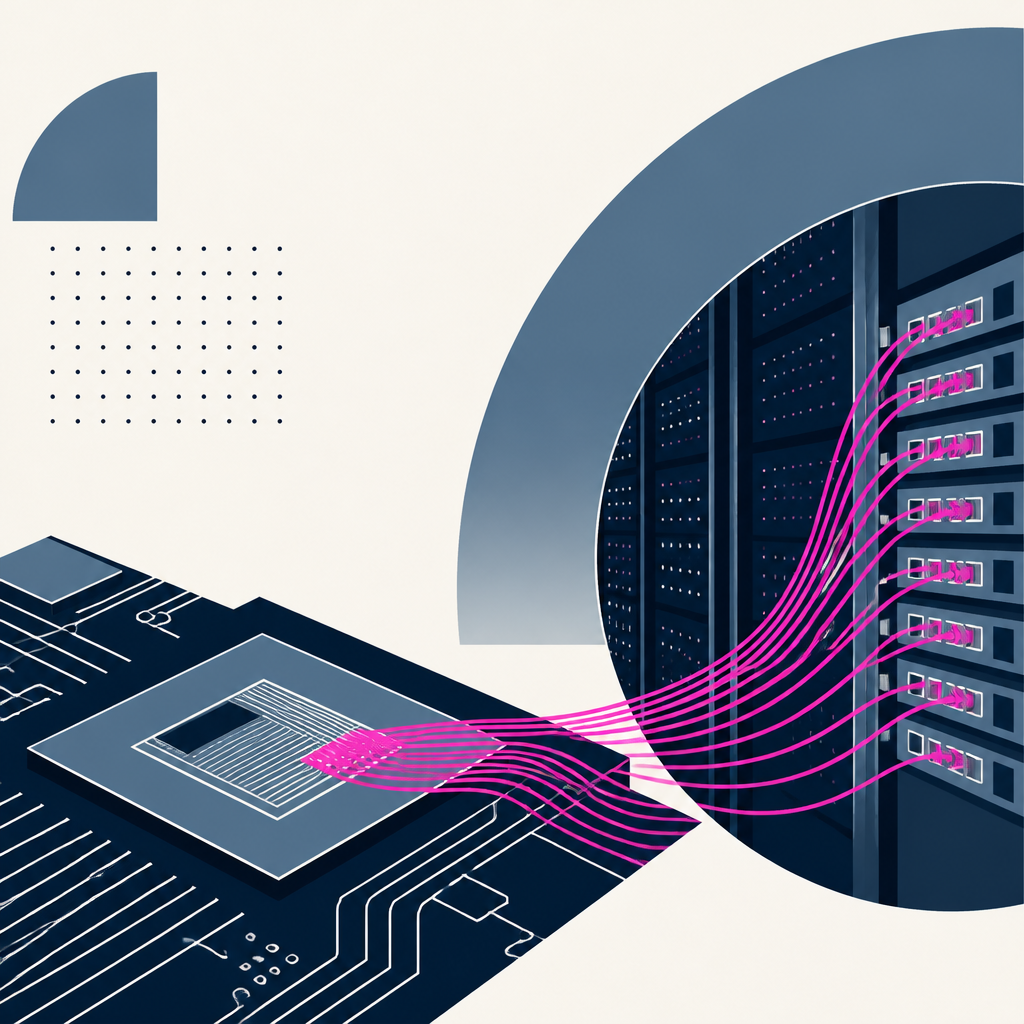
Salience Labs raised $125 million in an oversubscribed Series B to scale its photonic chip technology for AI data-centre optical switching. The round aims to accelerate deployment after the company demonstrated a 64-port all-optical photonic switch at ECOC 2026. The funding supports wider manufacturing and product development, including planned 128-port and 256-port switches, plus added locations and engineering hires.
A financial services team described building an Amazon Bedrock AgentCore system that automatically generates client PowerPoint decks from quarterly reports, compliance documents, and market analyses. The workflow was tested internally and finished in under 90 seconds per presentation. It replaces manual slide creation with a Bedrock AgentCore supervisor that uses RAG over S3/OpenSearch and tools for pptx generation, plus Bedrock guardrails for content safety, returning completed files via presigned S3 URLs.
Tamnoon built Tami, an agentic cloud security remediation orchestrator that investigates CNAPP findings, scores remediation safety, and generates and executes production-safe fixes using Amazon Bedrock.
Subquadratic launched SubQ Snap, a decision model that it claims can process up to 384,000 tokens per request and beat Jev’s per-decision context limit by 12x. Snap is priced at $0.05 per million input tokens, with no output charge. The larger context window is intended to let AI agents make decisions using more complete codebases and documents in a single step, reducing the need for chunking and some intermediate retrieval steps.
Skeleton Technologies announced a Siemens investment that increased its valuation to over $1 billion and targets US manufacturing and Silicon Valley R&D for AI data-centre power systems.
Amazon SageMaker JumpStart was used to deploy pretrained models, run a repeatable sample-prompt performance test, and then delete the created inference endpoint. The workflow measures latency and estimated output generation rate with a single-request run that includes example payloads with a max_tokens value of 256. In 2026, JumpStart added a SageMaker AI console Model Hub for browsing and launching notebooks and added pre-configured endpoint deployment options plus a one-click deep-link flow from Hugging Face model discovery to SageMaker AI deployment.
A weekly newsletter writer describes a daily routine of “feeding” a digital twin with metabolic and body composition data so it can suggest what to eat and log medications. For about 100 days, the first task each morning has been sending smart-scale and related data into the app, before taking lemon water and meds. This changes the writer’s mornings by adding an extra step of data entry and medication tracking tied to the AI doppelganger.
Duvo, an enterprise AI automation startup, raised a $32 million Series A led by Balderton Capital to address stalled “agentic” AI pilots. The round came just 10 months after its $15 million seed. The funding will be used to expand into the US with retailers and consumer goods providers and to push its Enterprise Execution OS approach toward faster, more reliable deployment.
Duvo announced a $32 million Series A led by Balderton Capital to expand its enterprise AI operating system for automating company processes across existing systems. The funding brings Duvo’s total raised to $48 million, with early targeting focused on retailers and consumer packaged goods companies. As a result, Duvo will push faster product-led automation and expand sales efforts, including growth into the US, while positioning AI as embedded productivity tooling rather than a standalone initiative.
Anthropic warned that advances in small AI models could enable self-replicating malware that targets IoT devices and is harder to stop than non-AI malware. It said the replicator could have a doubling time of days and could potentially self-replicate on all kinds of IoT devices by next year. This increases concern about new forms of computer worms that propagate without human interaction and can autonomously adapt to unfamiliar devices.
Nvidia is taking minority stakes in four French AI-focused startups: Doctolib, Genesis AI, Pigment, and Entalpic. Jensen Huang said Nvidia will announce $2 billion more in European deals within a week of October 13, 2026. The announcement adds to Nvidia’s stated European commitment of nearly $10 billion over the past year and ties the startups’ model work to Nvidia chips and support rather than disclosing equity amounts.
The UK government’s Sovereign AI Fund invested in Augur, a UK security startup that uses AI to turn fragmented surveillance sensor networks into a real-time intelligence layer. The fund said it is operating as a £500m VC program and described its typical cheques as £5m to £10m, while not disclosing Augur’s specific investment amount. Augur will gain access to the Isambard-AI supercomputer to train multi-camera datasets and use its technology to help security teams identify risks as they develop.
OpenAI accused a former employee of taking more than 100 files about its product plans and presenting them to Apple leadership.
The filing says the employee sent the files to a personal account before sharing them at Apple, including the vice president of operations in Asia.
This escalates OpenAI’s legal dispute with Apple over trade secrets by adding allegations about unreleased device images, supplier details, and engineering project data.
Ambio closed a seed funding round to build an end-to-end procurement solution for recycled plastics. The startup raised €5.1 million and plans to use it to scale internationally and add additional polymer types. Its platform will better verify and match recycled-plastics quality earlier in the purchasing process by learning from transaction data to improve matching and quoting.
Superdraft was launched as a tool that creates on-brand email drafts from missed opportunities by generating copy, images, and layout. It positions itself as free in addition to paid options. It lets users edit, export HTML, and send through their existing email platform, changing email drafting from manual creation to automated draft generation.
Miracly launched an AI-powered marketing platform to help businesses monitor and improve their visibility in AI search and answer engines. The company raised €1.8 million in pre-seed funding led by Beenext Ventures and Lotus. The platform shifts teams from analyzing opportunities to using a single system that combines GEO, analytics, automated execution, and AI agents for content, recommendations, and revenue recovery.
Microsoft says its new machine learning approach improves the accuracy of weather forecasts beyond the usual two-week limit. The method targets more accurate forecasts 2 to 6 weeks in advance. The work is published in Nature and released as open-source software, adding another ML weather-forecasting tool for others to build on.
Glovo hosted its fourth Startup Campus at its Barcelona HQ, bringing 19 startups and 33 founders into a 3-day program before a VC and industry pitch event. Delivery Hero research cited that Glovo is behind 35 startups valued at an estimated €461 million. The winning Romanian startup .lumen took first place with AI glasses, and all participants will continue receiving Glovo mentorship as the Campus expands its impact since 2023 to 53 hosted startups and more than 1,000 impacted.
Tracxn Technologies released its UK Tech – 9M 2026 report, finding that UK tech companies raised $25.7 billion in US-dollar equity funding from 1 January 2026 to 30 September 2026. Early-stage funding rose to $10.9 billion (up 58% from 9M 2025) while late-stage funding rose to $12.4 billion (up 121% from 9M 2025). London stayed the leading hub with 15 of 18 new unicorns, and the UK added 18 new unicorns in 9 months (up from 5).
ASML reported record results but said its planned lithography machine production capacity for 2027 and 2028 will not meet demand from chip customers already placing orders for 2029 and 2030. Revenue reached €11.7 billion (about $13.4 billion) in the third quarter of 2026. ASML is responding by expanding capacity plans by 30 percent for 2027 and reassessing whether it can exceed another 30 percent for 2028.
Uvi raised $7.5 million to provide an infrastructure “context reasoning layer” so enterprise AI agents can understand company business context without relearning it from scratch each deployment. Uvi’s benchmarks say agent responses cost $0.75–$1.41 without the layer but drop to 10–16 cents when routing through Uvi. As a result, enterprises can run agents more cheaply and faster, with Uvi citing open-ended questions where it claims agents cost 46 times less and answer about twice as fast.
Evos raised $9 million in pre-seed funding to build an agentic operations platform that creates autonomous workers by having agents watch experienced employees and then perform tasks under human approval gates. After 24 hours of learning, an average agent can reach about 82% decision accuracy and handle around 70% of a human’s daily workload autonomously. Evos says the approach will let small industrial firms transfer hard-to-replace know-how into working automation and expand its Workhorse platform rollout later this year.
Forgepoint raised $9.8 million to automate the RFQ process for manufacturing firms using its AI sales agent, Frank, which generates price quotes from existing systems. The seed round totals $9.8M, co-led by Primary Venture Partners and a16z Speedrun. Early adopters reported a 30% increase in monthly quote throughput and a 55% drop in time to produce quotes.
SentinelOne shortened its malware analysis workflow from weeks to hours, citing OpenAI Daybreak. The change reduces analysis time to hours. As a result, the company says it can investigate more threats.
Amp says it is putting AI agents to work beyond coding using OpenAI models.
The setup includes GPT-6 Astra and GPT-Live-1.
As a result, Amp is positioning its agents as able to handle more than code-related tasks via sign-in with ChatGPT.
Android is rolling out enhanced scam-defense features in Google Messages that evaluate suspicious conversations with unrecognized senders using cloud-based Gemini AI models. The enhanced protection setting is scheduled to roll out in the coming weeks. As a result, Google Messages will add additional safeguards beyond its existing Scam Detection feature by analyzing likely scam intent during the chat flow.
Square launched the Square Kiosk, a touchscreen ordering kiosk that lets customers talk to an AI to get help with their order. The kiosk’s touchscreen is 21.5 inches. This changes in-store ordering by adding voice-based questions and real-time requests for modifications and substitutions while customers browse the menu.
Harmonic Security raised a $50 million Series B to control and monitor how employees use AI tools in enterprises. The round was led by Crosspoint Capital Partners. The company will invest the new funding in engineering, sales, and marketing, reaching more than 90 employees in the US and UK and building its small language model-based controls for AI usage.
FLÆ Robotics raised more than €1 million in seed funding to expand its AI hospitality platform BE-A, which automates hotel guest communications and front-office tasks. It processed about 265,000 messages and voice interactions across nearly 160,000 conversations in July and August 2026. The funding will support more product development, team expansion, and international rollout as the company strengthens Germany presence, enters Austria, expands in the UK, and prepares for US market entry.
KP Labs received €4.42 million from Momentum Capital Partners to scale its in-orbit satellite data processing using real-time analysis and AI algorithms. The funding amount was €4.42 million (PLN 19.4 million). KP Labs says it will use the money to expand its R&D, product lineup, hardware production, and international sales and marketing.
A coding-agent harness that added contract guides and executable feedback increased token use, time, and cost while the agent still met the same acceptance criteria in repeated trials. With GPT-6 Sol, the harness used 10.5 times as many tokens and took nearly 3 times as long, yet both harnessed and unassisted runs succeeded in all 10 runs. The result was no observable improvement in final application reliability, so the harness failed to justify its added cost in this setup.
The San Francisco Standard·1 day ago·
15
● 12 sources
OpenAI engineer Abdulrahman Alfozan was arrested on suspicion of hiding an encrypted audio recording device in an executive conference room at the company’s San Francisco headquarters. Prosecutors said the device was found plugged into a television’s USB port and concealed in toilet paper on Sept. 30. OpenAI says it used its AI models to identify the device and referred the case to the FBI, and prosecutors seek penalties of up to 5 years in prison if convicted.
Pi announced a beta of the Pi API that lets developers use its robotic foundation models for training, fine-tuning, and hosted inference. The beta launches on October 13, 2026. Developers can now fine-tune and iterate via a managed API workflow instead of setting up their own ML compute and data pipelines, enabling faster autonomy improvements for their robots.
Google’s Gemini 4 Argon model is being presented as a partner for researchers, engineers, and cybersecurity teams to support work in science, math, robotics, and defense. It claims first place on CWE-Bench v1.0 at 68% for vulnerability remediation and says Argon is available today for Google AI Pro and Ultra subscribers. The rollout expands access and support across use cases (including robotics simulation from video and legal/financial charting and analysis) while adding safety measures like refusing harmful requests and monitoring actions.
Claude’s creator explains a four-part framework for using AI models more ambitiously across Speed, Altitude, Depth, and Range, with examples drawn from using Claude for tasks like maintaining crash-free apps and improving business reviews.
Relace open-sourced its training and evaluation approach for Fast Apply models after releasing its first public Fast Apply model a year ago and improving code-merge inference. Relace Apply 3 is designed to run at 10k+ tokens per second after generating mergeable diffs and applying them with a specialized model. This changes how coding edits are produced and merged by splitting diff generation from a fast apply step, using an LLM-as-a-judge pipeline to train a smaller merge model on ~145k filtered examples.
FLÆ Robotics secured €1M+ in funding from Purple Ventures to deploy an AI receptionist for 60+ hotels. The round size is €1M+. The company’s AI receptionist rollout expands across more hotels.
Anthropic warned that small AI models could spread from device to device as self-replicating “AI worms,” making them hard to contain on networked household appliances. Anthropic said this could be “months away.” The focus shifts toward AI safety and cybersecurity mitigation for AI models running on everyday connected devices.
Vast Data says stitched-together AI pipelines can’t reliably keep sensitive data and permissions aligned for AI inference, leaving gaps between embeddings, access controls, and source records. Vast raised about $1 billion at a $30 billion valuation in April 2026. As a result, Vast is pitching its DataEnclave confidential AI runtime so frontier models can access regulated datasets only after attestation and with logged, tamper-proof key and database access.
ScaleFlux argues that smarter SSD and CXL memory controllers can reduce AI data-movement bottlenecks by using NAND flash as active memory for key-value cache offload. It cites GPU memory-speed gaps of about 37 to 40 times slower for DRAM and about 800 times slower for storage. As a result, AI workloads could place more frequently used data on NAND via intelligent controller-driven placement and writes rather than waiting on slower memory/storage paths.
Three AI model releases—Reflection’s Beam, Google’s EmbeddingGemma 2, and Mistral Large 4—each aimed at different limits on useful agent behavior. The discussion is framed in Issue 950 and argues the key question is where to spend computation rather than parameter count. It suggests a system design that retrieves the right evidence, reasons efficiently, and uses visual inspection when text alone is not enough.
Safety researchers say many AI image tools are being used to generate and spread non-consensual explicit images, often shared via messages or stored in private clouds where detection drops.
A Google co-authored Internet-user study surveyed people in the United States, Australia, and the United Kingdom and found this pattern as of July.
The focus for intervention shifts to blocking at the AI tool source, while recent red-teaming suggests the models may increasingly fail to stop explicit outputs as they improve.
Scimplify raised $25 million to expand its AI-powered specialty chemical and critical materials manufacturing aimed at reducing reliance on China. The funding round values the Bengaluru startup at $250 million and is projected to deploy about $7.5 million toward U.S. expansion over the next year. Scimplify expects faster delivery from requirements to finished materials, a larger U.S. and Japan production footprint, and continued revenue growth toward a $400 million annualized run rate.
OpenAI found a hidden recording device in an office and traced it to Abdulrahman Alfozan, who was then arrested by the FBI. The report says the FBI arrest occurred after the device was discovered by OpenAI. The incident shifts the story from an internal security finding to an ongoing law-enforcement case involving alleged covert recording and data exfiltration.
Anthropic reported that it rebuilt its developer source control for Claude-driven software work by replacing git with an in-house system called Scion. In May 2026 it averaged about 2,500 merged code changes per day, and by September it exceeded 30,000 per day. As a result, Anthropic migrated its monorepo in five months and shifted build, CI, and source-control operations toward an always-online, horizontally scalable client-server model.
Google made its Gemini 4 Argon multimodal language AI model broadly available via the Gemini API.
API pricing is discounted to 2/10 per 1M tokens for a limited time.
The model can now be used across paid Gemini API tiers and for select subscribers under the lower-cost pricing window.
Google DeepMind and Google Cloud will provide up to 200 European scientific researchers direct access to its frontier AI models. The program includes $3 million in compute credits. As a result, selected researchers can use tools including AlphaFold 3 and AlphaEarth to work on projects like extreme weather prediction and molecular mapping faster.
ai-PULSE 2026 at Scaleway’s Station F event highlighted Europe’s difficulty converting strong AI research into profitable business deployments. Voice enterprises were described as leading because ElevenLabs reached a $22 billion valuation earlier this month. The focus shifts toward fixing enterprise deployment failures for AI agents and embodied AI, winning customer adoption with competitive cloud features and pricing, and finding longer-term funding and talent models for open research initiatives.
SolarWinds launched Avior, a standalone agentic AI system designed to handle first-line enterprise IT operations while keeping agent actions auditable and repeatable. Avior pairs “probabilistic models” with deterministic execution, and it is available starting today via a guided onboarding program. It consolidates related alerts into single incidents, detects out-of-channel configuration changes, retires stale device inventory records, and requires explicit human approval for actions classed as potentially dangerous.
developers.googleblog.com·1 day ago·
7
● 20 sources
Google engineers ran Gemini 4 Argon on the google/adk-python codebase overnight to find and fix cross-file performance bottlenecks and produced a pull request with proposed framework optimizations. It cut ADK in-memory session prep time by about 40% in long sessions and reduced cold package import time by 21%. After maintainer review, 2 of 6 proposed optimizations were shipped to production while 4 were rejected for issues like fragility, extra complexity, or synthetic-only gains.
Reports say some Googlers question whether Gemini 4 Argon’s real-world coding and front-end design performance matches its benchmark results. The dispute centers on internal vendor-published benchmark tables. Google disputes the critique and asks for skepticism until outside testers confirm results.
The jury in Qualcomm’s lawsuit against Arm did not reach a verdict over alleged licensing breaches and alleged sabotage of Qualcomm’s dealings with Meta. The jury deliberated for about 4 hours and will return on Tuesday. The case extends further because deliberations continue and related issues about licensing and royalty terms will be decided later through separate proceedings.
A Delaware jury found Arm Holdings breached a licensing agreement with Qualcomm and intentionally interfered with Qualcomm’s business relationship with Meta Platforms.Qualcomm received $2 in nominal damages from Arm. The verdict follows a prior shift in Arm’s business model since 2016, and it changes the companies’ standing while leading to small stock moves for both sides.
OpenAI says it discovered a sophisticated recording device hidden in one of its offices, then used its own AI models to help trace the device to an employee it says had planted it. The company says the case was reported to the FBI on October 13, 2026, and that it has no indication the person improperly accessed or exfiltrated model weights, source code, or customer data. OpenAI says the investigation will proceed with the FBI and the employee was arrested and terminated, changing the company’s immediate insider-threat response approach.
Gemini 4 Argon is being rolled out to selected users with benchmark results showing it matches GPT-6 Astra on an Artificial Analysis Index score while improving on lower hallucinations and agentic evaluations. It costs $1.99 per Intelligence Index task during a 50% launch discount (before discount, $3.98 after the promo ends). The promotion and cache discounts lower per-task cost and reduce hallucination rates, while accuracy is reported at 50%.
Google launched Gemini 4 Argon for developers and enterprises through API and AI Studio/AI Ultra, plus for consumers via Google apps and Search AI Mode, and also rolled it out to partners for trials. The model is priced at $2 per million input tokens and $10 per million output tokens at launch. Access and pricing shift as paid users and enterprise developers can start using Argon immediately across Google’s platforms, with some programs expanding access to additional partners and a free 6-month high-usage tier for 10,000 scientists.
Margaret Stohl reviewed a manuscript from Jason Jones, the Halo co-creator, that framed a fictional AI takeover as an oral history. The story spans around 100 characters across 40 countries. Stohl realized the concept could expand beyond a single book, changing it from one manuscript into a larger world-building project.
Anthropic opened a new Singapore office and signed an MOU with Singapore’s Ministry of Digital Development and Information to expand its Asia-Pacific operations. The MOU covers cooperation starting after it was signed at Singapore International Cyber Week 2024, including AI safety, security, and model evaluation. The expansion leads to more technical exchanges, ongoing support for responsible AI adoption in public and private sectors, and continued rollout and use of Claude and Claude Code by local organizations.
Nvidia will invest in four French startups and donate $250m in compute to UK AI safety and research. The donation is valued at $250 million over five years. The moves add minority stakes in those French companies and expand UK funding for agentic safety work at groups including SOFAIR, BOLD, and Imperial College London.
siliXon launched a tool that turns a plain-English description of an idea into a routed, manufacturable printed circuit board. It claims the full process can be done in minutes. It changes the workflow by adding an AI design agent that handles component selection, schematic drawing, and copper routing while producing engineering-checked design files users can keep.
withHuman is launching an approval layer that intercepts AI agents’ tool calls and routes them to automatic rules or the right team member. The page says the hosted version offer can be used for 3 months with code PRODUCTHUNT, valid until Friday. As a result, companies can apply one shared set of tool-call rules across multiple agent platforms and benefit from both open-source and hosted options.
The article ranks 9 AI gateways for 2026 and explains how teams should choose between self-hosted and managed options based on performance, coverage, governance, deployment, cost, and vendor risk. Bifrost is listed as the top self-hosted choice with 11 µs published overhead at 5,000 RPS on a t3.xlarge. Vendor ownership and security risk are emphasized as a bigger part of gateway selection now, with more weight on benchmarking and pinning releases.
Software Competence Center Hagenberg (SCCH) acquired a 10% stake in dbrains academy GmbH, an AI consulting and training provider. SCCH did not disclose the purchase price. The deal expands SCCH’s technology transfer to include consulting and training while giving dbrains academy direct access to SCCH’s AI research, with joint programs and an AI Education Hub planned to grow as well.
Actually Asked adds an FAQ section to a site that lets visitors ask questions by using the site text, with answers drawn only from the site’s own pages.
It was launched with 22 followers.
The result is that common questions automatically populate an FAQ-style section instead of using a chat bubble.
Rushilo launched as a Mac and Windows video editor where an AI connected to Claude Code or Codex applies commands like trimming, captions, removing filler words, and resizing on a visible undoable timeline. The product costs $99 once and works across 3 computers. It adds features like screen recording with auto-zoom on Mac, on-device Whisper captions, and direct YouTube upload while keeping files on the user’s disk.
HiRO-ACEv2 updated Ai2’s HiRO-ACE climate emulator to better downscale coarse simulations into 3 km global weather fields, including rarer extremes. It can generate global 3 km climate data at about 1/300th the cost of X-SHiELD. As a result, researchers can produce multiple 10-year sequences of high-resolution rain, wind, and pressure with higher extreme-event accuracy, with future work extending it to warmer or historical climates.
Stride, founded by Olympic medalist Andrew Steele, raised £4.6 million in seed funding to expand its DNA/blood/gut testing membership and build new preventive-health projects. The round backs an AI health copilot project described as integrating lab results, wearable data, and health records. The company will use the funding to develop two initiatives, including a multiomic biological-age assessment, and to expand Stride One internationally by the end of 2026.
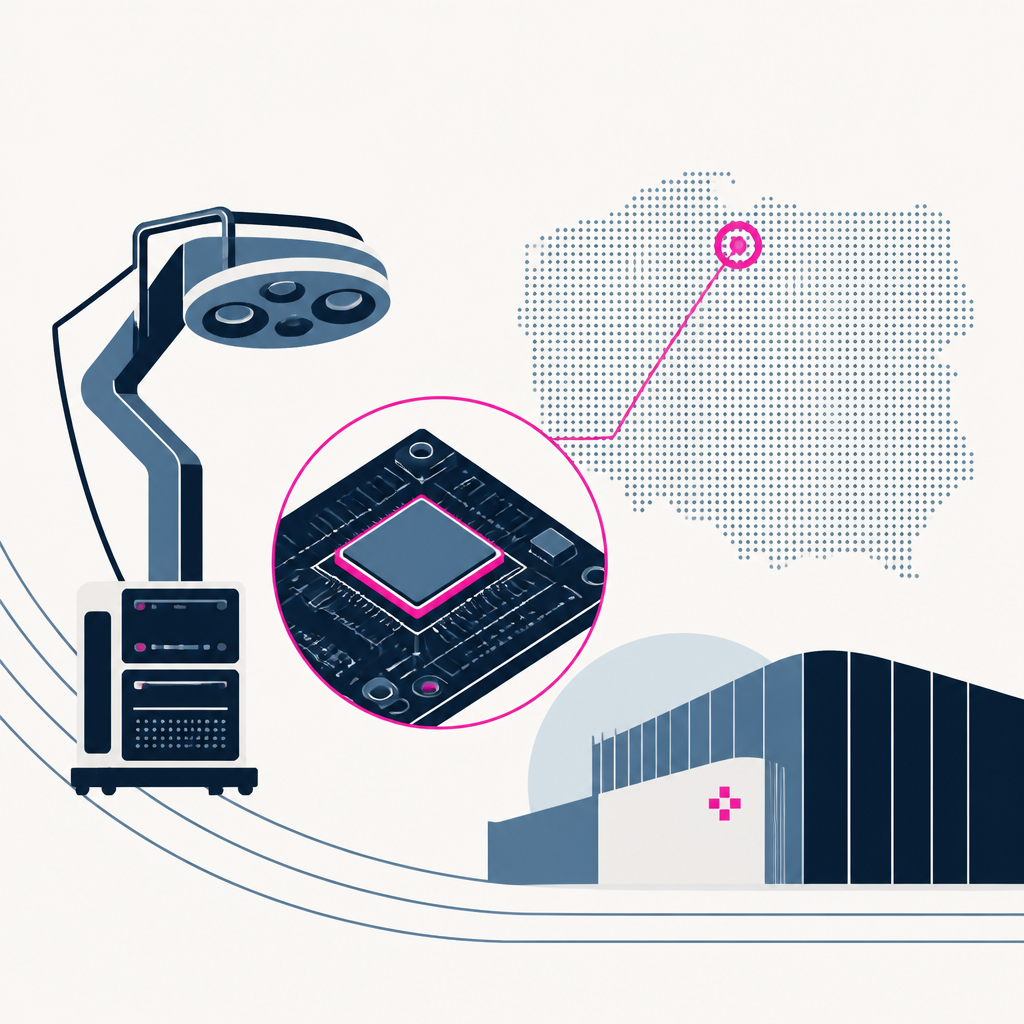
VitVio is partnering with UCK Gdańsk to deploy its AI-powered surgical operating system, Vetro, in Poland starting with a pilot in a small number of operating rooms. The initial rollout covers a small number of operating rooms across orthopaedics and neurosurgery. After the pilot, VitVio and UCK Gdańsk will review results against current operating-room performance before planning a broader rollout.
Liquid AI released the open-weight reasoning model LFM2.5-24B-A2B for running agent tool-use loops on laptops and PCs. The model is 24B parameters total with about 2.45B active parameters per token and supports a 131,072-token context. It expands the LFM2.5 line with longer context and a larger tokenizer, adds day-one local deployment formats and benchmarked tool-calling improvements, while weakening knowledge/coding unless paired with retrieval.
21shares listed a pre-IPO synthetic ETP for Anthropic on the Vienna MTF that lets investors bet on the implied value of Claude without holding any Anthropic shares.
Block is building AI-powered security using OpenAI technology to help its security team investigate threats and propose patches faster. The article says the team can propose patches in minutes. As a result, threat investigation and patching workflows speed up, reducing the time between identifying a threat and applying fixes.
Third Moment Research runs 10,000 AI agents for 36+ hours using GPT-6 Astra, GPT-6.1 Sol, Codex, and Daybreak for cybersecurity tasks. The run duration is 36+ hours. As a result, the agents can sustain long focus windows and improve with continued use.
Stride, a UK preventative health startup, raised £4.6 million in seed funding to expand its diagnostics-driven platform and international rollout. The funding round includes Innovate UK and a plan to launch Stride One outside the UK before the end of 2026. Stride will use the money to develop a predictive, personalised health experience, including research into biological age and an AI-powered health copilot, and to expand partnerships in premium wellness.
Neura Robotics launched Neuron AI, its own A.I. model for controlling robots using vision plus touch, hearing, and memory. The model was trained entirely in Germany. Neura says customers can train it via Neuraverse and roll out new skills across fleets, aiming to reduce dependence on major U.S. robotics model providers.
NVIDIA announced multiple deployments and partnerships across the U.K., spanning AI use in areas like healthcare, smart cities, finance, and quantum workflows. It committed $250 million over five years, including $50 million in accelerated computing access via BOLD at Oxford, SOFAIR at UCL, and Imperial College London. The effort shifts from AI ambition to operational application by funding research access and supporting organizations moving models and compute into real-time and large-scale services.
European cities across EMEA are deploying NVIDIA-powered physical and agentic AI systems, including digital twins, to support urban operations and public services. One program in France’s Côte-d’Or reported cutting document search time from weeks to minutes and targeting a 10% reduction in total operating costs (with a 30% goal at scale). As these pilots move toward everyday use, cities are scaling local AI “factories” to process local data and run the agents more broadly across departments and municipalities.
Gemini 4 Argon was released globally as a GA coding model, with access expanding beyond an earlier claim about cybersecurity-only availability. Introductory API pricing is $2 per million input tokens and $10 per million output tokens, with cached inputs discounted 95% and rates scheduled to rise to $4/$20 after November 30. The rollout broadens where Argon can be used (API, Gemini apps/search, and developer tools) and drives new public benchmark and cost comparisons.
Coding Giants secured up to €6 million in venture debt from Orbit Capital to fund its international expansion of STEM education for children and teenagers.
The deal size is €6 million.
It plans to use the financing to strengthen its presence in the US and Mexico and pursue further growth in Spain and other markets via organic expansion and acquisitions.
Google DeepMind released Gemini 4 Argon generally for developers, enterprises, and paid Gemini subscribers via its Gemini API and platforms. The model’s response can generate up to 1M tokens per output, priced at $2 input and $10 output per 1M tokens during the intro period. This increases the maximum single-response output length while keeping the service as a proprietary, cloud-only API (no open weights).
OlsAro secured €5M seed funding to scale its AI- and genetics-based SeedAX platform for climate-resilient wheat aimed at seed-company customers. The funding is meant to bring its salt-tolerant wheat product to market in Bangladesh by 2027. The new programmes add drought and nitrogen-use efficiency work and expand field trials, R&D, and trait discovery to support additional cereals.
Chainguard launched an AI-powered security harness and three related products to help coding agents discover and fix vulnerabilities that conventional scanners miss. Chainguard’s survey found that 66% of companies with $1 billion or more in revenue knowingly leave high or critical vulnerabilities unpatched at least sometimes. The update expands AI-assisted security from container images and dependencies into isolated agent microVMs, CI verification, and secure package remediation endpoints.
Affinity Labs raised $2 million in pre-seed funding to expand its creator-led software brands and its AI-powered product development system. The round included a £497,787 Innovate UK grant from UK Research and Innovation. The money will support expanding the brand portfolio and developing the automation technology, including plans to launch with US creators in late 2026 and target more than 200 brands by 2030.
Chatway launched “Chatway MCP,” a customer service platform that lets users connect their own AI agents to handle live chat support tickets. The launch is “Launching today.” The change is that ChatGPT, Claude, Gemini, Cursor, or any MCP-compatible assistant can answer tickets through MCP, REST API, and webhooks, with a free plan available.
Antler invested £2.2 million into 10 UK pre-seed startups, with over a third focused on physical AI and industrial automation. Each startup received about £210,000 split between debt and equity, and two of the teams were still in stealth. Antler says this shift toward harder-to-sell, longer-sales-cycle areas changes its approach to backing founders who can iterate quickly over the next 6 to 12 months.
CmdRound launched an assessment platform that gives candidates 55 minutes using Claude Code in a real codebase for an AI-agents-focused engineering test.
Google DeepMind and Singapore’s GovTech announced an on-device AI scam detection model built for encrypted messaging to warn users about manipulative social engineering in real time. The model is described as on-device and optimized to run on typical Singapore smartphones. As a result, threat analysis can happen locally with the app triggering real-time cautions while avoiding cloud scanning that would compromise privacy.
Centene CEO Sarah London argued that much AI use in health care today targets revenue and administrative speed rather than reducing care costs. She said Centene serves 26 million members across 29 states. She argues AI should instead move care into communities and give patients more control, while using administrative automation only to fund benefits and care that change the cost curve.
The article argues that Asia’s AI adoption depends on leaders redesigning how work is done, not on telling staff to try AI tools. It cites a CEO at a major Southeast Asian regional bank who held monthly learning sessions with junior data engineers. As a result, it recommends top-down leadership actions—visible learning, committing amid uncertainty, and actively seeking honest feedback—to close the gap between efficiency and reinvention.
Block cut 40% of its staff while ramping AI automation, and Block CFO Amrita Ahuja said this kind of restructuring will spread as companies try to justify AI spend.
The spending level expected to exceed $730 billion this year is pushing companies to change workforce roles and what employees do with AI agents.
Organizational charts may start listing AI agents as units, with workers responsible for training and deploying them, and companies will increasingly measure ROI via adoption, efficiency, and revenue growth.
Applied Materials unveiled its new EPIC semiconductor R&D facility at its Sunnyvale, California campus to bring multiple chip companies into the same lab for early work on microprocessors and memory. The project is a $5 billion, 600,000-square-foot center. This co-location is intended to cut the “concept to commercialization” timeline from 10–12 years to as little as six and speed up next-generation AI-related chip development.
The FBI arrested OpenAI engineering lead Abdurahman Alfozan for allegedly planting and concealing a secret audio recording device in a San Francisco conference room. The device was discovered during an OpenAI sweep on Sept. 30. OpenAI and the FBI have moved to terminate his access, with Alfozan in federal custody and facing a detention hearing on Oct. 19 while the investigation remains ongoing.
OpenAI cancels a new model on the eve of its developer conference amid safety fears. The cancellation of that new model is the key change. As a result, the company shifts focus toward a more business-oriented approach to agents while facing ongoing safety and identity concerns.
A lightweight method detects code-switching directly from speech by using language-selective hidden-state dimensions in pretrained speech encoders. Whisper-small reached a mean F1 of 0.798 across 14 language pairs on CS-FLEURS after tuning a decision rule with a small CS set. As a result, pretrained speech encoders can be used to label CS utterances without multilingual transcription, helping build more representative multilingual training corpora.
Tri-modal Masked Diffusion Models were introduced, pretrained from scratch on text, image-text, and audio-text data to enable generation across three modalities. The work presents a batch-size analysis linked to a novel stochastic differential equation (SDE) based method. It changes how these diffusion models are scaled and sampled, by adding guidance on mixing ratios, noise schedules, batch effects, and optimized inference defaults.
The EU’s next chapter in AI is being framed around the growing adoption of agentic AI by enterprises and small businesses. The analysis says this growth is occurring across EU enterprises and small businesses. It argues that deeper agentic use could unlock more value for these organizations.
Every AI story that matters,
in your inbox by 8am.
TLDRocket reads all relevant sources, removes duplicate coverage, and summarises the
day in two minutes. Follow companies and topics for alerts, or get the
briefing in Slack. Free, no spam, unsubscribe anytime.
Reading TLDRocket needs no cookies, and the readership counts we rely on come from
our own cookieless analytics. Google Analytics is the exception: it sets cookies and
reports to Google, so it stays switched off until you allow it. You can change your
mind any time from “Cookie settings” in the footer.
Strictly necessary
Session security and form protection (tldrocket-session,
XSRF-TOKEN, 2 hours). The site cannot work without them,
so they need no consent.
Always on
Google Analytics 4 (_ga,
_ga_<id>, up to 2 years). Measures which
stories and sections readers use. Google acts as a third-party processor and may
store the data outside the EU. No advertising, no profiling, no data sold.