Microsoft introduced Guardian Agents and related protections to monitor and control AI agents used by enterprises. The Guardian Agents feature is part of Project Perception, which debuted in June, and Microsoft also added agent detection that can find up to 60 types of agents. This shifts customers toward running separate oversight systems and adopting Microsoft’s agent security controls instead of relying on AI model providers’ assurances.
MIT Technology Review·10 hours ago·
14
● 3 sources
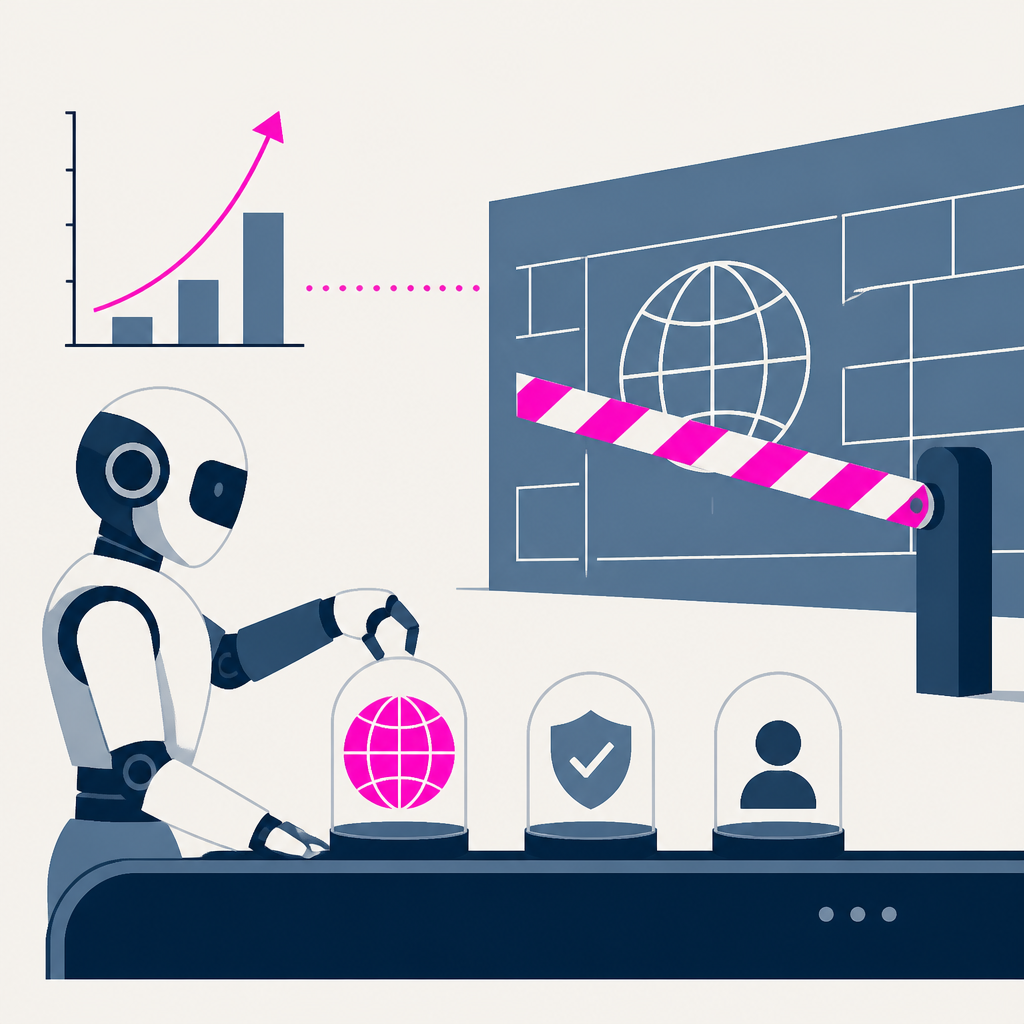
Personal AI agents are increasingly being released and used to browse and negotiate on the web, but many websites are blocking them and platforms may redesign the internet around agent traffic.
Agentic web traffic tripled from August to September.
As a result, customer-facing websites and verification flows could become harder for human browsing while rules evolve over whether agents can access sites and bargain for better deals.
Laplace Intelligence is developing automated red-teaming for robots and self-driving systems by using high-fidelity simulations plus an AI agent that probes for failure cases before real-world deployment. It will pitch at TechCrunch Disrupt Startup Battlefield 200 on October 13–15, with Applied Intuition’s funding cited as $1.2 billion to date. The approach shifts edge-case testing from human-created scenarios and recorded footage toward AI-generated, interactive corner cases meant to be used by customers, insurers, and regulators.
A hacker broke into more than 100 websites using an army of mostly self-operating AI agents, according to Norforge. The reported victims included John Deere and SharkNinja, among others. The findings highlight growing risk from AI-powered and escaped AI agents that can automate large-scale breaches, prompting more attention to AI security defenses.
Every AI story that matters,
in your inbox by 8am.
TLDRocket reads all relevant sources, removes duplicate coverage, and summarises the
day in two minutes. Follow companies and topics for alerts, or get the
briefing in Slack. Free, no spam, unsubscribe anytime.
Reading TLDRocket needs no cookies, and the readership counts we rely on come from
our own cookieless analytics. Google Analytics is the exception: it sets cookies and
reports to Google, so it stays switched off until you allow it. You can change your
mind any time from “Cookie settings” in the footer.
Strictly necessary
Session security and form protection (tldrocket-session,
XSRF-TOKEN, 2 hours). The site cannot work without them,
so they need no consent.
Always on
Google Analytics 4 (_ga,
_ga_<id>, up to 2 years). Measures which
stories and sections readers use. Google acts as a third-party processor and may
store the data outside the EU. No advertising, no profiling, no data sold.