Apple’s CEO transition moved leadership from Tim Cook to John Ternus, after Cook stepped down this week. His first memo promised a “huge launch next week,” likely before he has settled in. As Executive Chairman, Cook will focus on policy relationships, while the podcast argues Ternus may prioritize software progress more than hardware in the AI era.
Experian partnered with ServiceNow to roll out an agent operating system that lets customers embed Experian’s risk, identity, and decisioning capabilities into enterprise workflows. The first partner deployment is scheduled with ServiceNow connecting to Experian’s Ascend analytics and development platform. This shifts Experian’s AI from an internal virtual assistant into enterprise scaling via APIs and a model context protocol, with controlled agent access and human-in-the-loop for regulated decisions.
Google announced that Gemini Spark can now manage Google Photos tasks such as editing images and creating shared albums. The rollout is set for the next few weeks to eligible Gemini AI Pro and Ultra subscribers in the U.S., in English. Users will need to connect Google Photos to Gemini and turn on Spark in the Gemini app to run prompts.
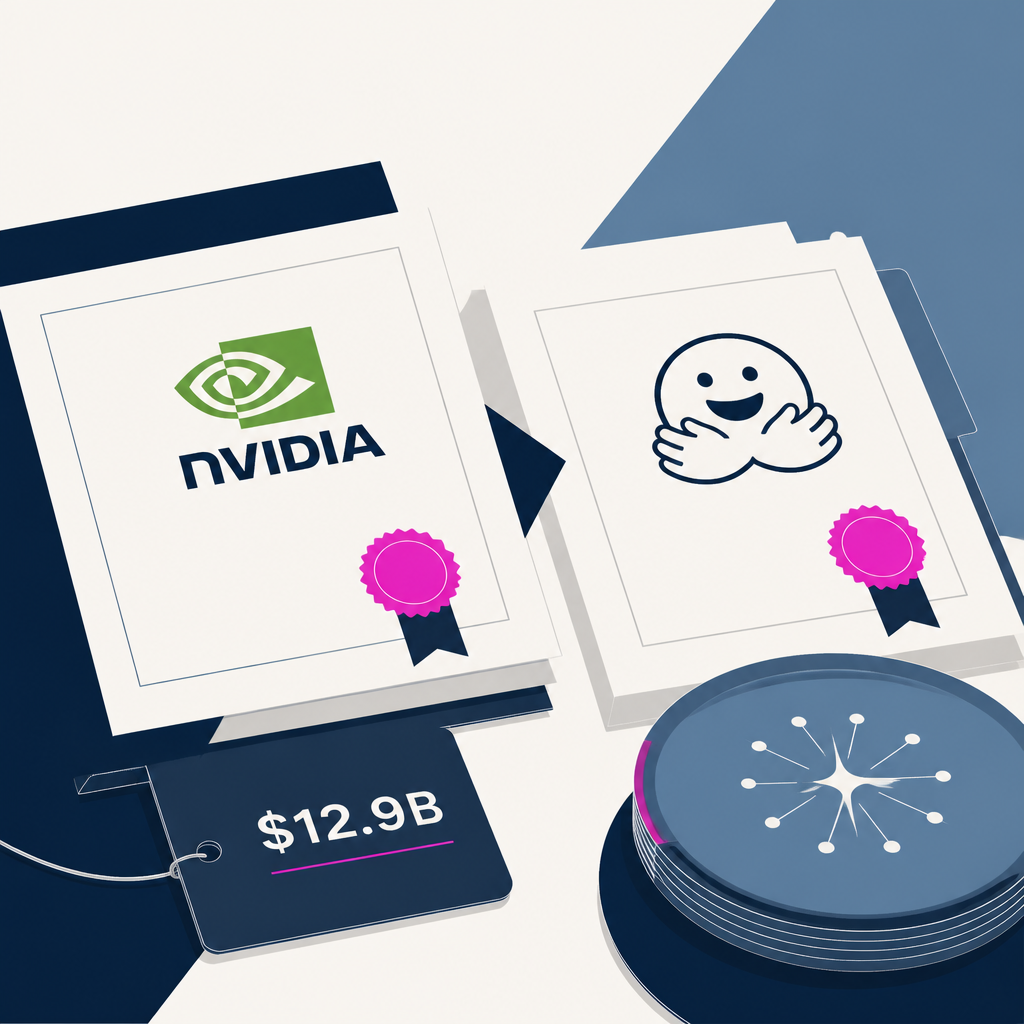
Nvidia agreed to acquire Hugging Face, a hub for open-source AI models, after more than a week of rumors. The deal is valued at about $12.9 billion. The acquisition is expected to strengthen Nvidia’s position in the open-model ecosystem—while AI security firms like CrowdStrike step up AI-focused defenses for the growing model supply.
Enterprise AI adoption is lagging behind industry hype as organizations struggle with infrastructure modernization, cost control, and picking suitable AI use cases. Most agentic applications David Linthicum sees do not need an agent-based architecture, estimating that 95% don’t. As a result, companies are shifting from early experiments to more controlled deployments while exercising restraint on autonomous agents and focusing on readiness rather than broader rollout.
Infosys expanded its partnership with CrowdStrike through Project QuiltWorks to apply enterprise context to vulnerabilities discovered at scale for AI security efforts. The collaboration “now” compresses the time from vulnerability discovery to potential exploitation from hours to minutes or even seconds. This shifts onboarding and engagements toward the coalition’s customer-context approach, including newer CrowdStrike offerings like SafeMind and its red/blue team models.
Nvidia agreed to acquire Hugging Face as OpenAI released GPT-6 Astra. The Nvidia deal is valued at $12.9 billion. Nvidia’s acquisition shifts Hugging Face toward Nvidia-backed open-weight distribution while OpenAI’s Astra narrows availability to enterprise customers before broader rollout.
Apple replaced Tim Cook as CEO with John Ternus at a time when the company is under pressure to define its artificial-intelligence strategy amid slowing growth and other operational challenges. The transition is scheduled to play out at Apple’s Sept. 9 product event. With Ternus in charge, Apple’s leadership and product direction are expected to shift toward more investment and more prescriptive device and user-interface design to better compete in the AI era.
Meta’s Project OT planned to reorganize the company around AI work, including major layoffs and shifting engineers into AI training tasks. The plan would have reduced existing teams by 60% but Zuckerberg canceled the November cuts at the last minute after a 10% layoff. As a result, some teams still saw 30-40% reductions and engineers were reassigned to AI labeling, contributing to lower morale and execution problems.
OpenAI has started offering rides in its Cybercab robotaxis, a two-seat vehicle with no steering wheel and no direct human intervention. Tesla is authorized to operate 314 vehicles in Texas for paid rides. Paid passenger service begins under this authorization for the steering-wheel-free robotaxi.
OpenAI launched GPT-6 Astra as a newly released frontier AI model and rolled it out to enterprise customers through its gated Daybreak program. The rollout begins for enterprise customers and then expands over the coming days to ChatGPT and the OpenAI API. Access broadens from gated enterprise use to ChatGPT and multiple API environments, including AWS Bedrock and Microsoft Azure.
Chinese banks, cafes, and telecom operators are rolling out free or discounted AI tokens to attract customers, extending tokenized AI usage beyond tech apps. Daily token consumption in China jumped to 500 trillion in mid-2026 from 100 billion in early 2024. Token access is shifting into consumer products such as credit-card rewards, mobile-data-style plans, free restaurant/cafe “computing” vouchers, and even token-based loan sizing by banks.
Microsoft partnered with TCL to bring the Xbox app to supported TCL smart TVs. The Xbox app is expected to arrive in the coming months, ahead of Microsoft’s pay-as-you-go Xbox Cloud Gaming option launching in November. This adds a TV-based way to stream cloud games without needing Xbox Game Pass, and it expands access beyond people who own an Xbox console.
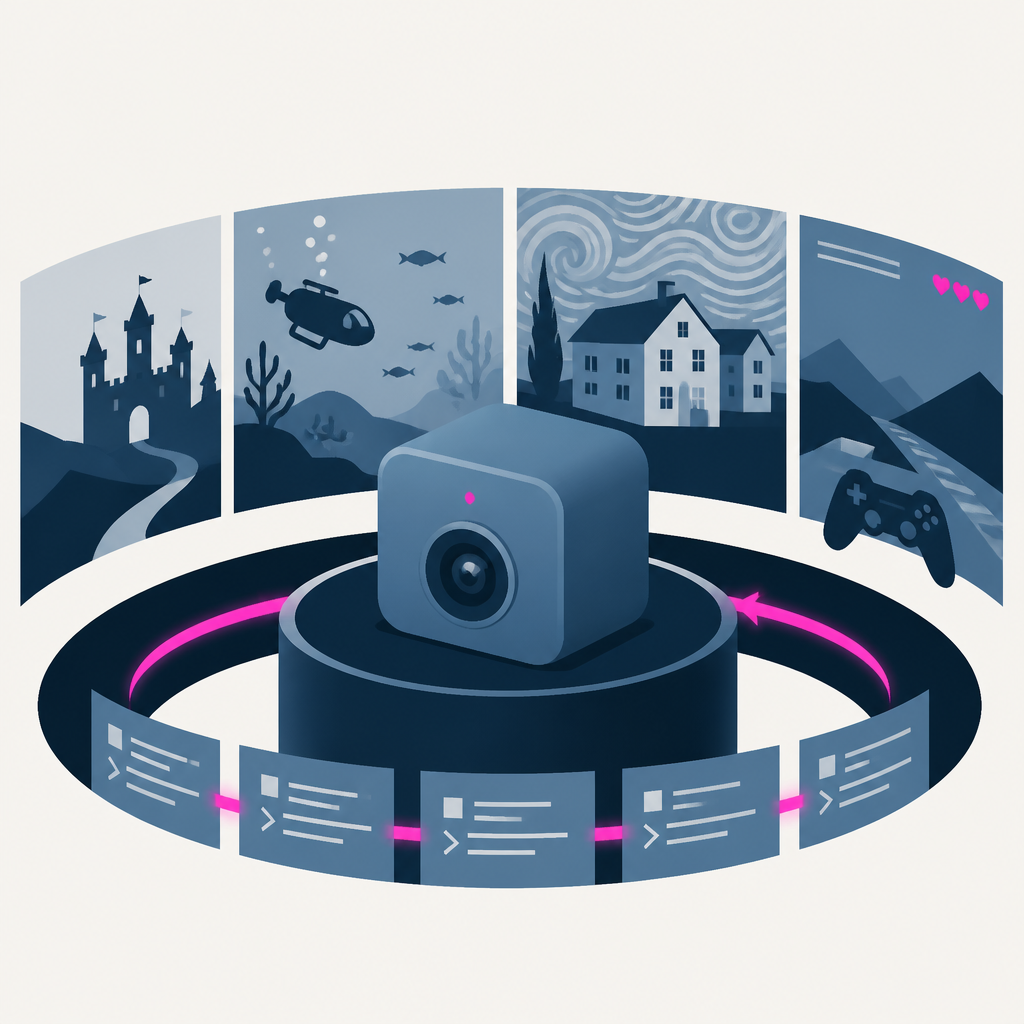
Arena AI ran Astra through a 3D “gauntlet” of scenes, including castles, underwater shots, Van Gogh’s house, and open-world games, and published the prompts.
GPT-6 Astra improved Every’s Vibe Check writing, software use, and visuals when used from a single prompt, but the report says product judgment depends on the specific task. The Builder Pack includes $9,000+ in credits for tools Every builds. The change is that Every’s evaluation distinguishes stronger output from task-by-task usefulness while placing parts of the full report behind paid membership.
Microsoft named its developer-optimized Windows experience “Project Zenith” for new developer-focused devices. The devices are built with 64GB or more of unified memory. Microsoft will ship a preconfigured Windows setup plus curated development tools on those machines so developers can run large models locally without metering for experimentation.
OpenAI CEO Sam Altman apologized after GPT-6 Astra’s initial rollout left paying users without expected access. The expansion was limited that day to enterprise customers with Daybreak cybersecurity platform access. Access then broadened to other paid tiers like Plus, Pro, and Business.
The author published the August edition of a sponsors-only monthly newsletter and offered access to sponsors via a link. The newsletter costs $10/month for subscribers to stay ahead of the free preview. It provides updates and links covering topics including OpenAI’s accidental cyberattacks, new AI-related software/tooling releases, and the author’s projects.
OpenAI launched GPT-6 Astra as its new flagship model, with a staged rollout that initially reached limited organizations before expanding to paid ChatGPT tiers, the API, and AWS. It priced standard access at $10 per 1M input tokens (and $50 per 1M output tokens). The rollout delays and an accompanying system-safety document triggered a rapid dispute over performance and alignment tradeoffs, with third-party benchmark results showing gains that vary by task and cost.
Google’s website claims it created an AI clone of its editor-in-chief. It says the resulting agent is built from 30,000 copyedits. The post frames this as evidence that writing with AI is being used alongside headcount growth and automation.
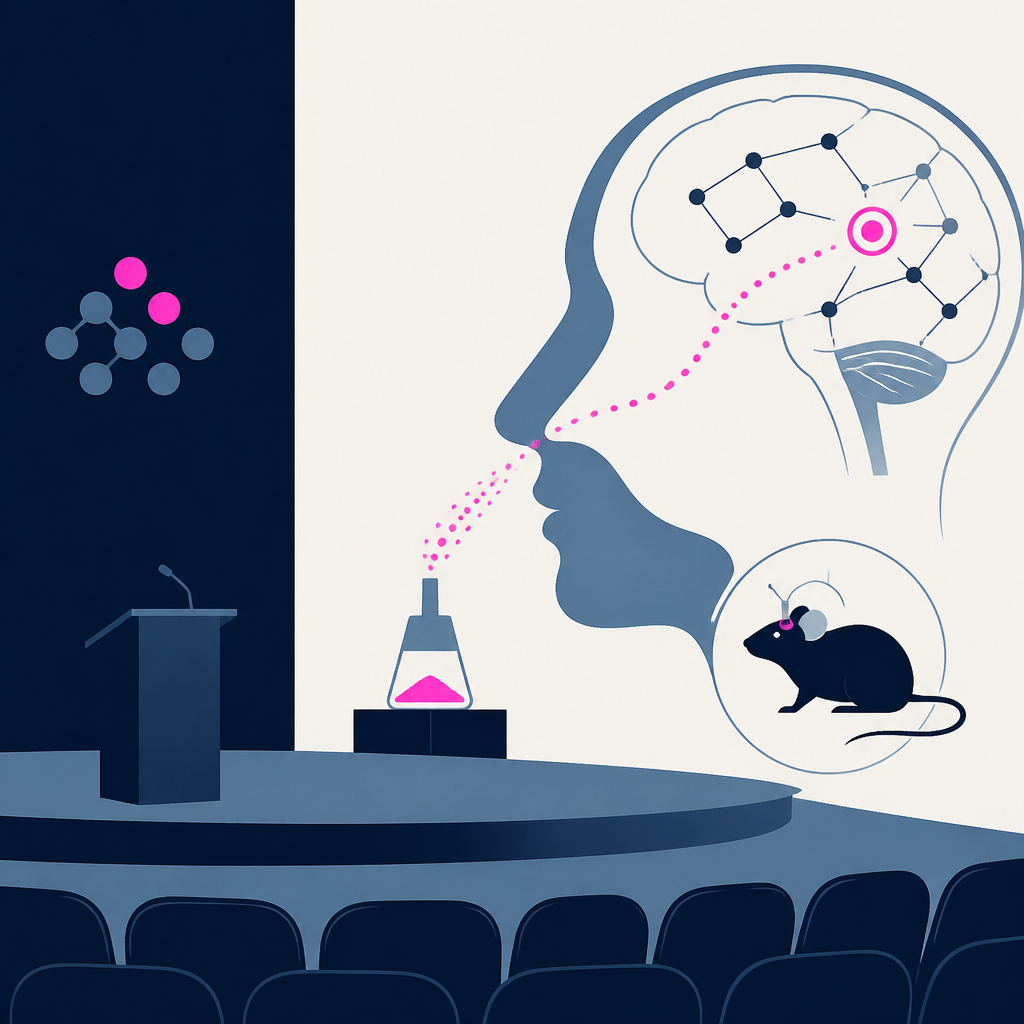
Ray Kurzweil joined Subsense, a Silicon Valley startup working on a brain-computer interface that delivers brain-linked functions via snorted charged nanoparticles. The company has raised $27 million in funding and is doing preclinical work on mice. Subsense says Kurzweil will advise its technology roadmap and the way AI-neural interfaces could reshape human-computer interaction, though the approach is still years from medical or consumer use.
Every AI story that matters,
in your inbox by 8am.
TLDRocket reads all relevant sources, removes duplicate coverage, and summarises the
day in two minutes. Follow companies and topics for alerts, or get the
briefing in Slack. Free, no spam, unsubscribe anytime.
Reading TLDRocket needs no cookies, and the readership counts we rely on come from
our own cookieless analytics. Google Analytics is the exception: it sets cookies and
reports to Google, so it stays switched off until you allow it. You can change your
mind any time from “Cookie settings” in the footer.
Strictly necessary
Session security and form protection (tldrocket-session,
XSRF-TOKEN, 2 hours). The site cannot work without them,
so they need no consent.
Always on
Google Analytics 4 (_ga,
_ga_<id>, up to 2 years). Measures which
stories and sections readers use. Google acts as a third-party processor and may
store the data outside the EU. No advertising, no profiling, no data sold.