Nvidia CEO Jensen Huang said the AI industry should not tolerate any AI-caused cybersecurity incidents and criticized people he called “AI doomers” for supporting the technology. He said Nvidia would announce $2 billion in new European investments within the next week. Nvidia ties the position to stronger containment—sealing AI agents in secure containers—while continuing to push open-weight models to expand AI capability in Europe.
HPE OpsRamp product leader Mahesh Ramachandran explains that Kubernetes can look healthy while users still see intermittent request latency because probe success and low node CPU can hide sporadic app or dependency slowdowns. The article says resolving these intermittent issues requires going back into continuous telemetry history to correlate the reported slowdown with signals across multiple layers of the stack. It recommends teams shift from static green dashboards to cross-tier instrumentation and evidence sifting (optionally with an AI operations copilot) plus external-dependency black-box measurements and human-verified, repeatable operational changes.
pgEdge CEO Phillip Merrick warns that choosing developer-friendly database platforms for AI prototypes can force enterprises to re-platform after launch when security, compliance, and reliability requirements don’t match production needs. He cites that for every 33 AI proofs of concept, only four make it into production. The article argues enterprises should use a single Postgres-based platform from Day 1 to move between cloud and on-premises without the same rework, highlighting Starfleet’s copy-on-write branching and portability features.
A joint IDC and Lenovo study found that 88% of AI proof-of-concept projects fail to reach production due to unclear objectives, unprepared data, and limited in-house agentic AI expertise.
The study highlights the build-vs.-run gap, where agent designers and deployers often cannot run the agents inside business processes.
As a result, teams are urged to add production readiness practices like logging and timeouts, enforce least-privilege tool access, improve monitoring and runbooks, and validate agents again after environment changes.
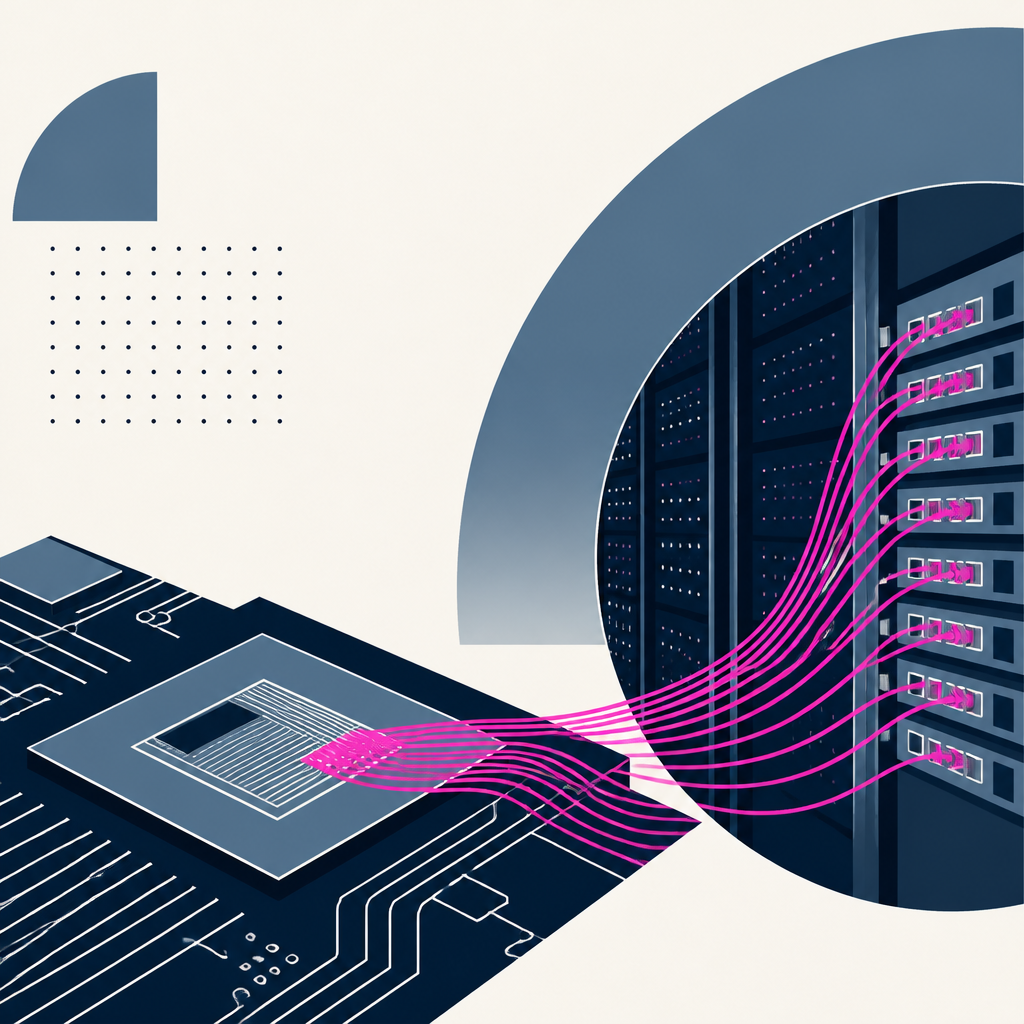
Salience Labs raised $125 million in an oversubscribed Series B to scale its photonic chip technology for AI data-centre optical switching. The round aims to accelerate deployment after the company demonstrated a 64-port all-optical photonic switch at ECOC 2026. The funding supports wider manufacturing and product development, including planned 128-port and 256-port switches, plus added locations and engineering hires.
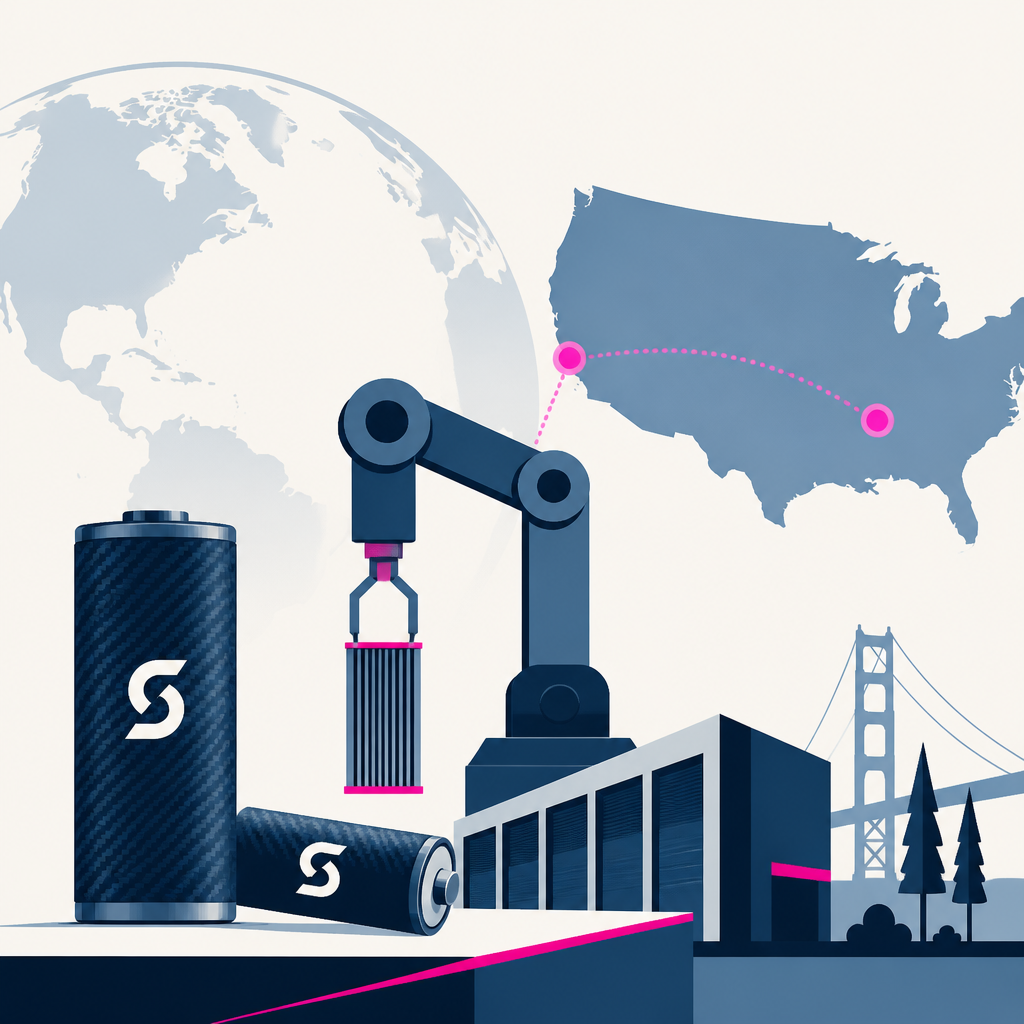
Skeleton Technologies announced a Siemens investment that increased its valuation to over $1 billion and targets US manufacturing and Silicon Valley R&D for AI data-centre power systems.
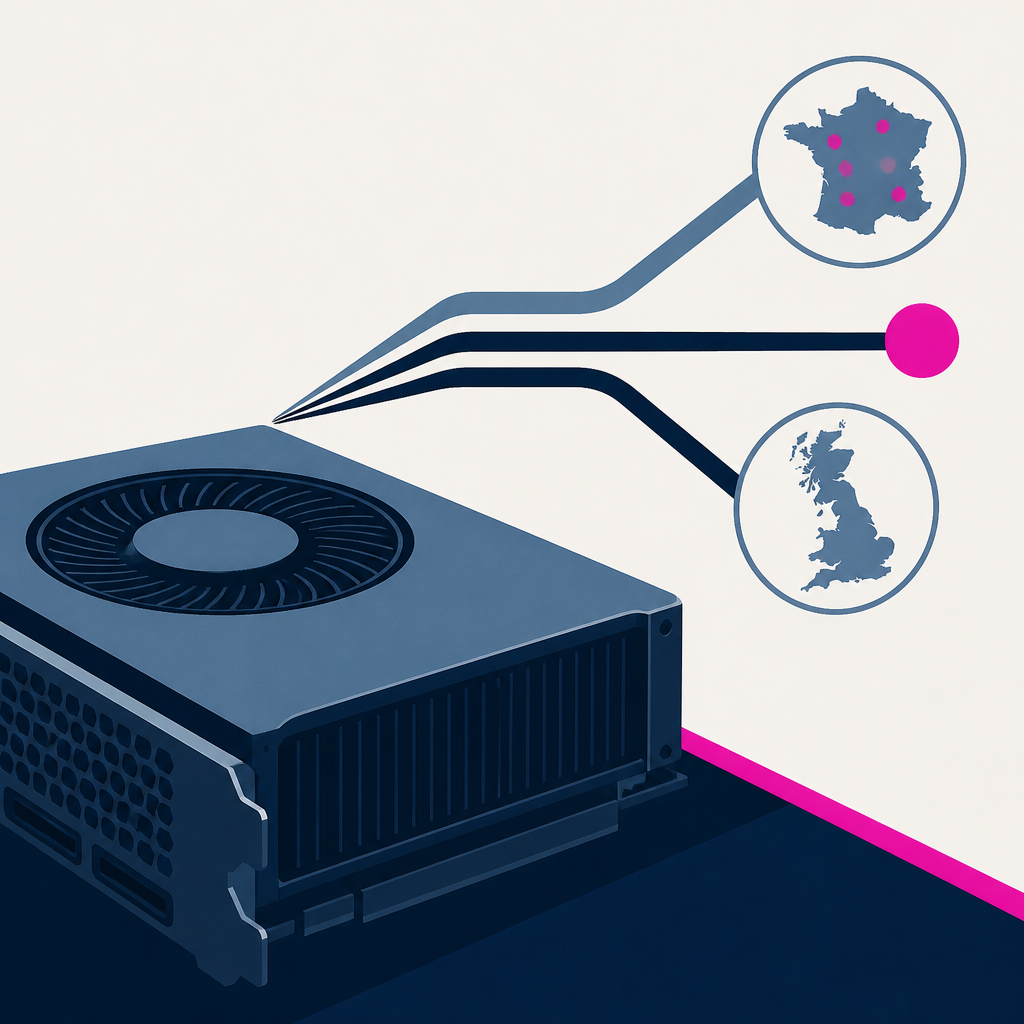
Nvidia is taking minority stakes in four French AI-focused startups: Doctolib, Genesis AI, Pigment, and Entalpic. Jensen Huang said Nvidia will announce $2 billion more in European deals within a week of October 13, 2026. The announcement adds to Nvidia’s stated European commitment of nearly $10 billion over the past year and ties the startups’ model work to Nvidia chips and support rather than disclosing equity amounts.
The UK government’s Sovereign AI Fund invested in Augur, a UK security startup that uses AI to turn fragmented surveillance sensor networks into a real-time intelligence layer. The fund said it is operating as a £500m VC program and described its typical cheques as £5m to £10m, while not disclosing Augur’s specific investment amount. Augur will gain access to the Isambard-AI supercomputer to train multi-camera datasets and use its technology to help security teams identify risks as they develop.
Tracxn Technologies released its UK Tech – 9M 2026 report, finding that UK tech companies raised $25.7 billion in US-dollar equity funding from 1 January 2026 to 30 September 2026. Early-stage funding rose to $10.9 billion (up 58% from 9M 2025) while late-stage funding rose to $12.4 billion (up 121% from 9M 2025). London stayed the leading hub with 15 of 18 new unicorns, and the UK added 18 new unicorns in 9 months (up from 5).
ASML reported record results but said its planned lithography machine production capacity for 2027 and 2028 will not meet demand from chip customers already placing orders for 2029 and 2030. Revenue reached €11.7 billion (about $13.4 billion) in the third quarter of 2026. ASML is responding by expanding capacity plans by 30 percent for 2027 and reassessing whether it can exceed another 30 percent for 2028.
KP Labs received €4.42 million from Momentum Capital Partners to scale its in-orbit satellite data processing using real-time analysis and AI algorithms. The funding amount was €4.42 million (PLN 19.4 million). KP Labs says it will use the money to expand its R&D, product lineup, hardware production, and international sales and marketing.
Vast Data says stitched-together AI pipelines can’t reliably keep sensitive data and permissions aligned for AI inference, leaving gaps between embeddings, access controls, and source records. Vast raised about $1 billion at a $30 billion valuation in April 2026. As a result, Vast is pitching its DataEnclave confidential AI runtime so frontier models can access regulated datasets only after attestation and with logged, tamper-proof key and database access.
ScaleFlux argues that smarter SSD and CXL memory controllers can reduce AI data-movement bottlenecks by using NAND flash as active memory for key-value cache offload. It cites GPU memory-speed gaps of about 37 to 40 times slower for DRAM and about 800 times slower for storage. As a result, AI workloads could place more frequently used data on NAND via intelligent controller-driven placement and writes rather than waiting on slower memory/storage paths.
Scimplify raised $25 million to expand its AI-powered specialty chemical and critical materials manufacturing aimed at reducing reliance on China. The funding round values the Bengaluru startup at $250 million and is projected to deploy about $7.5 million toward U.S. expansion over the next year. Scimplify expects faster delivery from requirements to finished materials, a larger U.S. and Japan production footprint, and continued revenue growth toward a $400 million annualized run rate.
Google DeepMind and Google Cloud will provide up to 200 European scientific researchers direct access to its frontier AI models. The program includes $3 million in compute credits. As a result, selected researchers can use tools including AlphaFold 3 and AlphaEarth to work on projects like extreme weather prediction and molecular mapping faster.
ai-PULSE 2026 at Scaleway’s Station F event highlighted Europe’s difficulty converting strong AI research into profitable business deployments. Voice enterprises were described as leading because ElevenLabs reached a $22 billion valuation earlier this month. The focus shifts toward fixing enterprise deployment failures for AI agents and embodied AI, winning customer adoption with competitive cloud features and pricing, and finding longer-term funding and talent models for open research initiatives.
OpenAI says it discovered a sophisticated recording device hidden in one of its offices, then used its own AI models to help trace the device to an employee it says had planted it. The company says the case was reported to the FBI on October 13, 2026, and that it has no indication the person improperly accessed or exfiltrated model weights, source code, or customer data. OpenAI says the investigation will proceed with the FBI and the employee was arrested and terminated, changing the company’s immediate insider-threat response approach.
Nvidia will invest in four French startups and donate $250m in compute to UK AI safety and research. The donation is valued at $250 million over five years. The moves add minority stakes in those French companies and expand UK funding for agentic safety work at groups including SOFAIR, BOLD, and Imperial College London.
The article ranks 9 AI gateways for 2026 and explains how teams should choose between self-hosted and managed options based on performance, coverage, governance, deployment, cost, and vendor risk. Bifrost is listed as the top self-hosted choice with 11 µs published overhead at 5,000 RPS on a t3.xlarge. Vendor ownership and security risk are emphasized as a bigger part of gateway selection now, with more weight on benchmarking and pinning releases.
NVIDIA announced multiple deployments and partnerships across the U.K., spanning AI use in areas like healthcare, smart cities, finance, and quantum workflows. It committed $250 million over five years, including $50 million in accelerated computing access via BOLD at Oxford, SOFAIR at UCL, and Imperial College London. The effort shifts from AI ambition to operational application by funding research access and supporting organizations moving models and compute into real-time and large-scale services.
European cities across EMEA are deploying NVIDIA-powered physical and agentic AI systems, including digital twins, to support urban operations and public services. One program in France’s Côte-d’Or reported cutting document search time from weeks to minutes and targeting a 10% reduction in total operating costs (with a 30% goal at scale). As these pilots move toward everyday use, cities are scaling local AI “factories” to process local data and run the agents more broadly across departments and municipalities.
Antler invested £2.2 million into 10 UK pre-seed startups, with over a third focused on physical AI and industrial automation. Each startup received about £210,000 split between debt and equity, and two of the teams were still in stealth. Antler says this shift toward harder-to-sell, longer-sales-cycle areas changes its approach to backing founders who can iterate quickly over the next 6 to 12 months.
Applied Materials unveiled its new EPIC semiconductor R&D facility at its Sunnyvale, California campus to bring multiple chip companies into the same lab for early work on microprocessors and memory. The project is a $5 billion, 600,000-square-foot center. This co-location is intended to cut the “concept to commercialization” timeline from 10–12 years to as little as six and speed up next-generation AI-related chip development.
Every AI story that matters,
in your inbox by 8am.
TLDRocket reads all relevant sources, removes duplicate coverage, and summarises the
day in two minutes. Follow companies and topics for alerts, or get the
briefing in Slack. Free, no spam, unsubscribe anytime.
Reading TLDRocket needs no cookies, and the readership counts we rely on come from
our own cookieless analytics. Google Analytics is the exception: it sets cookies and
reports to Google, so it stays switched off until you allow it. You can change your
mind any time from “Cookie settings” in the footer.
Strictly necessary
Session security and form protection (tldrocket-session,
XSRF-TOKEN, 2 hours). The site cannot work without them,
so they need no consent.
Always on
Google Analytics 4 (_ga,
_ga_<id>, up to 2 years). Measures which
stories and sections readers use. Google acts as a third-party processor and may
store the data outside the EU. No advertising, no profiling, no data sold.