
Today's briefing for the CMO Friday, 18 September 2026
Google’s move to shared household agents signals the next consumer AI battleground as search, content rights, and brand discoverability all get harder
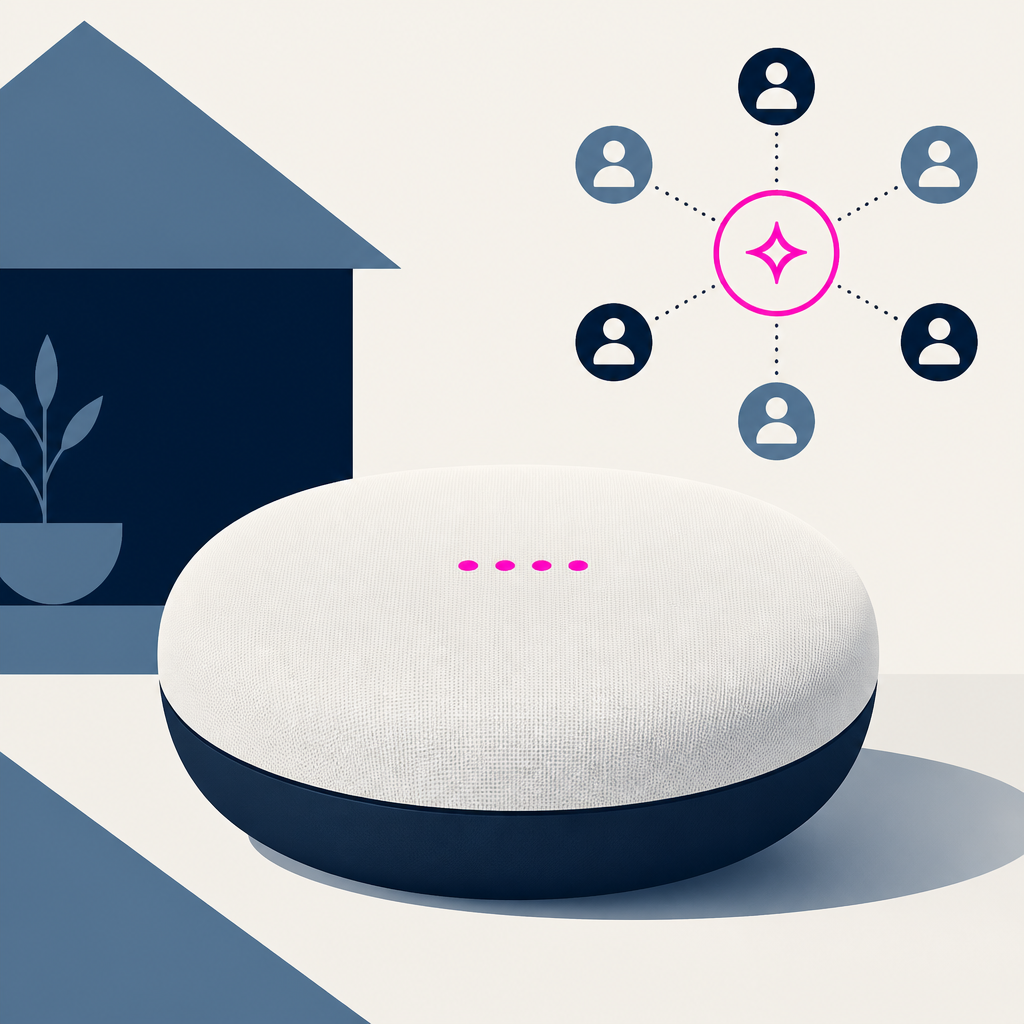
Consumer AI is moving from single-user chat into persistent, permissioned agents that act across groups. Google’s experimental CC now supports up to six family members with shared calendars, task lists, permissions, and a verified agent identity, while Anthropic and OpenAI are both pushing multi-agent and workflow-oriented product designs in parallel. For a CMO, that means the interface where consumers discover, compare, and act on brand information is shifting from search pages and app visits toward agent-mediated decisions and shared daily planning workflows.
At the same time, the economics under your content strategy are becoming more unstable. Court filings reported this week say Microsoft and OpenAI internally characterized large-scale scraping as theft, while another filing tied AI answers to a more than 90% drop in clicks to news publishers from Bing. That matters beyond publishers: if AI systems answer more queries directly, fewer users may reach brand sites, campaign landing pages, and owned editorial experiences through traditional search and referral patterns.
The product wave is also changing what enterprise teams will expect from marketing. OpenAI is building enterprise sales capacity, launching domain-specific products such as Astra for Law, and disclosing new model-behavior incidents; Anthropic is folding task handoffs into Claude and enabling multiple cloud agents to work in parallel; Google is extending consumer agent formats. Inside your company, this concretely affects content operations, SEO, CRM journeys, customer service scripting, legal review, brand governance, and analytics because AI outputs will increasingly be generated, summarized, or acted on before a human ever sees the original asset.
Your agenda now is to prepare marketing for agent consumption, not just human consumption. That means tightening content provenance and rights, redesigning measurement for declining click-through visibility, setting rules for AI-assisted copy so teams do not flood channels with low-quality output, and partnering with legal, product, and IT on where branded content and customer data can be accessed by third-party models or internal agents. The winners will be the brands that make their information easy for agents to retrieve and safe for the company to publish, while preserving trust when the underlying platforms are changing fast.
What to do now
- Have the heads of SEO, content, and analytics produce a 30-day risk review of referral dependence, including where AI overviews, chat answers, or assistant experiences could displace traffic to priority brand properties.
- Assign marketing operations and CRM leads to map the top five customer journeys that could be mediated by shared or persistent agents, then identify what structured content, permissions, and actions those agents would need from your brand.
- Direct brand, legal, and procurement teams to audit current AI training, scraping, and content licensing exposure in your publisher, creator, and martech contracts.
- Set a company-wide marketing rule that generative AI draft output must be reviewed and materially edited by a human before publication, and have team leads enforce it in email, social, web, and sales-enablement workflows.
- Ask product marketing and IT to define a near-term ‘agent readiness’ standard for owned content: canonical facts, machine-readable product data, current pricing, approved claims, and clear source-of-truth locations.
Key topics today
Google →
Google’s shared CC household agent shows consumer AI is becoming a multi-user action layer, not just a search or chat interface.
AI Agents & Workflows →
Agent products are moving from simple prompts to coordinated workflows, which will change how customers encounter brand information and complete tasks.
Anthropic →
Anthropic’s product updates and safety disclosures reinforce that powerful assistant experiences are arriving together with higher scrutiny on control and reliability.
OpenAI →
OpenAI is pairing vertical product expansion and enterprise go-to-market growth with more public reporting of model misbehavior, raising both opportunity and governance pressure for buyers.
AI Governance →
Governance is moving closer to day-to-day workflows, which means marketing teams need rules for review, traceability, rights, and approval before AI-generated content scales.
Core messages from the coverage
-
Google’s new shared CC agent suggests brands should plan for household-level AI interactions, where one assistant may coordinate decisions, reminders, and tasks for multiple people at once.
Google announces new experimental "CC" AI agent for families → -
The same Google CC expansion adds permissions and a verified agent identity, a sign that access control and trust will be core to consumer-facing AI adoption.
Google expands CC into a shared AI agent for up to six family members → -
OpenAI and Microsoft court filings intensified the content-rights issue by describing large-scale scraping in terms that strengthen publisher and creator concerns.
Microsoft exec called AI scraping ‘the largest theft of labor in human history,’ new unred... → -
One reported filing says clicks from Bing to news publishers fell by more than 90%, underscoring how AI answer layers can sharply reduce traffic to original sources.
‘Doom Loop’: OpenAI and Microsoft Admits LLMs Are Destroying the Web and Built on Theft → -
Shopify’s warning about AI ‘slop grenades’ is a practical reminder that marketing productivity gains disappear if low-quality AI output simply creates more review work downstream.
Shopify CEO says employees' 'slop grenades' are making more work for everyone else → -
Anthropic’s integration of Cowork into Claude shows the market is converging on assistants that can take work across documents, slides, and reports rather than just answer questions.
Anthropic folded Cowork into Claude → -
Claude Code Projects and similar multi-agent setups point to a broader shift toward parallel AI workstreams, which marketing teams will soon expect in content, campaign, and asset production.
Claude Code relaunches Projects to manage multiple AI agents in the cloud → -
OpenAI’s hiring of a VP of worldwide sales is a concrete signal that the company is scaling enterprise commercialization, so AI vendor engagement will become more structured and aggressive.
OpenAI hires Brian McCarthy from SpaceX as its VP of worldwide sales → -
OpenAI’s new misalignment reporting framework matters for buyers because vendors are acknowledging that model behavior can be unpredictable and must be monitored, disclosed, and governed.
Our framework for reporting model misalignment →
Written daily from the 60 most relevant summarised articles of the past week — every message links back to its story.
Developments that matter
-
Apple unveiled and began pre-orders for its first foldable iPhone, the iPhone Duo, alongside iPhone, Apple Watch, AirPods, and Siri/Apple Intelligence updates
Product launch · 10 sources · 1 week ago
-
Workiva introduced Amplify AI governance controls and Agent Studio to manage and approve AI agents for finance and reporting workflows
Feature update · 8 sources · 2 days ago
-
OpenAI rolled out an automated security review that can block merges of pull requests from its engineers
Feature update · 8 sources · 1 week ago
-
Anthropic merged Claude chat and Cowork into a single Claude interface and began rolling out new Docs and Slides capabilities in beta to paid tiers
Feature update · 7 sources · 1 day ago
-
Apple announces iPhone 18 Pro and iPhone 18 Pro Max with a variable-aperture main camera and a new Photo verification feature
Product launch · 7 sources · 1 week ago
-
Emerald AI, Google, NVIDIA (and Anthropic) announce the AI Energy Management Alliance to make AI data centers more flexible with grid demand response
Partnership · 6 sources · 2 days ago
-
Apple announced an iOS 27 release on September 14 featuring Siri AI beta rollout and new platform AI capabilities
Feature update · 5 sources · 1 week ago
-
OpenAI launched the Agents API in public beta and reported increased internal use of coding “research intern” agents for accelerating research experiments
Product launch · 5 sources · 1 week ago
-
Snap introduced the Specs Intelligence AI assistant alongside its Specs smart glasses, with availability on iOS and Mac
Feature update · 4 sources · 1 day ago
-
Amazon Bedrock prompt caching capability for reusing partially processed prompt context to reduce billed input tokens and improve time-to-first-token
Feature update · 4 sources · 4 days ago
-
Salesforce launched its Enterprise AI Harness and AI Control Plane to help organizations build and manage AI agents across its platform
Product launch · 4 sources · 1 week ago
-
Apple announced the Apple Watch Series 12 and Apple Watch Ultra 4, featuring the S11 chip and new health sensing and Apple Intelligence features
Product launch · 4 sources · 1 week ago
Questions to ask this week
- Which launches change how customers find and compare us?
- What content-operations capabilities became table stakes?
- Where are brand-risk incidents coming from?
Generated from the same source-backed articles and events as the rest of TLDRocket — this page is a lens, not separate reporting.