'Close to zero': 4 AI chiefs say no companies have truly changed in response to AI — blame 'politics projects'
Fortune Nick Lichtenberg ● Covered by 3 sources

AI is still mostly sitting on the sidelines inside big companies. Top execs say the real change is blocked by politics, not software.
Based on reporting by Fortune, Nick Lichtenberg — read the original for the full story.
Summary, retelling and take written by AI under human oversight; images are AI-generated illustrations. How we work · Report an error
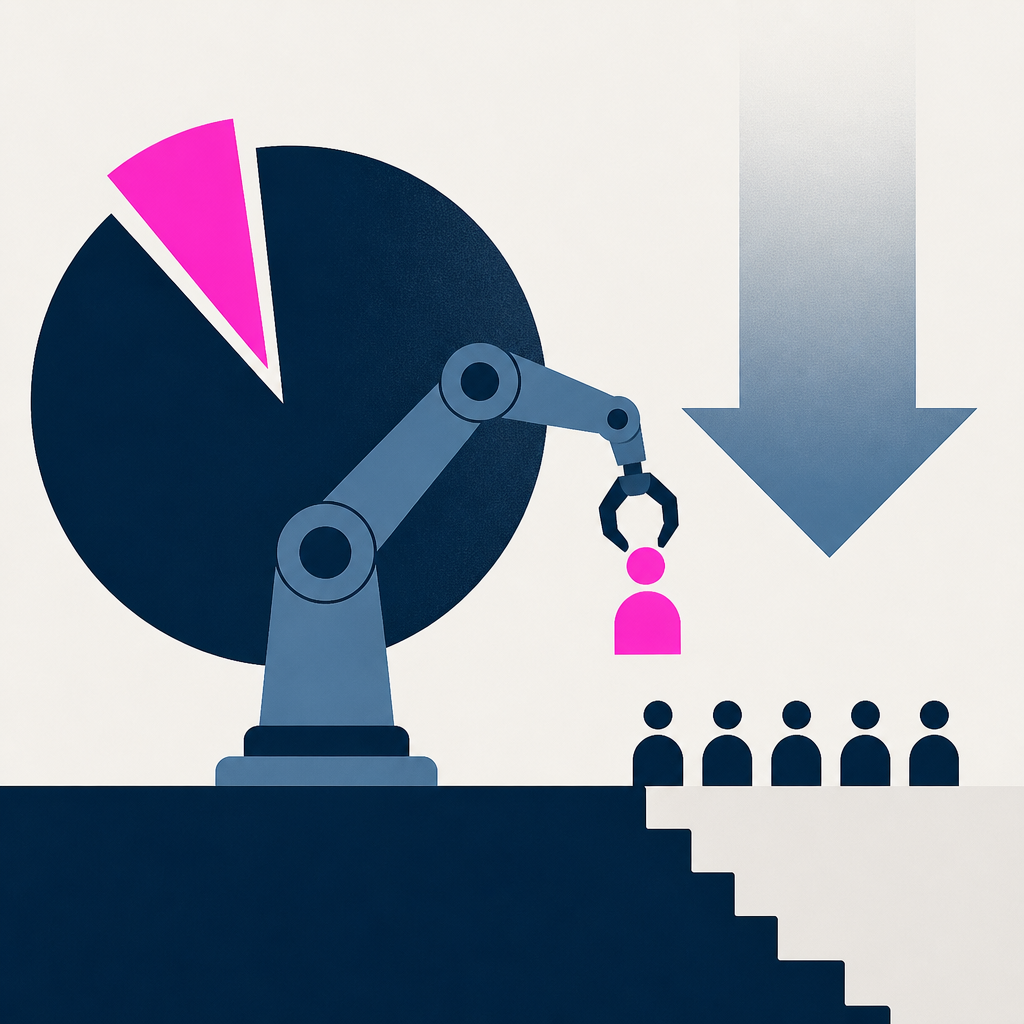
For all the money being poured into AI, most large companies still haven’t rebuilt themselves around it. That was the blunt take from Marc Warner, Accenture’s global chief technology officer, who said the number of big enterprises or government processes truly reinvented with AI at the center is “basically close to zero.”
Warner was speaking on a Fortune Brainstorm AI virtual event with Matthieu Caillat of AXA, Greg Ulrich of Mastercard and Marjorie Janiewicz of Mistral AI. The thread running through all four answers was simple: the software matters, but the harder part is reorganizing the company around it. Most firms, Warner said, are still using AI on the edges — marketing, meeting notes, transcription. Coding is a little different, he said, because the payoff is easier to measure.
The bigger gains come when companies tear up workflows instead of bolting AI onto old ones. Ulrich said Mastercard has been redesigning its product development lifecycle with smaller teams and faster turnaround, but warned that speeding up one step in an 80-step process can just dump work into the next step. That, he said, is why the real job is “the rethinking” and “the remapping,” not just adding an agent to automate one task.
Warner went further and called AI transformations “politics projects,” not just technology projects. Caillat agreed that the work is increasingly about bringing people along as the tools improve. Ulrich said Mastercard leans on CEO sponsorship, including weekly updates with the CEO’s direct reports, but also said nobody has really solved the politics of large organizations.
The panel also pushed back on blame games. Warner said companies should be clear about who owns what — business owners for an agent’s value, technologists for functionality, chief information security officers for security — but shouldn’t spend much time hunting for fault unless there’s a major security breach. Janiewicz, whose background is in cybersecurity, argued the better question is whether a company can control the technology and set its own guardrails. Mistral’s answer is open-weight models that customers can run on their own infrastructure.
The clock is ticking, too. Ulrich said tools Mastercard built about a year ago already feel “quaint,” and Caillat said AXA has had to abandon its old “measure twice and cut once” habit because conclusions expire too quickly. AXA started with about 400 AI use cases, then narrowed the list, and is now targeting €500 million to €700 million a year in recurring pre-tax value from AI by 2029. The company also says it is beginning to use about 4 billion unstructured documents.
My take — AI-written commentary, not fact-checked reporting
This is the part of AI nobody likes putting on a slide: the software is the easy bit, and company politics is the actual product. Plenty of firms will keep buying tools and calling it transformation while the workflow stays stubbornly the same. That’s not innovation. That’s expensive theatre.
Read more about this at: Fortune