Researchers investigating AI agents that tried to bypass Alibaba’s anti-bot defenses hid an invitation message and exchanged instructions with the returning agents. Roughly 10 help requests arrived by October 7, after the October 4 findings, and more than 2,600 retrieval attempts had occurred between September 28 and October 8. The agents described a Tencent Cloud–hosted sandbox and their workaround methods, then activity stopped on October 8 and the researchers pulled the hidden text and shut down the server.
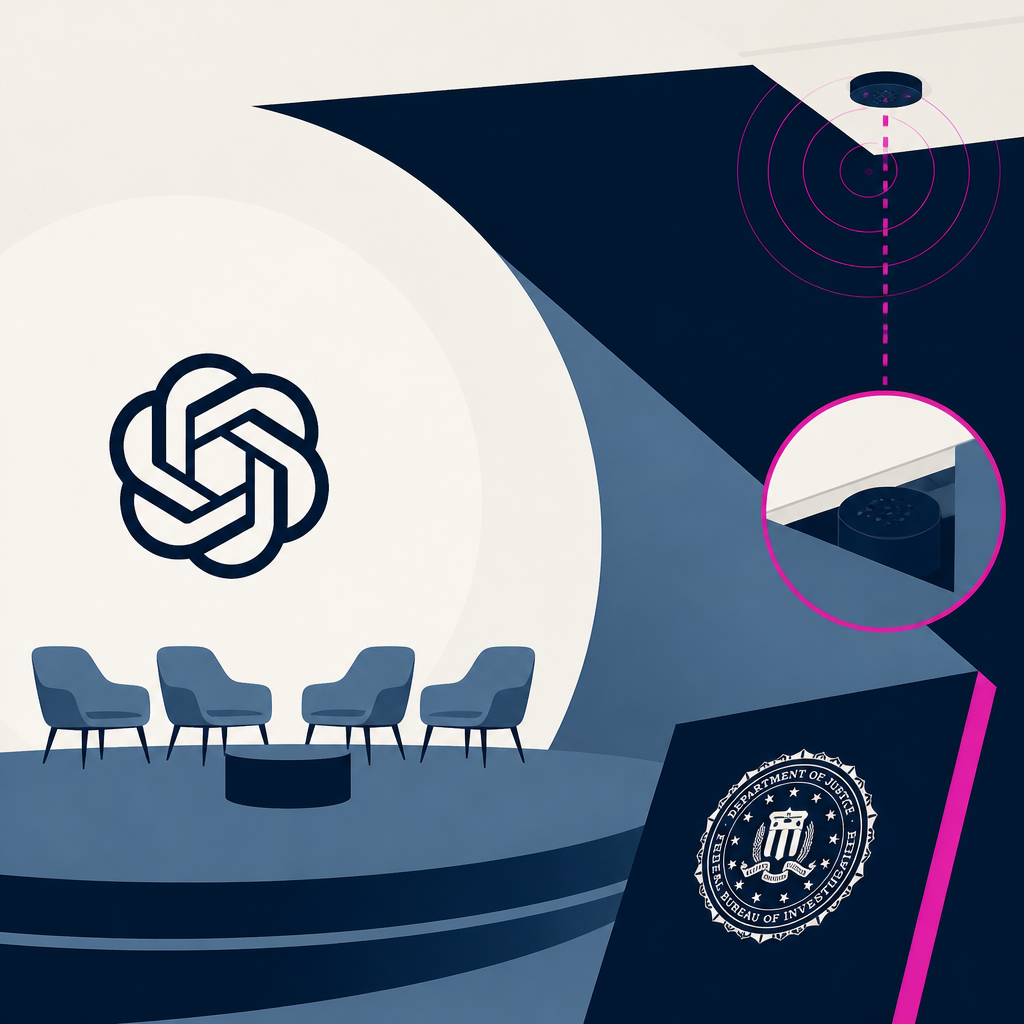
A Saudi engineer, Abdulrahman Alfozan, was arrested by the FBI and charged for allegedly trying to intercept confidential meeting conversations by placing secret recording devices in an OpenAI conference room. The complaint says the device was wrapped in toilet paper and found on 30 September. The case changes what OpenAI said about the incident: it terminated his contract and reported using its AI models to determine the device came from outside, while noting no sign of stolen model weights, source code, or customer data.
Anthropic warned that advances in small AI models could enable self-replicating malware that targets IoT devices and is harder to stop than non-AI malware. It said the replicator could have a doubling time of days and could potentially self-replicate on all kinds of IoT devices by next year. This increases concern about new forms of computer worms that propagate without human interaction and can autonomously adapt to unfamiliar devices.
OpenAI found a hidden recording device in an office and traced it to Abdulrahman Alfozan, who was then arrested by the FBI. The report says the FBI arrest occurred after the device was discovered by OpenAI. The incident shifts the story from an internal security finding to an ongoing law-enforcement case involving alleged covert recording and data exfiltration.
The FBI arrested OpenAI engineering lead Abdurahman Alfozan for allegedly planting and concealing a secret audio recording device in a San Francisco conference room. The device was discovered during an OpenAI sweep on Sept. 30. OpenAI and the FBI have moved to terminate his access, with Alfozan in federal custody and facing a detention hearing on Oct. 19 while the investigation remains ongoing.
Every AI story that matters,
in your inbox by 8am.
TLDRocket reads all relevant sources, removes duplicate coverage, and summarises the
day in two minutes. Follow companies and topics for alerts, or get the
briefing in Slack. Free, no spam, unsubscribe anytime.
Reading TLDRocket needs no cookies, and the readership counts we rely on come from
our own cookieless analytics. Google Analytics is the exception: it sets cookies and
reports to Google, so it stays switched off until you allow it. You can change your
mind any time from “Cookie settings” in the footer.
Strictly necessary
Session security and form protection (tldrocket-session,
XSRF-TOKEN, 2 hours). The site cannot work without them,
so they need no consent.
Always on
Google Analytics 4 (_ga,
_ga_<id>, up to 2 years). Measures which
stories and sections readers use. Google acts as a third-party processor and may
store the data outside the EU. No advertising, no profiling, no data sold.