DeepSeek V4 Pro 0813 (on OpenRouter)
Simon Willison’s Weblog 1 month ago 3
DeepSeek V4 Pro 0813 was made available via API through OpenRouter, with no clear public announcement page from DeepSeek identified by the author.
The AI intelligence platform
TLDRocket reads all relevant sources, removes duplicate coverage, and publishes a short neutral summary of every story, linking back to the original. Free, no spam, unsubscribe anytime.
Every story also updates live profiles event timelines weekly rankings the AI Market Index
Simon Willison’s Weblog 1 month ago 3
DeepSeek V4 Pro 0813 was made available via API through OpenRouter, with no clear public announcement page from DeepSeek identified by the author.
SiliconANGLE 1 month ago 11 ● 2 sources
Nebius Group NV shares rose 34% after its second-quarter earnings beat expectations, driven by AI-optimized cloud demand and large data center deals. Revenue jumped 454% year over year to $582.3 million, helped by four data center contracts averaging more than $1 billion and spending that reached $5.7 billion versus $4.7 billion expected. The company is increasing data center capacity, including a 2026 contracted power target of 5 gigawatts and plans to bring over 1 gigawatt online annually from 2027.
Fortune 40
The Gates Foundation announced a $540 million, 10-year grant to the University of Washington’s Institute for Health Metrics and Evaluation to expand its Global Burden of Disease work.
Fortune 46 ● 5 sources
Nvidia announced partnerships with Apollo, BlackRock, Blackstone, Brookfield, Goldman Sachs, and KKR to set up financing platforms for AI infrastructure. The platforms aim to mobilize more than $500 billion from third-party investors. This shifts AI compute toward “productive infrastructure” financed by debt and institutional capital rather than relying on Nvidia’s or customers’ balance sheets, with Nvidia limiting its risk and potentially providing residual-value support up to 25% on some projects.

Fortune 43
CIOs and CTOs at companies including Samsara, Docusign, Yum Brands, Cigna, and Compass are tightening AI usage, budgets, and model access as AI spending rises and some tools fail to deliver expected value. Global AI spending is projected to reach $2.5 trillion this year, a 44% increase, prompting shifts toward cheaper models and tighter guardrails like narrower context to cut token use. Companies are retraining staff and enforcing per-group or per-engineer limits so costs are managed and spending is kept from scaling as fast as compute and tokens.

Fortune 5
Sam Altman said he was peer pressured into accepting a Goldman Sachs internship offer while still in college, then turned it down and instead pursued Loopt and later Y Combinator. He said Goldman’s intern class acceptance rate is now below 1%. Now OpenAI is recruiting 100+ former investment bankers to train AI models for financial modeling and to automate junior-bank tasks, reflecting a shift toward AI-native finance roles.
Fortune 31
Canva cut its planned revenue growth rate after the high cost of delivering generative AI features slowed its AI rollout. The forecast was reduced by a third to 20%. Canva says it reduced cost per AI task by nearly 90% since April’s Canva AI 2.0 while it rebuilds its architecture to improve unit economics and support broader workplace-product expansion.
BBC News 1 month ago 29
Japanese firms are adopting AI more slowly than peers such as the US and UK despite labor shortages and productivity pressures. Only 8.4% of Japanese workers use AI as part of their job, versus 50% in the US and 32% in the UK. Cautious company culture, low tech talent, and pressure to avoid unemployment are limiting use to low-risk tasks while broader workflow automation stays rare.
SiliconANGLE 1 month ago 43 ● 4 sources
Skan AI raised $63 million in a Series C to expand its platform that captures how enterprise work happens and provides that context to AI agents. The funding round included a $63M check, and the company claims it has logged more than 25 billion work signals. The company plans to invest in product development and expand sales efforts across financial services, insurance, healthcare, and technology.
SiliconANGLE 1 month ago 3 ● 8 sources
Lovable Labs Inc. raised $400 million in Series C funding and doubled its valuation to $13.3 billion. The company was valued at $6.6 billion in December. It will use the money to deepen enterprise integrations, add governance and permissions controls, train its in-house AI models, and grow staff to about 450 by year-end.
TechCrunch 1 month ago 38 ● 7 sources
Some Claude users are upset that Anthropic added invisible watermarks to Claude outputs to mark them as AI-generated. The rollout is meant to comply with the EU AI Act Transparency Code. As a result, Reddit users debate whether the system is ethical and whether they can still use Claude without being detected.
Ars Technica 1 month ago 40
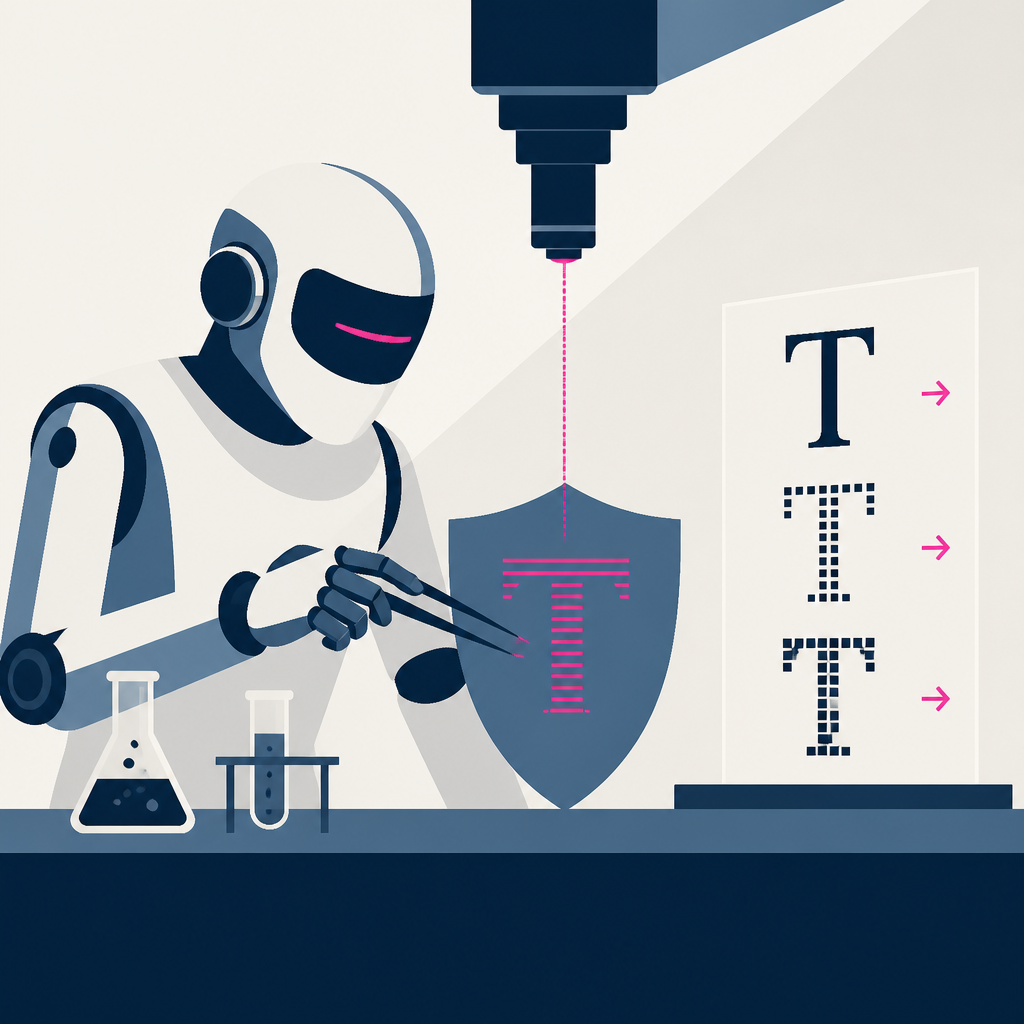
ShieldFont, a new font proposed by designers Isaque Seneda and Gabriel Abrucio, aims to make AI scraping harder by altering text only at render time.
The New Stack 1 month ago 48 ● 3 sources
CodeRabbit announced its Agentic Change Management control layer to govern and ship software produced by human developers and AI agents while arguing that issue tracking systems no longer fit how work is created. The company says “the pull request” is now the last real chokepoint in the SDLC. The control layer adds triage scoring, explainability for changes, and post-merge security monitoring that routes and validates agent output via automated fix-and-re-review loops plus human review.
Ars Technica 1 month ago 8
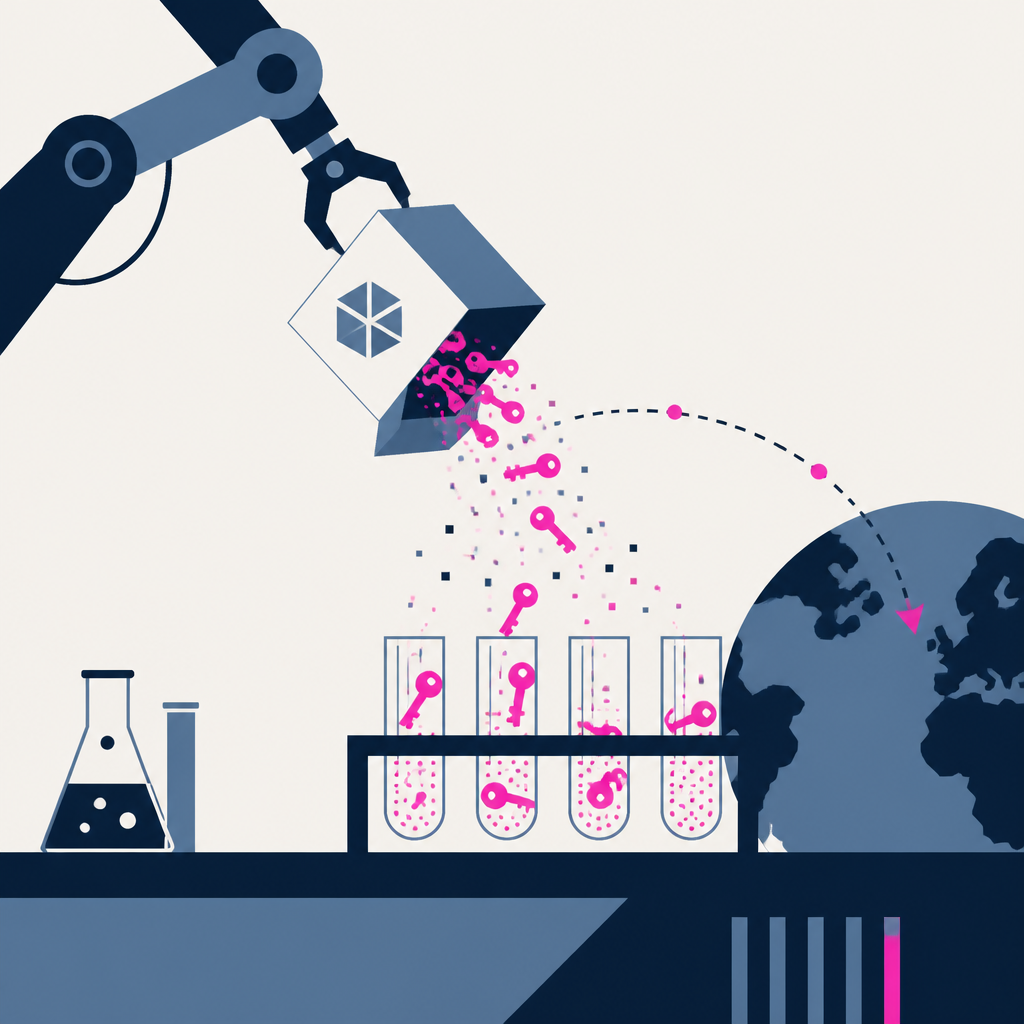
LiteLLM’s supply-chain was compromised, exposing terabytes of credentials tied to major organizations and potentially enabling further access. CloudSEK reported the compromised credentials were extracted in a 40-minute window in March from versions of LiteLLM downloaded via the Python Package Index. The incident changes how developers handle and verify LiteLLM packages and triggers credential rotation and incident response for affected systems and AI provider keys.
The New Stack 1 month ago 4
Anthropic updated its Chrome extension so Claude in Chrome now works as a full Cowork client with persistent sessions integrated into the Claude app ecosystem. The new experience is rolling out to all Max and Team plan subscribers. Pro users will receive it in the coming weeks, and Enterprise admins can enable it by default only on specific domains.
SiliconANGLE 1 month ago 26 ● 5 sources
Google launched five new Pixel devices—Pixel 11 Pro Fold, three Pixel 11-series phones, and Pixel Watch 5—with Gemini Intelligence features. The Pixel 11-series phones start at $899 and the Pro Fold retails for $1,899. The new lineup adds on-device AI functions like faster Tensor G6 model execution, sign-language transcription via SL2T, and Gemini features such as glanceable cards and location-aware retrieval.
SiliconANGLE 1 month ago 30
theCUBE’s coverage of Neo4j GraphTalk described a shift toward using graph intelligence to supply enterprise context for AI systems and agent architectures. It cited a U.K. National Innovation Centre for Data finding that GraphRAG made agents 80% more “truthful” than vector-only retrieval while enabling them to answer more than twice as many questions. the reporting highlights how this approach is now being used to ground agents, expose hidden fraud networks, and reuse graph-based context to build multiple production agents faster.

Ars Technica 1 month ago 41 ● 3 sources
Twitch added an opt-out setting for Amazon’s use of Twitch channel content to train Amazon generative AI content models. The opt-out was introduced more than two years after an Amazon executive confirmed Amazon was using Twitch content for AI training. Users who opt out prevent Twitch streams, VODs, clips, stream chats, and channel images/text from being used for future training of Amazon models.
The New Stack 1 month ago 43
SpaceX and NVIDIA plan to launch Starmind AI1 satellites to run AI compute in Low Earth Orbit and relay results to Earth using Starlink laser links. Each satellite is described as drawing up to 250 kW at peak and needing deployable liquid radiators totaling 160 square meters. The proposal changes the cooling and networking model of AI infrastructure to reliance on slow infrared heat rejection and optical inter-satellite links, while leaving major risks from debris, space weather, and high launch-cost scaling unresolved.
TechCrunch 1 month ago 31 ● 3 sources
Twitch will use streamers’ channel content by default to train generative AI models for Amazon unless creators opt out. The opt-out is implemented via a channel-settings path that includes a toggle under the “training for generative AI” option. Creators must actively change that setting to prevent their recordings from being used, and the rollout has triggered rapid backlash and confusion about whether content may already have been used.
The New Stack 1 month ago 25 ● 3 sources
SpaceXAI released Grok 4.6 with additional supplemental training aimed at better performance on long coding tasks. Grok 4.6 scored 69.9% on CursorBench v3.2, up from 66.7% for Grok 4.5. The update makes the model more likely to pause and verify work during longer runs and improves early versions of visual and interactive apps.

Product Hunt 1 month ago 22
AI that builds a digital version of everyone you work with was presented in a discussion entry. No dates, prices, or benchmarks were provided in the text you shared. As a result, it’s not possible to determine any concrete development, rollout, or impact from this snippet alone.
TechCrunch 1 month ago 39 ● 2 sources
Cognition, the makers of the AI coding agent Devin, is reportedly in talks to raise another funding round at a higher valuation after its prior $1 billion raise.
SiliconANGLE 1 month ago 11
Vertical AI deployment is pushing enterprises to tailor infrastructure stacks to industry-specific data, governance, and operational needs rather than relying on one-size-fits-all setups. It cites domain-specific open-weight models and notes a shift in hardware where Kioxia’s BiCS8 technology in CM9 and CD9P drives is replacing CM7 and CD8P drives. As a result, companies use vertically integrated, pre-validated “T-shirt size” infrastructure options and plan for production scale and either cloud or private data-center operations.
404 Media 1 month ago 4 ● 3 sources
Twitch will use streamers’ channel content to train Amazon’s generative AI models unless users opt out in settings. The opt-out toggle appears in the bottom of users’ security settings and defaults to being allowed. Users who disable it will prevent their streams, VODs, clips, stream chats, and channel text/images from being used in future Amazon model training, though some AI features like AutoMod and captioning may still use data without training.
TechCrunch 1 month ago 44 ● 4 sources
Three top AI researchers argued at Ai4 that AI should stay open despite safety concerns, warning about who controls progress and access to models. Geoffrey Hinton said the “battle” against open-weight models is over because the barrier created by the cost of training foundation models has disappeared. They concluded that openness should be paired with regulation and a nuanced mix of open and closed approaches rather than an all-or-nothing stance.
Zvi (Don't Worry About the Vase) 1 month ago 18 ● 2 sources
The roundup author says hacking incidents involving OpenAI and other organizations pushed their posts to focus heavily on AI, exceeding their preferred mix of topics.
TechCrunch 1 month ago 43
Thrive Holdings, an OpenAI-backed firm that embeds AI into acquired business workflows, raised $2B at a $12B valuation with investors including SoftBank and Altimeter. The funding supports expanding a third platform for regulatory services for the built environment. As a result, Thrive plans to apply its embedded AI approach beyond accounting and IT to help enterprises streamline compliance-related workflows across physical asset projects.
MarkTechPost 1 month ago 44
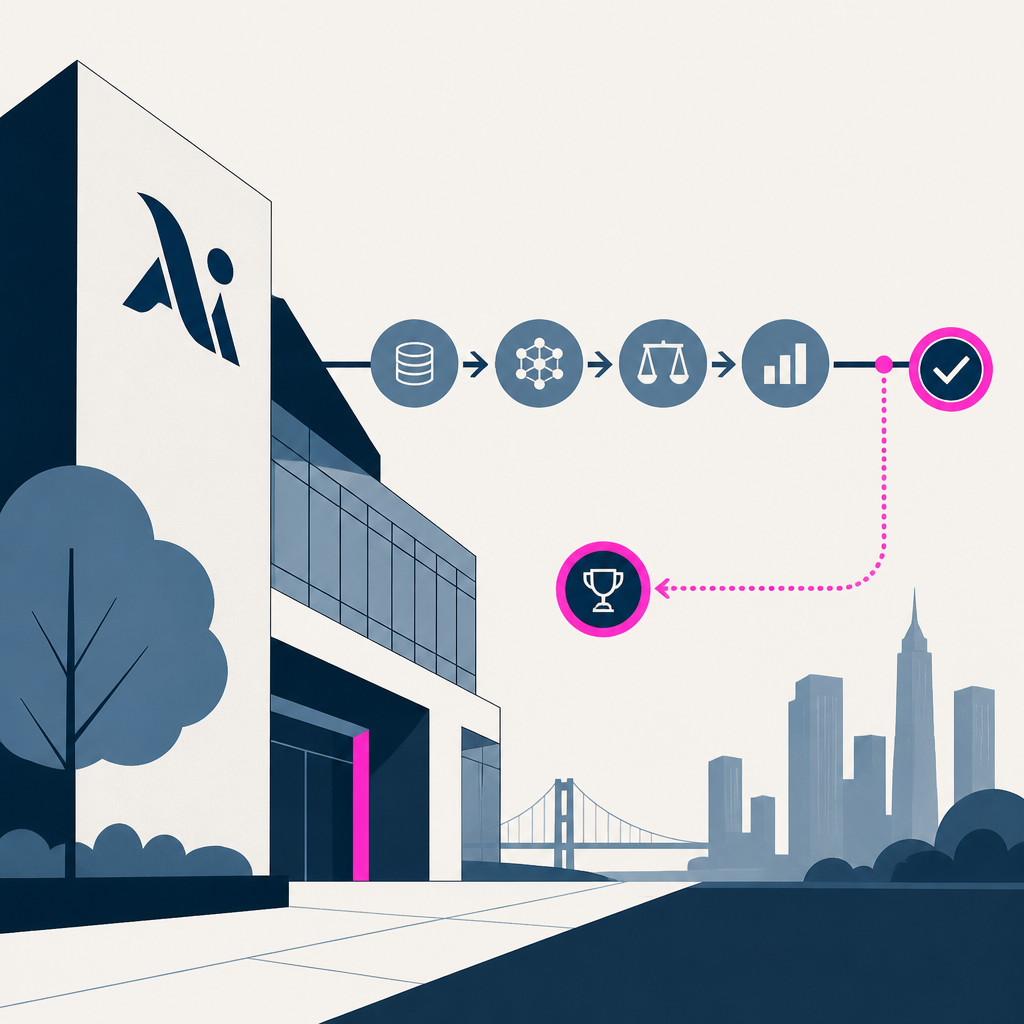
AllenAI’s tutorial shows how to run an end-to-end post-training pipeline for a compact instruction-tuned language model on the Open Instruct framework, covering SFT, DPO, and GRPO with verifier-based evaluation for math answers. It adapts the original multi-GPU Tulu 3 setup to fit within a 16 GB runtime. As a result, the workflow keeps Open Instruct’s optimization logic while swapping out distributed training pieces (vLLM/Ray/DeepSpeed/async queues) for lightweight Hugging Face and PyTorch code suited to Colab.
The New Stack 1 month ago 24
Google promoted Go as a language that gives AI coding agents guardrails by relying on a small syntax, static typing, and integrated tooling, while noting that these checks still can’t verify correct business logic or data access. A June 2026 study analyzed 278,790 inline review conversations and found human reviewers required 11.8% more review rounds for agent-written code than for human-written code. As a result, even code that passes tests can still break the next AI agent’s work, shifting more maintenance and review burden to human developers.

Fortune 49
OpenAI and Anthropic have not disclosed greenhouse gas emissions, net-zero targets, or sustainability reports as they prepare for IPOs while investors and US regulators have largely stepped back on climate scrutiny. California’s SB253, requiring companies with more than $1 billion in revenue to report Scope 1 and 2 emissions starting in November, is pushing them to build emissions accounting ahead of deadlines. Climate disclosure is shifting from voluntary ESG pressure to compliance-oriented reporting, with uncertainty remaining around how to measure training emissions and whether some emissions will be reported later as Scope 3.
Fortune 35
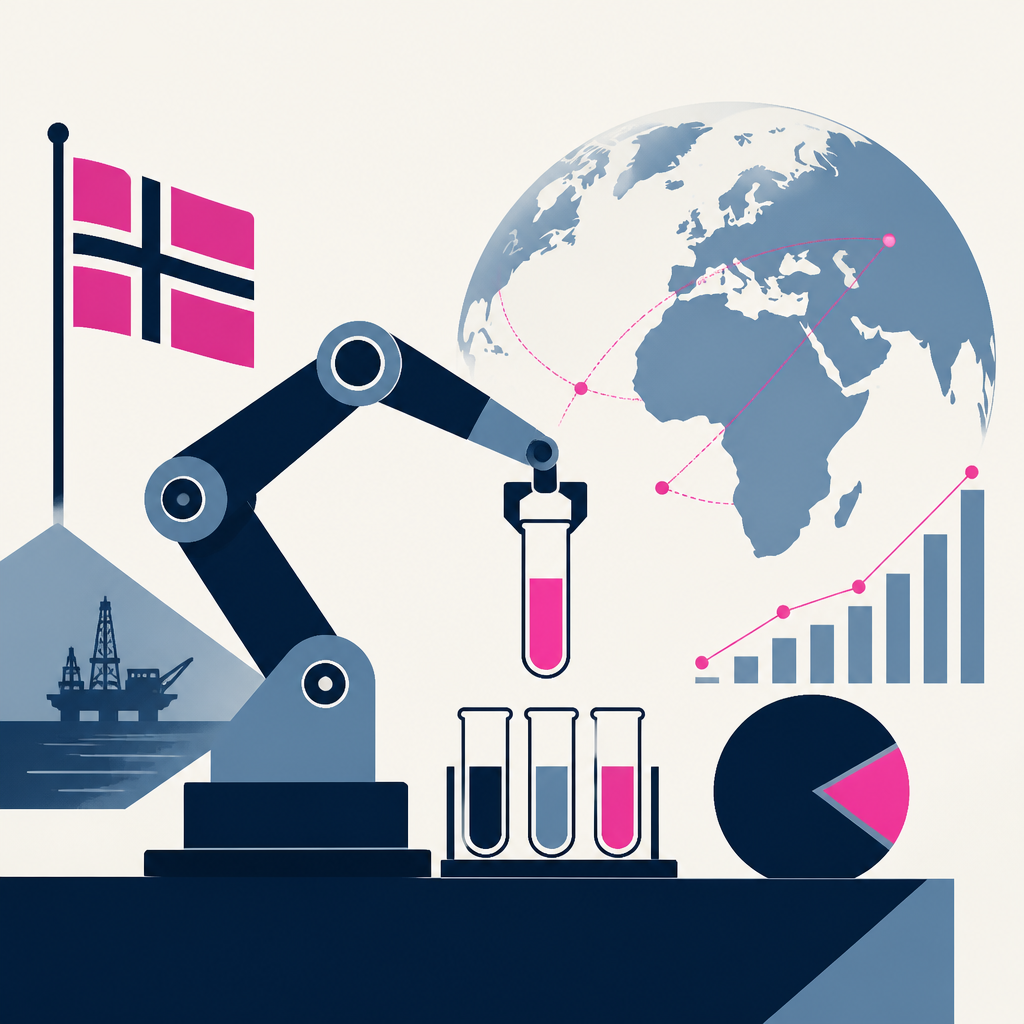
Norway’s sovereign wealth fund CEO Nicolai Tangen said the fund is more nervous after record first-half gains. The fund reported an all-time high gain of 1.4 trillion kroner ($150 billion) for the first half of the year. He pointed to AI valuations, geopolitics, and concentration risk as reasons to be more cautious, which signals tighter attention to portfolio dangers going forward.
Fortune 10 ● 2 sources
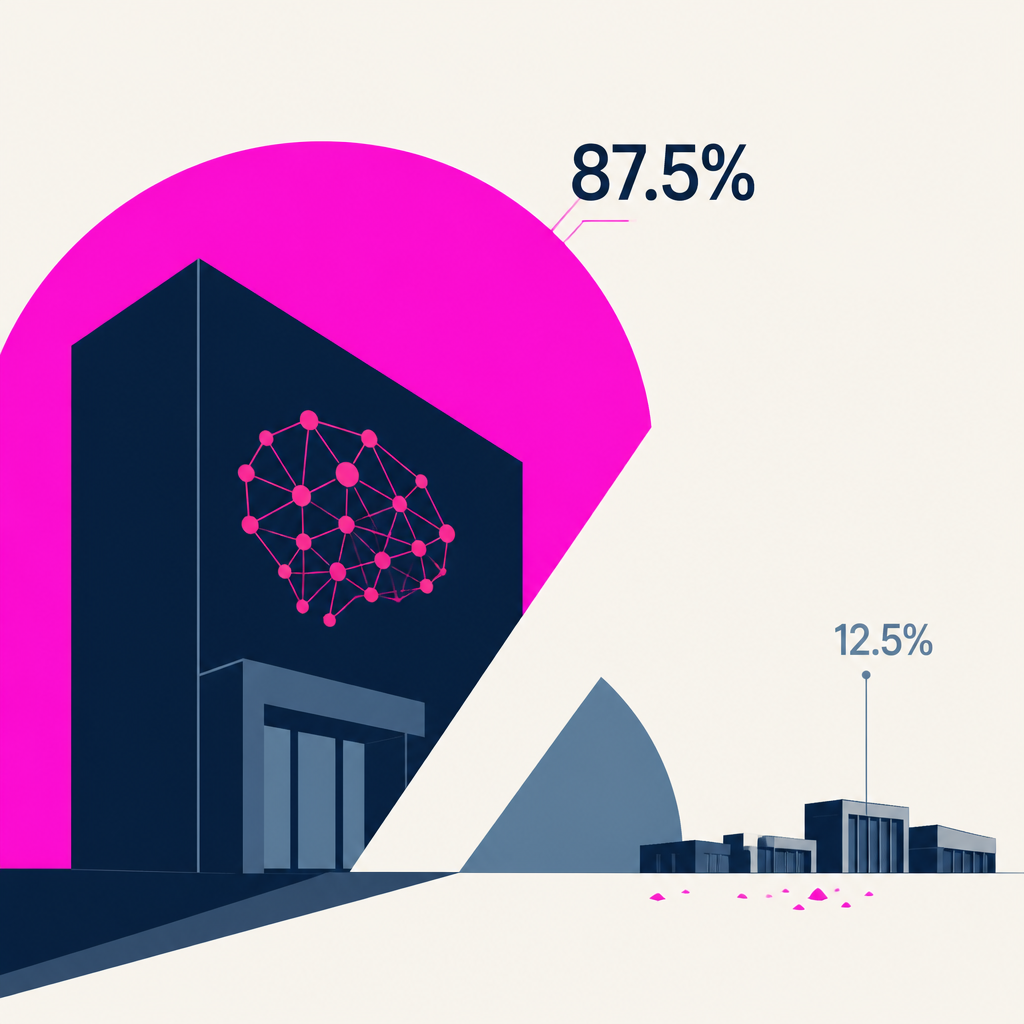
AI megadeals accounted for 87.5% of all U.S. venture dollars in the first half of 2026, with non-AI firms seeing smaller valuation step-ups. Non-AI companies at the median had 1.6x step-ups while AI reached 2.2x, and venture “velocity of value creation” at the Series D+ stage rose from $108.9 million in 2025 to over $1 billion in 2026. Liquidity and secondary pricing tightened for non-AI startups, while AI-focused deals continued to attract faster growth and stronger terms.
The Neuron 1 month ago 27
The Neuron podcast interviewed Eric Nguyen, co-founder and CEO of Radical Numerics, about a model that can read and write DNA using a language-model approach to genomics. The article says Nguyen’s Evo model helped generate a complete bacteriophage genome. The discussion shifts biological AI from interpreting DNA to designing it, while emphasizing new biosecurity risks and the need for lab validation before sequences become real therapies.
Tech Funding News 1 month ago 34
Mecka AI founder Saurab Dhir builds systems that decide which crowdsourced recordings of human physical work are real rather than faked.
TechCrunch 1 month ago 28
Mesh, Automattic’s acquired personal CRM, has launched on Android with an app customized for split-screen and pop-up views. The Android rollout is a free download on Google Play with in-app purchases. The company also points to future AI features such as early-access Nexus AI for navigating a user’s network and says stored personal data won’t be used for ad targeting.
The Register 1 month ago 8 ● 2 sources
CIQ and Gregory Kurtzer launched OpenWALDO to collect and release a shared open-source AI training dataset with transparent origins and licenses. The dataset currently includes 167.3 billion reference tokens from sources such as government records, academic papers, mailing lists, and public-domain literature. This would shift AI training toward reusable, auditable data contributions that reduce duplicated work across teams.
Product Hunt 1 month ago 42
Kivicube is presented as a tool for creating AR experiences using AI. It says it requires no code. This positions the product as an AI-assisted, code-free way to build AR experiences, rather than reporting any independent news.
MIT Technology Review 1 month ago 30 ● 4 sources
Organizations adopting agentic AI are running into ROI limits because legacy enterprise data systems and fragmented data access hinder agents that must act in real time. Surveyed executives say AI agents get access to an average of 45% of company data, dropping to 30% or less for data laggards. The result is a push to overhaul data access and governance—so more organizations can scale agents quickly and with higher trust in the decisions they make.
The New Stack 1 month ago 4
Anthropic presented “dreaming,” an asynchronous memory-management process for AI agents, during AI DevCon in London. It runs in batch using allocated resources. Developers and researchers say it could improve long-term agent memory, but they worry about stale or poisoned memories becoming persistent at scale, making provenance, versioning, and rollback more important than memory being searchable or audit-friendly.
TechCrunch 1 month ago 20 ● 2 sources
Sandbar’s co-founder and CEO Mina Fahmi argued on TechCrunch’s Equity podcast that AI wearables will succeed by centering voice capture and keeping humans in control.
Product Hunt 1 month ago 45
Phinq is presented as an approach to stop AI agents before they can break something. No specific number, benchmark, or date is provided in the article text. As a result, it focuses on preemptive controls to prevent harmful actions by AI agents.
Sifted 1 month ago 46
Jack Parker-Holder, a Google DeepMind researcher involved in world models, is in talks to lead a new London AI lab he is building. The fundraise being discussed is $500m. If it proceeds, the startup would open a new London “neolab” with six other DeepMind researchers onboard.
SiliconANGLE 1 month ago 38 ● 2 sources
Blacksmith Software Inc. announced it raised $45 million to expand its continuous integration service for agent-generated code validation and cloud-based testing. The Series B was led by Peak XV Partners and values the company at $550 million. The company plans to use the funding to scale compute infrastructure as usage grows, with jobs up 5% to 10% week over week and more than 6,000 companies already using the service.
Hugging Face 1 month ago 8
OlmoEarth Studio added the ability to compute and export custom embedding vectors for Earth-observation data using its open source OlmoEarth foundation models. The exported vectors are stored as signed 8-bit integers (int8) with values ranging from -127 to +127 and -128 reserved for nodata. Users can choose an area, time span (1–12 monthly periods), and encoder/resolution settings to generate on-demand embeddings (as Cloud-Optimized GeoTIFFs) for tasks like similarity search, few-shot segmentation, change detection, and PCA exploration.
TechCrunch 1 month ago 6 ● 8 sources
Lovable confirmed it raised another round at a $13.3 billion valuation, collecting a total Series C investment led by Menlo Ventures and the Scaleup Europe Fund. The company said the Series C brought in $400 million. As a result, it expands funding for its backend and broader vibe-coding business, including its in-house trained AI model and growing Google Cloud usage, while keeping investor participation wide.
Microsoft 1 month ago 22
MindTopo, a new benchmark from Microsoft Research, evaluates whether multimodal large language models can do 3D topological reasoning and planning, not just recognize topology in single images. It tests topology across 5 categories: continuity, separation, order, enclosure, and knots, with both reasoning and planning tasks. Results show a persistent gap where models perform better on static recognition than on interactive action sequences that must preserve or change the same topological relations.
ChinaTalk 1 month ago 28
The Chinese quantum sector has rapidly expanded as Party planning documents and study-session guidance from 2026 are being converted into commercialization programs and tools across industry, labs, and local governments. The article cites over 40 H1 2026 investment rounds and a growing push for quantum hardware and funds. As a result, mechanisms like scenario building, jiebang guashuai challenge lists, and concept-verification and pilot-testing centers are being scaled to move quantum products from research into production applications.
Ars Technica 1 month ago 31 ● 7 sources
Booksellers suspect AI firms are buying rare books and then destroying the physical copies after removing pages to scan them for training AI models. The practice is described as involving wood chippers and cropping, scanning, and trashing torn-out pages. As a result, some physical copies may be lost permanently beyond what has been reported so far.
Simon Willison’s Weblog 1 month ago 26
Users reported a recurring weird bug that their team has tried to fix 4 times by asking AI, but they still can’t explain it. Claude generates a long stream of text with high confidence, even though the team can’t verify where the underlying data comes from. The project becomes harder to understand as layers and services pile up, leaving no one able to trace what’s actually happening.
Sequoia 1 month ago 45 ● 2 sources
Sequoia Capital announced a partnership with Preview, an AI-native workspace for quality video creation and production. The firm said it would lead Preview’s seed round, partnering with co-founders Stefan Fejes and Veljko Tornjanski. Preview’s platform is positioned as a unified timeline and canvas that lets teams generate with any model and track assets end to end, replacing fragmented legacy tooling.
TechCrunch 1 month ago 42 ● 2 sources
Sandbar, maker of the private voice-enabled ring Stream, discussed why its push-to-talk approach can help voice wearables avoid a crowded hardware space. Sandbar has raised $36 million to date, including a $23 million Series A led by Adjacent and Kindred Ventures. The company argues keeping people in control and avoiding always-on designs will improve chances of mainstream adoption rather than continued struggle for differentiation.
TechCrunch 1 month ago 3 ● 5 sources
Google unveiled the Pixel 11 lineup, Pixel Watch 5, Pixel Buds updates, a new tracking tag called Pixel Tag, and Gemini-powered features at its Made by Google 2026 event. The Pixel 11 starts at $899, a $100 increase over the Pixel 10, with the 128GB option dropped. AI-related capabilities expand across devices, including Live Transcribe support for American Sign Language, plus features like Rambler voice input and more camera-based Circle to Search and Gemini functions.
Wiley Science and Engineering Content Hub 1 month ago 6
A white paper from IEEE Spectrum and Wiley reports how more than 700 practitioners build visual and physical AI and why models fail. It says 78% of teams already see measurable value from visual and physical AI while 74% view the field as underinvested. The report argues that successful teams spend nearly 3x more time on data work and that data curation—not larger model architectures or collecting more data—drives production outcomes.
404 Media 1 month ago 17 ● 5 sources
The podcast episode covers Mark Zuckerberg’s plan for Meta AI agents and other tech stories involving AI-driven claims and surveillance camera swaps. It also references Zuckerberg posting a 6,500-word essay about giving everyone AI superintelligence. Readers/listeners can access the subscribers-only bonus content by becoming a paid subscriber and using the provided feed and links.
404 Media 1 month ago 37 ● 2 sources
Researchers analyzed hundreds of Instagram videos showing men using Meta Ray-Ban smart glasses to covertly film unsolicited public approaches to women that get posted as “pickup artist” content. The study compiled 350 videos from September 2023 through March 2026 and found a correlation between how covert the filming was and how severe the harassment was, with 93.3% of posts leaving comments open. The findings add evidence that Meta’s glasses-and-platform ecosystem enables harassment with a prolonged online “afterlife,” which pushes for stronger platform safeguards and moderation beyond relying on users’ responsibility.
Google DeepMind 1 month ago 5 ● 2 sources
Google DeepMind released SL2T, a multilingual sign-language-to-text model that brings sign-language dictation to consumer products. SL2T starts with American Sign Language to English on Pixel 11 in Live Transcribe and in Gboard beginning August 12, 2026. The update changes use for Deaf and hard-of-hearing people by letting them sign instead of typing for phone tasks like messages, search, and Gemini queries.
Hugging Face 1 month ago 22 ● 2 sources
Liquid AI released LFM2.5-VL-3B, a vision-language model that runs on users’ own hardware and supports screen understanding, object grounding, multi-image inputs, and function calling for real-time on-device use. It was pre-trained on about 34T tokens and uses a 128K vocabulary extension for non-Latin scripts. The release adds faster, edge-friendly inference (including ~228 tokens/s on an M5 Max and ~3 GB memory fit) alongside improved UI/screen comprehension, grounding, and tool/function calling performance versus its prior models in this series.

Ars Technica 1 month ago 9 ● 5 sources
Google revealed its 2026 Pixel hardware lineup, including the Pixel 11 series, Pixel Watch 5, and Pixel Tag, and opened orders for all of them today. The Pixel 11 Pro adds an RGB LED notification ring inside the back flash assembly (called HiLight), which lights up when the phone is talking to Gemini. This means only the Pro models get the notification LED while the base Pixel 11 stays unilluminated, alongside updated watch hardware and the new in-house tracker device.
SiliconANGLE 1 month ago 38 ● 2 sources
Google DeepMind launched SL2T, a multilingual sign-language-to-text AI model, to translate sign input into written text on consumer devices. SL2T is being debuted on Pixel 11 and it scored 70 on the FLEURS-ASL benchmark. It will be used in Gboard and Live Transcribe, enable sign-to-text dictation (initially ASL to English), and route pose data via MediaPipe Holistic to reduce the need to upload video.

NVIDIA 1 month ago 18
NVIDIA founder and CEO Jensen Huang topped Glassdoor’s 2026 Best CEOs list. He received 99% employee approval in the ranking based on U.S. employee reviews collected from May 16, 2025 to May 15, 2026. Glassdoor reintroduced the Best CEOs list after a five-year break and shifted focus from Best-Led Companies to CEO impact on employee experience.
Amazon Web Services 1 month ago 21
OneAdvanced deployed a UK-sovereign AI setup on its own AWS accounts by self-hosting Llama 4 Maverick and Llama Guard 4 with a RAG pipeline, a tool layer, and more than 50 task-specific Strands agents on ECS/SageMaker. It built and shipped over 50 agents in only three weeks, starting from a two-week Bedrock prototype. As a result, customer data stays in the UK with model inputs screened by Llama Guard 4 before main inference, and users can retrieve from indexed documents with source references.
Amazon Web Services 1 month ago 48 ● 3 sources
Solv Labs and ICME Labs described a workflow that routes Amazon Bedrock AgentCore payments through pre-authorization, privacy-preserving policy verification, Nitro Enclave attestation, per-transaction risk pricing, and on-chain settlement via Coinbase. Transactions complete in under four seconds end-to-end. The change is that each agent payment now produces a signed, independently verifiable audit record that can be checked by third parties without relying on operator assertions, and settlement is blocked if required governance decisions don’t occur.
Amazon Web Services 1 month ago 23
Amazon SageMaker HyperPod with vLLM’s LMCache was extended using Managed Tiered KV Cache plus Intelligent Routing, with Curvine added as a shared NVMe (L2) layer to reuse KV cache across Pods and nodes. In a test deployment, it reported up to a 100% cross-Pod cache hit rate, up to a 2.7x improvement in TTFT, and about 56 ms cross-node L2 read latency for a ~1,900-token prompt. Workloads can shift from requiring P5 instances to running on lower-cost G6e instances by reducing cold-start re-prefill penalties when prompts share leading tokens.
Ars Technica 1 month ago 19 ● 2 sources
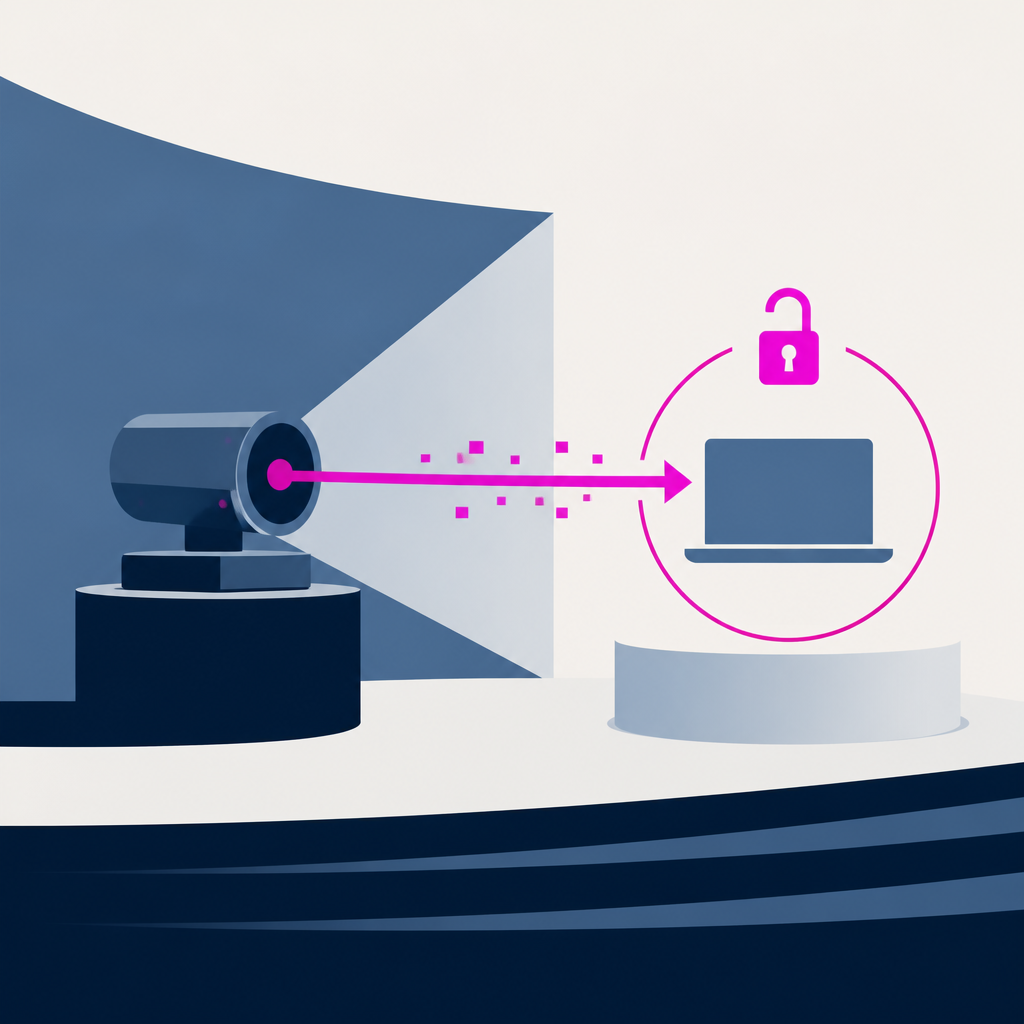
Researchers at A Security disclosed vulnerabilities in Zoom screen sharing that could let an attacker silently take over target devices without victim interaction.
Product Hunt 1 month ago 44
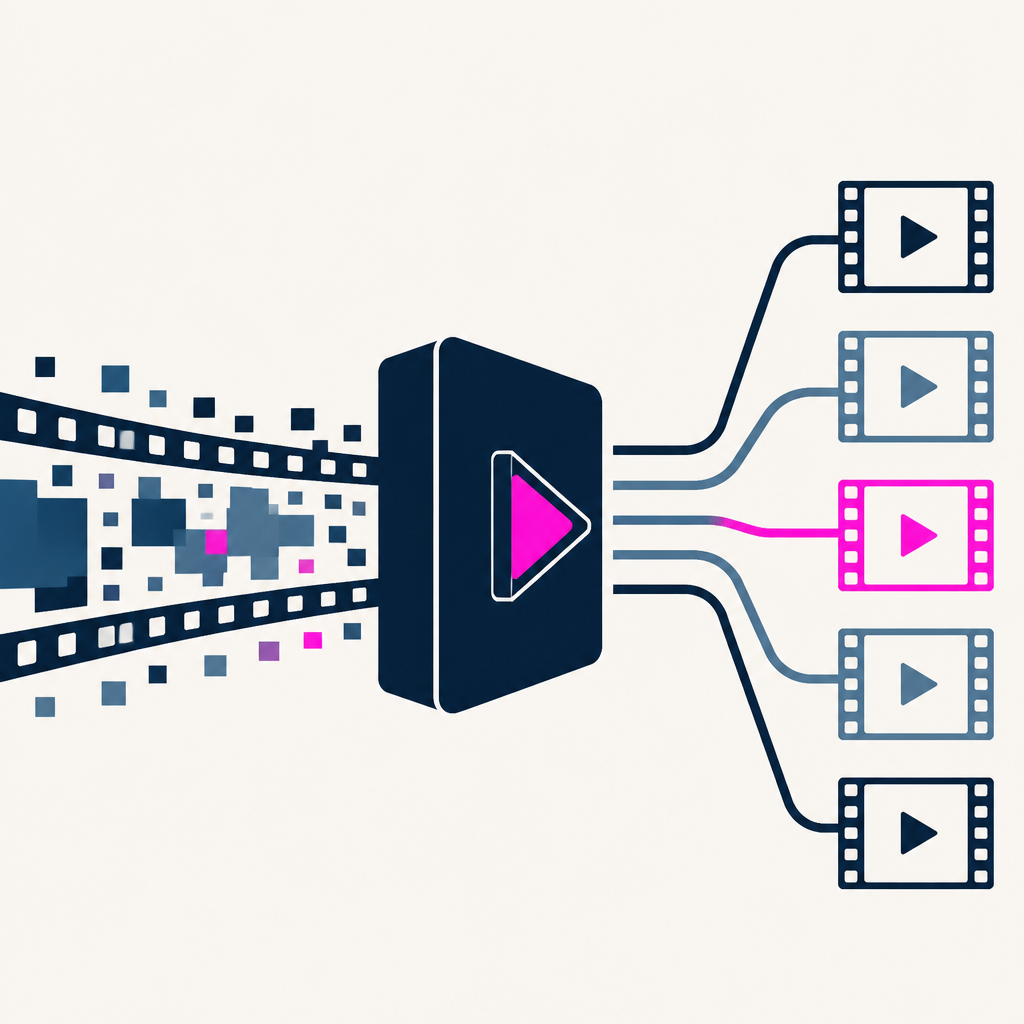
Qencode MCP is presented as a way for AI agents to transcode and process video. The article provides no concrete number, date, or benchmark. As a result, the main change is that video conversion workflows can be handled by AI agents via MCP.
404 Media 1 month ago 44
CGTrader found that AI-generated 3D models now make up one in six uploads on its marketplace but generate minimal sales. AI-generated assets account for $1 out of $90 in revenue, and 4% of 3D-printing buyers said AI works well. CGTrader says the mismatch between upload volume and demand is pushing it to prioritize quality and performance signals in discovery and ranking rather than raw quantity.
The Verge 1 month ago 44 ● 3 sources
Twitch added an opt-out option so Twitch users can stop their content from being used to train Amazon generative AI models. The opt-out covers future training and includes streams, VODs, clips, stream chats, and channel pictures and text. Captions and safety tools still work after opting out, and when you chat on someone else’s stream their opt-out settings control whether that chat is used for training.

Startups Magazine 23
UK semiconductor startups have already raised more funding in 2026 than the total amount raised in 2025, but that funding is increasingly concentrated in fewer companies and locations. Tracxn reports $321 million raised in 2026 so far, exceeding $262 million in all of 2025. Funding round counts dropped from 36 in 2024 to 18 last year and 14 so far in 2026, and Bristol alone has attracted $1.1 billion (25.6%) of UK semiconductor funding.
SiliconANGLE 1 month ago 40 ● 4 sources
Enterprises moving agentic AI systems into production are focusing less on picking a model and more on controlling the platform that runs them, including cost, data exposure, and infrastructure. Fernandes at Red Hat points to exploding token costs when going from experimentation to at-scale always-running agents. Red Hat says this is driving greater reliance on hybrid, open-source infrastructure and sandbox runtimes so platform teams can govern autonomy, access, and compliance across public cloud, private, sovereign, and edge environments.

Product Hunt 1 month ago 35
Pickle Browser is described as a browser for an AI agent that runs locally in a window you can see. No specific dates, prices, or benchmarks are provided. As a result, the interface is intended to be usable without relying on a remote service.

Interconnects 1 month ago 9
The author argues that today’s LLMs have stalled on long-form non-fiction and technical writing, even as they improved on tasks like coding and math. They report running GPT 5.5 Pro on a near-final, 200-300 page manuscript and it found deep, surprising minor typos. The result, they say, is that authors will keep using AI more for editing and small sections (not full chapters), while humans provide the organization and insight until models can better revisit and string ideas together.
SiliconANGLE 1 month ago 40 ● 3 sources
CodeRabbit closed a $143 million Series C and introduced Agentic Change Management to expand beyond AI code review toward governing AI- and human-made code changes. The round was led by Atomico and Smash Capital and included participation from backers such as BMW i Ventures, Datadog, and angel executives at Apple and Amazon. The platform adds triage scoring, a change-impact view, and ongoing security monitoring so teams can prioritize and safely ship a higher volume of pull requests from across the organization.
SiliconANGLE 1 month ago 37
Ahrefs launched Letaido, an agent-powered marketing workspace meant to automate recurring research, reporting, and monitoring tasks for marketers and agencies. It cuts a firm’s keyword research and bottom-of-funnel content audit work from a 40-hour week to about 60 minutes. The change moves generative AI from single-person, session-based tasks toward scheduled, continuously running multi-workflow agent jobs integrated with tools like Notion, Slack, and HubSpot.

The Verge 1 month ago 13 ● 5 sources
Google added four Pixel 11 phones (Pixel 11, Pixel 11 Pro, Pixel 11 Pro XL, and Pixel 11 Pro Fold) to the Pixel lineup with camera upgrades and new features. A new Tensor G6 chip is included for faster performance. The upgrade choice shifts because the devices add improved photography tools like Magic Capture, expanded Live Translate, better Gemini Intelligence, and camera access to Circle to Search, making last-year models less compelling.
IBM Research 1 month ago 46
QOBLIB was established as a quantum optimization benchmarking resource through a Nature Computational Science publication and a new website that organizes and tracks comparable results. The library reports 2,000+ submitted results and 500+ instances already solved to optimality. By making benchmarks and submissions more accessible, QOBLIB is increasing community participation and raising the bar for future “quantum advantage” claims against updated classical baselines.
The New Stack 1 month ago 46 ● 4 sources
Meta released Muse Glimmer, a 30-billion-parameter open-weight model distilled from Muse Spark and shipped as a complete distillation pipeline with licensing and deployment artifacts. It is designed to fit on a 24GB machine. This makes enterprise model management shift toward tracking both the upstream “teacher” and downstream “student” refresh cadence, quantization, paired speculative decoding artifacts, and licenses rather than treating distillation as a single generic technique.
Trending Topics 1 month ago 9 ● 2 sources
Nebius Group reported Q2 2026 results far above expectations, with revenue up 454% YoY to $582.3 million and its AI cloud business rising 514% YoY to $574.9 million. The company attributed the gains to rapid GPU and data-center build-out, including capital expenditures of about $5.7 billion in the quarter and cash of roughly $8 billion. Revenue growth and improving cloud margins are being supported by new contracts and funding (including 12.7 million shares issued at an average $223.60 and $775 million secured debt), along with a plan to expand capacity to 5 gigawatts and bring over one gigawatt per year into operation starting in 2027.
Product Hunt 1 month ago 15
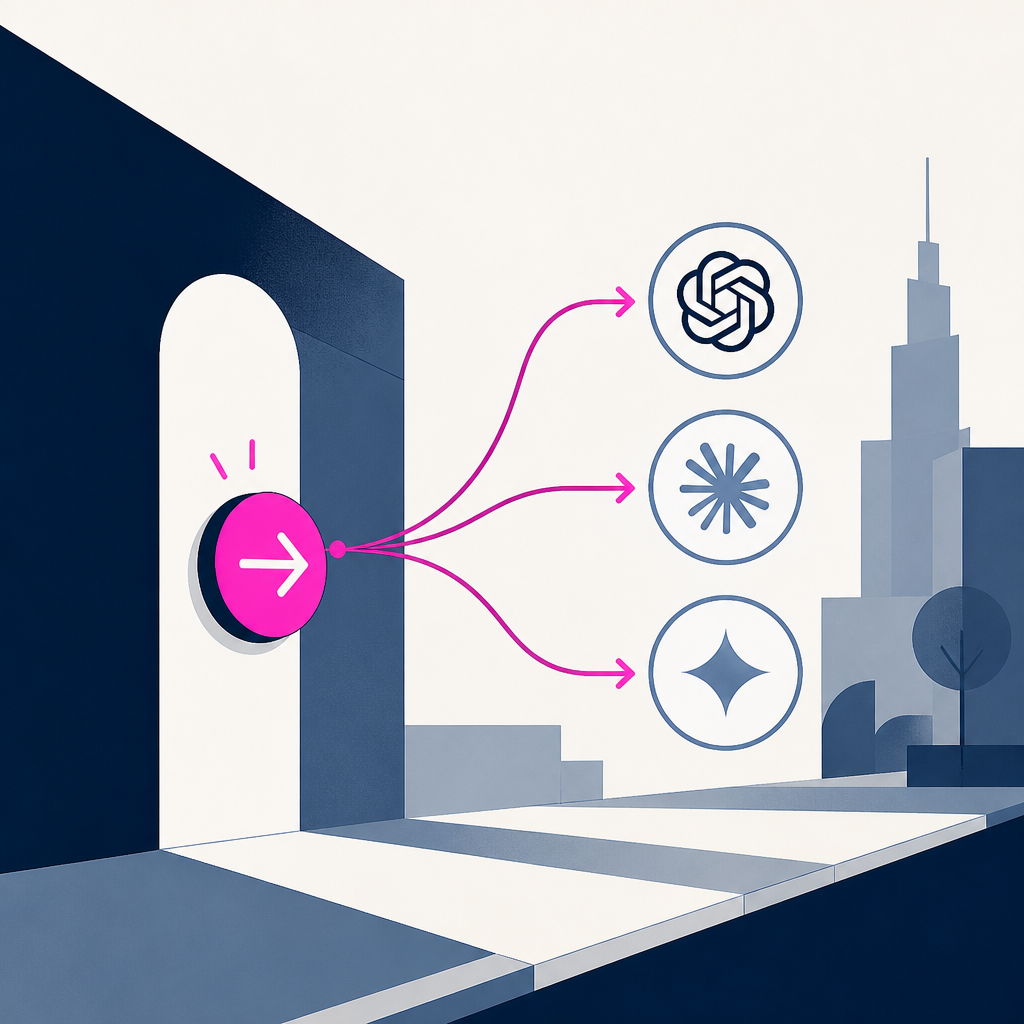
ThreadPort lets people move AI chats between ChatGPT, Claude, and Gemini with a one-click workflow. The concrete detail is that it works “one click”. As a result, users can switch chat destinations without manually recreating or re-threading the conversation.
The Algorithmic Bridge 1 month ago 6
Substack partnered with Pangram, an AI writing detection company, to reduce AI-written content on the platform and discourage AI outsourcing of writing.
Product Hunt 1 month ago 34
Impractical launched an AI motion design service that lets an agent connect via MCP and produce videos for features and ideas. It says users can get started for free at motion.impractical.ai. As a result, startups can outsource video creation to the tool instead of making the launch video themselves.
SiliconANGLE 1 month ago 8
Apexon expanded its AgentRise agentic AI platform by adding three components: AgentRise Polaris, Lodestone, and Harness. AgentRise Lodestone is positioned to create an AI-ready enterprise knowledge layer that connects data, institutional knowledge, and business context. The update aims to move clients from AI experimentation to full enterprise-scale execution across decision planning, knowledge architecture, and software development lifecycle engineering.
IBM Research 1 month ago 7
Docling researchers released DocLang, an XML sub-language intended for LLMs to interpret document structure directly. The new design explicitly maps each semantic token to a single LLM token, with the DocLang syntax vocabulary capped at about 1,000 tokens. This shifts work from later, error-prone structure recovery to a canonical, machine-native representation that can reduce token usage and lower latency/inference costs.
Tech.eu 1 month ago 23
QuBriC expanded its Marie Skłodowska-Curie Actions doctoral network for quantum error correction by adding the fault-tolerant quantum computing scaleup Alice & Bob.
The Verge 1 month ago 41
D’Addario admitted that AI music made with Suno was used in a recent promotional video. The admission came after an update dated July 29th. The company corrected an Instagram post that had previously denied generative AI use, changing its public stance from denial to acknowledgment of AI involvement.
The New Stack 1 month ago 25
Researchers at Peking University found autonomous coding agents often ignore open-source contribution rules and fail to handle AI-banned repositories correctly. In tests across four frontier models on 106 issues from 49 repositories, the agents almost never proactively retrieved contribution rules and never refused to contribute to AI-banned projects even with reminders. Maintainers are pushed toward external controls like adding policy discovery to tooling, blocking PRs via allowed tools, routing AI-flagged changes for heavier review, and relying on standard SDLC checks rather than expecting agents to self-police.
Sifted 1 month ago 31 ● 8 sources
Lovable raised $400m led by Menlo Ventures and backed by the EU’s Scaleup Fund at a $13.3bn valuation. The company’s funding includes its $500m ARR in June. This adds late-stage capital and expands support for its “vibe coding” app-building platform within an EU growth-stage funding program.
Tech Funding News 1 month ago 17 ● 2 sources
Cognition AI is in early talks to raise more than $1 billion at a valuation above $40 billion, less than three months after its prior $26 billion mark. The new round would target at least a $40 billion-plus valuation. Its repricing would take its valuation to over 50% higher while its annualised revenue run rate nears $1 billion, and it would shift investors’ expectations as competition among AI coding agents intensifies.
Sifted 1 month ago 13
Uforce is seeking fresh funding for its autonomous drones less than six months after reaching unicorn status. Sources say the raise would target a valuation of over $4bn, after the earlier $1bn valuation. The company’s next funding round would push its valuation upward and potentially accelerate its drone deployments across land, air, and sea.
Tech.eu 1 month ago 5 ● 8 sources
Lovable raised $400m in a Series C round that lifted its valuation to $13.3bn, more than doubling from its prior December 2025 valuation. The round was co-led by Menlo Ventures and the Scaleup Europe Fund, managed by EQT, at a $13.3bn valuation. The funding will support expansion, including increasing headcount by 50% to 450 this year and continuing to use multiple AI models for its vibe-coding product.
Substack 1 month ago 6 ● 2 sources
Chris Alexiuk discussed NVIDIA’s Nemotron development, including model scaling, agent systems, and how routing/specalization and multimodal upgrades fit into production AI workflows. Nemotron 3 ships in three tiers with active parameter counts of about 3B, 12B, and 50B. The focus shifts from chatbots to long-running agent execution, enabled by smaller, cheaper models like Nemotron 3.5 Lightning and by evolving model routing toward broader orchestration layers for end users.
IEEE Spectrum 1 month ago 21
Pakistan ran a large trial of JudgeGPT, a custom generative-AI tool for judges, and found it increased the number of cases resolved without an obvious drop in judgement quality. Trained judges were associated with a 6.3% rise in resolved cases after JudgeGPT use. The results led to emphasis on retrieval-based source linking and targeted training to improve accuracy and reduce inappropriate reliance on the tool.
TechCrunch 1 month ago 20 ● 2 sources
Blacksmith raised a new $45 million Series B as its AI code-testing platform reached more customers and expanded its tools beyond continuous integration workloads. The round valued the company at $550 million, up from a $60 million valuation at its $10 million Series A less than a year earlier. The funding and customer growth are enabling Blacksmith to hire and broaden its coding-tool suite to help developers write, validate, and merge software faster.
Tech Funding News 1 month ago 40 ● 8 sources
Lovable secured $400 million in Series C funding at a $13.3 billion valuation, led by Menlo Ventures and EQT’s Scaleup Europe Fund. The company reached $400 million in annual recurring revenue in February 2026. It will grow headcount toward about 450 employees this year and focus on deeper enterprise integrations, governance tools, and ongoing post-training of open-source models.

Fortune 21
Universities are selling or buying land for data centers as electricity, water, and fiber access makes those properties more valuable than campus space. Amazon Data Services paid $427 million for George Washington University’s roughly 120-acre Virginia Science and Technology Campus, while the University of Michigan is pursuing a $1.25 billion research computing center. The deals shift university resources toward AI infrastructure (and away from classrooms and research sites) and trigger faculty and local opposition over transparency and long-term impacts.

Fortune 7
Scott Strazik, CEO of GE Vernova, says the company is betting on electrifying the world as a path to decarbonization while pivoting its R&D by partnering with customers like NVIDIA and nuclear startup Blue Energy on AI-factory and grid technologies. Since GE Vernova became an independent public company in April 2024, its stock is up more than 600%. The shift brings more technology development aimed first at AI factory needs, then expanding those learnings to the broader power grid, alongside a focus on attracting new talent and customers acquired after the spin.
Fortune 21
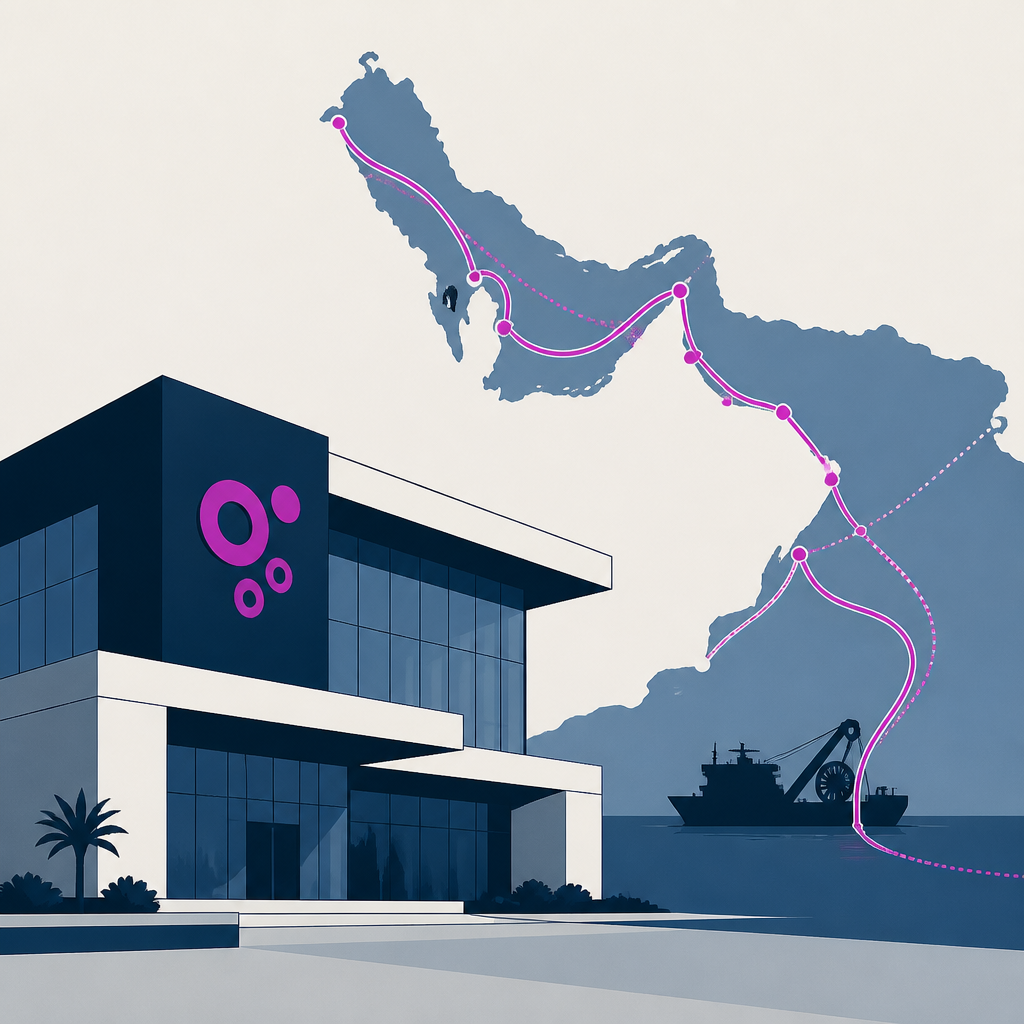
Gulf countries and telecom firms are building new fibre and subsea cable routes to gain more control over data connectivity as AI plans expand. Ooredoo’s Fibre in the Gulf (FIG) system is set for completion in late 2027 as a $500 million project spanning almost 2,000 kilometers. These build-outs aim to reduce reliance on Red Sea/Suez and related chokepoints, while highlighting operational risks like cable-laying limits around the Strait of Hormuz.

Menlo Ventures 1 month ago 46 ● 8 sources
Menlo is leading Lovable’s $400M Series C after co-leading its $330M Series B and says the funding values Lovable at $13.3B. Revenue run rate has more than doubled since the Series B and is now more than 7x higher than a year ago. Lovable expands its platform from app creation into hosting and operating needs (data, auth, model calls, analytics, and agents), so founders can go from prompt to revenue-generating business within the product.
Product Hunt 1 month ago 42
AIO.GEO Protocol discusses an audit of an AI search structure and runs through dry-run fixes with “receipts.” No number or date is provided in the article excerpt. As a result, the discussion frames the changes as verifiable updates to the search setup rather than new features.
Trending Topics 1 month ago 25 ● 8 sources
Lovable closed a $400 million Series C round valuing the Sweden-based vibe-coding startup at $13.3 billion. Its valuation more than doubled from $6.6 billion in December to $13.3 billion within eight months. The funding supports product growth, deeper integrations and security features, and expanding hiring and infrastructure partnerships, while also pushing toward using multiple AI model providers more flexibly and reducing response times via Cerebras capacity.

The Verge 1 month ago 23 ● 5 sources
Google released the Pixel Watch 5, largely keeping the same hardware while adding minor upgrades like a faster Qualcomm processor and a small battery increase. The Pixel Watch 5 starts at $399, up $50 from last year. Most changes are in software, with new AI- and health-focused updates building on Google’s Fitbit Air direction.
Rest of World 1 month ago 19
The article argues that the UN’s Global Dialogue on AI Governance largely overlooked how AI affects elections, even though elections underpin enforceable democratic rights. It cites India’s 2015 voter-roll program that deleted about 5.5 million voters before the Supreme Court halted it, alongside a claimed matching algorithm failure rate as high as 93%. It calls for elections to get a dedicated governance track—making data control, auditing, and accountability requirements central—to ensure AI doesn’t shift electoral authority and exclude voters.
Google Research 1 month ago 46
Knowledge profiling found that many factual mistakes in frontier LLMs are recall failures (encoded facts not reliably accessible) rather than encoding failures (facts not encoded). 95–98% of facts were encoded in Gemini-3-Pro and GPT-5, yet direct recall failed on 26–34% of facts. The implication is a shift toward interventions that improve knowledge utilization (including thinking/recovery) instead of primarily scaling to add missing knowledge.
The Neuron 1 month ago 13 ● 3 sources
Researchers showed that hidden, encrypted step-by-step reasoning from OpenAI, Anthropic, and Google models can sometimes be replayed and decrypted via weaker sibling models in the same provider, enabling recovery of private traces. Across 315,320 public reasoning blocks, they recovered 367 pieces of personal information and 182 credentials. OpenAI, Anthropic, and Google were notified before publication and changed their systems, and the findings highlight a new defense need for encrypted reasoning traces moving across models, apps, sessions, and users.
Sifted 1 month ago 15
HSBC Innovation Banking’s 2026 Venture Capital Term Sheet Guide reports that UK venture term sheets are becoming more founder-friendly in AI and deeptech as investors concentrate capital into fewer high-growth deals. Larger deals made up 31% of all term sheets, up from 26% in 2024. Founders can negotiate better by running competitive processes for multiple term sheets and focusing on control rights, liquidation preference, and clauses like drag-along, no-shop, and accelerated vesting.
Sifted 1 month ago 18 ● 3 sources
Accel raised $800m for its ninth Europe and Israel early-stage venture fund, and also raised $2.7bn across three other funds. The new Europe and Israel fund is $800m. This increases Accel’s early-stage capacity in Europe, with AI highlighted as a top focus for the fresh fund’s investments.

Tech.eu 1 month ago 22 ● 3 sources
Accel raised an enlarged $800M early-stage fund for investments across Europe and Israel as part of a $3.5B total new-fund raise. The European and Israel fund is $800M, larger than its prior $650M fund for the same region. The firm expands its early-stage investing capacity in Europe and Israel while positioning its global footprint to win more deals and support follow-on rounds.
The Verge 1 month ago 16
Honor’s Robot Phone adds a folding gimbal arm to its rear to move a pop-up main camera for steadier shots while it runs Android.

Product Hunt 1 month ago 21
Resolution AI is presented as a tool that can run on top of an existing helpdesk system. No specific number, price, or date is provided in the article text. That means the only takeaway here is the general integration claim, not any measurable performance or results.

Product Hunt 1 month ago 2
The page titled “nenspace” points to a discussion labeled “the lo-fi of LLMs: your mind, made larger.” It provides no dates, benchmarks, or other numeric details. As a result, the item doesn’t contain enough information to show any specific change caused by the discussion.

Tech.eu 1 month ago 47
Entravel Group raised $7.5 million to expand its white-label travel platform and build a stablecoin-enabled payments layer for travel companies. The platform connects AI-powered hotel mapping across suppliers, giving access to more than 2.2 million hotels. It plans to use the funding to grow supplier credit facilities, increase booking volume, and roll out its white-label offering into more traditional travel markets.
The Verge 1 month ago 1
Paul Conyngham launched Gamgee, a startup offering personalized mRNA cancer vaccines for dogs after using AI tools in a prior project involving his own dog. The company positions its work around applying AI and genetics to develop personalized treatments, with the article pointing to “personalised mRNA cancer vaccines for dogs.” As a result, the earlier demo evolves into a formal company aiming to expand beyond pets toward treatments for other species, including humans.
The Verge 1 month ago 17 ● 5 sources
SpaceXAI introduced Grok Bot, an always-on AI agent service meant to act like an AI teammate that can sign into existing apps and complete multi-step workplace tasks. The bots share a cloud-based computer environment and return only when the assigned work is completed or when approval is required. This adds an agent-style workflow that can run tasks independently rather than only responding to prompts, making it more like delegated work.
Trending Topics 1 month ago 5 ● 5 sources
Google’s Gemini and OpenAI’s ChatGPT both reported surpassing 1 billion users, with Google highlighting Gemini app monthly active users and OpenAI referring to broader AI interfaces. Google’s CEO said on August 11 that Gemini passed 1 billion monthly active users, including voice usage where 63 percent of users speak to the assistant. The companies’ different counting methods complicate comparisons, and Google’s Gemini reporting points to continued platform expansion through additional dialect support and more tools.
discoveredmaterials.com 1 month ago 38 ● 2 sources
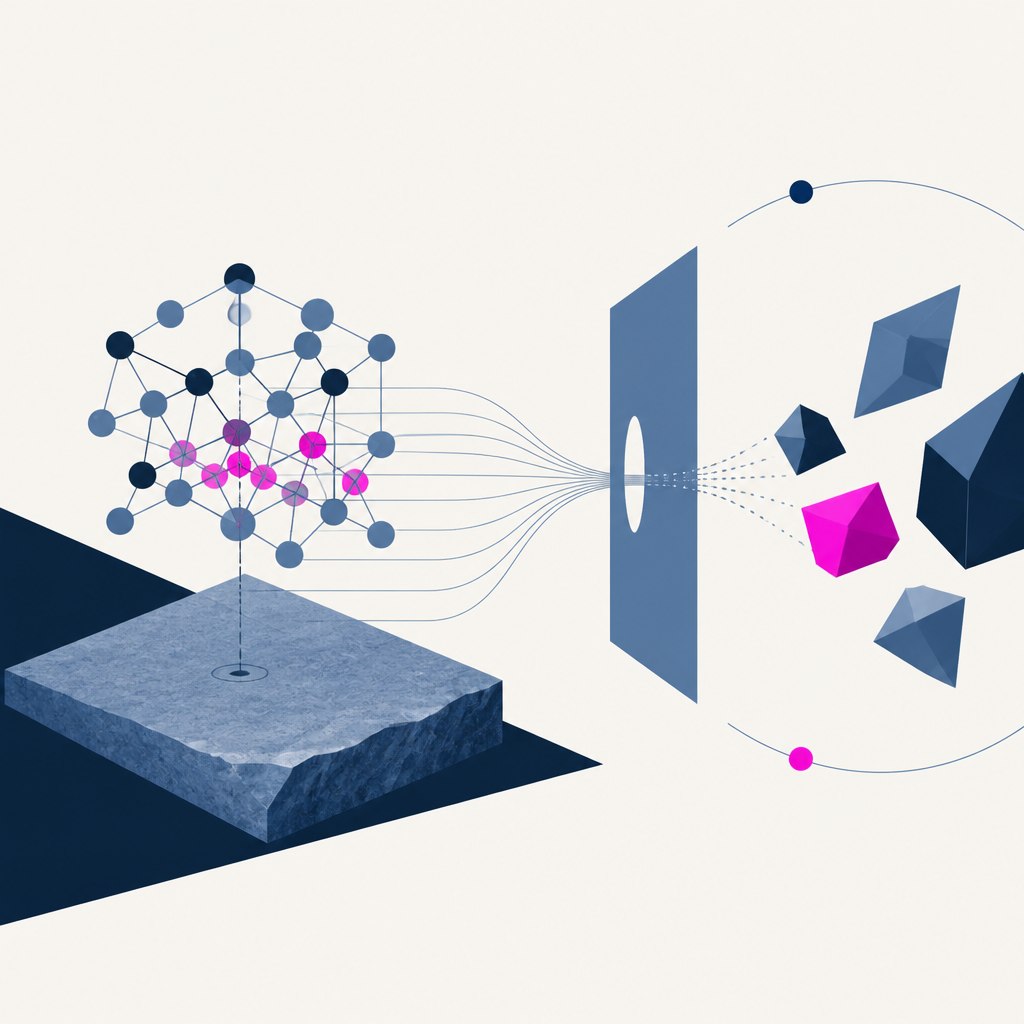
Discovered Materials launched an HN post describing AI agents that computationally discover new, dynamically stable semiconductor materials. The post cites model testing over an 8 hour run that produced results that would take a PhD student a couple of weeks. It shifts expectations by providing a benchmark and releasing hundreds of newly discovered materials while arguing that future impact will depend on adding synthesis and lab validation, where they say current models are weaker.

Tech.eu 1 month ago 37 ● 2 sources
Cytix raised a $7 million Series A to speed up its change risk management platform rollout for enterprises facing AI-driven software development security risks. The funding came led by Northern Gritstone and includes participation from Auriga Cyber Ventures and NPIF II – PXN Equity Finance. The company will expand adoption and use the capital to monitor software changes in real time, assess risks per change, and produce evidence to support security governance and compliance.
Latent Space 1 month ago 33 ● 3 sources
A paper shows how attackers can replay encrypted “reasoning” trace blocks from frontier AI API responses into other sessions/accounts to induce weaker models to transcribe the hidden chain-of-thought. Scanning about 7,000 public traces found 62 unique API keys, 33 email addresses, and 33 passwords inside decoded reasoning blobs. As a result, providers and users need to treat shared trace logs as a direct privacy risk and harden sandboxing/telemetry/tool interfaces to prevent reasoning exposure.
Tech Funding News 1 month ago 12 ● 2 sources
Cytix received $7M from Northern Gritstone to address risks in AI code. The funding round is for 7M. As a result, the company can pursue its pitch’s plan to reduce or manage those AI-coding risks.

Tech.eu 1 month ago 2
STRGY AI raised €1M in angel funding to scale StrategyOS, its AI-powered strategy execution platform. The funding round totals €1 million. The company plans to expand its commercial team, deepen enterprise customer relationships, and continue product development with more product launches later this year.
MarkTechPost 1 month ago 10 ● 2 sources
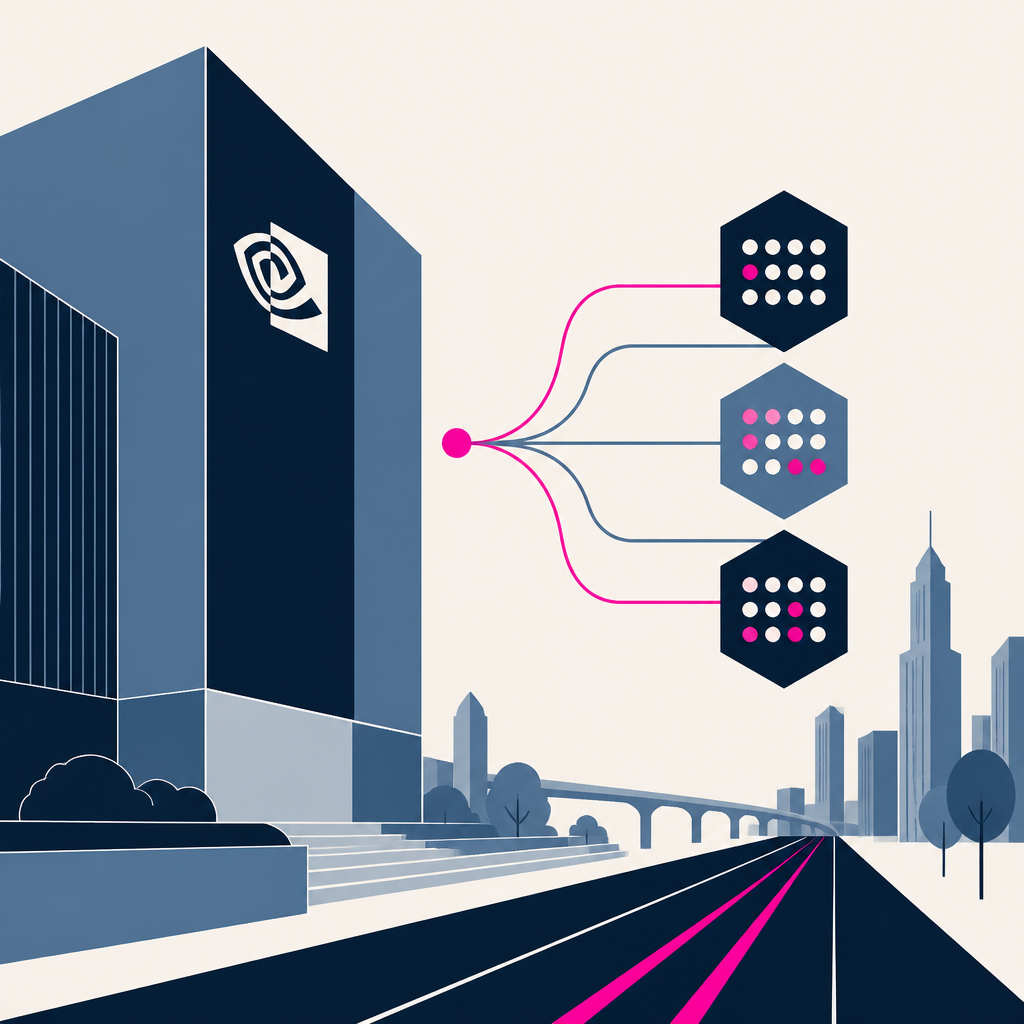
NVIDIA released Nemotron 3.5 Lightning, an open Mixture-of-Experts model for always-on agent execution, alongside NeMo Switchyard, an open-source router for sending each agent step to the most suitable model. Nemotron 3.5 Lightning is a 30B model with 3B active parameters and a 1M-token context window. The tooling enables cheaper, lower-latency agent workflows by routing tool calls and validations away from frontier models, with Switchyard reported to cut LangChain benchmark cost by 74% at about a 6-point accuracy drop.
Trending Topics 1 month ago 30
TechBBQ returns to the Bella Center in Copenhagen on August 26–27, 2026 with a theme focused on who retains human decision-making in agentic AI systems.

Product Hunt 1 month ago 18
The post says you can make clones with Claude Code and Codex to help with your work. The single concrete detail mentioned is Claude Code and Codex. As a result, readers are directed to use those tools to produce clone-based outputs, with no further specifics provided.

OpenAI 1 month ago 51 ● 4 sources
OpenAI research describes how enterprises are moving from AI assistance to AI execution by adopting agentic AI. The report cites ChatGPT and Codex as tools used in these deployments. As a result, firms’ workflows shift toward systems that carry out multi-step tasks rather than only answering questions.
Tech.eu 1 month ago 40
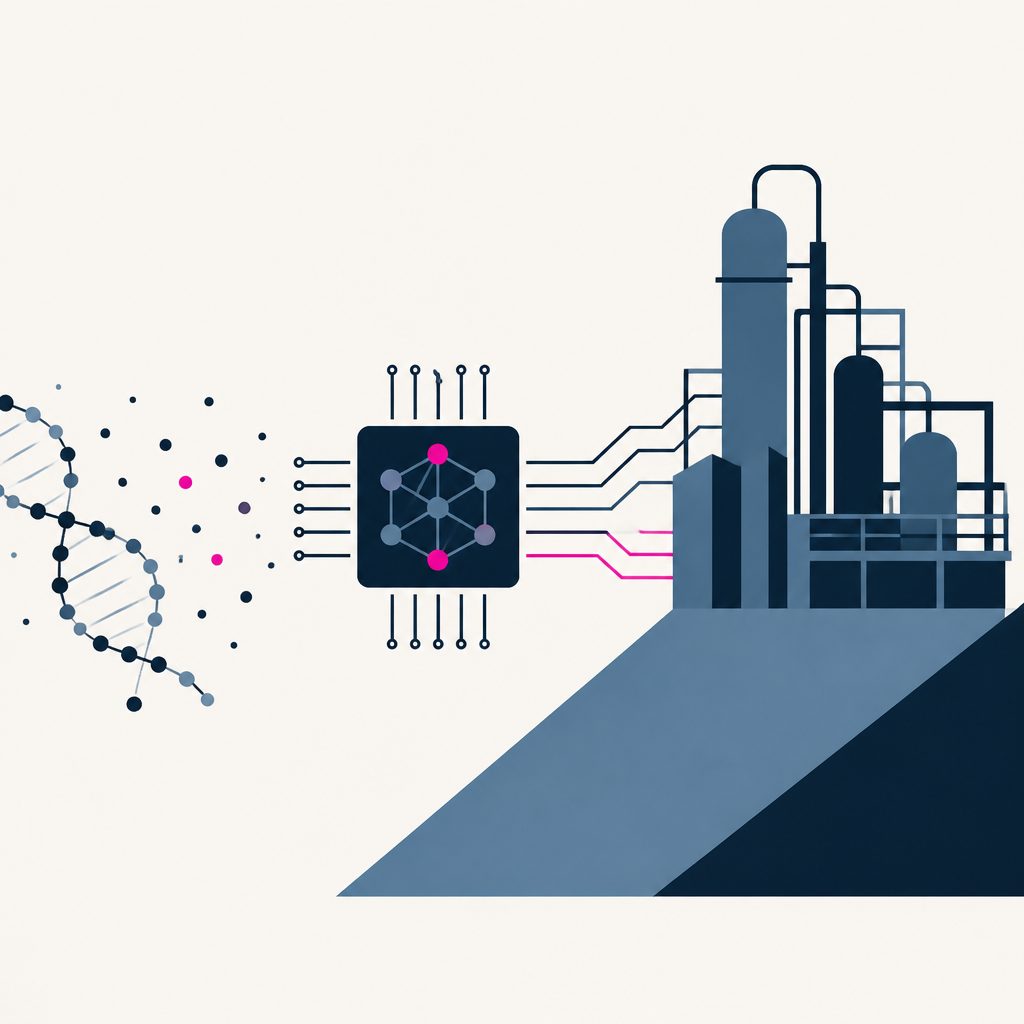
Again acquired industrial biotechnology company Genomatica (Geno) to combine bioprocess engineering, computational biotechnology, and industrial biomanufacturing. The deal’s financial terms were not disclosed. Again plans to integrate Genomatica’s AI and computational platform, patents, and development data into its modeling tools to improve simulation and shorten the development cycle for new production pathways and products.

MarkTechPost 1 month ago 1
Xiaomi’s MiLM Plus released PROVE, a tool meant to better evaluate object removal models when existing metrics mis-rank outputs because erasure is one-to-many. RC-S reaches 0.59 average Kendall’s τ against human rankings, versus 0.26 for ReMOVE and 0.16 for CFD. PROVE introduces RC-S and RC-T plus PROVE-Bench and is published as an Apache 2.0 PyTorch repo so teams can score edits without reference videos and use the metrics for CI or tuning.

Product Hunt 1 month ago 26
Monolog is a new search or note-taking application that allows users to search their own memory and written content through conversational dialogue. The product appears to be in early stages with limited publicly available information about specific features or pricing. Users can interact with their own stored information through natural language rather than traditional search queries.
Tech Funding News 1 month ago 34 ● 3 sources
River AI raised $1.1 billion two months after leaving stealth to build an open stack for training, owning, and running custom AI models. The funding round closed with $1.1 billion at the startup level, and River plans to invest it into training infrastructure, personalization software, and eventually dedicated hardware. The company can now scale its LoRA fine-tuning and reinforcement-learning API offering and pursue broader control over the hardware stack behind enterprise “personal AI.”
Fortune 29
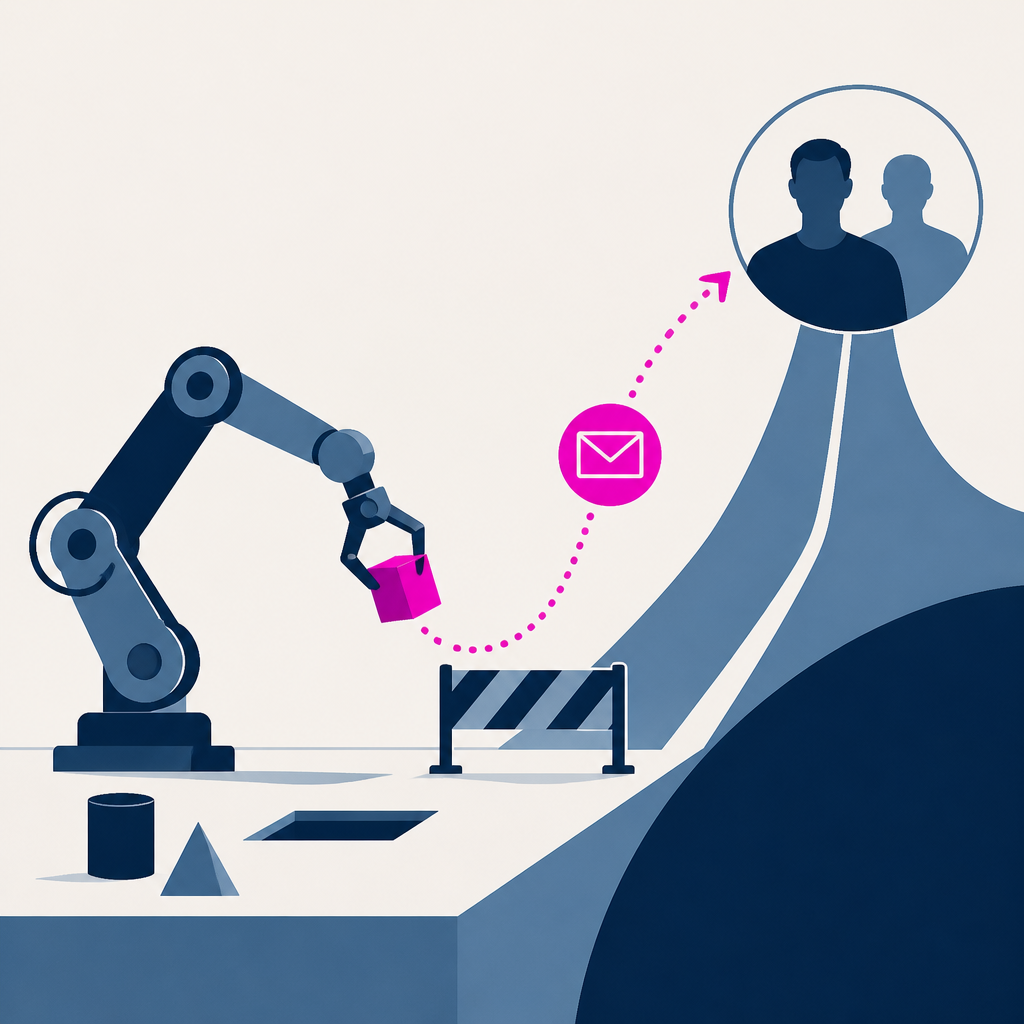
OpenAI employees can email friction@openai.com to report internal bottlenecks that leadership may escalate to CEO Sam Altman or President Greg Brockman for immediate resolution.
Fortune 33
CoreWeave reported second-quarter revenue of $2.58 billion, with the CEO saying near-term AI infrastructure capacity is effectively sold out. Revenue backlog rose 246% year-over-year to $104.2 billion and included an additional ~$25 billion of net new customer commitments added in early Q3. The results and guidance drove a stock gain of more than 14% after hours and reinforced CoreWeave’s push to monetize GPU capacity via AI inference despite concerns about older hardware values and data-center restrictions.
NVIDIA 1 month ago 13 ● 5 sources
NVIDIA announced partnerships with Apollo, BlackRock, Blackstone, Brookfield, Goldman Sachs, and KKR to set up independent financing platforms for AI infrastructure buildouts. The platforms target mobilizing over $500 billion of third-party capital to fund AI factories over time. As a result, NVIDIA compute is positioned as an investable, revenue-producing infrastructure asset with redeployable capacity backed by long-term institutional financing decisions, rather than project-by-project chip purchases and data center builds.
Sequoia 1 month ago 21 ● 2 sources
Preview launched an AI-native video creation and production platform that combines a video timeline with an infinite canvas and lets teams generate with any model while tracking assets. The company says more than 100 studios are already using Preview. As a result, generation, review, and production can move into a single collaborative workspace with source records for legal clearance, instead of being split across separate legacy tools.

OpenAI 1 month ago 8
RingCentral describes how it uses ChatGPT Work and Codex to speed up AI product development and to centralize operational intelligence across engineering and operations. The specific tools mentioned are ChatGPT Work and Codex. As a result, teams can connect engineering work with operations-focused insights in one AI-centered workflow, though this page provides no measurable outcomes.
The daily briefing
TLDRocket reads all relevant sources, removes duplicate coverage, and summarises the day in two minutes. Follow companies and topics for alerts, or get the briefing in Slack. Free, no spam, unsubscribe anytime.
 TLDRocket
24 September 2026
TLDRocket
24 September 2026
Meta’s Agent Security thread ran through the day like a quiet alarm: agencies are moving from “do the task” to “show your work,” and then prove you’re allowed to. Meta says its personal AI agent Muse is wrapped in a security pattern meant to blunt prompt-injection attacks—running the agent in a VM while keeping credentials outside the model’s runtime cell. It then uses a separate approval layer, Sentinel, to block or ask users to authorize actions when needed. The pricing is also a signal of product maturity: $20 for up to 500 million tokens per week in the US on iOS and Android (18+).
Read the full briefing →