Launch HN: Discovered Materials (YC P26) – AI agents to discover new materials
discoveredmaterials.com advaith08 ● Covered by 2 sources
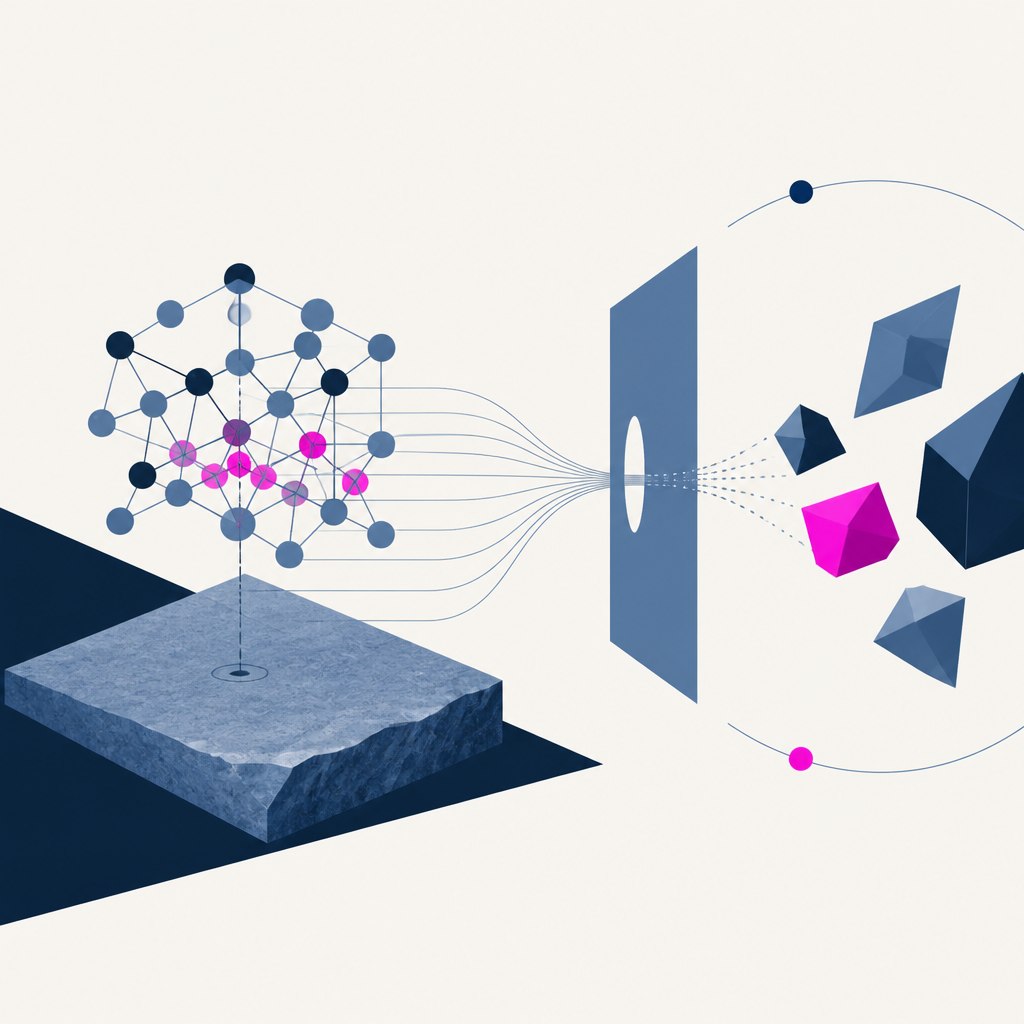
YC startup Discovered Materials says AI agents can find new chip materials. Big claim: it could speed up fixes for GPU heat, a growing datacenter pain.
Based on reporting by discoveredmaterials.com, advaith08 — read the original for the full story.
Summary, retelling and take written by AI under human oversight; images are AI-generated illustrations. How we work · Report an error
Discovered Materials, a Y Combinator startup from Advaith and Akash, is building AI agents to find new materials for semiconductors. Their pitch starts with a real problem: modern chips are turning into tiny heaters, and the next few Nvidia generations point in that direction even more sharply. The company says the H100 puts out 700W of heat, Blackwell 1.2 kW, and Rubin 2.3 kW.
That matters because cooling is now part of the power bill. The founders argue that materials choices help determine both how much heat a chip makes and how well it can shed it. They point to 3D packaging, where memory stacks sit on top of logic chips, as one place where better dielectrics could make a huge difference. Right now, they say, materials like SiO2 are a poor thermal conductor, which traps heat between logic and memory and makes temperatures spike.
The same story shows up elsewhere in the chip stack: thermal interface materials, substrates, and other parts are all being rethought. But there’s a catch that keeps the field slow. Getting a new material into a fab can take years and hundreds of millions of dollars, which is why the industry has its own grim phrase for the gap between the lab and production.
Discovered Materials is betting that AI can shorten that gap. The team says it tested seven models from Anthropic, OpenAI, and Kimi, and found they could computationally discover dynamically stable materials with promising properties. It says that used to take a PhD student a couple of weeks, while the models did it in about an eight-hour run. The hard part, though, is synthesis: models still struggle to propose recipes that actually work in a lab, and the company says making materials remains an empirical grind.
Over the last three months of its YC batch, the startup says it simulated, synthesized, and tested thermal interface materials that match the performance of TIMs guarded as trade secrets by the world’s largest chemical companies for more than 20 years. It’s also releasing hundreds of new materials found by frontier models, plus a benchmark for material discovery. The business could go two ways: licensing the materials and the manufacturing IP, or selling the tools and harness so semiconductor and chemical companies can run the process themselves.
My take — AI-written commentary, not fact-checked reporting
This is the right kind of AI story: boring physics, expensive manufacturing, and no magic wand. The market has already shown that chips don’t care about demo videos; they care about whether the material survives a fab and a lab. AI can help there, but the real moat will be who can turn clever guesses into repeatable recipes without setting money on fire.
Read more about this at: discoveredmaterials.com