Why we should all be worried about AI in elections
Rest of World Lisa Poggiali and Samson Itodo
Opinion — commentary, not a factual news event.
The UN spent two days talking AI in Geneva and barely touched elections. That’s the risky bit: AI in voting systems can quietly change who gets to vote.
Based on reporting by Rest of World, Lisa Poggiali and Samson Itodo — read the original for the full story.
Summary, retelling and take written by AI under human oversight; images are AI-generated illustrations. How we work · Report an error
The UN’s first Global Dialogue on AI Governance opened in Geneva last month with all 193 member states at the table. For two days, governments argued over how to handle AI. Elections, though, barely made the agenda — even though they may be the place where AI can do the most damage to democracy.
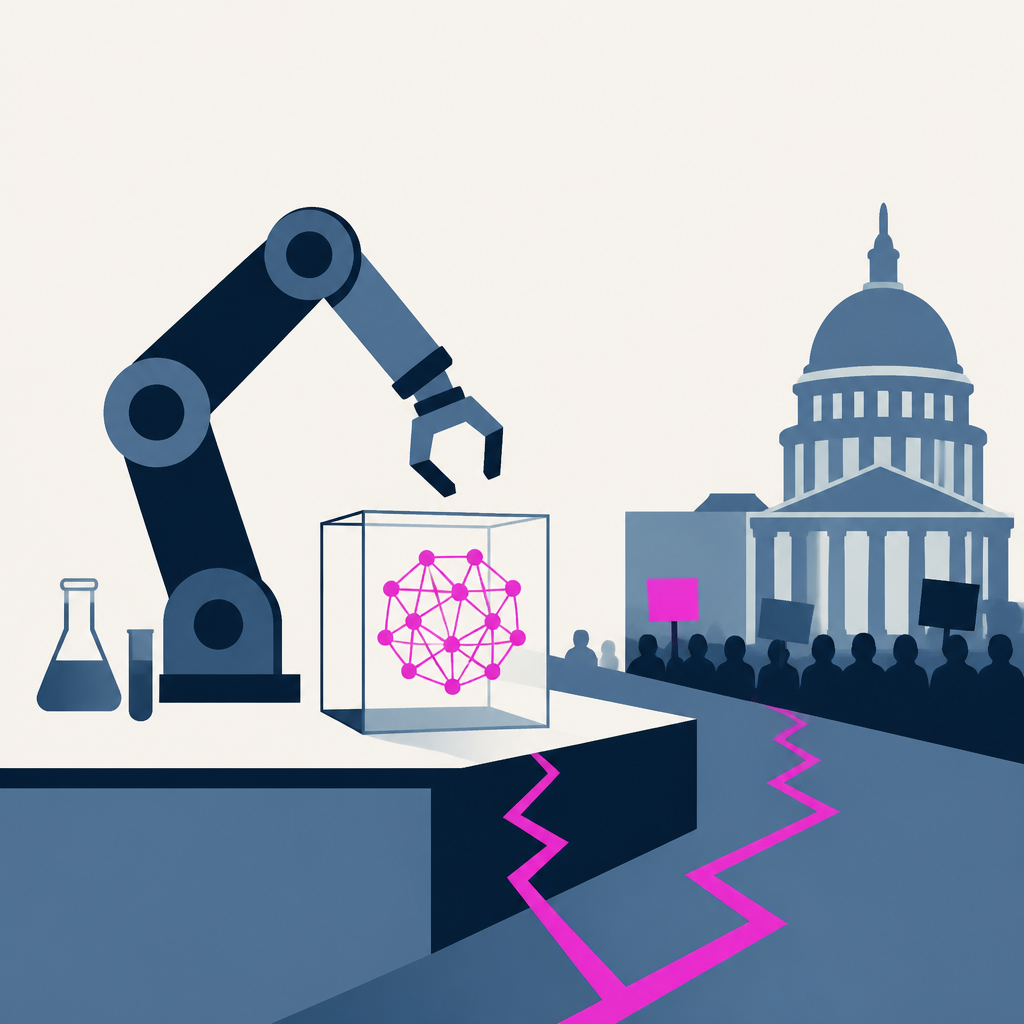
That blind spot matters because elections are not just one more public service touched by software. They are the machinery that makes every other democratic right real. The usual obsession is disinformation, deepfakes, fake clips of candidates, and the rest of that noisy circus. But the source of the bigger risk is quieter: AI buried inside voter registers, biometric systems, identity databases, results software, procurement decisions, and cloud services.
India offers the clearest warning. In 2015, its election commission linked voter photo IDs to Aadhaar, the national biometric database. A machine-learning system compared the two records and flagged supposed duplicates and dead voters for removal. The data also flowed into a state-run system, putting election records into government hands. About 5.5 million voters were dropped from the rolls in two states before India’s Supreme Court stopped the program, and later disclosures said the matching algorithm’s failure rate was as high as 93%. Even so, the same linkage returned nationally in 2021.
The larger problem is not one bad model. It is the slow handoff of electoral control to systems that public institutions don’t fully own. Across much of Africa, Asia, and Latin America, private vendors design, host, and supply election tech that can sit beyond national oversight. Sensitive voter data can cross borders. Proprietary systems can’t be properly audited. Hidden errors can knock voters off the rolls without anyone noticing.
And the risk is spreading beyond election hardware. People are already turning to chatbots for voting information, including OpenAI’s ChatGPT and Google’s Gemini, now folded into search. Those tools can hallucinate, or amplify bias, especially where online information is thin and languages are many. The African Union has started pushing back, saying Africa must “shape and control” its AI ecosystem and treating data localization, technology transfer, and source-code disclosure as nonnegotiable. The UN should take the hint. If elections are left out of AI governance, every other promise about safe, trustworthy AI is built on sand.
My take — AI-written commentary, not fact-checked reporting
This is the part of AI policy everyone keeps trying to file under “someone else’s problem.” It isn’t. If a system can quietly distort voter rolls, then all the hand-wringing about chatbots and deepfakes is just theatre with nicer PowerPoint slides. The grown-up position is simple: no election system should be run by software nobody can inspect, audit, or truly control.
Read more about this at: Rest of World