Google reveals 2026 hardware lineup: Pixel 11, Pixel Watch 5, and Pixel Tag
Ars Technica Ryan Whitwam ● Covered by 5 sources
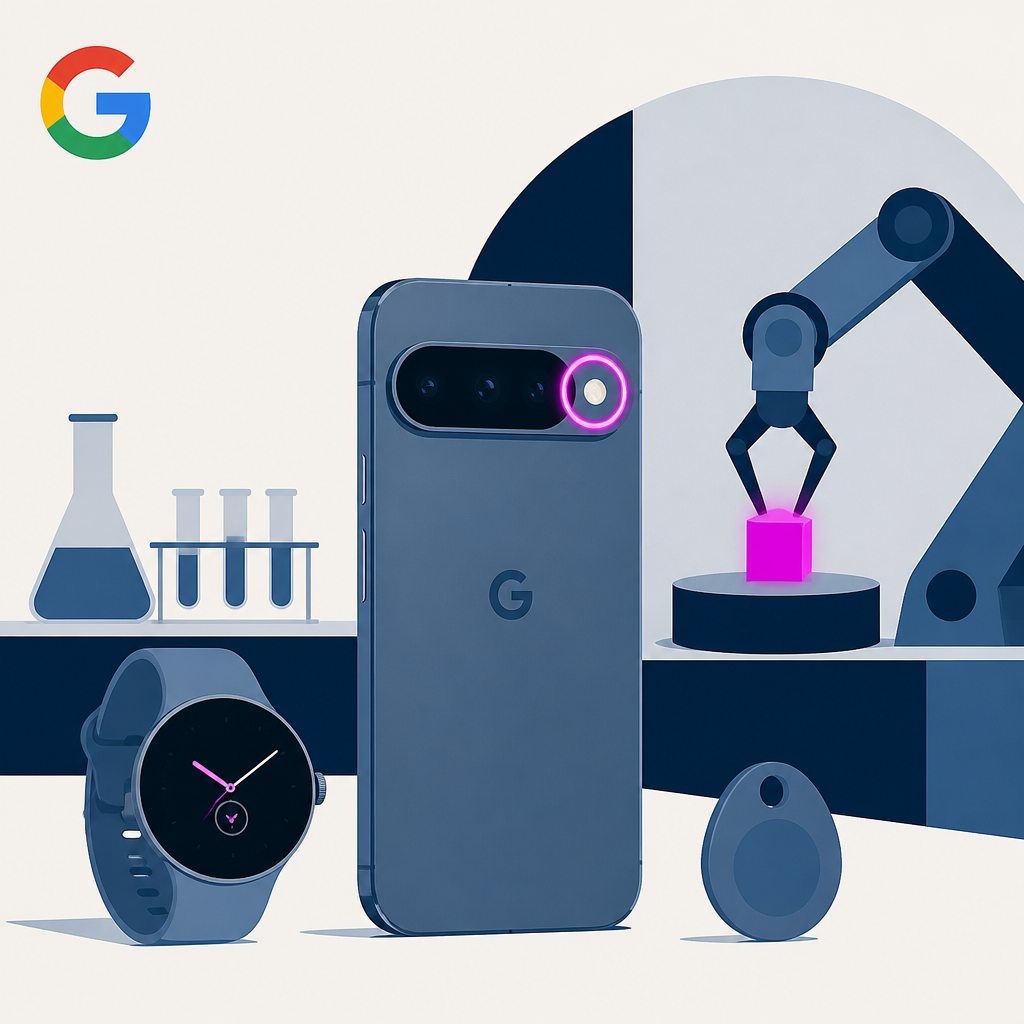
Google showed off its 2026 Pixel gear: Pixel 11, Watch 5, and a new Pixel Tag. The big surprise is a tiny LED ring that lights up when Gemini is listening.
Based on reporting by Ars Technica, Ryan Whitwam — read the original for the full story.
Summary, retelling and take written by AI under human oversight; images are AI-generated illustrations. How we work · Report an error
Google has put its 2026 hardware lineup on the table, and the broad shape is exactly what the leaks suggested. The Pixel 11 series keeps the same general look Google started with the Pixel 9, with only modest changes rather than a full redesign. Orders are open now.
The main phone story is not a new body or a dramatic spec leap. It’s HiLight, Google’s awkwardly named take on a notification LED. On the Pro phones, a ring of RGB LEDs sits inside the rear flash assembly. It lights up when you’re speaking to Gemini, so you can tell the assistant is active without staring at the screen.
That means the feature is most useful when the phone is lying face down, which is a very Google sort of solution: slightly clever, a little specific, and entirely tied to its own AI pitch. The base Pixel model does not get HiLight, so the glowing trick stays for the Pro crowd.
The rest of the lineup follows the same pattern. Google also showed the Pixel Watch 5, which sounds like an update rather than a reinvention, and the Pixel Tag, its first tracker built in-house. Together, they round out a launch that is more evolutionary than flashy, even if Google is clearly trying to dress the evolution up with more Gemini.
My take — AI-written commentary, not fact-checked reporting
Google keeps mistaking “AI feature” for “reason to care,” and HiLight is peak evidence. A glowing ring on the back is charming for about three seconds, then it feels like a very expensive way to avoid looking at a screen. The company still knows how to make hardware, but it’s getting awfully attached to proving the assistant is in the room.
Read more about this at: Ars Technica