
How Meta took the lead in the race for the post-smartphone world
Fortune Sebastian Herrera ● Covered by 6 sources
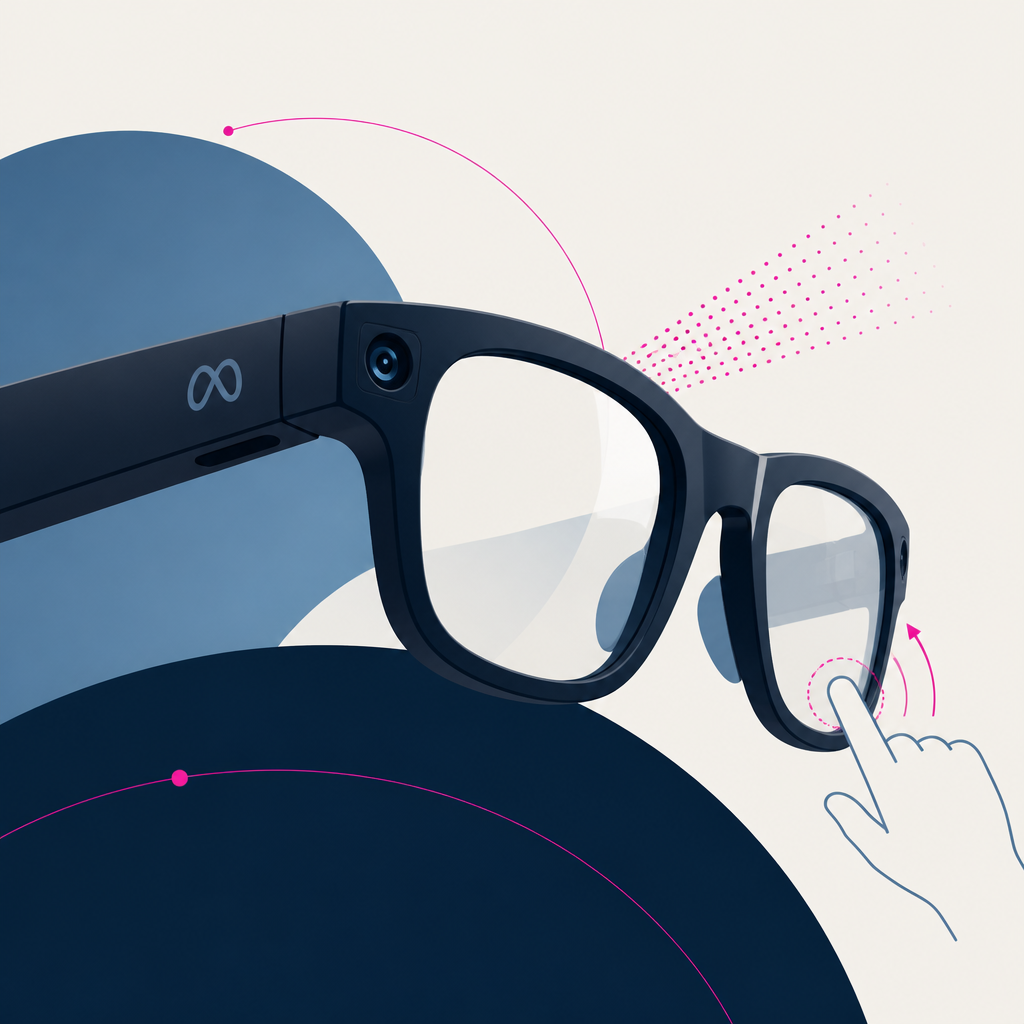
Meta’s smart glasses are the clearest glimpse yet of AI after the phone. The surprise: the company’s lead comes from fashion and hardware, not better AI models.
Based on reporting by Fortune, Sebastian Herrera — read the original for the full story.
Summary, retelling and take written by AI under human oversight; images are AI-generated illustrations. How we work · Report an error
Put on Meta’s latest smart glasses and the pitch lands fast. A high-resolution display sits in one lens. A wristband lets you control it with tiny finger movements. Tap thumb to pointer finger and an app opens. Say “Hey, Meta,” and an AI bot is listening. The company clearly wants you to feel like this is the next normal way to use AI, not a demo trick.
Meta took Fortune into a private room at its Menlo Park headquarters to show the lineup it has built around that idea. There were the Ray-Ban Wayfarer camera glasses, now with nine-hour battery life; the display glasses paired with the “neural” wristband; new audio-only glasses with no camera; fresh styles such as Aviators; and Orion prototypes. The company’s AI models may trail OpenAI and Anthropic, but in glasses Meta is the company everyone else is chasing.
That lead is not an accident. Meta’s partnership with EssilorLuxottica, Ray-Ban’s parent, gave the project fashion credibility that most tech hardware never gets. Alex Himel, Meta’s vice president of wearables, says the company has been able to keep adding technology into something people already want to wear. That matters because users only lean on the smart features about 10% of the time, so the glasses still have to work as, well, glasses. EssilorLuxottica has kept most models at 50 grams or below, and sales have taken off: Meta says smart glasses sales tripled last year, while EssilorLuxottica says it sold 7 million pairs of AI-enabled glasses in 2025.
The ambition keeps stretching beyond notifications and photos. Meta is pushing “agentic” AI, where the glasses can handle multistep tasks like managing schedules or scanning emails. It is also experimenting with a hologram feature that captures facial expressions and turns them into a 3D animated version of the wearer. On Wednesday, the company said it will ship a separate pair of virtual reality glasses in the spring for $1,299. The bet is obvious: if AI is going to live with people all day, the hardware better be something they actually want on their face.
But the rough edges are still there. The display glasses can miss thumb swipes, lag after voice commands, and sometimes struggle to identify what they’re seeing. Privacy is the bigger drag on the whole category, especially for a company with Meta’s history. That hasn’t stopped the lead from forming anyway. In wearables, being first, useful, and acceptable-looking may matter more than having the smartest model in the room.
My take — AI-written commentary, not fact-checked reporting
Meta is doing what Silicon Valley always does when the software story gets crowded: it is moving the fight to hardware and calling it the future. That’s smart, and a little annoying, because the real moat here is not AI brilliance but getting people to tolerate a computer on their face. The next platform will probably belong to whoever makes surveillance feel like style.
Read more about this at: Fortune