The Gulf wants to break free from the world’s data chokepoints
Fortune Melissa Hancock
The Gulf is racing to build its own data routes and cut dependence on Egypt and the Red Sea. Ooredoo’s $500 million cable is the big one, but war is already testing whether these new digital highways can even get built.
Based on reporting by Fortune, Melissa Hancock — read the original for the full story.
Summary, retelling and take written by AI under human oversight; images are AI-generated illustrations. How we work · Report an error
The Gulf’s AI push is turning into a fight over the pipes, not just the servers. Gulf states and telecom groups are trying to build enough computing power for AI, but also to control the fibre and subsea cables that move the data afterward.
That urgency comes from geography and politics. More than 90% of Europe–Asia data and telecom traffic still runs through Egypt and the cable corridors around the Red Sea and Suez Canal. With the region unstable, the case for alternative routes has only gotten stronger.
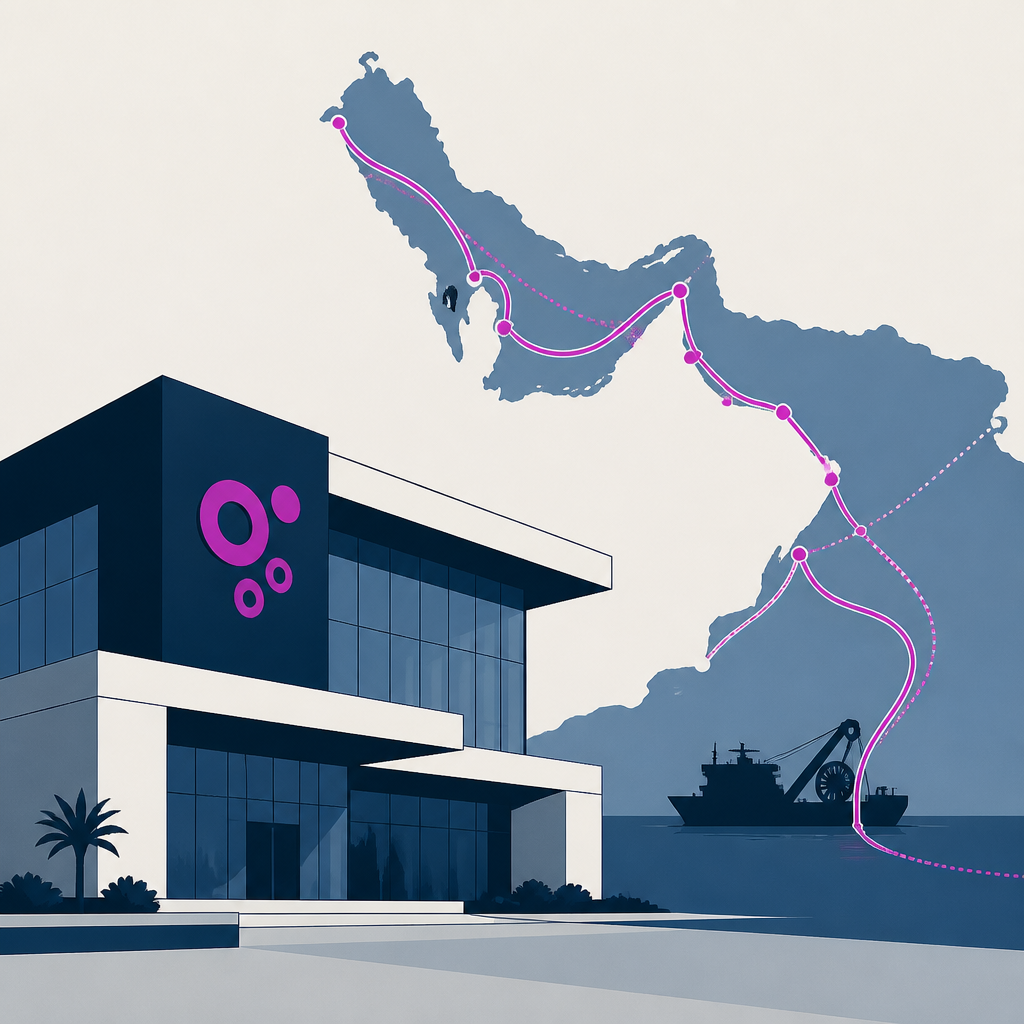
Qatar’s Ooredoo is trying to make that shift concrete with Fibre in the Gulf, or FIG. The system is due in late 2027, carries a $500 million price tag, and is expected to be the largest subsea cable system ever built in the GCC. It will stretch almost 2,000 kilometers, connect all six GCC states and Iraq, and bypass both the Suez Canal and Bab-el-Mandeb.
But even this project runs into the Gulf’s choke points. A key section is supposed to pass through the Strait of Hormuz, and Ooredoo Group CEO Aziz Aluthman Fakhroo said the company currently cannot get cable-laying ships inside the strait. He said the Iran war has reinforced the case for FIG, which is a neat summary of the moment: the conflict is both the reason these routes matter and the thing that may slow them down.
That tension hangs over the whole region. The source notes that the war could still affect the long-term viability of the digital highways now being planned across and beyond the Gulf. And while Ooredoo is pushing cables, it is also broadening its reach elsewhere, teaming with Nvidia and Nokia on a multi-billion-dollar AI compute and neo-cloud platform in Indonesia.
My take — AI-written commentary, not fact-checked reporting
This is the Gulf doing what it often does best: building around a problem instead of solving the problem itself. Cables, clouds and “digital highways” sound elegant until the Strait of Hormuz shows up and ruins the presentation. The region keeps discovering that infrastructure strategy is just geopolitics with better branding.
Read more about this at: Fortune