
How Google’s new Pixel 11 phones compare to last year’s models
The Verge Sheena Vasani ● Covered by 5 sources
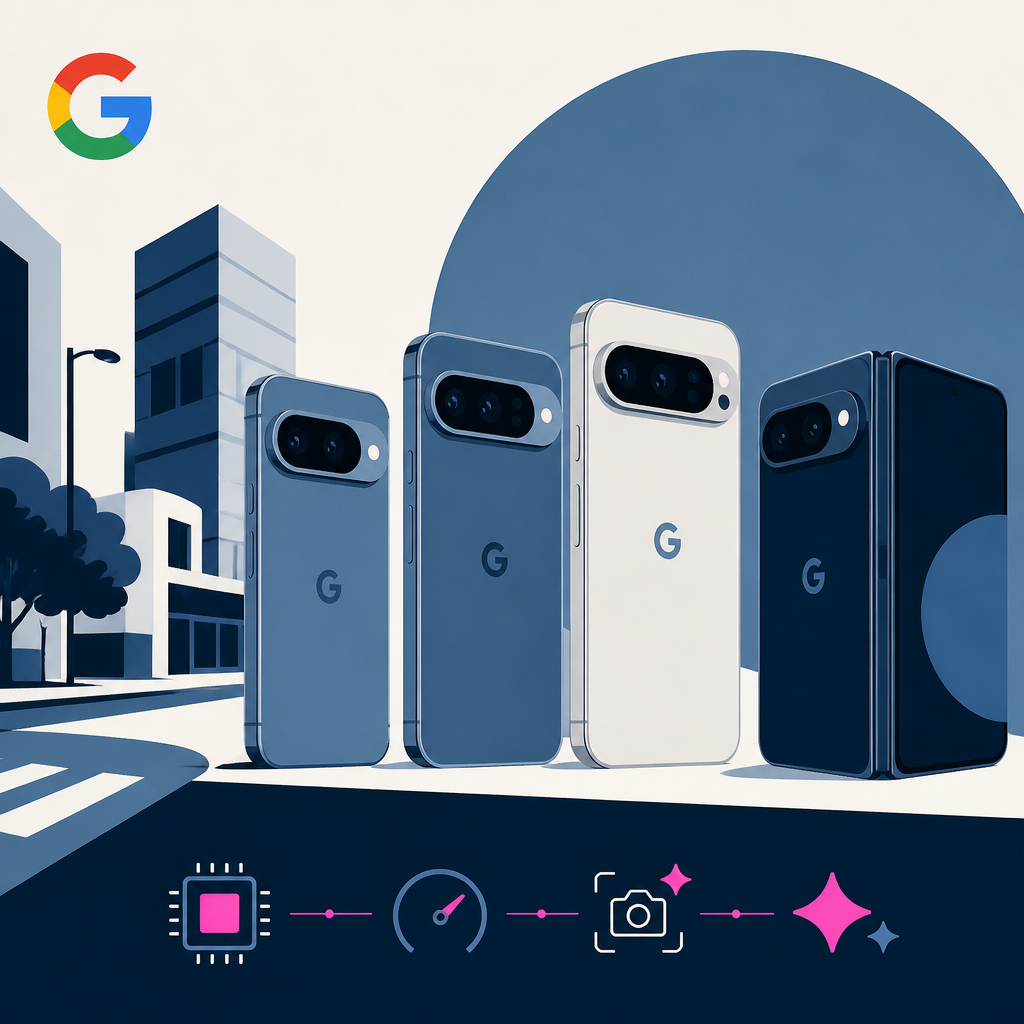
Google’s new Pixel 11 phones are here, and they cost a bit more. The big draw is better cameras plus a new Tensor G6 chip, so upgrades look less cosmetic.
Based on reporting by The Verge, Sheena Vasani — read the original for the full story.
Summary, retelling and take written by AI under human oversight; images are AI-generated illustrations. How we work · Report an error
Google has added four new phones to its Pixel line: the Pixel 11, Pixel 11 Pro, Pixel 11 Pro XL, and Pixel 11 Pro Fold. They’re the latest step up from last year’s models, and Google is asking a little more money for them than before.
The main pitch is not a redesign. It’s the stuff under the hood and inside the camera app. Google says the phones bring improved cameras and a new Tensor G6 chip, which should mean faster performance. That matters more than a fresh paint job, especially when the phones already sit in a crowded premium market.
There are also new photography tools, including Magic Capture. On top of that, Google is pushing harder on its Gemini Intelligence features, while Live Translate gets expanded capabilities. And if you use Circle to Search, there’s now a way to do that directly through the camera.
So this looks like a familiar Pixel play: incremental price increases, then a bundle of software and hardware improvements meant to make the jump feel justified. Whether that feels enough will probably come down to how much people care about camera work, translation tools, and raw speed rather than just buying the newest thing with a new number on the box.
My take — AI-written commentary, not fact-checked reporting
This is classic Pixel behavior: charge a bit more, then try to win people over with camera tricks and AI polish. Fine, but the real test is whether those features feel useful after the first week, not whether they sound clever in a launch slide. The tech industry loves calling software frosting a reason to upgrade; buyers keep pretending not to notice.
Read more about this at: The Verge