“Issue tracking is dead”; How the pull request became the last chokepoint in the SDLC bottleneck
The New Stack Adrian Bridgwater ● Covered by 3 sources
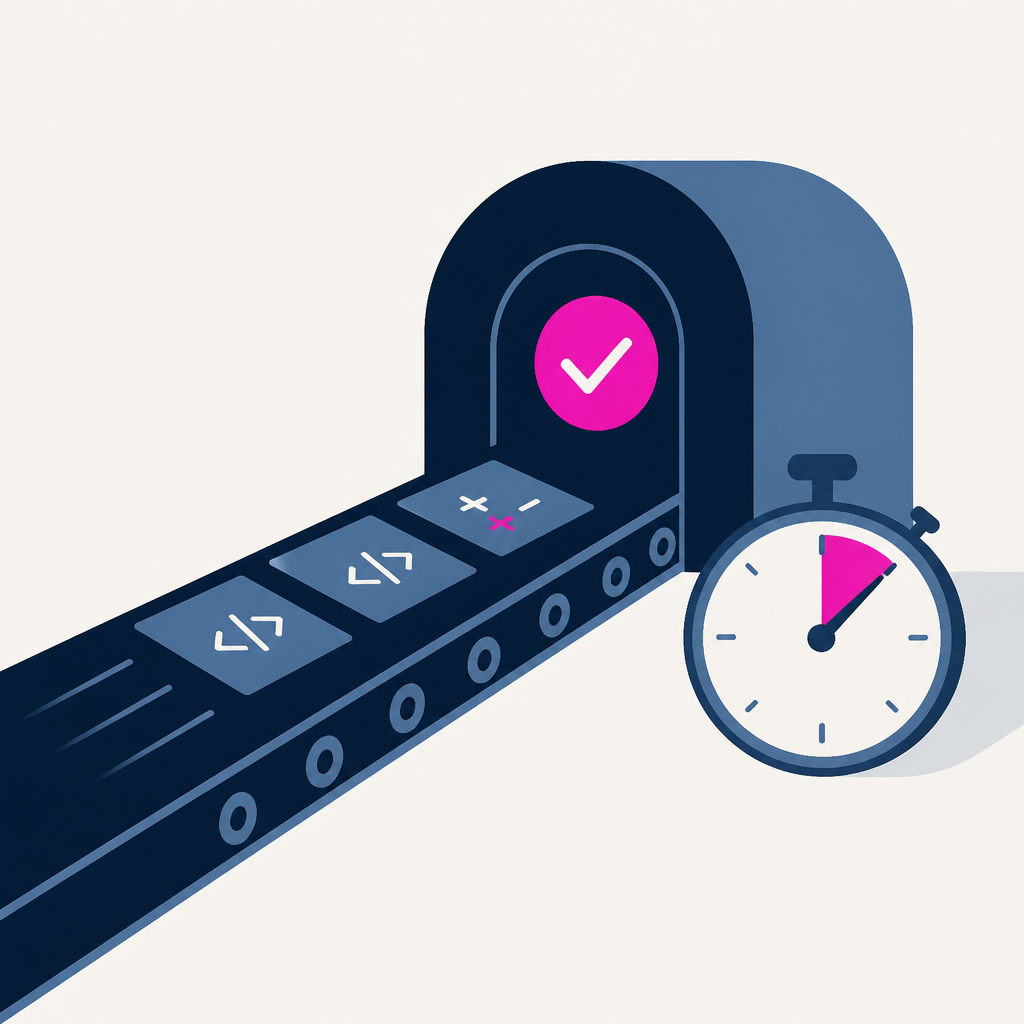
CodeRabbit says issue trackers can’t keep up with AI-built code. It wants the pull request to become the main place teams decide what ships.
Based on reporting by The New Stack, Adrian Bridgwater — read the original for the full story.
Summary, retelling and take written by AI under human oversight; images are AI-generated illustrations. How we work · Report an error
CodeRabbit has launched Agentic Change Management, a control layer meant to help engineering teams govern software made by both people and agents. The pitch is blunt: the old mix of issue trackers, backlogs, and handoffs was built for a slower era, and AI has pushed the software process past it.
CEO Harjot Gill told The New Stack that code is now created so quickly that alignment often lags behind it. In his view, the pull request has become the last real chokepoint in the software development lifecycle because teams need a place to decide what is worth shipping, what deserves human attention, and which agent-made changes should be finished at all.
That shifts the job of review upward. Instead of grinding through line-by-line code checks, humans are supposed to focus on intent, architecture, behavior, and execution trade-offs. CodeRabbit says that when code becomes abundant, judgment becomes the scarce part, and that scarce part should not be wasted on syntax-level nitpicking.
The new control layer tries to make that practical. CodeRabbit Triage scores incoming pull requests for value, urgency, risk, dependencies, readiness, and reviewer fit, then routes them to people or automation. CodeRabbit Change Stack adds explainability with views of contracts, domain behavior, integrations, tests, and migrations, while CodeRabbit Security keeps scanning after merge and can send fixes back through the pull request flow.
Under the hood, CodeRabbit says it uses proprietary codegraph technology that maps relationships across a codebase so it can reason about trust boundaries and blast radius. The company contrasts that with file-level pattern matching, which it says lacks context. Its broader bet is that the pull request is no longer just a review step. It is becoming the place where software gets judged, filtered, and perhaps saved from its own speed.
My take — AI-written commentary, not fact-checked reporting
This is what happens when software starts producing software: the old ticket mill gets demoted, and suddenly everyone discovers that judgment was the scarce resource all along. CodeRabbit is right to push control closer to the pull request, because a backlog full of AI-generated enthusiasm is still just a backlog. The real danger is letting “automation” become a polite word for moving chaos one step downstream.
Read more about this at: The New Stack