
LFM2.5-VL-3B for Better and Faster Vision Capabilities for the Edge
Hugging Face ● Covered by 2 sources
Liquid AI released LFM2.5-VL-3B, a vision model for your own hardware. It reads screens and docs, and it’s tuned for speed instead of long reasoning.
Based on reporting by Hugging Face — read the original for the full story.
Summary, retelling and take written by AI under human oversight; images are AI-generated illustrations. How we work · Report an error
Liquid AI is pitching LFM2.5-VL-3B as its most capable vision-language model for local hardware, and the pitch is refreshingly specific: it’s built to answer directly, not to pause and “think” out loud. That makes sense for real-time apps and edge devices, where latency matters more than a polished chain of reasoning nobody asked for.
The model is aimed at the unglamorous but useful stuff. It understands documents and screens, grounds objects from natural-language queries, handles multiple images, and can call tools. Liquid says the new release improves all four of those areas, with especially strong gains in screen/UI understanding and function calling.
Under the hood, LFM2.5-VL-3B pairs a SigLIP2 400M NaFlex vision encoder with the same pre-trained backbone used for the company’s LFM2.5-2.6B text model. It was pre-trained on about 34T tokens and got 4x more vision data than before, pulled from curated and synthetic image-caption, OCR, grounding, and instruction-following sets. To handle non-Latin scripts, Liquid doubled the vocabulary to 128K by extending the tokenizer instead of starting over. Post-training came in two stages: supervised fine-tuning with knowledge distillation and Antidoom training, then multi-reward reinforcement learning.
The benchmark table is broad, and the headline is simple enough. LFM2.5-VL-3B leads its size class on real-world image tasks, while also doing well on documents, charts, and UI elements. It scores 91.1 on DocVQA, 87.9 on RefCOCO-avg, 82.2 on ScreenSpot-v2 Web, and 81.3 on ChartQA. On the text-only side, tool use rises sharply, and the model lands on par with Gemma-4-E2B and Qwen3.5-2B on those tests.
Speed is the other half of the story. Liquid says the model decodes 228 tokens per second on an M5 Max, 116 on a Ryzen AI Max+ 395, and fits in about 3 GB of memory. It even reaches 20 tokens per second on a Galaxy S26 Ultra, which is the kind of number that turns a demo into something people might actually ship. On GPUs, Liquid claims about 11K tokens per second at high concurrency, roughly twice the larger 4B-class models.
My take — AI-written commentary, not fact-checked reporting
This is the right kind of AI release: less theater, more utility. A model that can read a screen, call a tool, and run in 3 GB is doing work; a model that narrates its own thought process is mostly auditioning for a podcast. The industry still loves giant models that live in the cloud, but the real product market is increasingly on-device, boring, and very profitable.
Read more about this at: Hugging Face
Related stories
 Liquid AI Releases LFM2.5-2.6B: An On-Device Agentic Model With 128K Context, Tool Calling, And Open Weights
MarkTechPost · 2 months ago ·
50
Liquid AI Releases LFM2.5-2.6B: An On-Device Agentic Model With 128K Context, Tool Calling, And Open Weights
MarkTechPost · 2 months ago ·
50
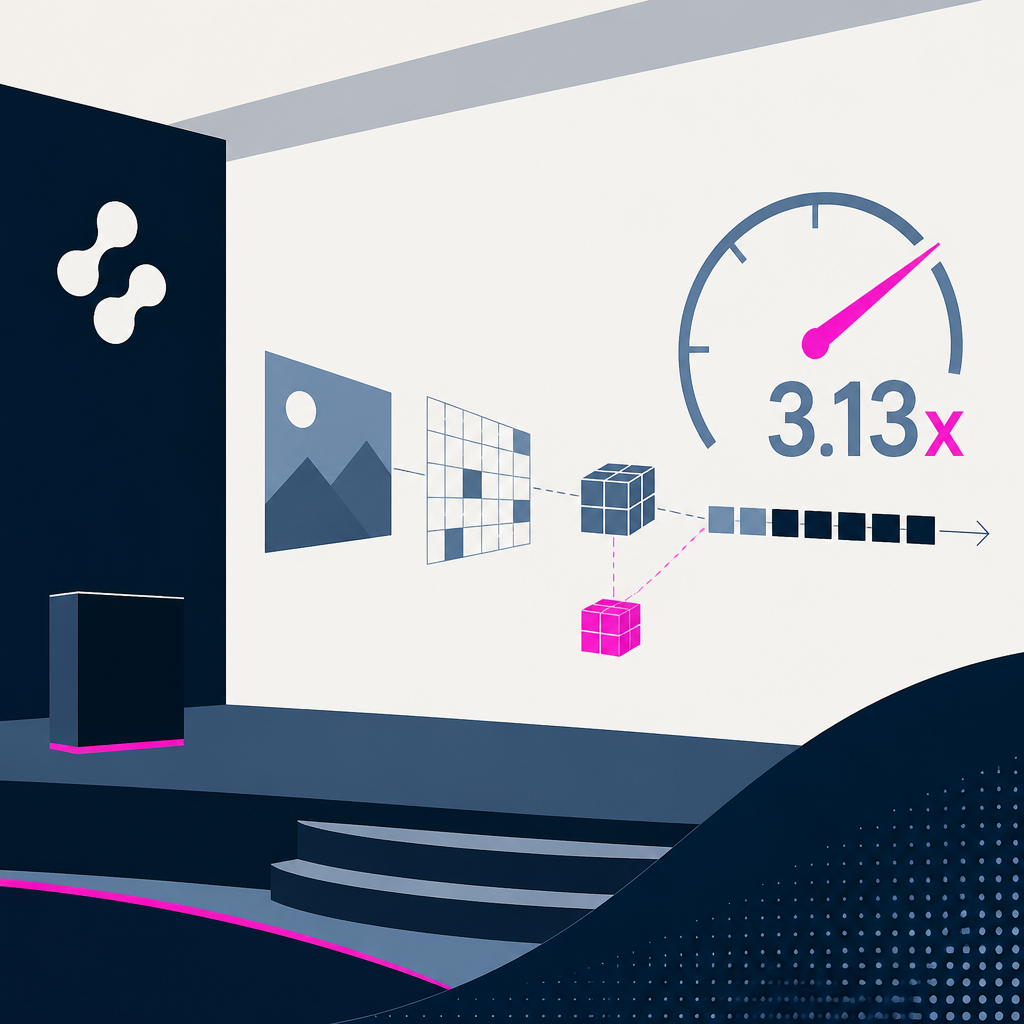 Liquid AI Releases LFM2.5-VL-3B-DSpark: Speculative Decoding for Vision-Language Models With Up to 3.13x Faster Decoding
MarkTechPost · 3 weeks ago ·
41
Data Machina #260
Substack · 2 years ago ·
19
Liquid AI Releases LFM2.5-VL-3B-DSpark: Speculative Decoding for Vision-Language Models With Up to 3.13x Faster Decoding
MarkTechPost · 3 weeks ago ·
41
Data Machina #260
Substack · 2 years ago ·
19