Canva was the rare startup that grew fast and made money—then AI costs slashed its growth forecast by a third
Fortune Mia Osmonbekov
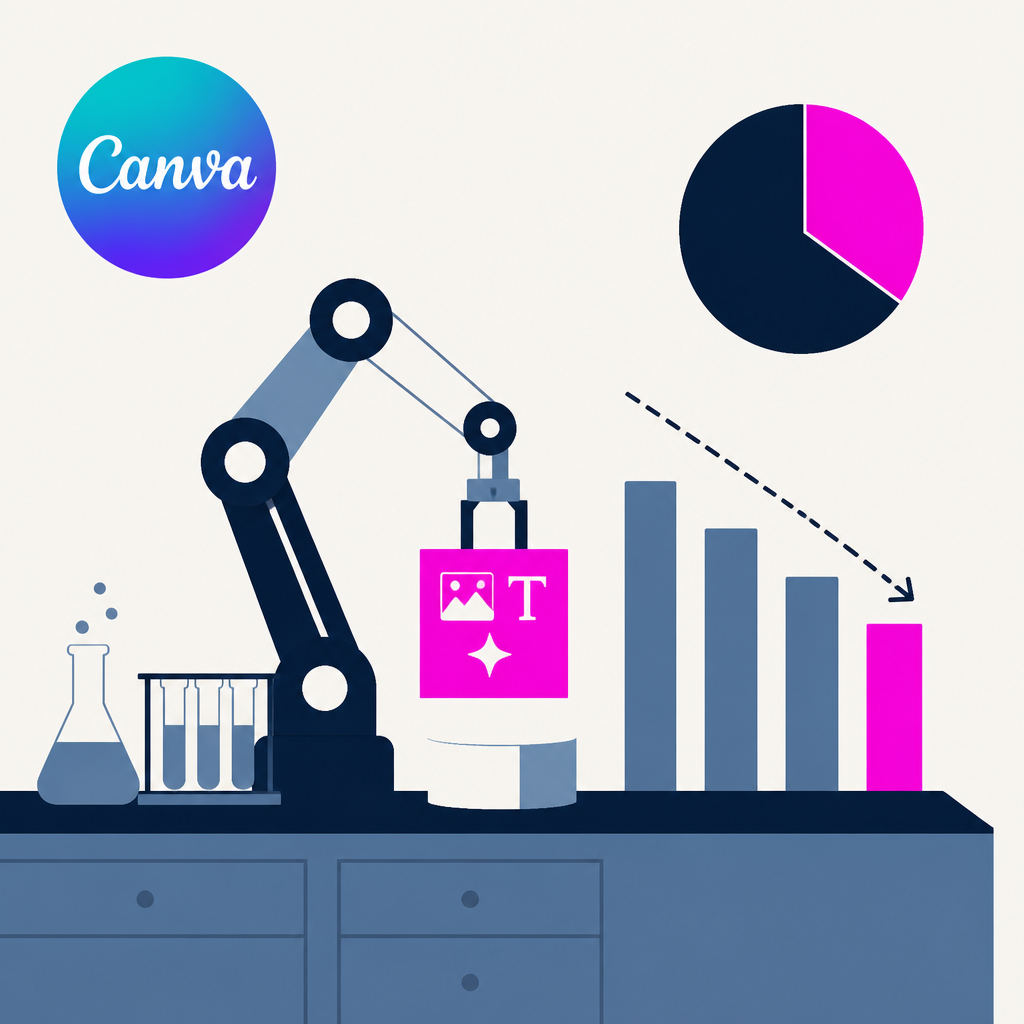
Canva cut its AI growth forecast after the features cost more than expected. That’s awkward for a company built on growing fast and still making money.
Based on reporting by Fortune, Mia Osmonbekov — read the original for the full story.
Summary, retelling and take written by AI under human oversight; images are AI-generated illustrations. How we work · Report an error
Canva spent years looking like the startup everyone else wishes it could be: growing quickly and still staying profitable. Now generative AI has shoved that tidy story off course. The design company has cut its expected revenue growth rate by a third, to 20%, after the cost of serving AI features came in much higher than it expected, forcing a slower rollout.
CEO and co-founder Melanie Perkins said demand for new AI tools far outpaced the company’s forecast. That was flattering, but expensive. In her email to Fortune, she said Canva chose to slow down rather than push a product out before the economics made sense, while it rebuilt the architecture, cut unit costs and strengthened the business model. In other words: nice feature, bad bill.
The timing matters because AI is no side project for Canva. It sits at the center of the company’s push to become a broader workplace software platform, not just a design app. Perkins has already said the AI market was too fragmented, and Canva has added tools like Canva Code as it tries to move deeper into enterprise workflows. The problem is that the more useful the AI gets, the more money it can burn every time someone uses it.
Perkins said Canva has cut the cost per task by nearly 90% since launching Canva AI 2.0 in April, an agentic update to the platform. But users are now creating three times as many designs as before, so the company is still chasing the economics rather than celebrating them. That is the new SaaS tax: inference costs, not training, are what turn shiny AI features into margin problems.
Canva is not alone. Figma has shown its own version of the same trade-off, with free-cash-flow margin falling to 14% in the second quarter from 27% in the first, while third-quarter revenue growth was forecast at 36% after 48% in the June quarter. A year ago, Fortune reported an employee share sale valued Canva at $42 billion, with experts then talking about a possible 2026 IPO. Now the conversation is drifting earlier, and the company is clearly trying to look less like a growth story at any cost and more like a public-market candidate that still knows how to say no.
My take — AI-written commentary, not fact-checked reporting
The industry keeps pretending AI is just another feature, then acts shocked when the usage bill shows up. Canva’s slowdown is the sane move, which is exactly why it stings: the market now rewards restraint only after companies have already paid for the lesson. The bigger tell is that SaaS’s old trick — spend once, sell forever — is getting mugged by recurring inference costs.
Read more about this at: Fortune