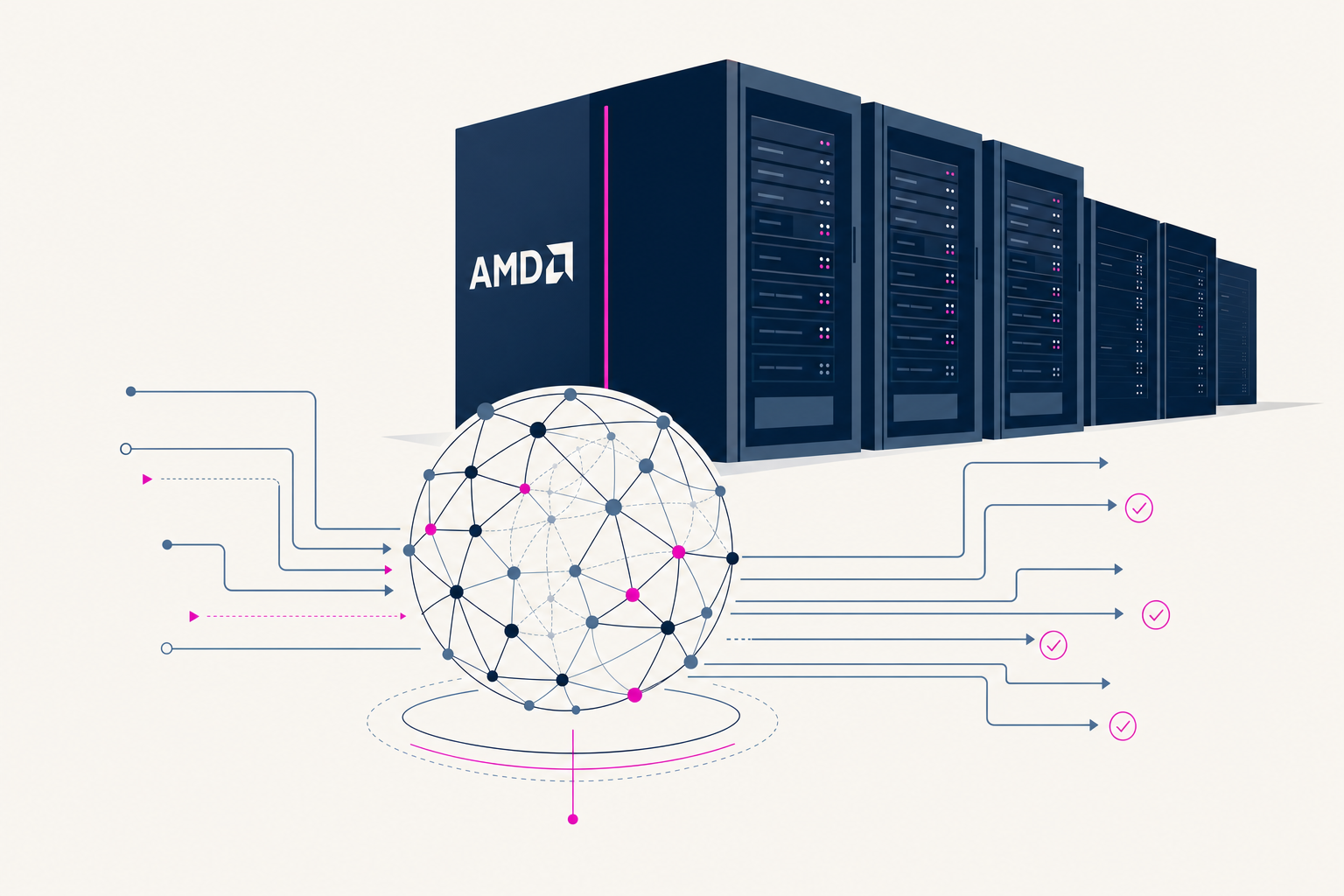
AMD’s $8.2 billion play for World Labs is the loudest signal of the day: the chipmaker is betting that the next leap in AI won’t just be faster tokens, but better “world models” that can drive physical and embodied decisions. World Labs—cofounded by Fei-Fei Li, a name synonymous with modern AI vision research—brings its two-year-old world-model stack and team into AMD through an all-stock deal. Li will join as executive VP and chief scientist, with AMD positioning the acquisition to accelerate physical-AI hardware and narrow the performance and ecosystem gap with Nvidia.
That focus on real-world execution echoes elsewhere, just with different pressure points. Okta is turning agent runtime security into a multivendor blueprint, organizing controls around four questions: where agents are, what they can do, what they’re doing, and how to respond—then layering identity and security signals across endpoint and network telemetry. Even agent progress talks, like Anthropic’s preview of Claude Code’s “mutable” harnesses, are increasingly framed as an orchestration problem across cloud and local environments, not just a clever UI. Meanwhile, Stripe’s research on multi-account free-trial abuse is a business-level reminder that production agents run on money as much as compute: more than one in six sign-ups are linked to token burn that destroys margins before payment kicks in. OpenAI’s decision to scrap a GPT-6.1 Astra rollout over safety standards adds a final note of friction—agents may be heading toward autonomy, but rollout gates still matter.