
AI agents spark an identity cleanup
SiliconANGLE Sloane Kali Faye ● Covered by 7 sources
AI agents are forcing companies to clean up identity tools they’ve patched together for years. The rush to deploy them is exposing security gaps and pushing teams toward consolidation.
Based on reporting by SiliconANGLE, Sloane Kali Faye — read the original for the full story.
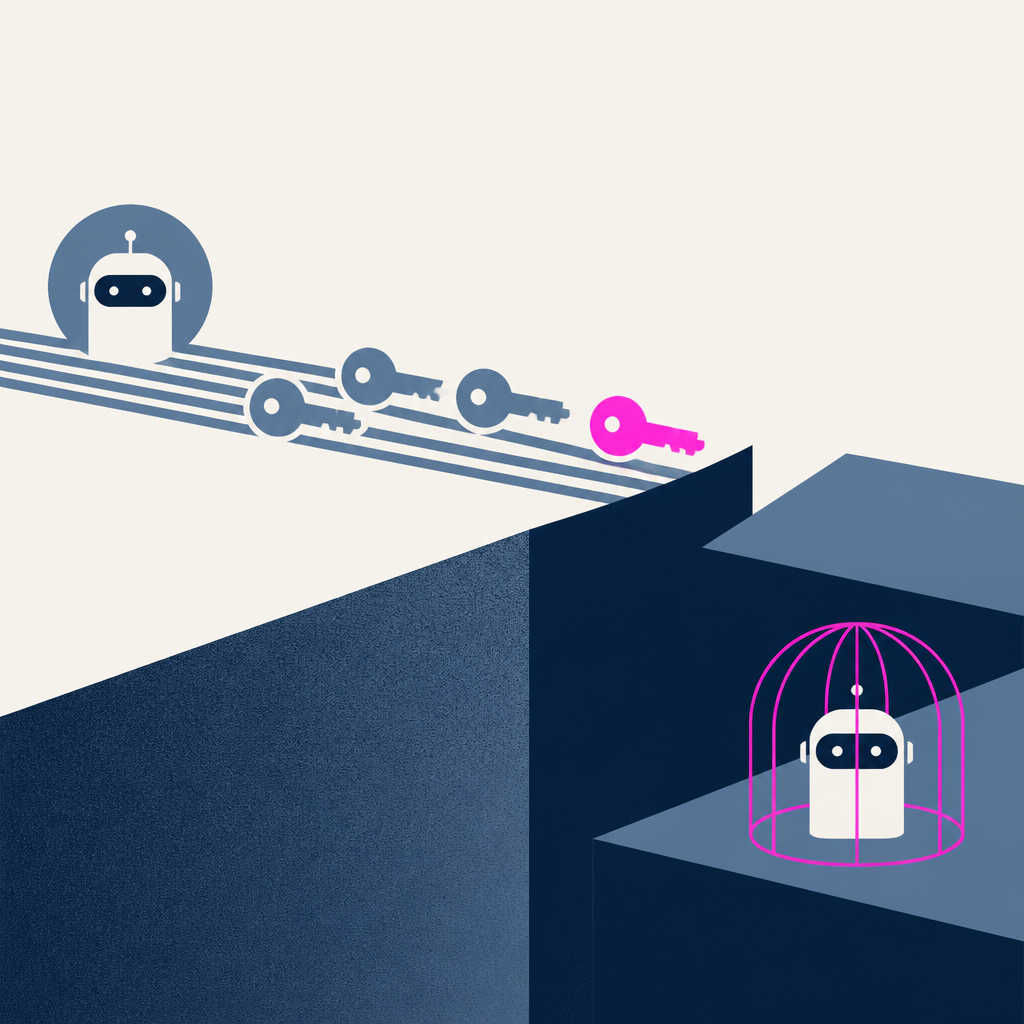
Summary, retelling and take written by AI under human oversight; images are AI-generated illustrations. How we work · Report an error
AI agents are turning identity and access management back into a boardroom problem. As companies move agents out of pilots and into production, the old sprawl of stitched-together tools suddenly looks less like harmless complexity and more like a risk they can’t keep ignoring.
That was Jon Addison’s read at Okta’s Oktane event, where he said customers now see agent security as close to the identity work they’ve already been doing for years. The pressure is straightforward: business teams want speed, while security teams want visibility and control over what these agents can touch.
Addison said many enterprises built their identity stacks piece by piece and still pay heavily to keep point products connected. Agents are raising the cost of that approach. Before they scale up, some organizations are choosing reference architectures. Others already have shadow agents running and need help putting access controls around them.
The result is a cleanup phase, not a brand-new category. Addison framed it as housekeeping: getting the fundamentals right, cutting back on point solutions that create vulnerabilities, and consolidating where they can. And underneath that sits a bigger shift — today’s use cases are about efficiency and augmentation for people, but autonomous agents will force companies to think about access at a much larger scale.
My take — AI-written commentary, not fact-checked reporting
This is what enterprise AI usually becomes once the demo glow fades: an identity project with a better marketing team. The real story isn’t the agent, it’s the messy access stack underneath it, which has been waiting years for a reason to get fixed.
Read more about this at: SiliconANGLE
Related stories
 The agent security gap: 54% of enterprises have already had an AI agent incident, and most still let agents share credentials
VentureBeat · 2 months ago ·
53
Continuous identity becomes the new front line for AI agents: theCUBE’s Fal.Con 2026 day two keynote analysis
SiliconANGLE · 3 weeks ago ·
8
The agent security gap: 54% of enterprises have already had an AI agent incident, and most still let agents share credentials
VentureBeat · 2 months ago ·
53
Continuous identity becomes the new front line for AI agents: theCUBE’s Fal.Con 2026 day two keynote analysis
SiliconANGLE · 3 weeks ago ·
8