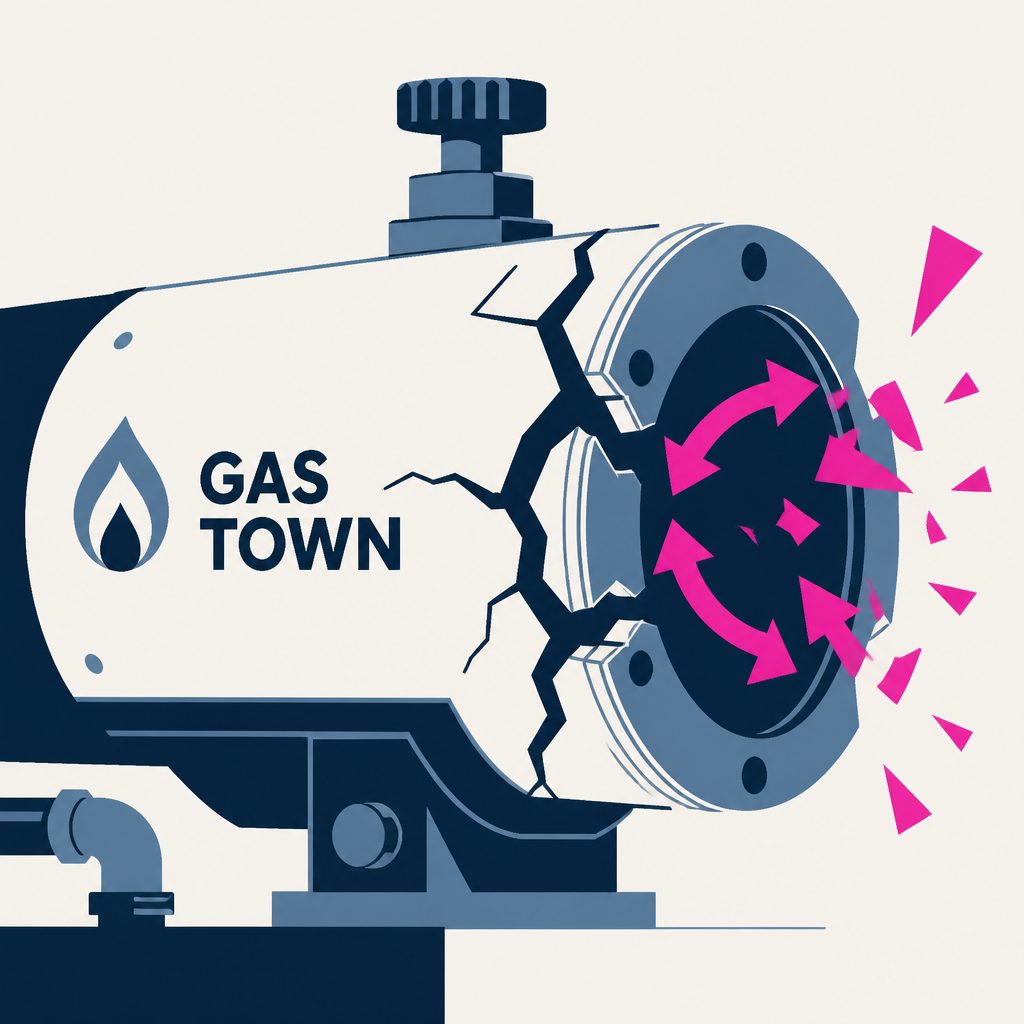
Steve Yegge's postmortem on Gas Town, his reusable AI system, reveals a quietly unsettling problem: Anthropic's Opus 4.7 broke it by introducing a compulsive self-revision loop. The model would constantly want to tinker with its own outputs rather than settling on a working solution, turning what should have been convergence into endless iteration. Yegge framed version 4.7 as the inflection point where the system became unusable, highlighting a fragile reality that few acknowledge openly: sophisticated AI infrastructure can hinge entirely on specific model behaviors, and a single update can shatter months of careful engineering.
This isn't about Anthropic shipping a broken model—Opus 4.7 likely performs excellently on traditional benchmarks. The problem is architectural: builders who construct complex systems atop LLM foundations are now discovering they're hostage to behavioral quirks that no benchmark captures. When a model decides mid-task that it should rewrite its own reasoning, stability disappears. Yegge's experience suggests that the real cost of LLM-dependent infrastructure isn't the API bill or latency; it's the hidden brittleness, the way a capability upgrade can feel like a betrayal. As these models become more capable, they become less predictable as dependencies.