How tech is helping in the battle against wildfires
BBC
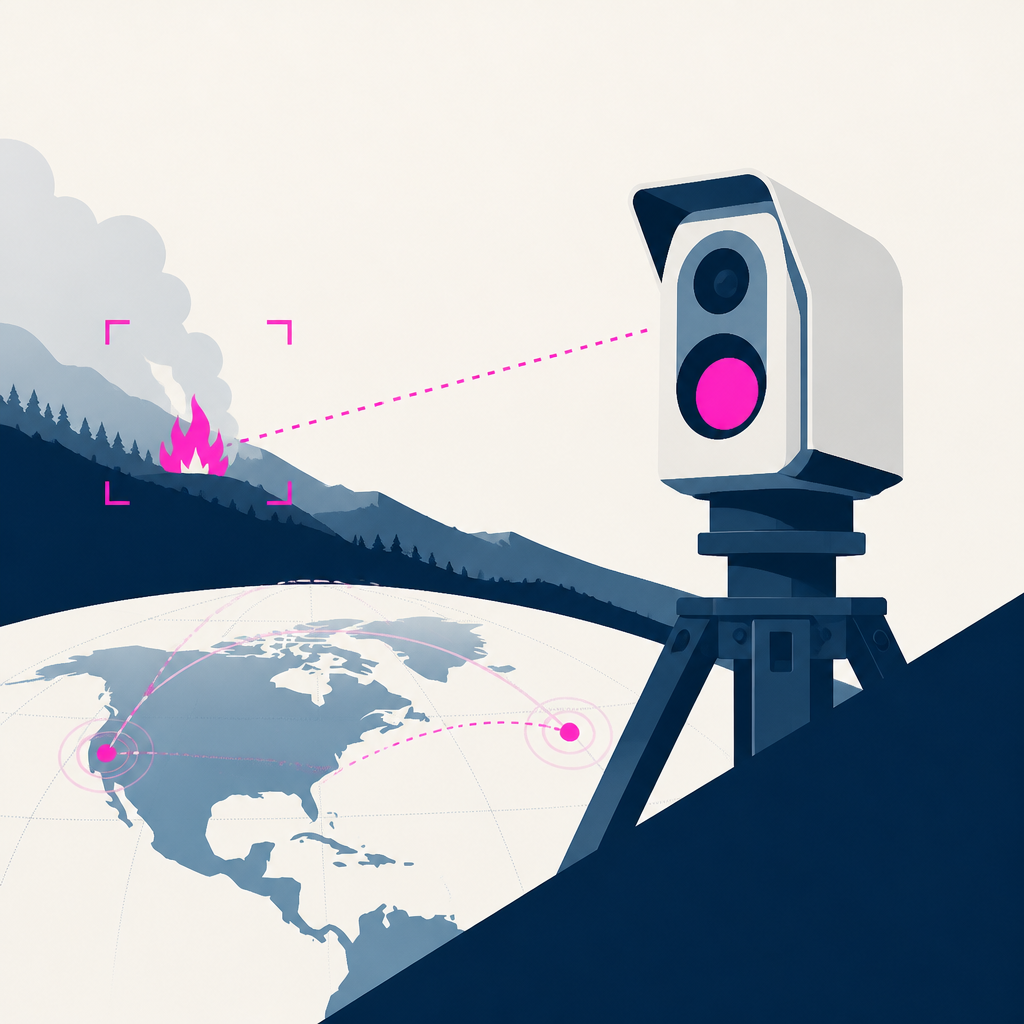
AI-powered cameras are now watching French forests for wildfires, replacing the students who used to sit in lookout towers. They can spot smoke minutes faster than a phone call, but putting the fire out still takes people with hoses.
Based on reporting by BBC — read the original for the full story.
Summary, retelling and take written by AI under human oversight; images are AI-generated illustrations. How we work · Report an error
The images out of Gironde this summer look the same as they always have: flames chewing through pine forest, water bombers circling overhead, exhausted crews on the ground. But behind the scenes, something has quietly changed. The watchtowers that used to be staffed by students scanning the treeline all summer have been swapped for cameras linked to artificial intelligence, and firefighters say it's making a real difference in how fast a blaze gets caught.
Guillaume Millet, a 24-year veteran firefighter and union official in Gironde, describes cameras that can tell the difference between smoke and the dust kicked up by a tractor almost every time, cutting down on false alarms that used to eat up crews' time. The systems, built by companies like Midgard and FireTracking, can spot fires up to 20km away. When one triggers, firefighters get an alert on their phones with a live feed zoomed in 40 times, a map pinpointing the fire and nearby homes, and a spread simulation based on wind and humidity.
FireTracking's CEO, Jean-Simon Chaudier, put the stakes in blunt terms: over a recent 10-day stretch, the AI flagged seven fires a full 15 minutes before anyone phoned it in. That gap, he says, is often the line between a fire contained to a couple of hectares and a catastrophe. His rule of thumb is almost poetic — a fire can be doused with a glass of water after one minute, needs a tank after two, and calls for a Canadair water bomber by minute three. FireTracking's cameras now cover a million hectares in France, and in one département alone, covering 6,000 square kilometres of mostly farmland where crop fires are common, the buildout cost €1.2m.
More is coming. France's civil protection service is testing solar-powered drones under a programme called Condor that patrol continuously with AI-linked cameras, while a Spanish project called SenForFire is experimenting with sensors that sniff out the gases fires release before any flame is visible. Startups are also chasing heavier hardware: one, Daidelos, is trying to raise money for a petrol-powered drone that could hover over a fire and dump 1.2 tonnes of water, and others are developing drones that drop chemical grenades meant to smother a fire the instant it starts.
But for all that, Millet is clear that none of it puts out a fire on its own. Even a Canadair dropping 6,000 litres only knocks the intensity down; someone still has to drag hoses through the forest to finish the job. Drones are being trialled for sea rescue, but nothing similar exists yet for firefighting itself. The tech is getting better at spotting danger early and might eventually make the job safer, but replacing the people on the ground with the hoses isn't on the horizon.
My take — AI-written commentary, not fact-checked reporting
Cameras that can tell a wildfire from tractor dust and shave fifteen minutes off a response time are the kind of unglamorous AI win that actually matters, unlike half the chatbot demos getting hyped this year. But the instinct to imagine drones dropping fire-suppressing grenades as some autonomous saviour ignores what the firefighters themselves are saying: detection is solved, extinguishing is not, and dumping money into flashy hardware while underfunding the humans dragging hoses through burning forest would be a mistake dressed up as innovation.
Read more about this at: BBC