
Texas says data centers must pass an audit before connecting to the grid
The Verge Lauren Feiner ● Covered by 3 sources
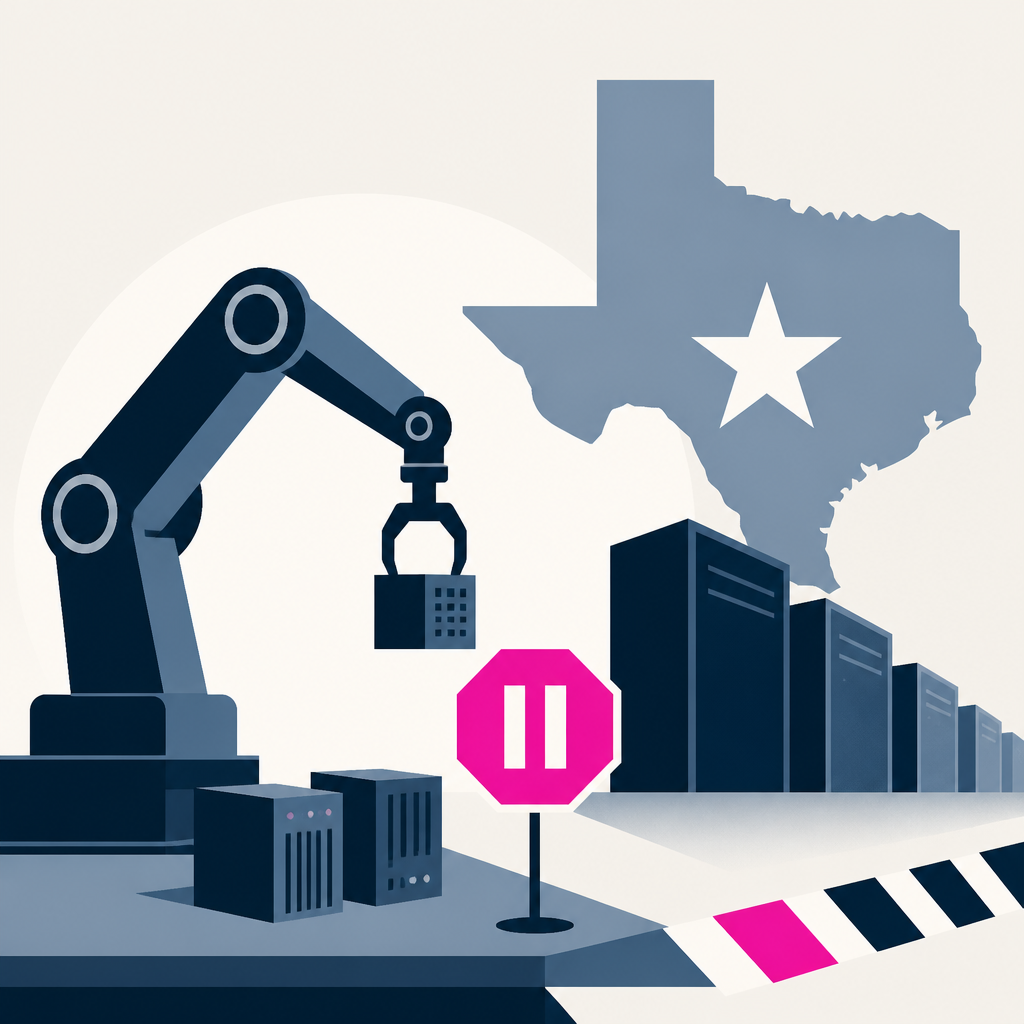
Texas now wants data centers to pass a state audit before hooking up to the power grid. Requests to connect already total more than five times the state's peak electricity demand ever recorded.
Based on reporting by The Verge, Lauren Feiner — read the original for the full story.
Summary, retelling and take written by AI under human oversight; images are AI-generated illustrations. How we work · Report an error
Greg Abbott just handed Texas regulators a new homework assignment: check the math on every data center trying to plug into the grid before letting them in. The governor's directive, issued Monday, tells the Public Utility Commission of Texas and ERCOT to verify and audit new proposals, with Abbott framing it as necessary to keep the grid stable and reliable.
The paperwork burden is real. Companies will have to disclose what state and local incentives they've collected, how heavily they'll actually lean on the state grid, how much water they expect to consume and where that water comes from, and how they intend to monitor community effects like noise. None of that existed as a formal gate before.
What's murky is timing. Nobody has said how long this audit process will take or how much friction it'll add to projects already in the pipeline. And there are carve-outs: places like El Paso sit outside ERCOT's jurisdiction entirely, and some facilities sidestep the issue altogether by generating their own power on-site instead of drawing from the shared grid.
The bigger story is the pile of demand sitting behind this decision. ERCOT is currently sitting on more than 474 gigawatts of connection requests, a number Abbott's office says is over five times the grid's record peak electricity demand. Data centers make up roughly 90 percent of those new requests. A Texas Tribune analysis counted at least 335 data centers already running in the state, with another 248 or more in the works, putting Texas behind only Virginia as the country's largest data center market.
Coming right after New York rolled out its own data center moratorium, Abbott's move reads less like an isolated Texas concern and more like a pattern forming. Politicians on opposite ends of the map, with very different politics, are arriving at the same instinct: slow down before the grid gets overwhelmed by servers.
My take — AI-written commentary, not fact-checked reporting
A Republican governor in Texas essentially agreeing with New York's instinct to hit pause on data centers should tell everyone something: this isn't a partisan energy fight, it's a math problem. When requested capacity outstrips record peak demand by more than five times, no amount of pro-growth rhetoric changes the fact that someone has to check whether the grid can actually deliver. Audits like this will slow a few projects down, and good — better a few delays now than blackouts later while AI companies figure out water and power bills aren't optional.
Read more about this at: The Verge
Related stories
 Greg Abbott turned from data center 'epicenter' booster to skeptic—and Trump is calling it an economic 'mistake'
Fortune ·
2
Amazon is building a new AI data center in Texas that could become the country’s largest source of carbon emissions
SiliconANGLE · 1 month ago ·
43
An Amazon data center could have the worst polluting power plant in the country
The Verge · 1 month ago ·
28
Greg Abbott turned from data center 'epicenter' booster to skeptic—and Trump is calling it an economic 'mistake'
Fortune ·
2
Amazon is building a new AI data center in Texas that could become the country’s largest source of carbon emissions
SiliconANGLE · 1 month ago ·
43
An Amazon data center could have the worst polluting power plant in the country
The Verge · 1 month ago ·
28