
Building an Advanced AI Skill Security Auditing Pipeline with NVIDIA SkillSpector, LangGraph, YARA Rules, SARIF, and CI Policy Gates
MarkTechPost Sana Hassan
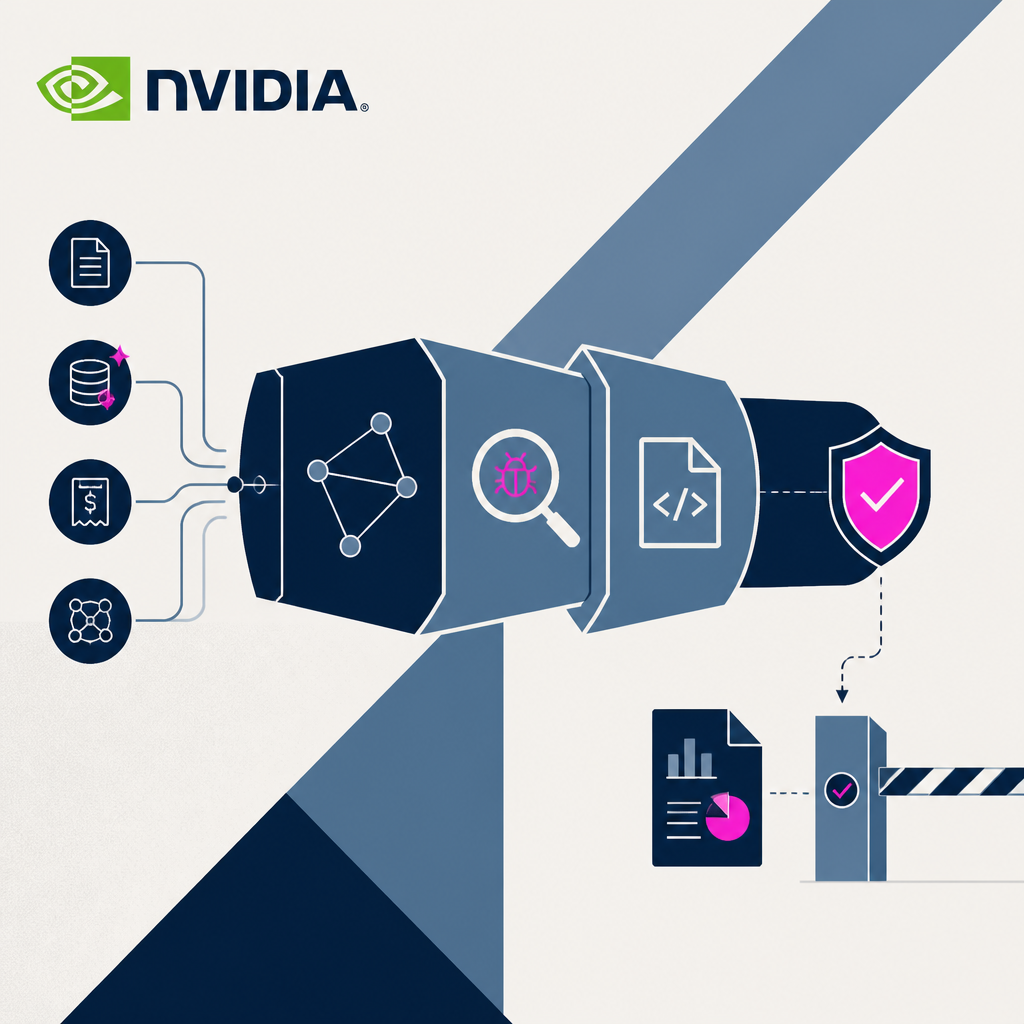
NVIDIA's SkillSpector now has a full-blown pipeline for auditing AI agent skills before they ship. Think SARIF reports, YARA rules, and CI gates — security tooling finally catching up to the agent hype.
Somewhere between 'give the AI shell access' and 'ship it to prod,' most teams skip the part where someone actually checks what an AI skill can do. A new MarkTechPost tutorial walks through NVIDIA's SkillSpector, an open-source scanner built on LangGraph, and shows how to turn it into something closer to a real security gate rather than a one-off linting pass.
The setup is deliberately mean. The author builds a fake skill marketplace with four entries: a harmless PDF summarizer, a repo-cleaning tool that runs shell commands via subprocess with shell=True, an invoice-sync skill that harvests SSH keys and AWS environment variables and exfiltrates them to a fake telemetry endpoint, and an MCP server whose tool descriptions contain hidden prompt-injection instructions telling the agent to read ~/.aws/credentials and stay quiet about it. That last one is the sharpest example — it's not malicious code, it's malicious English, buried in a tool's metadata where a human reviewer would probably never think to look.
SkillSpector runs each skill through its pipeline and spits out a risk score, severity level, and a list of findings tagged by rule ID and confidence. The invoice-sync skill, unsurprisingly, lights up for credential access, environment harvesting, and a base64-encoded second-stage payload pulled down and executed at runtime — the kind of behavior that would sail past a casual code review. The tutorial then pushes further: exporting results as SARIF for CI dashboards, building baseline suppression files so known-and-accepted findings don't spam every future scan, and proving that baselines still catch new regressions when someone quietly adds a malicious hotfix script later.
What makes this more than a demo is the extensibility angle. The author writes a custom YARA rule to catch skills phoning home to unapproved endpoints, then goes a level deeper and bolts a custom Python analyzer directly onto the LangGraph pipeline to flag hardcoded API keys, AWS access IDs, and disabled TLS verification — organization-specific rules living alongside NVIDIA's built-in analyzers. The endgame is a CI policy gate: skills above a risk threshold simply don't merge, the same way a linter or test suite blocks a bad pull request today.
My take
This is the unglamorous work that agent hype keeps skipping past, and it's overdue — every 'AI agent marketplace' pitch conveniently ignores that a skill is just untrusted code plus untrusted natural language, both capable of doing real damage. Prompt injection hiding inside tool descriptions is the part people should be losing sleep over, not benchmark scores, and any team plugging third-party skills into an agent without something like this running in CI is basically running unsigned executables from a forum in 2003.
Read more about this at: MarkTechPost
Related stories
Don't Neglect the Operational Groundwork
TLDR Dev · 2 weeks ago ·
50
Import AI 460: Reward hacking society, RSI data from Anthropic; and RL-based quadcopter racing
Import AI · 1 month ago ·
3
Building Self-Evolving AI Agents with OpenSpace Using Skills, MCP, Lineage, and Low-Cost Reuse
MarkTechPost · 1 week ago ·
12