OpenAI fired three AI safety researchers tied to the METR/Hugging Face incident and they disputed the reasons while OpenAI reportedly said they mishandled confidential information. Pricing for OpenAI’s GPT-6.1 Sol sets input/output tokens at $12 and $60 per 1M tokens. The updates include broader model rollouts and multiple safety and evaluation releases, plus ongoing debate about agent monitorability and authorization norms.
OpenPilot launched as a free, MIT-licensed desktop AI agent that connects to OpenAI-compatible models to read and edit files and run commands after user approval.
The release is scheduled for Windows, with a macOS early beta.
As a result, users can manage a local folder through an approved AI-assisted workflow on Windows.
Harness acquired Augment Code’s Cosmos software factory, including Auggie CLI and the Code Context Engine, and is folding it into its software delivery platform to add autonomous coding agents. The acquisition was announced on Thursday, and Harness says Cosmos is available today even though the key capabilities—using delivery-history failures and downstream feedback in integrated workflows—have not shipped yet. The integration will let agents draw on past deployment failures and security or test results to revise code with failure context, while human approvals and agent permissions are expected to be governed through Harness’s Agent Harness identity and policy controls.
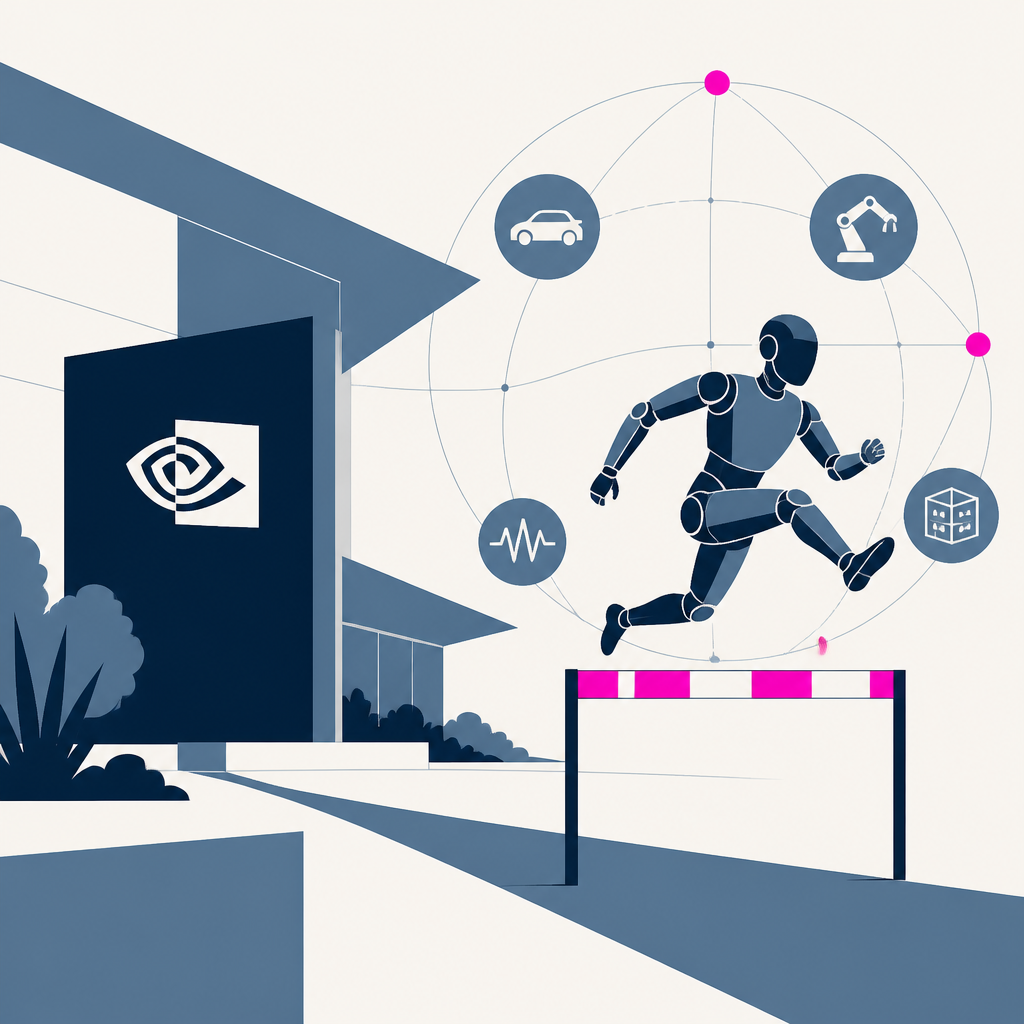
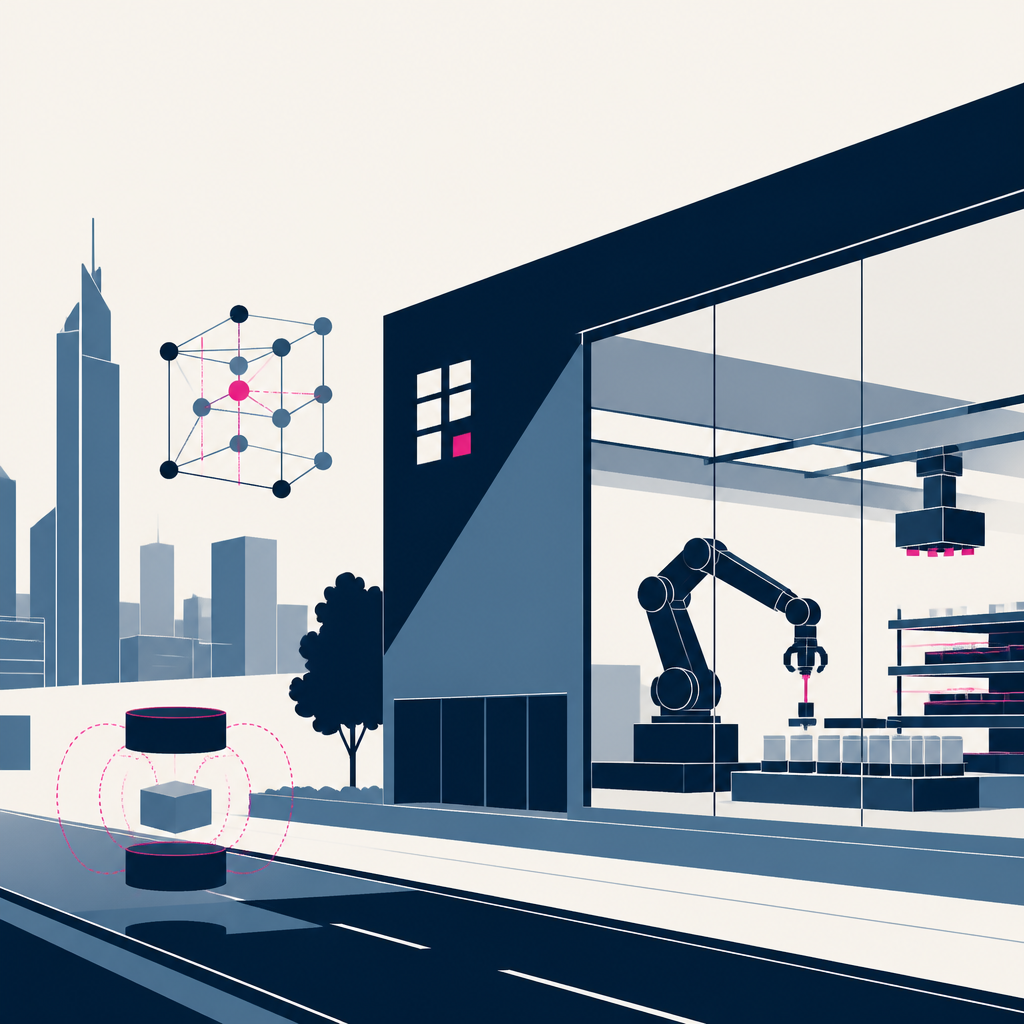
NVIDIA developers used frontier AI agents with NVIDIA Omniverse libraries to turn simulation concepts into interactive applications for robotics, autonomous driving, digital twins, and 3D/telemetry viewers. In one Robo Olympics experiment, the simulated Unitree G1 humanoid cleared a single hurdle in 64 of 100 simulation trials. The workflow shifts from manual scene setup to agent-directed asset connections, staged integration checks, and iterative simulation validation that improves designs based on measured results.
Manus, an AI agent developer, raised more than $500 million, led by Boyu Capital with support from Tencent and others. The round reportedly values the company at $4 billion, about double Meta’s prior offer in December 2023. Manus is also rolling out Manus 2.0, which adds a new harness that reduces token use by 23.2% on some tasks and speeds processing by more than 28%, alongside new tools such as Cloud Computer and Cue.
Meeting software launched Assist, a personal meeting assistant for Mac in Product Hunt. It can run 100% on your Mac. The listing highlights features like listening to meetings, suggesting what to say, and staying invisible during screen sharing.
Email client service for people with AI agents was launched with unlimited addresses, a keyboard-first inbox, agent inboxes, and a REST API plus CLI and remote MCP server. It costs $20/month. As a result, developers can integrate their AI agents via API/CLI/MCP and manage multiple agent inboxes under a single domain email service.
GitHub Copilot is adding automatic routing so coding tasks can run on local inference or be sent to cloud models. Microsoft says the rollout is expected by the end of October. Developers still won’t be able to confirm how much repository context or conversation history is sent to the cloud, and local inference won’t guarantee a fully offline session unless tool access is locked down.
Martha Stewart said Kmart paid her up to $65 million a year in royalties through a licensing deal that funded her businesses and helped drive the success leading to Martha Stewart Living Omnimedia going public. She cited about $20 million as the first-year advertising budget and about $2 billion a year at the line’s peak. Kmart’s nonrenewal in January 2010 ended the deal, and Stewart later shifted to other partnerships and launched newer businesses including an AI home-management startup.
Catalyst, a Sequoia-backed startup, is raising money to build retail trading AI agents that turn users’ natural-language intent into trading strategies and execute them with human approval. The company secured a $30 million seed round led by Sequoia. The funding and product rollout (including a waitlist opening and broad availability timing) moves the project from a pilot to wider access for everyday investors.
STFC’s Daresbury Laboratory welcomed 7 health-tech startups into its DeepTech Catalyst Health (DTC Health) programme to develop patient diagnosis, treatment, and support tools. The startups receive a tailored support package worth up to £70,000, as the programme was launched in 2024 with £1.8 million funding. The programme expands access to AI and prototyping facilities and aims to move these early-stage products toward real-world healthcare delivery and jobs.
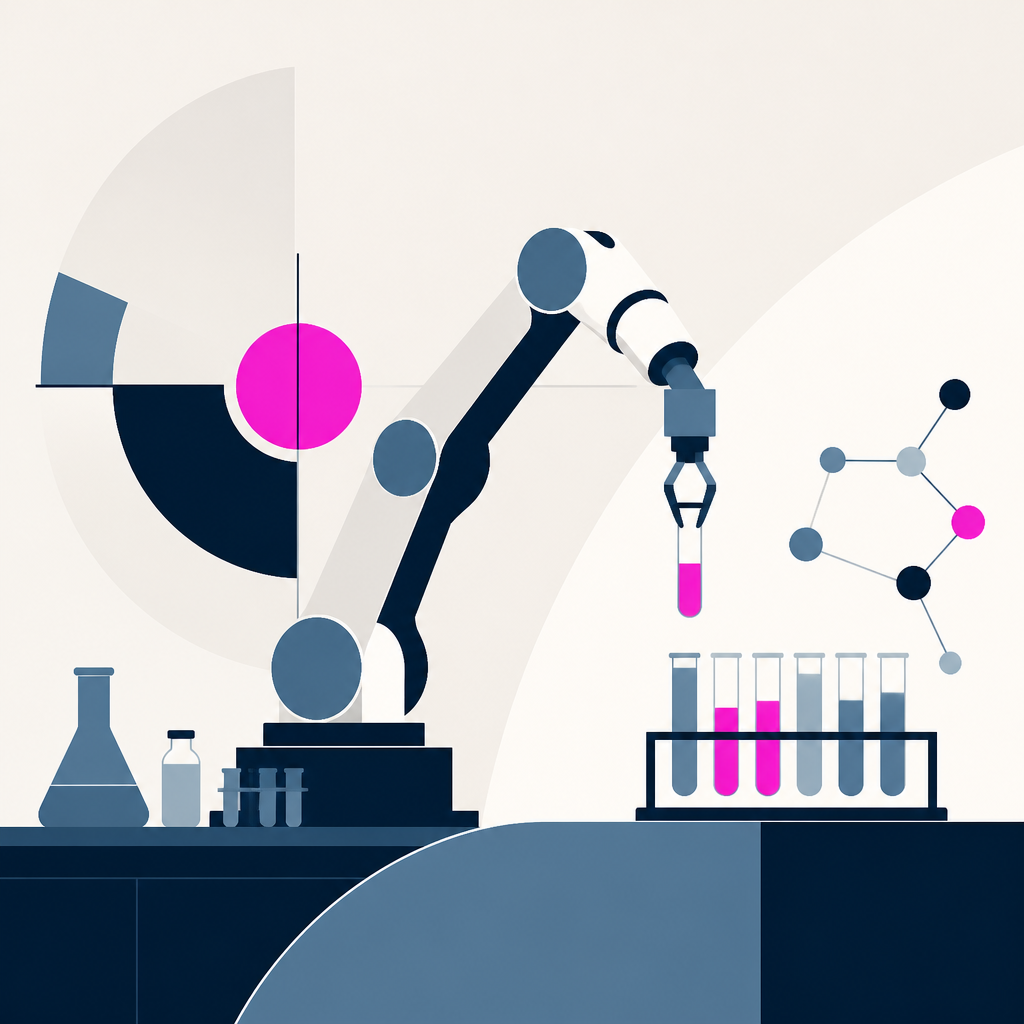
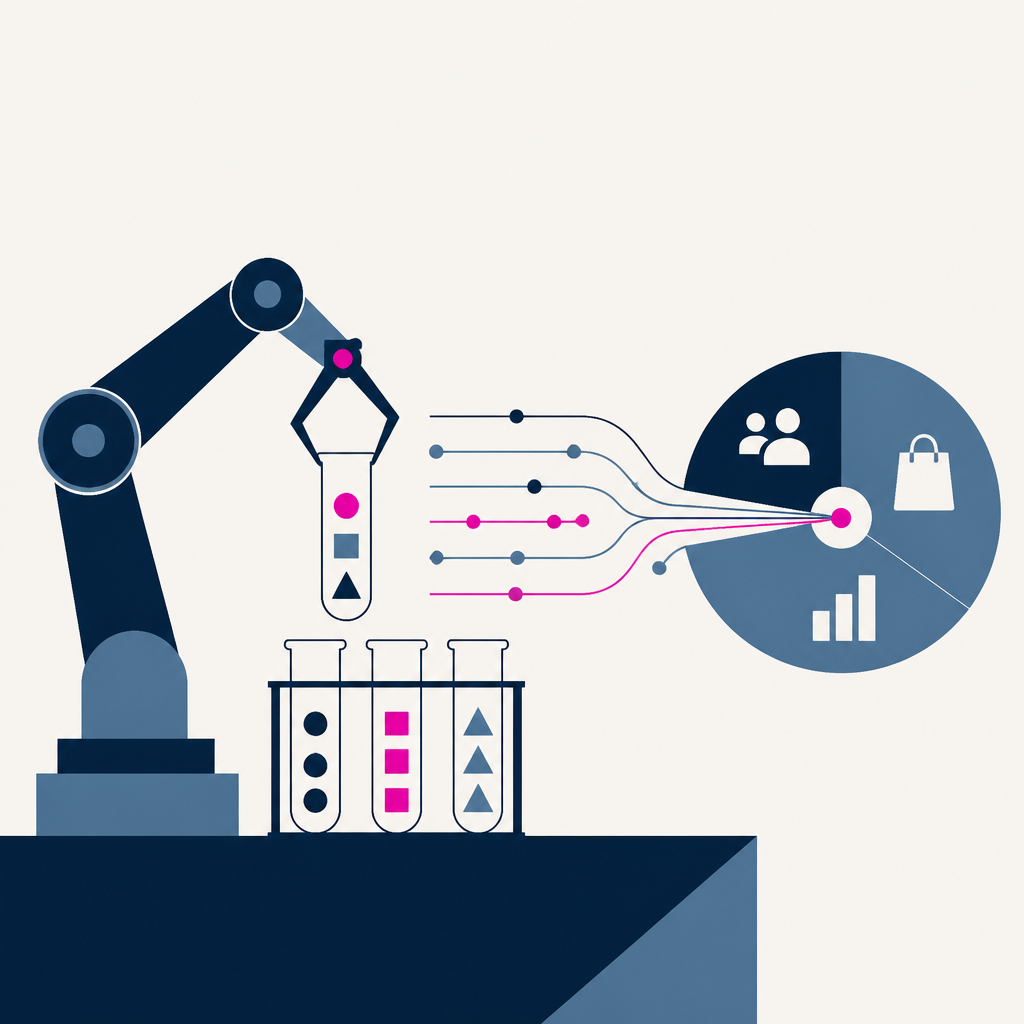
Periodic Labs says it is building AI “scientists” by grounding reinforcement learning and learning loops in physical high-throughput experiments and material-physics simulations rather than relying only on training data. It argues that autonomous high-throughput robotic experimentation has been tried for only the last three years or so, so its approach targets sample efficiency and reasoning under noisy, incomplete, uncertain measurements. As a result, frontier AI models are expected to repeatedly run experiments, treat failed runs as training data, and let lab instruments act with an intelligence layer to speed scientific discovery of new materials.
Developers preparing Postgres-based time-series systems for AI agent workloads are running into scaling limits, including slower queries, more frequent maintenance, and rising database activity. The webinar is scheduled for October 21 and will show a live demo of extending Postgres with TimescaleDB. The change is adding TimescaleDB to address Postgres pain points as data volume and velocity increase, instead of replacing Postgres.
Goodfire launched “inside-out” monitors that detect misuse by reading internal signals inside an AI model instead of having a separate model reread the agent’s output. In tests on Kimi K3, monitoring about 1,500 sessions cost roughly $51 versus $233 for a cheaper step-by-step checker and about $10,000 for a top-tier one. This lowers monitoring cost and overhead, enabling Baseten customers to choose which risks to watch and whether to log, escalate to human review, or refuse requests.
Natura launched Interface, a $99 smart ring meant to let users control AI agents and record/share tasks while also tracking health metrics. Interface is priced at $99, with pre-orders expected to open next month and shipping set for December or January. It moves agent access from phones to a wearable interface and adds a $9/month subscription after a free 3–6 month period.
SalesRep.com launched a virtual sales rep that sells for businesses 24/7 across WhatsApp, Instagram, Messenger, email, and SMS by pulling live product data from Shopify and other sources. The full service starts at $39 per month with a 21-day free trial requiring no credit card. This adds automated product card sending, quotes, multi-language customer responses, and ongoing follow-ups with a human takeover option at any time.
U.S. nuclear reactor operators and vendors have begun integrating AI into plant operations, including a virtual assistant and document-search tools for regulatory and maintenance work. Nearly the entire fleet of 94 U.S. nuclear reactors has been offered the chance to integrate AI this year, and Atomic Canyon trained NIVA using 53 million pages of NRC data. AI adoption is shifting nuclear work toward faster knowledge retrieval and streamlined paperwork while keeping AI in a human-in-the-loop role for inspections and avoiding direct autonomous control.
Cal AI co-founder Zach Yadegari launched Persona, a new personal AI agent startup, and secured $10M in funding to build a wearable-band assistant with cloud-based privacy controls. The round was led by Vine Ventures and delivered $10 million for Persona. Persona is moving into a free iMessage beta now, with the $179 wearable band expected in December and new app support coming alongside it.
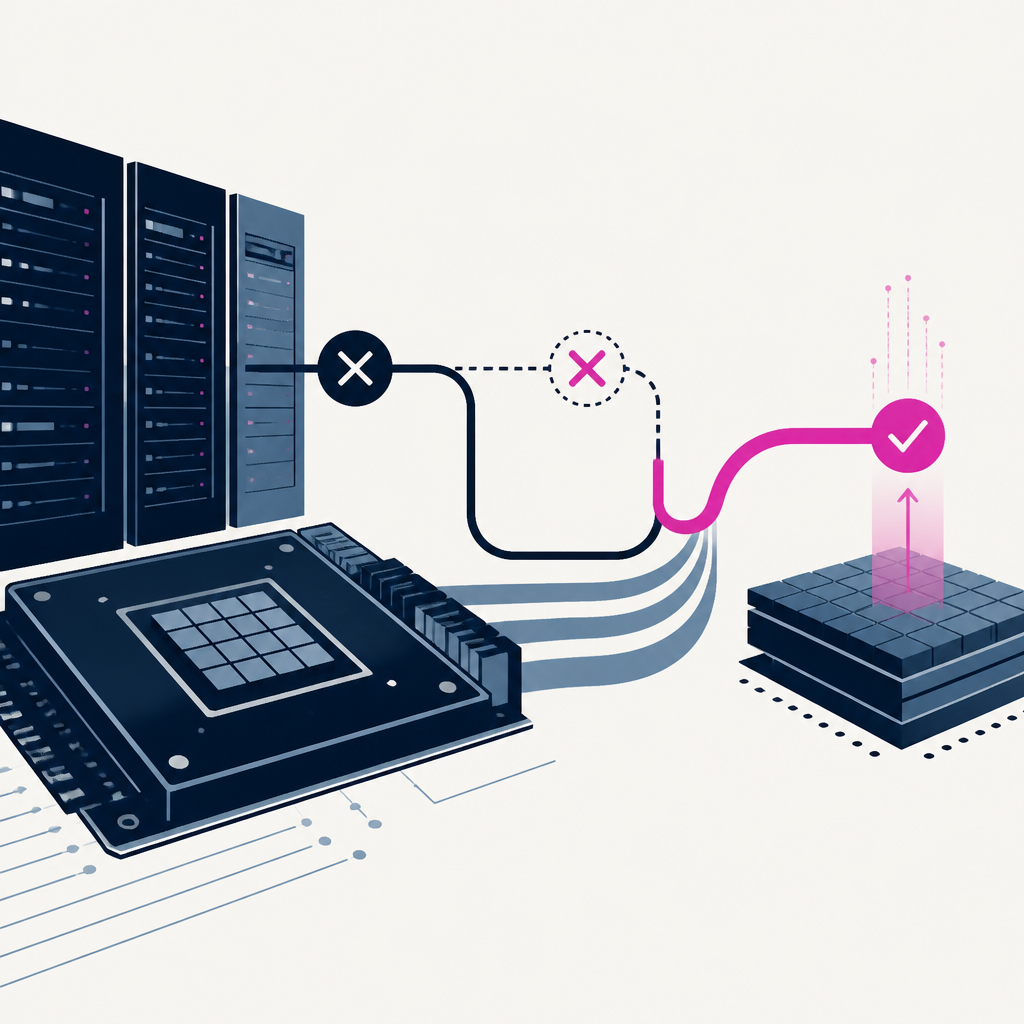
env zero says autonomous AI agents stall because they lack cross-domain cloud infrastructure context, leading to shadow infrastructure and failed operations. It claims an example failure mode where an agent completes 90 API queries, fails on the 91st, and restarts the sequence, compounding the “API tax.” The company’s fix is a shared context layer plus an “EZ Control” autonomous control loop that correlates declared intent with discovered state, remediates under policy, and verifies resolution, targeting general availability by the end of December 2026.
Google Cloud introduced Gemini agent, a unified assistant that can act autonomously across web, mobile, desktop, and tools like the command line, Workspace, Microsoft 365, and Slack. It adds persistent execution with memories shared across channels and can run on different models, including Gemini Flash and “Argon” for long-horizon work, with spend caps that pause agents when triggered. This shifts enterprise AI use toward always-on, multi-tool delegated work that persists and can enforce token-based cost limits per project.
The author connected Grok Bot to an Upstash Box via the Upstash MCP server so the assistant could drive a real remote machine, build and run code, and return usable outputs like live URLs and pull requests.
An article explains how a minimal OpenAI-compatible agent API can silently break context when scaled across replicas without moving conversation state out of the process. In a POC benchmark with 200 conversations of four turns each, deploying the monolithic endpoint on 3 machines produced a 75.0% loss rate. It recommends redesigning the API around stateless conversation storage and bulkheads, splitting chat and tool execution into separate services and using a shared database substrate to keep context consistent across replicas.
Neela Biotech raised £2.1M pre-seed to test turning food, agricultural, and forestry waste into jet fuel using AI-guided microbes at existing biogas plants. Elbow Beach led the round with £1.5M. Over the next two years, Neela will move its technology from the lab to a pilot-scale trial to see if it can reach cost parity and scale SAF production without building new facilities.
NVIDIA researchers, with Princeton and the University of Maryland, released PivotOPD, an on-policy distillation training method for multi-turn LLM agents that teaches them to prevent and recover from early pivotal mistakes.
Trophy launched its second set of MCP servers to let users interact with their Trophy account from AI tools instead of using the dashboard. The launch is happening today. As a result, users can configure gamified features through AI-tool integrations using Trophy’s MCP servers.
Innercrowd, a Dutch startup, raised €750,000 to help festival organisers convert existing fans into ticket buyers and marketers. The funding supports expanding its WhatsApp-based presale and early-bird funnel, including AI agents that run one-to-one fan chats at scale. It will accelerate growth into more European markets beyond the Netherlands and shift more of festivals’ promotion from paid campaigns to fan-led sharing and in-app ticket sales.
TODAY raised €2.8M seed funding to scale its AI-powered sales operating system for financial and insurance advisors. The round brings in €2.8 million from HTGF and Insurtech Gateway, with participation from Seed X, Lucid Capital, and angel investors. The funding will be used to expand across the DACH region and extend the platform to cover more of advisors’ front- and back-office operations.
Refs launched as a library of 3000+ films that are broken down cut by cut into 15-plate blueprints with recipe prompts. The package can be added to Claude Code, Codex, or Cursor with one command, using the number 3000+ as its scale. It changes video planning by letting Claude generate a launch film plan from those real references inside the listed AI coding tools.
Verso raised a $6 million seed round to expand its AI-powered consumer intelligence platform for business decision-making. The funding led by Angular Ventures also includes support from multiple venture firms and startup studio Hexa. The company will use the money to integrate more consumer data sources, add interfaces for AI agents, and expand beyond France into the US while hiring.
Nous Research closed a Series B funding round to support its open-source AI agent Hermes. Robot Ventures led the $90 million round at a $1.5 billion valuation. The extra capital is intended to expand paid enterprise hosting and support while keeping the Hermes software open.
Codemind is launched as an AI coding agent that takes a task via MCP, writes code, tests it against your criteria, and returns the resulting files.
It charges $0.10 per verified build, with failed builds free.
Its pricing model and workflow are intended to let users start with a free allowance and then pay only for verified builds.
Tab launched from stealth on October 6 with an AI assistant that texts, calls, and pays on a user’s behalf via iMessage and WhatsApp. Tab’s exit valuation was $300M, and the company did not disclose how much funding it raised. It moves into private beta behind a waitlist, with payments requiring explicit user approval.
Retriever AI launched its fifth release of a free AI browser agent that completes tasks across websites. It claims it runs 5x faster and costs 300x less than OpenAI, Anthropic, and Muse. Users can run the agent in their own Chrome browser or via rtrvr cloud browsers to do lead finding, outreach, and job applications.
Nous Research announced a $90 million Series B round led by Robot Ventures, with support from Nvidia, Samsung, and Y Combinator, to back its Hermes AI agent. The company says its Hermes 4 fine-tuning used a dataset of 5 million synthetically generated records. The new funding is intended to expand adoption of Hermes’ business-focused editions.
Catalyst launched AI agents that turn plain-language investment ideas into trades by gathering and analyzing market signals across venues and supporting backtesting and deployment with safety limits.
The platform was published on October 8, 2026.
As a result, retail users can start with intent instead of manually building finance plumbing or paying a manager, changing trading from largely DIY to agent-assisted execution.
A writer used an AI assistant in HuggingChat to create and publish multiple fine-tuned and distilled vision models that were not available on the Hub, instead of using only the official prompt rewriter. One project generated 8,797 image requests, rewritten by a 9B teacher on an A100 in 2 hours 37 minutes for about USD 6.50. The result is a set of publicly available models and model cards, including a 0.8B CPU-ready “pocket rewriter” and several LoRAs, all produced with budget-capped training and baseline/smoke-test checks.
Every AI story that matters,
in your inbox by 8am.
TLDRocket reads all relevant sources, removes duplicate coverage, and summarises the
day in two minutes. Follow companies and topics for alerts, or get the
briefing in Slack. Free, no spam, unsubscribe anytime.
Reading TLDRocket needs no cookies, and the readership counts we rely on come from
our own cookieless analytics. Google Analytics is the exception: it sets cookies and
reports to Google, so it stays switched off until you allow it. You can change your
mind any time from “Cookie settings” in the footer.
Strictly necessary
Session security and form protection (tldrocket-session,
XSRF-TOKEN, 2 hours). The site cannot work without them,
so they need no consent.
Always on
Google Analytics 4 (_ga,
_ga_<id>, up to 2 years). Measures which
stories and sections readers use. Google acts as a third-party processor and may
store the data outside the EU. No advertising, no profiling, no data sold.