Doctor Evidence Search Tool “Evidence Finder” Adds Sakana Namazu
Sakana AI 43
Iris’s doctor-focused evidence search tool Evidence Finder adopted Sakana AI’s Japanese LLM, Sakana Namazu.
1631 summarised stories about AI Agents, each linking back to the original source. Browse all topics →
Sakana AI 43
Iris’s doctor-focused evidence search tool Evidence Finder adopted Sakana AI’s Japanese LLM, Sakana Namazu.
Product Hunt 5 days ago 36
Maildun launched “Maildun for Mac,” an agentic email builder for macOS that lets you design on-brand emails by hand or with AI via connected providers and your own API key. It launches today and includes a built-in MCP server for tools like Claude Code, Codex, or Cursor to create and edit emails. As a result, users can live-edit email designs with AI, manage per-client workspaces and brand kits, and publish emails through maildun.com.
Fortune 29
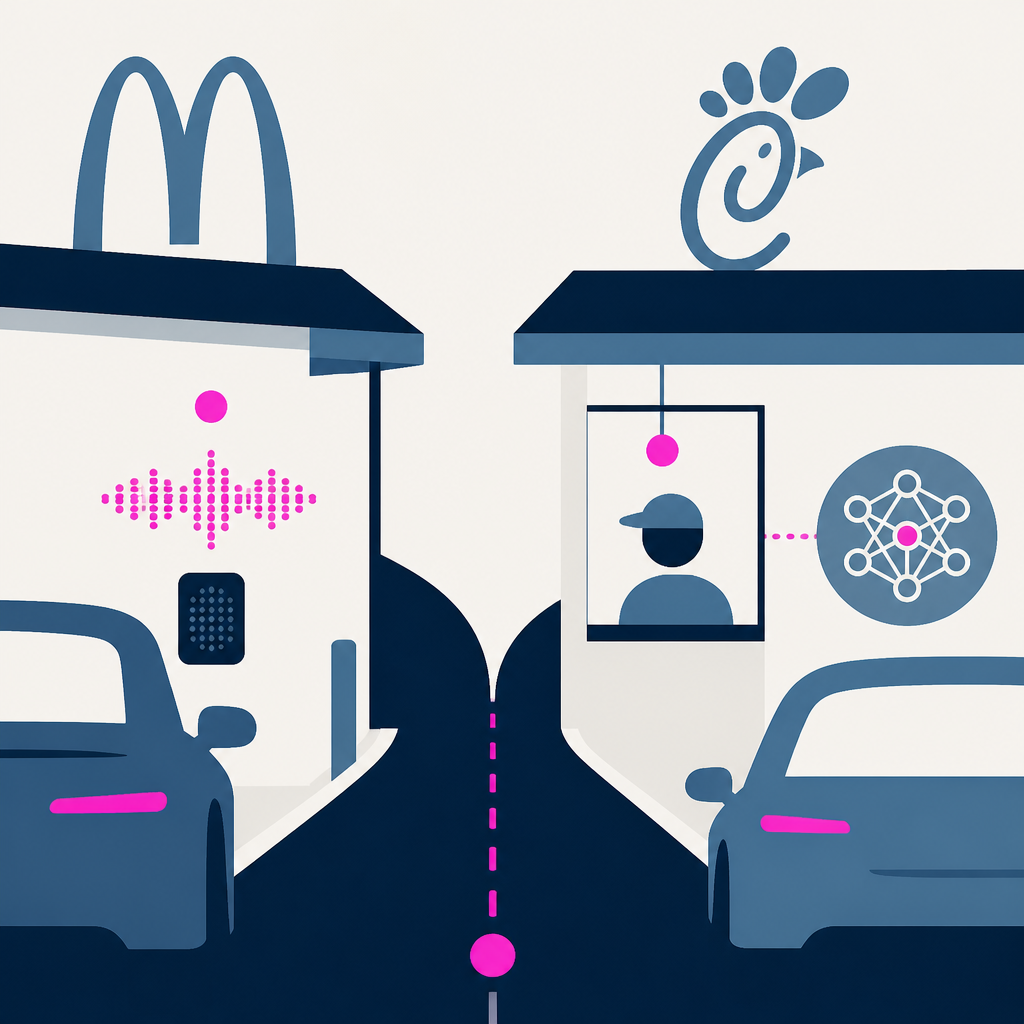
Chick-fil-A and McDonald’s are taking different approaches to using AI at drive-thrus and in restaurant decision systems. McDonald’s says it is testing Archy, an AI voice ordering system accurate more than 90% of the time. Chick-fil-A will keep human staff at the speaker using AI behind the scenes, while McDonald’s expands AI ordering and faces an Oct. 2 antitrust lawsuit over a separate pricing-recommendation system.
Fortune 44
Ultra raised $62 million to expand its warehouse “robots as a service” business and announced a deeper partnership with AI robot-software firm Physical Intelligence. The funding includes a $50 million Series A led by Framework Ventures and participation from Y Combinator. The tie-up shifts Ultra toward using Physical Intelligence’s “body and brains” approach so PI provides the learning-focused AI while Ultra focuses on robot installation and hardware support.
TechCrunch 5 days ago 46 ● 3 sources
Amazon says it will stop using NDAs when negotiating data center deals with local governments. The change follows Microsoft’s similar move earlier this year and comes alongside plans for a $3,499 computer to run AI agents around the clock. Together, these shifts are framed as reducing secrecy in public contracting while increasing emphasis on trust for personal AI startups that seek access to users’ data and payments.
Trending Topics 5 days ago 21
Schneider Electric agreed to buy PTC, and the article also lists nine other deals involving AI and data software companies. The largest transaction is Schneider’s roughly $22.6 billion cash purchase of PTC. After the deals, companies like BlueMatrix (Aiera), Automation Anywhere (Boost.ai), Harness (Augment Code), SAP (TechWolf), and Alight (Abett) expand their AI and data offerings, while other bidders make non-AI telecom and simulation acquisitions (BT/TalkTalk, FVLCRUM/Fidelity Technology Services, Acuity/Continuus).
Amazon Web Services 5 days ago 28
Amazon AWS recapbed September 2026 updates across Amazon Bedrock, Amazon Bedrock AgentCore, and Strands for AI builders. AgentCore’s runtime added lower cold-start latency and improved memory management for serverless agents, with pay-as-you-go pricing that charges for actual usage rather than peak memory. These changes expand model availability, speed up and measure agent operations, and add new ways to sync and connect enterprise knowledge sources so agents can use fresher business data with fewer custom ingestion steps.
Amazon Web Services 5 days ago 46
Postman built Agent Mode to let its AI agent operate across API testing, documentation, discovery, and implementation within the Postman product, and it documented the architecture lessons from integrating it into a mature interface-driven platform. In its testing, tool-selection errors rose once the visible toolset exceeded about 40 tools, while the system narrowed 170+ candidate tools down to roughly 15 relevant ones. The result is a production-style agent design that scopes tools per task, uses schema-based read access, and treats context as the main bottleneck while running model inference on Amazon Bedrock with controls like zero data retention settings and prompt caching.
The Verge 5 days ago 38 ● 12 sources
Microsoft is using a Windows and Surface event this week to lay out a plan to keep Windows 11 as the base while evolving Windows toward an agentic OS powered by AI agents. Microsoft said Windows 11 was released 5 years ago, and the new approach is to use hybrid intelligence that can run free local models instead of relying on expensive cloud models. As a result, Windows will shift toward agent-style features that take actions using local AI when available.
Product Hunt 5 days ago 16 ● 8 sources
Microsoft released Microsoft-Decision-1, a decision-scoring model for routing, classification, verification, and agent control.
Expo Blog 5 days ago 21
Expo added an evaluation harness to measure whether coding agents actually trigger and use its Expo skills during app-development tasks.
Runtime 5 days ago 11
Runtime introduced a “test gate” that reruns an agent’s proposed change in a fresh Firecracker microVM and checks for test weakening and related issues before any review. It measures sandbox startup at 102 ms after the create request on Runtime’s servers and then runs three test passes, requiring all 3 runs to pass and the old base-branch tests to pass on the new code. The result is that agents can no longer rely on their own potentially weakened test runs, because the gate blocks or reports failures such as skipped/focused tests, removed tests, flaky behavior, and altered assertions.
The Verge 5 days ago 13
The Vergecast hosts David and Nilay discussed how major tech companies are putting AI assistants and agents at the center of new gadgets. The episode focuses on hardware launches like Microsoft’s high-end laptop, Amazon’s Android tablet, and Apple’s smart home direction. The discussion shifts from whether “AI should run the computer” is the right premise to whether any of the new devices actually get that idea right.
Trending Topics 5 days ago 1
fonio.ai reported that its ARR rose from $10 million to $15 million in 60 days, announced by CEO Daniel Keinrath on LinkedIn. The company said it must sustain a pace of just over 22% per month to reach more than $25 million ARR by Christmas. It is using that growth to justify rapid expansion—now offering phone-call and WhatsApp A.I. agents, adding an enterprise version via a T-Systems Austria partnership, and filling more than 70 open roles.
The Verge 5 days ago 27 ● 33 sources
Instinct launched an invite-only AI agent built around a text-message interface for tasks like booking DMV appointments and follow-up emails. In August, the startup went to market with minimal outward promotion. With Muse and Dots arriving from larger AI companies shortly after, Instinct’s momentum was left in doubt.
adobe.com 5 days ago 25 ● 3 sources
Adobe released an Adobe plugin for Claude that connects Adobe creative and document tools to a Claude conversation for generating and editing outputs across images, video, designs, and PDFs. The plugin adds 80+ tools across Adobe apps. After installing the plugin and connecting the Adobe connector, users can run an “/adobe” command to create, batch-edit, resize, animate, and refine assets without switching apps, with extra capabilities unlocked by signing in.
Allen Institute (AI2) 5 days ago 1
Ai2 presented its COLM 2026 work on open AI research artifacts, including Olmo Hybrid and new tooling for science-focused agents. Olmo Hybrid matched Olmo 3 7B’s MMLU accuracy while using 49% fewer training tokens. This leads to a next Olmo pre-training effort with a hybrid mixture-of-experts design, plus new releases like Olmo-core 3 and AstaBrief for cited-report generation.
MarkTechPost 5 days ago 41
Underdog released Saluki 27B, a 2-bit GGUF version of Qwen3.8-27B designed for on-device agent tool calling under an Apache 2.0 license. It shrinks storage to 7.89 GB versus 54 GB for the full BF16 model while reporting 42 versus 35 parallel tool calls. The compression targets tool-use performance, so tool-calling improves relative to the full model while math and multi-step reasoning drop by about 12 to 18 points.
Trending Topics 5 days ago 19
Hone, led by Austrian founder Moritz Stephan, raised $60 million to develop AI agents it calls Engines for taking ownership of business goals. The round valued the company at $285 million. The funding supports its push to sell measurable, profit-and-loss tracked agents with logged actions and human approval for sensitive steps.

OpenAI 5 days ago 10 ● 3 sources
Asana cut the cost and increased the speed of its browser agent by switching it to GPT-6.1 Sol in tests. The browser agent became 76x cheaper. Asana can now offer more capable models to customers at lower per-task cost.
MarkTechPost 5 days ago 39 ● 5 sources
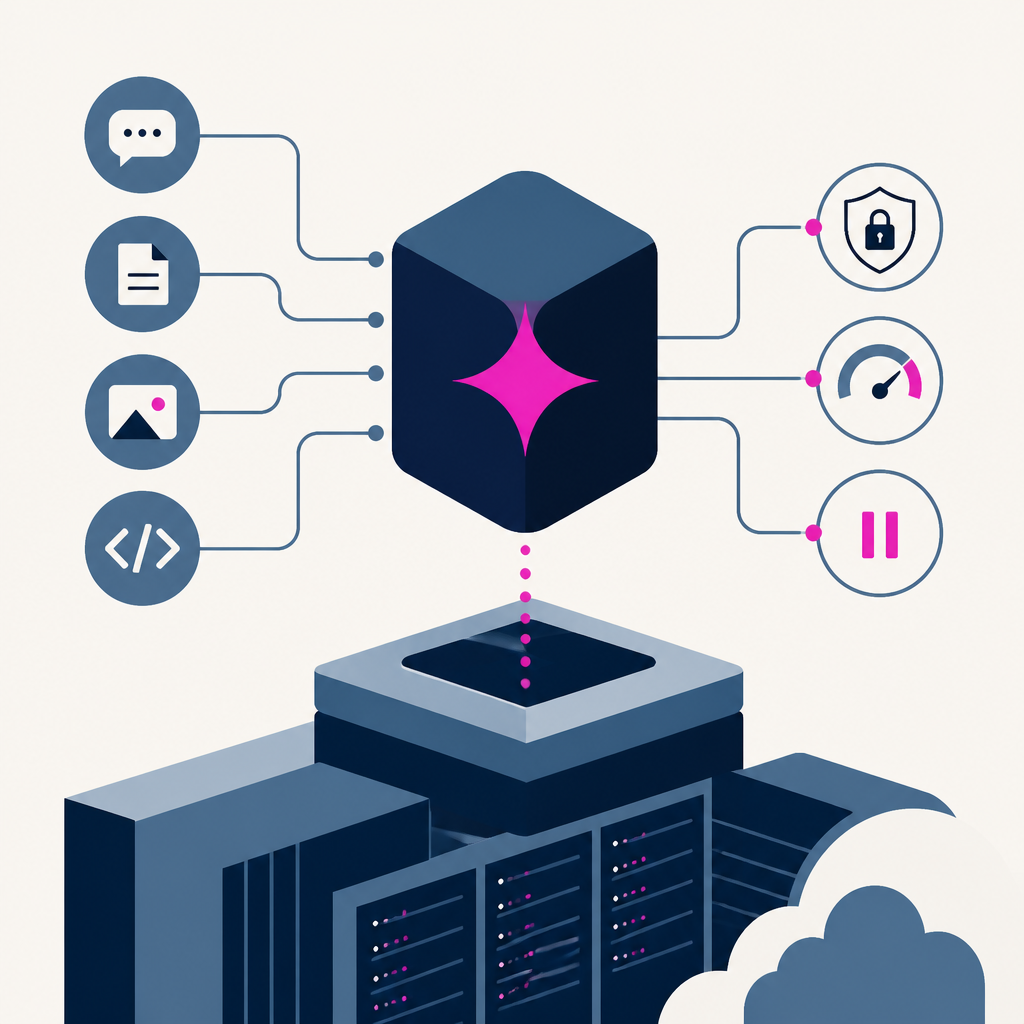
Google Cloud launched the Google Cloud Gemini agent, a cloud-hosted delegation layer for enterprise work covering question answering, knowledge work, media creation, and coding. It includes 3 governed cost controls, including real-time spend caps, and can pause an agent when a hard per-project limit is hit in the Cloud Billing Console. This shifts enterprise AI use toward a single agent interface (1 prompt box and 1 API) with persistent cloud execution, governed identities, and routed model execution across Gemini and Claude.
Trending Topics 5 days ago 18
Exit51, a Vienna-based advisory firm, guides founders through selling smaller profitable startups with an enterprise value target up to about €10 million. The focus transactions include businesses with roughly €250,000 to €1 million in EBIT and up to about €10 million in annual revenue. The firm says it uses a lean team plus AI research and buyer matching to handle these smaller deals while keeping personal support central.
MarkTechPost 5 days ago 12 ● 3 sources
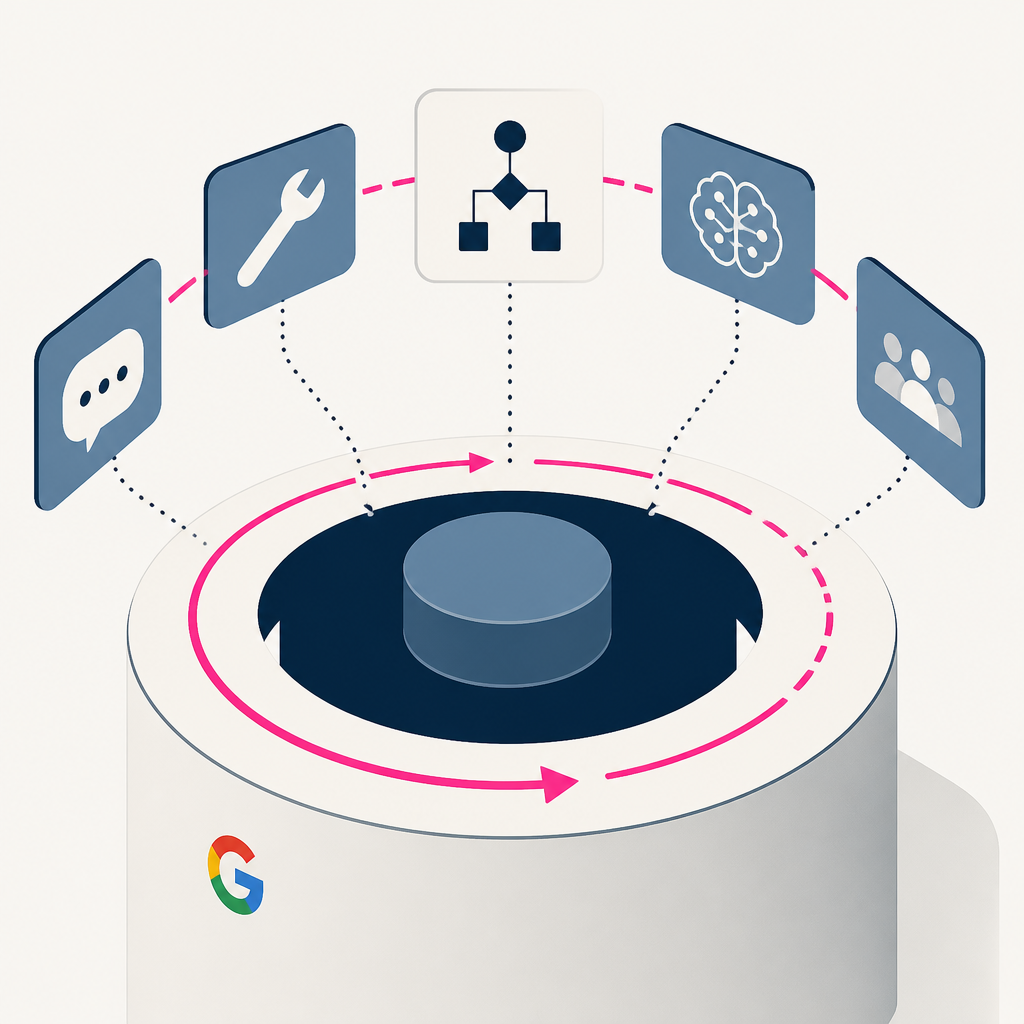
Google Research published a tutorial that implements RRSI (Regularized Recursive Self-Improvement), letting an LLM agent rewrite its own harness (prompts, tools, memory, control flow, sub-agents) while keeping a frozen underlying model, and driving the paper’s edit-selection logic directly with Python. The selection procedure uses calibrated noise bands, with the paper reporting a value of 0.020 for engineering evaluations. As a result, the guide turns the paper’s rules into runnable code, including how scores treat missing trials, and demonstrates how RRSI’s decisions can be audited against ground truth in a simulated setting rather than only by comparing top scores.
Product Hunt 5 days ago 40
Guilds.run launched an open-source tool for building and inspecting AI agent teams. It highlights “50 followers” and lets you debug prompt and tool-call behavior, control permissions, and select models per agent. Users can self-host it for free and stop relying on black-box understanding of agent interactions.
The daily briefing
TLDRocket reads all relevant sources, removes duplicate coverage, and summarises the day in two minutes. Follow companies and topics for alerts, or get the briefing in Slack. Free, no spam, unsubscribe anytime.
 TLDRocket
14 October 2026
TLDRocket
14 October 2026
Sakana AI added a new transparency layer to Sakana Chat with “My Fish,” letting users see what the chatbot remembers, when those memories get used, and how related facts connect. The interface surfaces memory activity as small “chips” during responses and backs it up with a heatmap of memory use plus read/write history and a connection map. It’s a practical answer to a familiar problem: people don’t just want outputs from AI systems, they want a way to audit what the system is carrying forward.
Read the full briefing →