
Synthesis Superintelligence: from Semiconductors to Superconductors — Periodic Labs’ Liam Fedus and Ekin Dogus Cubuk
Latent Space
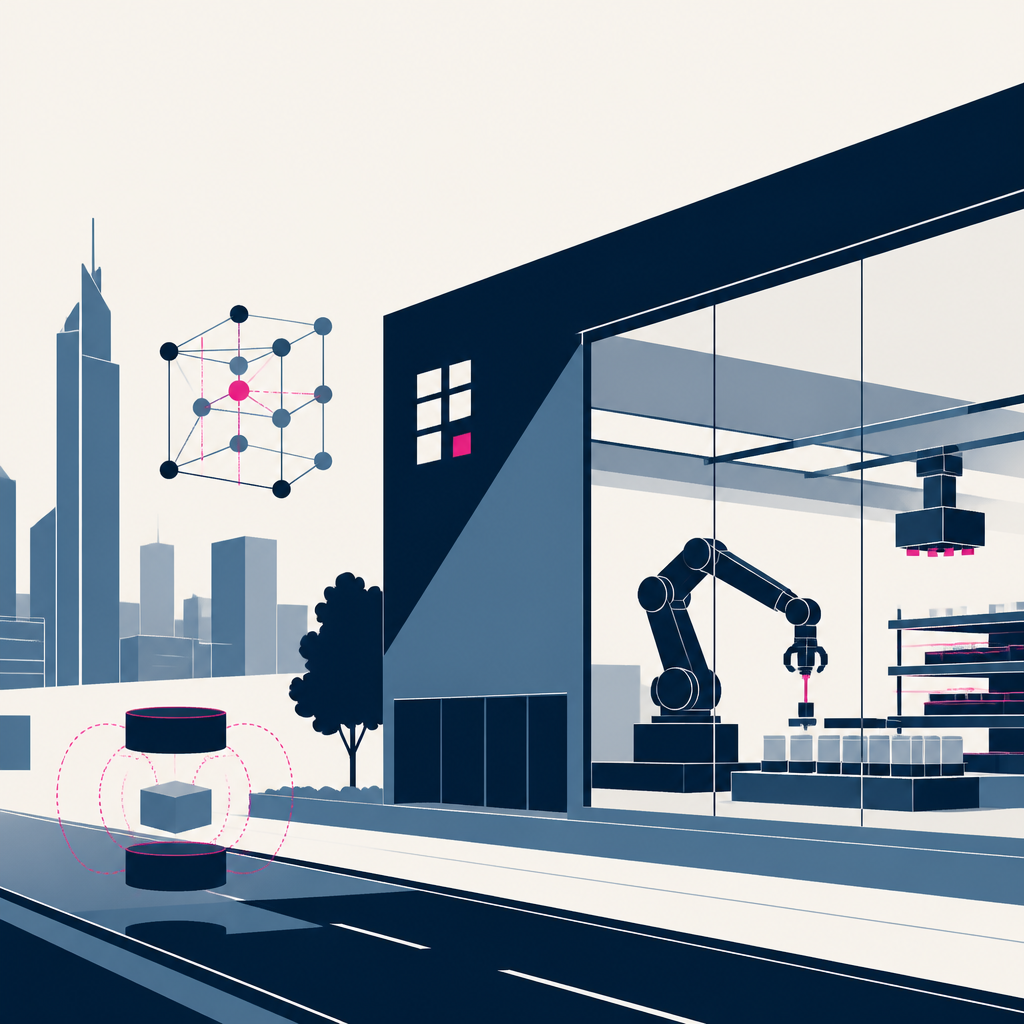
Periodic Labs says real science, not web text, is where AI gets stuck in the real world. That means noisy labs, failed runs, and maybe faster discoveries in materials.
Based on reporting by Latent Space — read the original for the full story.
Summary, retelling and take written by AI under human oversight; images are AI-generated illustrations. How we work · Report an error
Periodic Labs is only about a year old, but the pitch coming out of it is already unusually clear: stop asking AI to just memorize the internet and make it work in a lab. Liam Fedus and Ekin Doğuş Çubuk are building around a simple claim from their site — intelligence matters, but new knowledge only appears when ideas survive contact with reality.
That sounds tidy until you think about what a lab actually is. Fedus says their reinforcement learning environments come from physical experiments, which means the system has to deal with uncertainty, missing telemetry, messy measurements and plain old bad luck. Things do not come out of a furnace neatly labeled. Machines drift. Temperatures are off. Labels can be noisy. And unlike a digital sandbox, they can’t just spin up more environments whenever they want.
Çubuk draws a sharp line between science and the kinds of problems current models are best at. In math and code, the context is mostly there. In materials science, the system starts with far too many atoms and far too much complexity, so humans compress reality into reduced descriptions: energy, fluctuations, reaction barriers, local structures, X-ray structure data that only captures part of the picture. That is why Periodic is pairing AI with high-throughput experiments, simulations and density functional theory, instead of pretending one of those pieces can do the whole job.
The broader bet is what they call “synthesis superintelligence”: models that learn from the process of doing science, not just the final paper. The lab is aiming at the whole discovery loop — prediction, synthesis, characterization — and at a future where even failed experiments become useful training data. That is a very different kind of AI company. It’s also a reminder that science is not just another benchmark to be solved and posted about.
Periodic’s founders also point to practical targets: new materials, room-temperature superconductors, better batteries, more efficient compute. But the real twist is more basic than any of that. They want every instrument to get a kind of 140 IQ, and they want the lab itself to become the teacher. That is a much more grounded AI story than the usual chatbot victory lap, which is probably why it sounds refreshing.
My take — AI-written commentary, not fact-checked reporting
The smartest thing Periodic is doing is treating lab work as the test, not the demo. Too much AI still acts like reality is an inconvenient edge case, when it’s the whole point. Open models are great; open-ended wishful thinking is not.
Read more about this at: Latent Space
Related stories
 Building the materials foundation for AI
MIT Technology Review · 3 weeks ago ·
15
Building the materials foundation for AI
MIT Technology Review · 3 weeks ago ·
15
 Launch HN: Discovered Materials (YC P26) – AI agents to discover new materials
discoveredmaterials.com · 1 month ago ·
38
🔬 The Lab of the Future Should Feel Like a Data Center — Andy Beam & Rafa Gómez-Bombarelli, Lila Sciences
Latent Space · 2 months ago ·
28
Launch HN: Discovered Materials (YC P26) – AI agents to discover new materials
discoveredmaterials.com · 1 month ago ·
38
🔬 The Lab of the Future Should Feel Like a Data Center — Andy Beam & Rafa Gómez-Bombarelli, Lila Sciences
Latent Space · 2 months ago ·
28