
NVIDIA PivotOPD Teaches Multi-Turn AI Agents to Recover From Pivotal Mistakes
MarkTechPost Michal Sutter
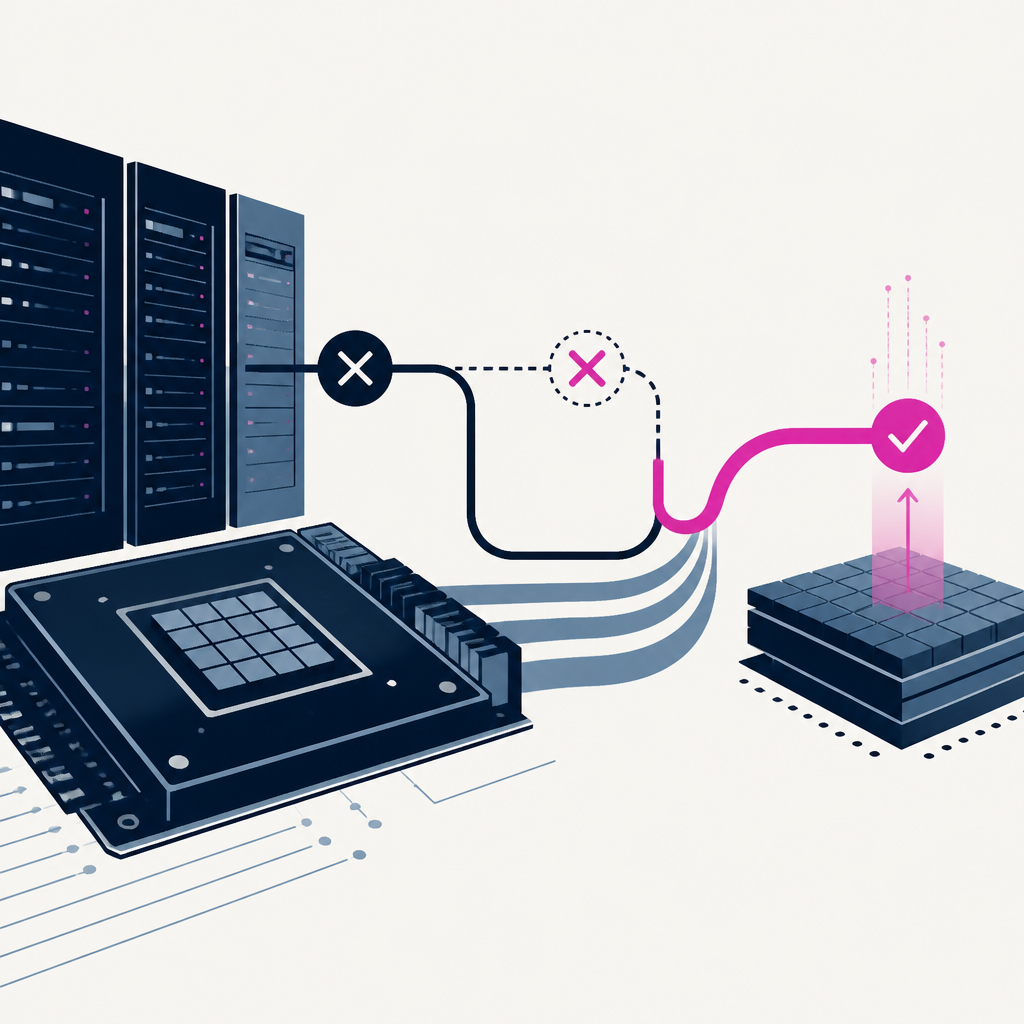
NVIDIA and university researchers built PivotOPD, a training method for AI agents. It helps them dodge early mistakes and recover when they still make them.
Based on reporting by MarkTechPost, Michal Sutter — read the original for the full story.
Summary, retelling and take written by AI under human oversight; images are AI-generated illustrations. How we work · Report an error
NVIDIA researchers, working with Princeton University and the University of Maryland, have introduced PivotOPD, a training method for multi-turn language agents. It is not a new model. It is a way to teach existing ones what to do after they’ve already taken a bad step.
That matters because a lot of agent failures seem to come from one early wrong turn. In the paper’s ALFWorld analysis, more than half of failed rollouts contained a pivotal mistake, and the first one usually showed up early, around turn 8 to 12 in a 30-turn run. After that, the agents often kept going for many more turns without getting back on track.
PivotOPD tries to fix both sides of that problem. First, a larger teacher model looks back at a rollout and marks pivotal turns. Then the student is trained not just to avoid the mistake, but also to recover from it, using reverse KL for prevention and forward KL for recovery. The researchers say this is the piece standard on-policy distillation usually misses. In their tests, the right action at a pivotal turn stayed below 1% probability, which helps explain why ordinary sampling-based training so often walks past it.
The results are strong across three agent benchmarks. Against 13 baselines, PivotOPD posted the best average results on ALFWorld, WebShop, and Search-based QA for Qwen3-1.7B and Qwen3-8B students. For the 1.7B student, it reached 73.7% on ALFWorld and 44.5% on Search-based QA, with 76.6% WebShop success. For the 8B student, it reached 93.0% on ALFWorld, 47.4% on Search-based QA, and 81.9% WebShop success.
The recovery numbers are the clearest part. Across 72 replayed pivotal mistakes, PivotOPD recovered 72.7% of them, compared with 20.3% for standard OPD and 8.3% for the base model. The catch is that it depends on replayable environments and on a teacher whose pivot calls line up with the oracle often enough to be useful. Training also adds overhead during learning, especially when later recovery turns need environment replay. But at inference, the method is free: no extra cost once the model is trained.
My take — AI-written commentary, not fact-checked reporting
This is the sort of paper that quietly exposes a big gap in agent hype: most systems are trained to look smart on the first try, not to dig themselves out of a hole. Recovery is the real skill, and the field keeps pretending it’s optional. It isn’t.
Read more about this at: MarkTechPost
Related stories
 Perplexity Trains Its Computer Agent on Real Mistakes With Hint-Guided Self-Distillation
MarkTechPost · 1 week ago ·
6
ImportAI 449: LLMs training other LLMs; 72B distributed training run; computer vision is harder than generative text
Import AI · 6 months ago ·
22
LEAD: Breaking the No-Recovery Bottleneck in Long-Horizon Reasoning
Apple · 2 months ago ·
23
Perplexity Trains Its Computer Agent on Real Mistakes With Hint-Guided Self-Distillation
MarkTechPost · 1 week ago ·
6
ImportAI 449: LLMs training other LLMs; 72B distributed training run; computer vision is harder than generative text
Import AI · 6 months ago ·
22
LEAD: Breaking the No-Recovery Bottleneck in Long-Horizon Reasoning
Apple · 2 months ago ·
23