MentionBird says it launched and claims to test ChatGPT, Gemini, and Claude on buyer questions so that AI search answers can be missing when a product isn’t mentioned on trusted pages. It reports “Nine answers” and “Zero mentions” in the test results. It positions its service to help businesses appear in those AI-generated results by increasing their presence on the sources AI pulls from.
Fortune highlighted 10 influential women across Asia for 2026, spanning fields from badminton and tennis to space, conservation, film, and AI governance. The list says 23-year-old Jeeno Thitikul posted the lowest single-season scoring average in the LPGA’s history and added 3 more LPGA victories in 2026. The result is a spotlight on diverse women’s leadership and achievements across sports, culture, and policy, including setting the stage for how they’ll be watched through 2026.
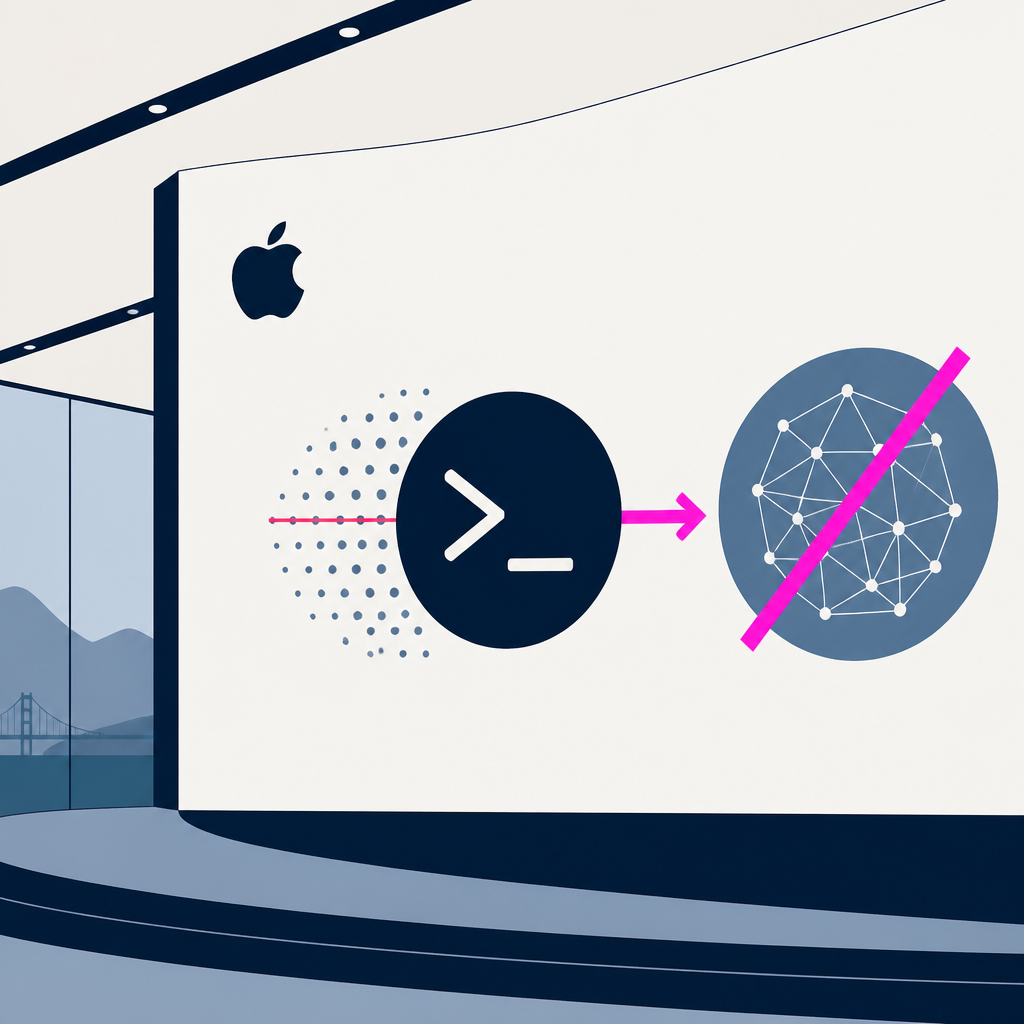
RemoveMacAI was released as a command-line tool to let macOS 27 users disable Apple Intelligence in a fully reversible way. The models use about 12GB of storage, and can exceed 30GB depending on what’s installed. With no built-in toggle in macOS 27 Golden Gate, users now have a simpler method to remove the AI model files and reclaim disk space.
TikTok announced it is adding an AI shopping assistant and a one-click in-app checkout that lets users buy directly from brands from the For You feed. The checkout is described as “one click,” enabling purchases without leaving the app. The change integrates shopping questions and payments into TikTok’s main feed, aiming to capture more transaction value within the platform rather than sending users elsewhere.
Sona8, a startup founded by former BCG and McKinsey consultants, was accepted into Y Combinator’s current batch using AI voice agents to interview employees about how work is done. It has supported more than 10,000 employee interviews so far. The company plans to expand from interviews into a “context layer” that other AI automation tools can query and keep updated as systems and work change.
HackerRank is moving its developer hiring interviews to Chakra, an AI interviewer that observes candidates doing tasks with an AI assistant and evaluates both their answers and their approach. After about six months in beta, HackerRank is making Chakra generally available on Monday, following more than 500,000 interviews in testing. The hiring process consolidates multiple rounds into a single AI-led interview and changes what employers measure from just correct outputs to reasoning and judgments, while suspicious-activity flags drop by 70% to 80%.
Nolla Health launched an app in Utah that lets users scan their faces for acne and have an AI system analyze severity and draft a prescription. For the first 100 patients, two physicians approve each AI-generated prescription before it’s issued, then review only after up to 500 patients have been prescribed. Oversight is gradually loosened as the pilot expands.
Employers are finding that workers with in-demand AI skills can command higher pay rather than being displaced, according to new data from Robert Half and other studies.
About 72% of managers plan to raise pay for recruits with relevant AI skills, and AI job postings in the U.S. have doubled since 2023.
As a result, hiring in 2027 is expected to include more higher-than-planned salaries, wider pay premiums for AI expertise, and faster wage growth for AI-adjacent roles.
TIAA reported survey results showing Gen Z is unusually anxious that AI will harm their retirement savings and earning power. The survey found 51% of Gen Z fear AI could cut their nest egg, 11 points above the national average. The takeaway is that the concern is pushing advice to start saving earlier and adjust retirement expectations for longer working lives and lifespans.
Saber developed and scaled an AI workflow automation platform by starting from customer-led consulting and proving automation on a 200,000-claim book before commercializing. It automated that manual task in less than three days instead of the six weeks previously expected. As a result, it grew to £13M ARR without signing a term sheet and positioned its product utility around client demand rather than investor-driven deployment.
Consumer Technology Association announced CES Unveiled Milan, an event in Milan intended as a European preview for CES 2027. It will be held on October 21 at Allianz MiCo. Registration opens in May, and it adds a Milan stop to the Road to CES with startup exhibits, match-and-mentor support, and a pitch contest whose winner earns space in Eureka Park at CES 2027.
Etsy sellers are getting a Customer Service AI tool that drafts replies to buyer messages directly in the Etsy reply box. The tool includes 30 free replies. Sellers can review and press Send, so messages are only sent after they choose to use the generated text.
Spinachi AI is presented as a WhatsApp-based way to forward lab reports, have them sorted for a family, and show where results stand and when tests are due. The listing shows 22 followers. This shifts lab-report handling from manual review toward automated organization and reminders without a dedicated app.
AI is being used to support self-represented legal cases, with outcomes reported in England and Wales, the US, and Australia. In May, 0.6% of Claude use was for lawyers’ tasks. This points to a shift where more people without lawyers may use AI agents to argue their cases and understand legal rights.
Stanislav Shabaiev argues that investors should look for companies using AI to reduce manual work and embed technology deeply in existing workflows, rather than focusing on traditional AI business labels. He says defensibility comes from data and integration costs that make switching too expensive, with the model itself available to everyone now. As AI spending shifts from experimentation to everyday operations, the emphasis moves from pilots to renewals and contract survival, favoring firms that combine AI with industry-specific know-how.
Enterprise AI is shifting from predictive models that beat statistical forecasts to systems that can make autonomous decisions based on their conclusions without losing business intent.
NVIDIA Inception startups are building AI tools to reduce bottlenecks in breast cancer screening, diagnosis, and treatment planning. iSono Health’s ATUSA system standardizes a 3D ultrasound breast scan in about 2 minutes per breast and reports 28% higher sensitivity than handheld 2D ultrasound. The work is intended to speed results, improve imaging consistency and risk estimates, and support therapy decision-making, with investigational components noted for some uses.
Physical AI is moving from training models in data centers to deploying adaptable robots on factory floors, where manufacturers must trust machines that handle constant process change. Walden Robotics, spun out of Toyota Research Institute in January 2026, launched with $300 million in July and has had robots working full production shifts since May. As a result, the bottleneck shifts to continuous learning in deployment supported by simulation and human assistance, including robots that can call remote help for better ongoing improvement.
The article argues that Meta’s Muse is winning consumer adoption by combining existing agent capabilities into a simpler interface that feels like one personal helper instead of many separate tool switches. It contrasts this with ChatGPT’s $100+/mo tier gating the “best models and enough tokens” for practical agent workflows. As a result, Muse hides token and workflow complexity behind a single main chat, while its permissive free tier is supported by ads to let most users use it without thinking about limits.
The article argues that developers do not consistently follow the “use the platform” guidance because history, familiarity with packages, documentation patterns, and personal enjoyment of building custom solutions all make rolling your own feel more practical or rewarding. It cites that Safari’s browser update cadence is about 7 times per year. It predicts AI coding could both reduce userland code by steering toward platform APIs and increase duplicated, over-engineered code if agents skip existing helpers and rely on first drafts.
Ghost Core was launched as a personal AI computer intended to run AI models on-device and link to your apps, files, and devices for continuous context. It launched today and shows 30 followers. As a result, users can access an on-device AI setup that aims to proactively help by maintaining context across their apps and data.
Norway’s government announced a temporary ban on camera-capable A.I. glasses in many public settings, targeting devices such as Meta’s Ray-Ban glasses.
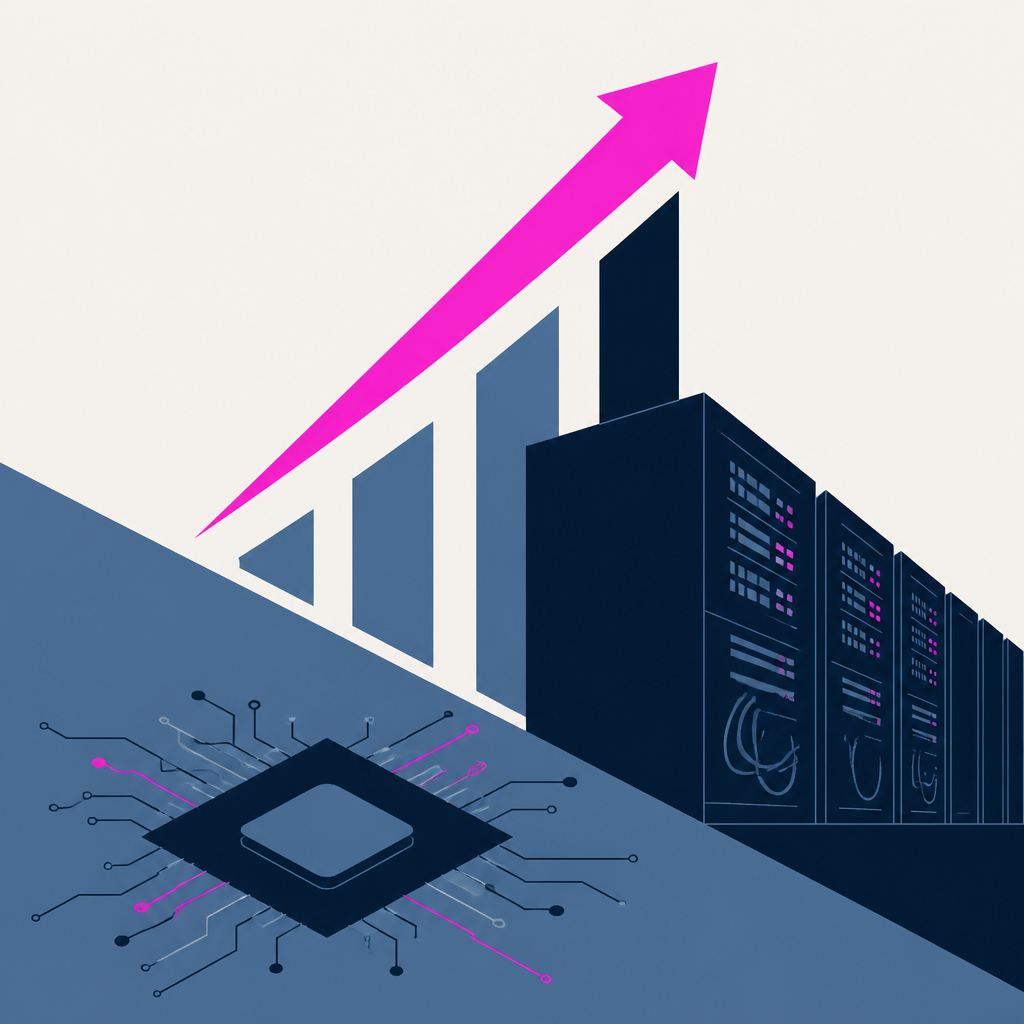
AI data-center demand has driven up memory-chip costs, which is raising smartphone prices and making sub-$150 models shrink or disappear. Smartphone models launched this year are about 25% more expensive than last year, and 173 million sub-$100 phones shipped globally last year are forecast to be down almost 60% year over year in the second quarter of 2026. Chinese makers are cutting back on entry-level projects and shifting resources to higher-margin premium phones, potentially widening the digital divide as some people can’t afford or access an internet-enabled device.
OpenAI introduced a new visual ad format in ChatGPT and expanded its measurement tools, attribution partnerships, and brand suitability features for advertisers. The update includes “ChatGPT visual ads,” launched on March 2025. Advertisers can now run visual ads inside ChatGPT while using upgraded measurement and targeting suitability capabilities.
The author argues that business leaders should decide how to use AI by sorting tasks into automate, assist, or own, based on where human judgment and connection must remain. A key example is a post that reached 3.5 million views, which the author attributes to an unpolished meme created by real social media managers rather than AI-generated content. The guidance changes how teams allocate time and responsibility: automate repetitive admin, use AI to speed drafting and research while keeping judgment, and ensure a specific human is accountable for anything in the “own” category.
OpenAI began testing a new ad format in ChatGPT that shows sponsored product images on your screen during image generation. Testing is set to start in the US later this month. The ads will be added alongside image outputs but remain separate and won’t change the answers, and they will not show for ChatGPT Plus or Pro subscribers.
RobCo, a Munich robotics start-up, became a unicorn after being valued at more than $1 billion. Its valuation doubled in nine months, and the deal included fresh capital plus partial share sales for long-serving employees. The company will accelerate its robotics-as-a-service push and develop its autonomous robot Alfie, unveiled in March 2027, while also expanding in the United States.
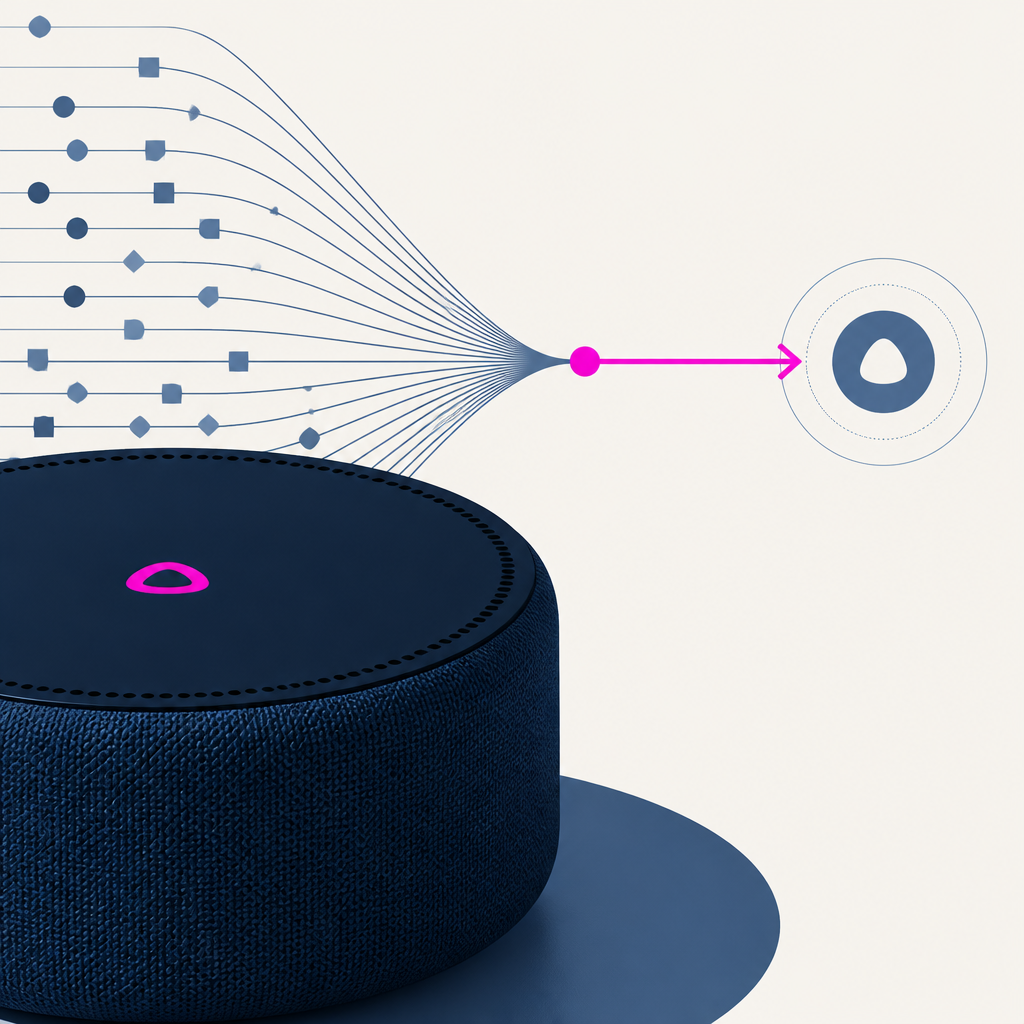
Yandex introduced Sona, a generative recommender model that replaces a multi-stage recommendation cascade with one served transformer combining candidate generation and ranking. In a 7-day A/B test on its smart speakers, it replaced more than 15 candidate generators plus the pre-ranking and ranking stages. The change improved metrics such as active users (+4.53%), total listening time (+6.30%), and likes (+11.42%) for the test group.
Search engines still receive far more web traffic than AI chatbots, according to OneLittleWeb’s analysis of visits across 10,171 websites. Search engines logged 162.19 billion visits in June 2026 versus 8.26 billion for AI chatbots. The gap narrows only in part because both categories declined from the previous month, while the remaining traffic share stays concentrated in Google for search and ChatGPT for chatbots.
European tech deal-tracking coverage reported 70+ European tech funding deals alongside 5+ exits, M&A transactions, and rumours. The total value reported was over €3.9 billion, with cloud (€2.95 billion) the top funded industry. The roundup points readers to the Tech.eu Funding Explorer for deeper breakdowns of the funding data and market trends.
EnerCube formed a strategic partnership with Panasonic to launch a new prefabricated heat pump heating unit series for large commercial, industrial, and municipal buildings. The new series is planned to launch in Germany and Austria from 2027. It integrates Panasonic’s Big Aquarea M air-source heat pumps (up to 180 kW per unit) into EnerCube’s factory-built “Cubes,” enabling faster, in-series replacement of heating systems for large building portfolios.
Pandektes raised a €13.5 million Series A to build legal data infrastructure for cross-border legal research and to license its structured data to legal AI developers. The round was led by Alstin Capital. The funding will be used to expand into Europe and North America, grow the team, and provide more data access to external developers via an API, with an API waitlist tracking demand.
Vionmo won Travel Start-up Night Vienna 2026 after pitching its tourism mobility-data approach at the ÖBB Innovation Lab, beating four other companies. The event took place in 2026 at Vienna’s main train station and the prize advances vionmo to the annual final in Germany for “Travel Start-up 2026.” The result sets up vionmo to compete nationally, while two AI-focused finalists (touristinfo.ai and Majourny) continue toward partnership discussions rather than winning the Vienna event.
Deutsche Telekom is deploying AI to run parts of its hotline, network operations, and software and administration work while using AI to become a growth business. By 2030, it expects AI and automation to reduce about 2.5 billion euros in indirect costs compared with 2023. The company’s operations and customer-contact model shift toward AI handling large call volumes, while it reinvests some savings into digital transformation and pushes AI-related revenue from business customers and consumer services.
Vanoor launched and lets Apple Watch users follow GPX routes with spoken turn cues, track split-by-split pace, and run structured workouts planned in-app or by an AI assistant. It offers 7 days free before a one-time purchase. After running, it scores how closely you matched your planned splits and saves results to Apple Health and Strava.
Venture firms in Silicon Valley are increasingly targeting European AI startups for pre-seed funding before they are well-established. The article says there were 8 pre-seed rounds led by Tier 1 US investors. As a result, early-stage European AI companies are being pulled into US-led fundraising earlier in their development.
EmTech Future 2026 featured MIT Technology Review editors and speakers discussing how AI is reshaping areas like biology, infrastructure, manufacturing, and science as well as what happens when it converges with other technologies. The full on-demand program is available with a 20% discount, lowering the access price to $596. Attendees can now watch all sessions on demand, and the event’s themes are positioned around cross-domain technology convergence rather than standalone advances.
Every AI story that matters,
in your inbox by 8am.
TLDRocket reads all relevant sources, removes duplicate coverage, and summarises the
day in two minutes. Follow companies and topics for alerts, or get the
briefing in Slack. Free, no spam, unsubscribe anytime.
Reading TLDRocket needs no cookies, and the readership counts we rely on come from
our own cookieless analytics. Google Analytics is the exception: it sets cookies and
reports to Google, so it stays switched off until you allow it. You can change your
mind any time from “Cookie settings” in the footer.
Strictly necessary
Session security and form protection (tldrocket-session,
XSRF-TOKEN, 2 hours). The site cannot work without them,
so they need no consent.
Always on
Google Analytics 4 (_ga,
_ga_<id>, up to 2 years). Measures which
stories and sections readers use. Google acts as a third-party processor and may
store the data outside the EU. No advertising, no profiling, no data sold.