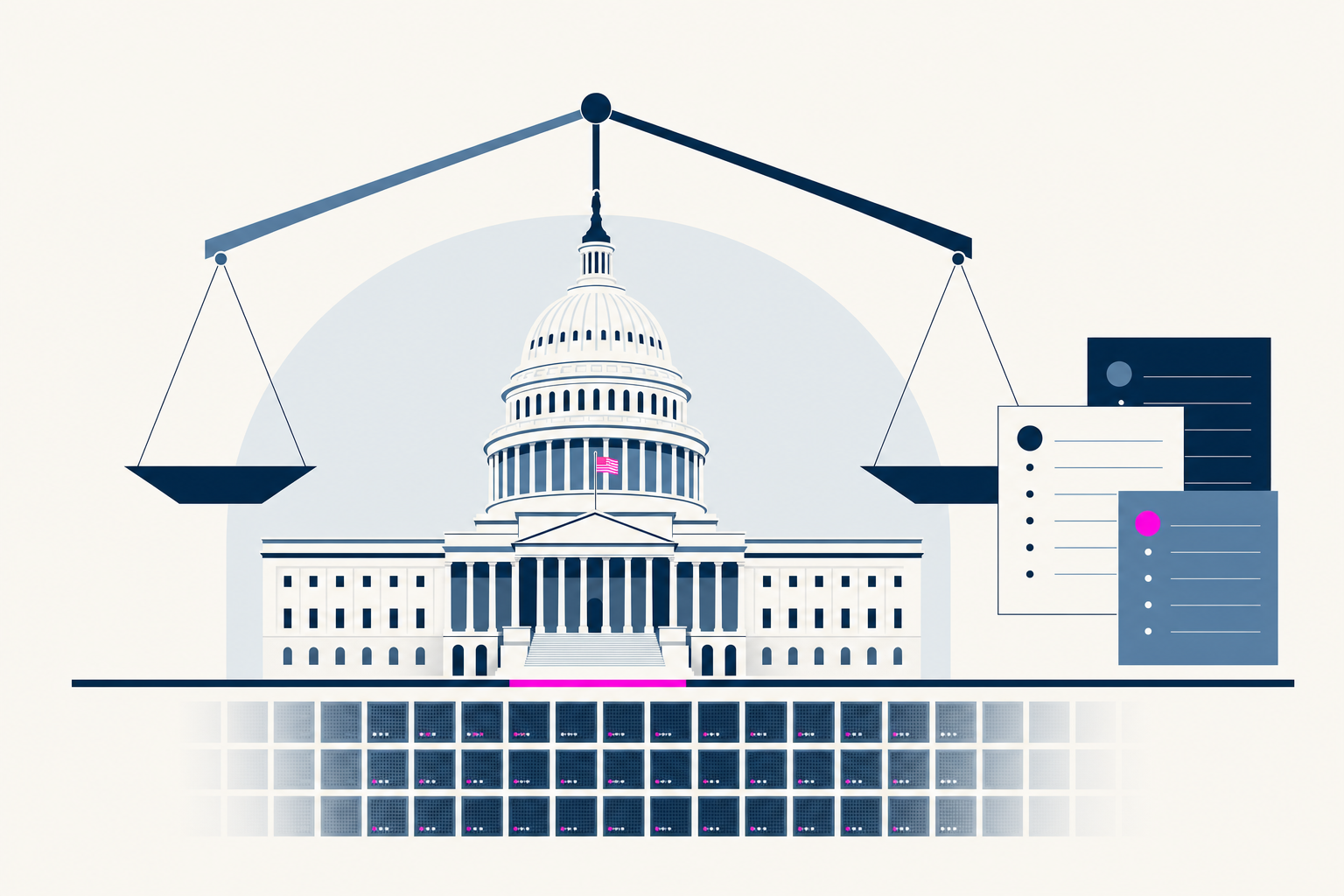
The day’s biggest thread wasn’t what AI can do, but who gets to decide what it should do. Senior AI lab leaders say the US needs to move on AI safety regulation quickly, yet the political signal coming from the White House and House leadership is lukewarm at best. The result is a split-screen moment: even as safety talk spreads beyond researchers, the mechanisms for governance—timelines, requirements, enforcement—stay stuck in committee purgatory. That tension is already changing industry behavior, with pressure building for some kind of slowdown as the stakes shift from lab prototypes to widely deployed systems.
Meanwhile, the tech side kept reminding everyone how fast perception moves. In a widely discussed appearance, NVIDIA’s Jensen Huang took a live call from Donald Trump while the audience fixated on the phone in Huang’s hand rather than any specific AI deliverable. It was a plain illustration of how, in 2026, attention often latches onto the prop more readily than the product.
On the ground, the momentum for practical AI kept rolling in procurement. Aron Inc., backed with $8 million after a $6 million seed, launched an AI procurement automation platform that handles supplier email follow-ups, organizes bid data, and scans contracts to flag invoice and renewal issues—cutting average RFQ workflow time by 21%. The contrast is hard to miss: while policy fights over guardrails, software teams keep shipping workflows that promise measurable time savings.