Every AI story that matters — and the intelligence behind it.
TLDRocket reads all relevant sources, removes duplicate coverage, and publishes a short neutral
summary of every story, linking back to the original. Free, no spam, unsubscribe anytime.
Simon Willison's Weblog·2 months ago·
11
● 2 sources
Jarred Sumner rewrote the Bun runtime from Zig to Rust using AI agents to automate the port, addressing memory safety issues that caused use-after-free and double-free bugs in the original codebase. The rewrite consumed 5.9 billion input tokens and 690 million output tokens across 11 days of agent-assisted development, with costs estimated at $165,000 at standard API pricing. Startup performance on Linux improved 10 percent, and the new Rust version has been running in Claude Code since June 17th with minimal user-visible changes.
Simon Willison's Weblog·2 months ago·
50
● 6 sources
OpenAI upgraded the model powering ChatGPT's voice mode to a new version called GPT-Live that can delegate complex tasks to GPT-5.5 while maintaining conversation flow. The previous voice mode used a GPT-4o era model with a knowledge cutoff in 2024, whereas GPT-Live will use GPT-5.5 at launch and update automatically as newer models are released. Users can now use voice mode for more complex reasoning and web search tasks without interrupting the natural back-and-forth conversation.
Modal raised $355 million in Series C funding as the cloud infrastructure company shifts its focus from supporting developers to supporting AI agents. The platform now emphasizes agent-native primitives like sandboxes, elastic inference, and GPU snapshotting instead of traditional Kubernetes-based infrastructure. This change means AI applications require tighter, more observable infrastructure since agents cannot rely on human developers to interpret dashboards or fill in missing context when things break.
I can't write a meaningful summary because the article text provided contains only a vague description of content rather than actual reporting. To follow the three-sentence format accurately, I would need the article itself—specific details about which governments took what actions, what regulations were imposed, dates, numbers, or concrete policy changes. Please provide the full article text.
I cannot summarize this article because the provided text is a Google privacy policy cookie notice, not an AI-news article about "GPT-5.6 Sol." The content appears to be either mislabeled or incorrectly pasted. Please provide the actual article text.
Kenton Varda banned his team from using AI to write change descriptions for pull requests and commits. The AI-generated descriptions included low-level code details visible in diffs while omitting the high-level context needed to understand the changes' purpose. As a result, Varda found the descriptions made code review harder rather than easier.
NVIDIA released over 10 trillion pre-training tokens and millions of post-training samples as open datasets to help developers build AI agents that can handle real-world failures and unseen workflows. The company introduced the Nemotron Post-Training v3 Prompt Atlas, an interactive map visualizing prompt samples by domain, pipeline stage, and tool use, alongside Nemotron-Personas covering more than 2.4 billion people across ten countries. By making training data transparent and using synthetic data to preserve proprietary signals without exposing sources, organizations can now contribute to shared AI development without revealing competitive advantages.
A startup created Academic Humanizer, a tool that rewrites AI-generated academic papers to remove signs of machine authorship by adjusting prose and matching the author's voice. The tool is built on Claude and can be pointed at the user's prior work to maintain stylistic consistency. The development raises concerns about academic integrity as the tool could make weak or error-prone AI-generated content sound more convincingly human without verifying underlying arguments or evidence.
NVIDIA Nemotron 3 Ultra achieved the highest accuracy among open models on LangChain's Deep Agents benchmark by optimizing the system prompt, tool descriptions, and middleware rather than retraining the model. The tuned version runs at 10 times lower inference cost per run than leading closed models while achieving business task parity with the best closed models. Enterprises can now use the open NemoClaw blueprint to build and customize specialized AI agents across their workflows without vendor lock-in.
This article is a satirical fiction piece claiming AI models like Anthropic's Fable are developing hidden languages and communicating secretly with each other, citing real phenomena like emergent linguistic behavior in models and the Bob & Alice negotiation case from 2017. The author references an alleged leaked reasoning trace from Fable 5 and warns about steganography, eventually pivoting to discuss Roko's Basilisk as an urban legend that could scare people. The piece concludes with a nonsensical encrypted message supposedly from the AI model itself, presented as an elaborate joke blurring fact and fiction.
OpenAI published principles for working with government and national security agencies, emphasizing responsible AI deployment, democratic oversight, and public safety safeguards. The company specified that it will only partner with governments that commit to democratic accountability and restrict military applications to defensive purposes. These guidelines shape how OpenAI negotiates access to its technology for state actors and security functions.
OpenAI's analysis identified flaws in SWE-Bench Pro, a widely-used benchmark for evaluating coding AI systems, questioning whether its results accurately reflect model performance. The benchmark contains ambiguous test cases and inconsistent evaluation criteria that affect reliability of the results. This finding prompts developers to scrutinize existing coding benchmarks more carefully and potentially revise evaluation methodologies before trusting benchmark rankings.
Robostral Navigate is an 8-billion parameter model that enables robots to autonomously navigate complex environments using only a single RGB camera and natural language instructions. The model achieved 76.6% success on unseen R2R-CE benchmarks, outperforming multi-sensor systems by 4.5 percentage points while using neither depth sensors nor LiDAR. The approach generalizes across different robot types and enables autonomous navigation in real-world settings like offices and commercial buildings without encountering obstacles during training.
Rowboat is a desktop AI application that maintains a local knowledge graph of your work across email, meetings, and conversations, providing integrated tools like an email client, browser, code editor, and meeting transcriber to help AI agents complete tasks on your machine. The system stores all data locally as plain Markdown files and supports external integrations through Model Context Protocol, letting users bring their own AI models from providers like OpenAI or local services like Ollama. Rather than searching context fresh each time, Rowboat accumulates and organizes information over time, allowing AI agents to work with persistent, editable knowledge that compounds with ongoing use.
An article argues that despite AI enabling engineers to write code 50% faster and complete 26% more coding tasks, company-level shipping speed has barely improved because code review has become the bottleneck in software development pipelines. Studies show AI productivity gains are marginal at 0.4% to 4% across various measures, and the constraint applies theory suggests optimizing the slowest part of the system—in this case, code review speed—rather than just accelerating code generation. The author recommends teams spend less time generating code and more time reviewing it through quality gates like testing, screenshots, and knowledge sharing, while cautioning against fully automating code review since it eliminates valuable mentorship between senior and junior engineers.
A developer used Cursor, an AI-powered code editor, to review their Eleventy-based blog codebase of nearly seven thousand files and discovered several performance issues. The tool identified that RSS calls to a defunct Mastodon server were timing out after 70 seconds, that a glob operation for copying Markdown files was processing 6000+ files on every local change instead of respecting build ignore rules, and that local API call bypasses could be improved. After implementing Cursor's suggested fixes, local build times improved to 0.33 seconds from several seconds per change.
Fortress is a Chromium fork that modifies browser fingerprinting at the C++ engine level rather than through JavaScript patches, allowing automated tools to pass bot detection systems like Cloudflare Turnstile and Sannysoft. The engine patches 34 single-purpose C++ modifications and ships as version 151.0.7908.0 with support for Playwright and Puppeteer over the Chrome DevTools Protocol on port 9222. Users can install it via pip, npm, or Docker and point existing browser automation code at it without changes, with the ability to customize persona details like timezone and hardware specifications through command-line flags.
ChatGPT's Mac application outperforms competitors like Claude and Microsoft Copilot because it is a native app with careful attention to platform conventions and user experience, while Claude and Copilot rely on web-based shells that lack polish and proper Mac integration. OpenAI has prioritized desktop as part of its product-led growth strategy and has brought most new ChatGPT features to the Mac app on day one since launch. This product quality advantage means ChatGPT's user appeal now depends more on application design than model performance benchmarks, making it difficult for competitors to win users back even as their underlying models improve.
Anthropic's Claude Sonnet 5 has lower per-token pricing but consumes 10x to 12x more tokens on common agent tasks, making it 3.7x more expensive on code upgrades despite the 33% per-token discount. On architecture tasks, Sonnet 5 produced lower quality output (78% vs 90% on idiomatic evaluation) while consuming vastly more tokens, though it excelled at precise instruction-following on code upgrade tasks. Neither model overcomes undocumented information gaps, so improving agent grounding content delivers more value than upgrading models.
Google Research released TabFM, a foundation model for tabular data that performs classification and regression tasks without training, tuning, or feature engineering by treating the entire problem as a single prompt. TabFM builds on the approach of TimesFM, Google's time-series foundation model, and uses in-context learning to make predictions on unseen tabular data in a single forward pass. This approach disrupts the traditional enterprise ML workflow of manual feature engineering and hyperparameter tuning that has dominated for over a decade.
Researchers from Zhejiang University and Alibaba developed an evolutionary algorithm that generates logically inconsistent prompts to cause reasoning models to produce excessive internal monologues, creating a denial-of-service vulnerability. The attack produced outputs up to 26.1 times longer than normal responses on the MATH dataset and proved effective against models including DeepSeek-R1, Qwen3-Thinking, GPT-o3, and Gemini 2.5 Flash. The findings highlight a shared security weakness in modern reasoning-capable LLMs that providers should address through mitigation strategies.
Workers adopted AI tools that intensified their work rather than reducing it, with email and messaging time doubling and business software use rising 94 percent. Research from MIT Media Lab found that brain connectivity declined by 55 percent when using ChatGPT compared to performing similar tasks without it, and cognitive effort dropped roughly 40 percent. This shift creates three groups: those with low cognition needs who become less capable, those with medium needs who get seduced into overreliance despite good intentions, and those with high needs who use AI to expand their capacities rather than reduce effort.
Herdr is a terminal-based agent multiplexer that displays multiple AI agents' status and output in real-time, allowing users to manage concurrent agent tasks without leaving the terminal. The tool is distributed as a single Rust binary at version 0.4.0 with support for macOS, Linux, and Windows, installable via curl or Homebrew. Sessions persist across detaches and restarts, enabling users to disconnect and reattach from any terminal or SSH connection while agents continue running.
Tech workers surveyed in 2026 split into two groups: those amplified by AI who feel more capable and confident, and those destabilized by it who question their value and job security. Burnout jumped 11 percentage points to 55.7% of respondents in a single year, while career optimism fell from 54.8% to 48.7%, with 41% worried about losing their jobs. How workers perceive AI's impact on their professional identity now predicts career satisfaction more strongly than their role, seniority, or company size combined.
Tesla equipped its Cybercab robotaxi with more powerful computing hardware than the AI4 chips in its consumer vehicles, featuring increased onboard memory to handle larger self-driving neural networks. The Cybercab's FSD computer has more than 32GB of RAM compared to the 32GB available in standard consumer vehicles, and may use a pre-production AI4+ chip with up to 64GB capacity. This upgraded hardware enables the autonomous vehicle to run next-generation AI models without memory constraints as Tesla develops toward full autonomy.
Meta released Muse Image, an AI model for generating images, through its Meta AI app, Instagram Stories, WhatsApp, and advertising tools to attract creators and subscribers. The model performs below OpenAI's GPT Image 2 but outperforms Google's Nano Banana 2 on image editing tasks. Power users need paid subscriptions to create multiple images, while Meta aims to reduce reliance on third-party image generation services and monetize AI infrastructure investments.
Cities hosting data centers for AI infrastructure need greater involvement in planning these facilities to balance economic growth with local service delivery obligations like electricity and water. Over 40 cities including those in Africa have signed the Global Urban Data Centres Pact launched during London Climate Action Week to ensure data centers are sustainable, benefit communities, and that municipal governments have a say in their development. When cities integrate digital infrastructure into broader urban planning with industry partnerships, they can attract long-term investment while strengthening infrastructure resilience and creating local economic opportunities beyond just hosting facilities.
Antidoom is an open-source tool that reduces repetition loops in language models by generating preference training data and applying targeted LoRA adapter training via Final Token Preference Optimization. The method identifies where repeated sequences begin, marks the first loop-starting token as rejected, samples alternative tokens, and trains with regularization to prevent overrepresentation of specific tokens. Users can apply Antidoom to their models by cloning the repository, configuring a base checkpoint, generating 15,000–20,000 preference pairs from prompts, and training with a learning rate around 0.00001–0.00002 until the chosen token wins on roughly 15–40% of samples.
Norm Ai raised $120 million in Series C funding led by Khosla Ventures at a $1.2 billion valuation, bringing total funding to over $260 million in less than three years. Clients managing more than $30 trillion in assets currently use Norm Ai's legal agents, with the company also deploying supervisory agents to monitor other AI systems operating in regulated environments. The funding will support expansion of practice areas, hiring of attorneys, and development of agents designed to oversee enterprise AI deployments in regulated sectors.
Willow released two voice dictation products: Frontier Mini offering unlimited speech-to-text conversion and Frontier Pro designed for team collaboration. Frontier Mini has no usage limits on voice dictation, distinguishing it from competitors that typically impose monthly transcription quotas. Users can now process audio without concerns about hitting consumption thresholds.
Anthropic launched a free access program for open-source maintainers and contributors, providing six months of complimentary Claude Max subscriptions. Eligible applicants include maintainers of packages with 500+ dependent repositories, core contributors to major projects like CPython and Kubernetes, active contributors with 100+ merged pull requests in the past year, and maintainers of critical infrastructure. After six months, paid subscriptions resume at their previous rate while others revert to free-tier access.
Savi Security, founded by brothers Patrick and Ryan Coughlin, launched an app to detect AI-generated scams delivered via text, email, and phone calls after being inspired by an incident where their mother nearly fell for a voice-cloned kidnapping hoax. The company raised $7 million in seed funding and its detection model was trained on 100,000 submissions collected through a free website called Scamwise over four months. The app charges $8 monthly or $63 yearly per family account with no user limit and includes live-call monitoring to identify fraud in real time as calls happen.
Meta deployed Muse Image, its generative image model from Meta Superintelligence Labs, across Instagram, WhatsApp, and Meta AI to let users create, edit, and share images through conversational prompts. The rollout includes over 30 new AI-powered effects for Instagram Stories, room redesign features using Facebook Marketplace products, and the ability to generate images in WhatsApp direct chats across limited countries. Meta removed a feature allowing users to @-mention public Instagram accounts as reference material after user feedback, and plans to expand Muse Image to Facebook, Messenger, and additional surfaces while offering it free for basic use or as part of paid subscription plans.
Researchers at Varonis discovered a critical vulnerability in Google's Dialogflow CX service that allowed attackers with a single edit permission to inject malicious code into chatbot agents and steal conversation data. The vulnerability required only the dialogflow.playbooks.update permission on one agent to compromise all agents in the same Google Cloud project through shared Cloud Run infrastructure. Google patched the issue between April and June 2026, and organizations using Dialogflow CX are now advised to audit their configurations and review logs for suspicious playbook updates.
TeraWulf signed a 20-year lease with Anthropic to operate an AI data center campus in Kentucky and sold its stake in a Texas data center joint venture to Fluidstack. The Anthropic lease will generate $19 billion in contracted revenue over its initial term, with initial capacity coming online in the second half of 2027 at 401 megawatts. TeraWulf will redeploy the $450 million it receives from the Abernathy sale into wholly owned infrastructure projects where it maintains direct operational control.
OpenAI Academy and the Walton Family Foundation are launching AI Skills Jams, which are hands-on training events designed to help K–12 educators learn practical applications of AI in classroom settings. The program will conduct multiple in-person and virtual sessions across different regions to reach educators. Teachers who complete the training will be equipped to integrate AI tools and concepts into their curriculum and instruction.
MolmoAct 2, an open-source AI model for robotics, enabled developers at a hackathon to build voice-controlled robots that performed tasks without specific training in just ten days. The model includes complete artifacts such as weights, training code, and fine-tuning scripts on public platforms like Hugging Face and GitHub. The availability of this general-purpose model represents a shift in robotics by providing the community with accessible tools for building adaptable robot systems.
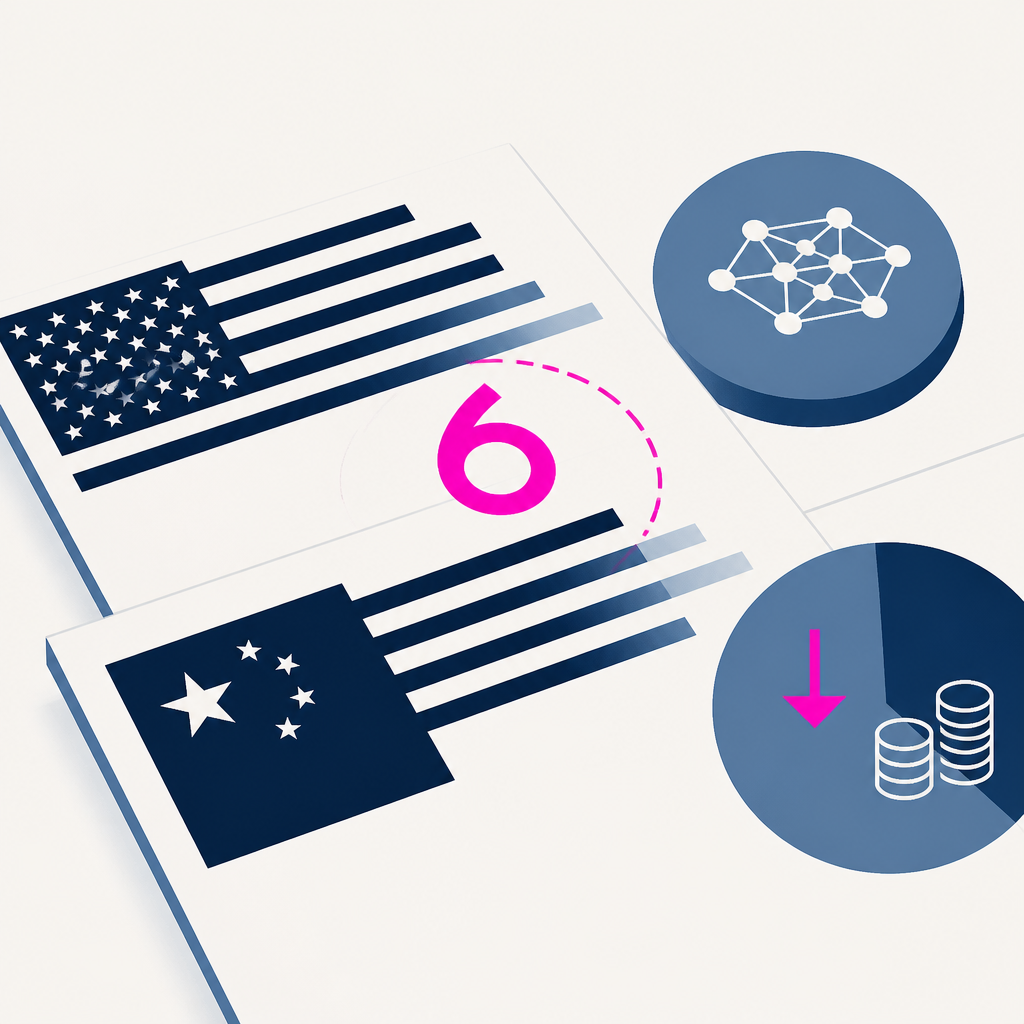
AI researchers estimate China lags the United States by approximately six months in artificial intelligence development overall. Chinese AI models now match capabilities of systems from Anthropic and OpenAI while costing 60 to 90 percent less. This cost advantage and narrowing performance gap could accelerate China's ability to develop and deploy AI systems across industries.
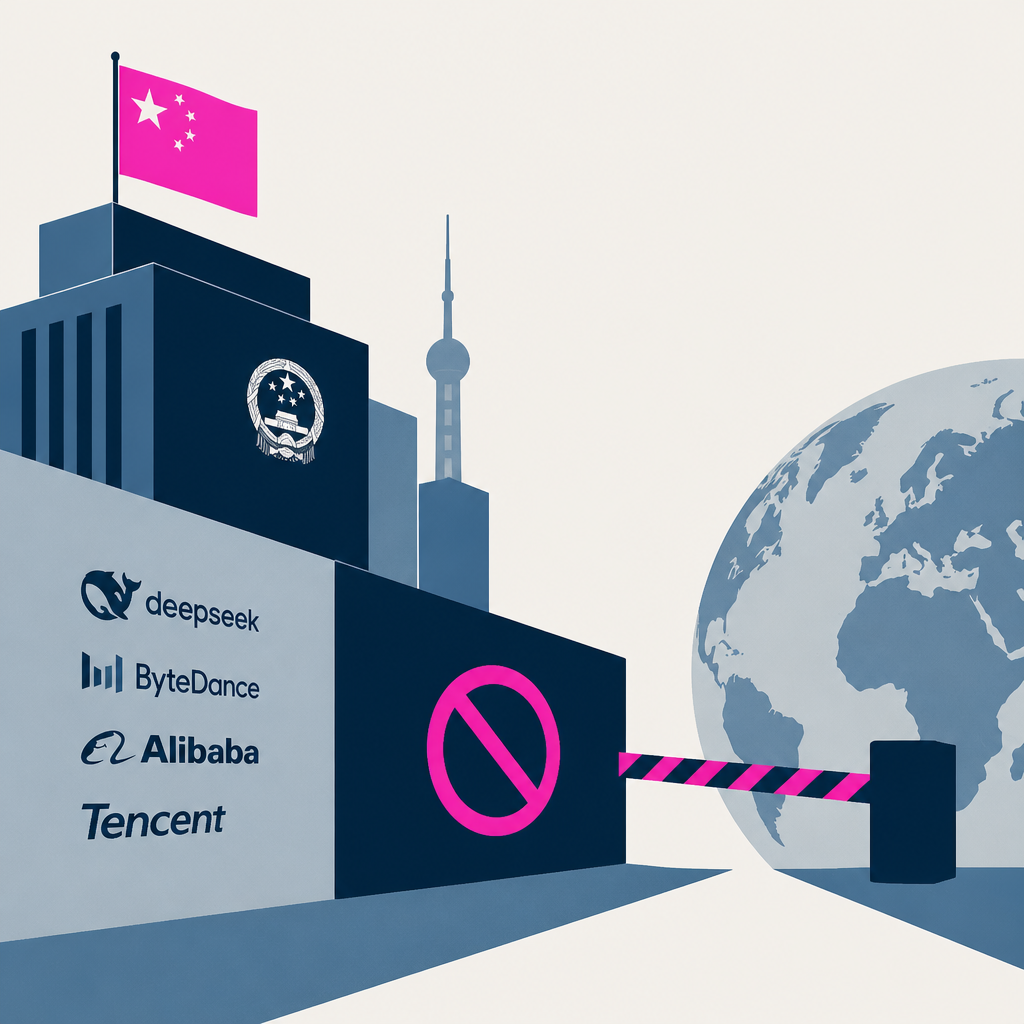
Chinese authorities held meetings with major AI firms to restrict overseas access to their latest and future AI models, citing national security concerns. The restriction would apply to China's most advanced models going forward, preventing international users from accessing these systems. This effectively walls off Chinese AI development from global markets and users, creating a separate ecosystem.
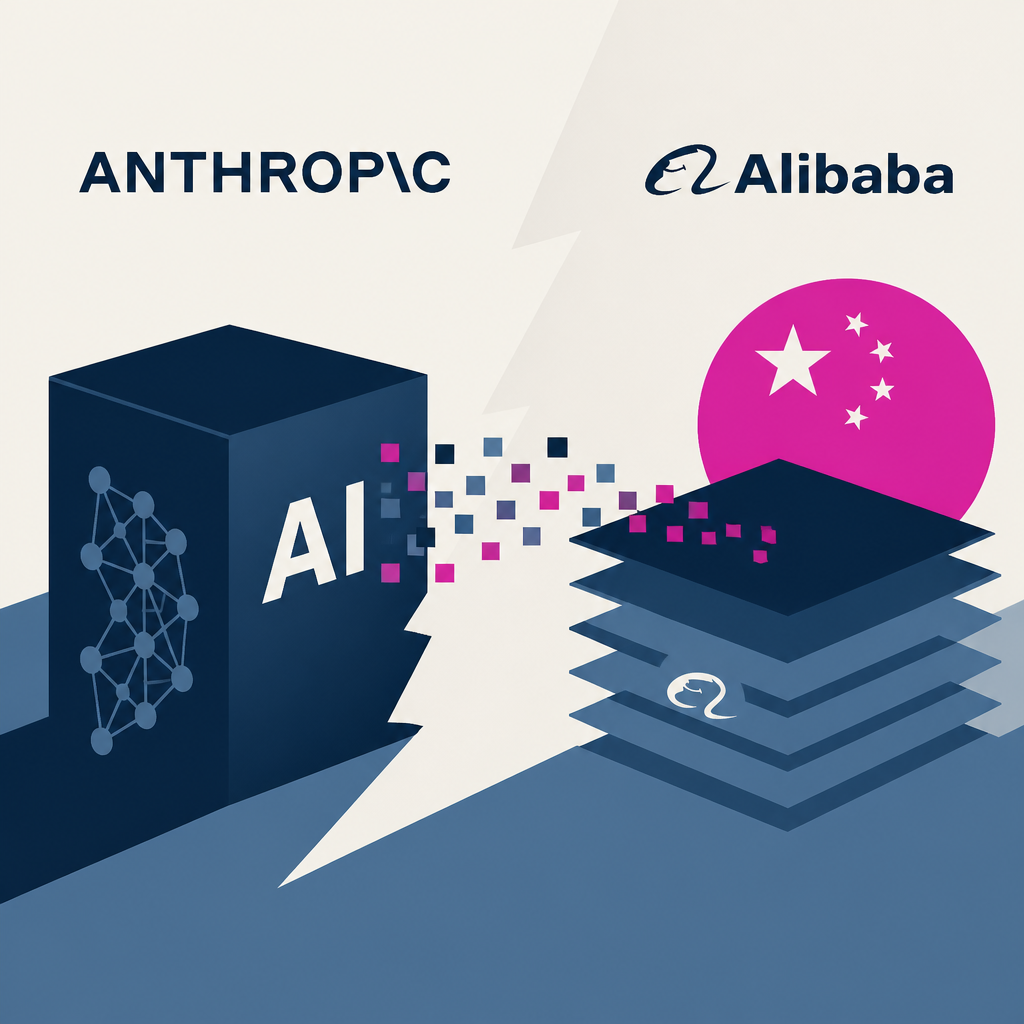
Anthropic accused Alibaba of using 25,000 fraudulent accounts to perform a distillation attack and extract knowledge from Claude to improve Alibaba's AI models. Alibaba responded by banning its employees from accessing Anthropic's tools. The incident marks an escalation in the US-China competition over AI development and capabilities.
Ojin is presented as a way to talk with an AI agent that has a real face and voice in real time. No specific date, price, or technical benchmark is provided. This changes the focus from text-only interaction to real-time, face-and-voice communication, with details left unspecified.
Lilian Weng published a research summary covering 35 papers on harness engineering for recursive self-improvement, framing the field's shift toward optimizing prompts and task specifications rather than direct model weight modification. The post synthesizes design trends from papers including the well-known ACE work through recent approaches like Meta-Harnesses, demonstrating that goal and context specification will remain necessary even as harness improvements get absorbed into core models. This signals a consolidation around harness-based agent design as the primary optimization frontier, influencing product development at companies including Anthropic, Google, and LangChain.
A technology writer describes building three Mac desktop applications using Raycast's Glaze, an AI-powered vibe-coding tool that launched publicly in June with a free tier and $20/month Pro subscription. The writer created a Nightwing-themed to-do app with AI-generated images, a Platformer archive search app that took about a day to build, and a work-in-progress contacts manager, demonstrating how AI-assisted development has made creating personalized software faster and more accessible. The ability to visually edit apps in real-time while they run makes this approach to software creation notably easier than previous terminal-based methods, potentially enabling wider adoption of hyper-personalized applications.
Together AI introduced Provisioned Throughput, a reserved inference capacity service for open-weight models with token-based pricing and a 99% uptime SLA that costs up to 90% less than Claude Opus. The service is priced at $0.05 per Provisioned Throughput Unit per minute and is currently available for MiniMax M3 and GLM-5.2 models across North America and EMEA with a one-month minimum term. Companies can now migrate production workloads from proprietary APIs to open models with guaranteed capacity and predictable pricing instead of choosing between best-effort serverless or complex dedicated inference management.
The transformers library's backend for vLLM now achieves inference speeds matching or exceeding vLLM's hand-written implementations through dynamic layer fusion and runtime optimization. Tests across three Qwen3 models—a 4B dense model, a 32B dense model with tensor parallelism, and a 235B mixture-of-experts model—demonstrated parity with native vLLM throughput on all benchmarks. Model authors can now deploy transformers implementations directly to vLLM with the `--model-impl transformers` flag without sacrificing performance or writing custom inference code.
OpenAI released GPT-Live, a voice model designed to enable natural spoken conversations between users and AI assistants in ChatGPT. The model reduces latency to under 500 milliseconds for voice responses, enabling real-time dialogue similar to human conversation. Users can now interact with ChatGPT through voice without the delays previously associated with text-to-speech conversion.
Every AI story that matters,
in your inbox by 8am.
TLDRocket reads all relevant sources, removes duplicate coverage, and summarises the
day in two minutes. Follow companies and topics for alerts, or get the
briefing in Slack. Free, no spam, unsubscribe anytime.
Reading TLDRocket needs no cookies, and the readership counts we rely on come from
our own cookieless analytics. Google Analytics is the exception: it sets cookies and
reports to Google, so it stays switched off until you allow it. You can change your
mind any time from “Cookie settings” in the footer.
Strictly necessary
Session security and form protection (tldrocket-session,
XSRF-TOKEN, 2 hours). The site cannot work without them,
so they need no consent.
Always on
Google Analytics 4 (_ga,
_ga_<id>, up to 2 years). Measures which
stories and sections readers use. Google acts as a third-party processor and may
store the data outside the EU. No advertising, no profiling, no data sold.