
China restricts overseas access to AI models
Reuters ● Covered by 4 sources
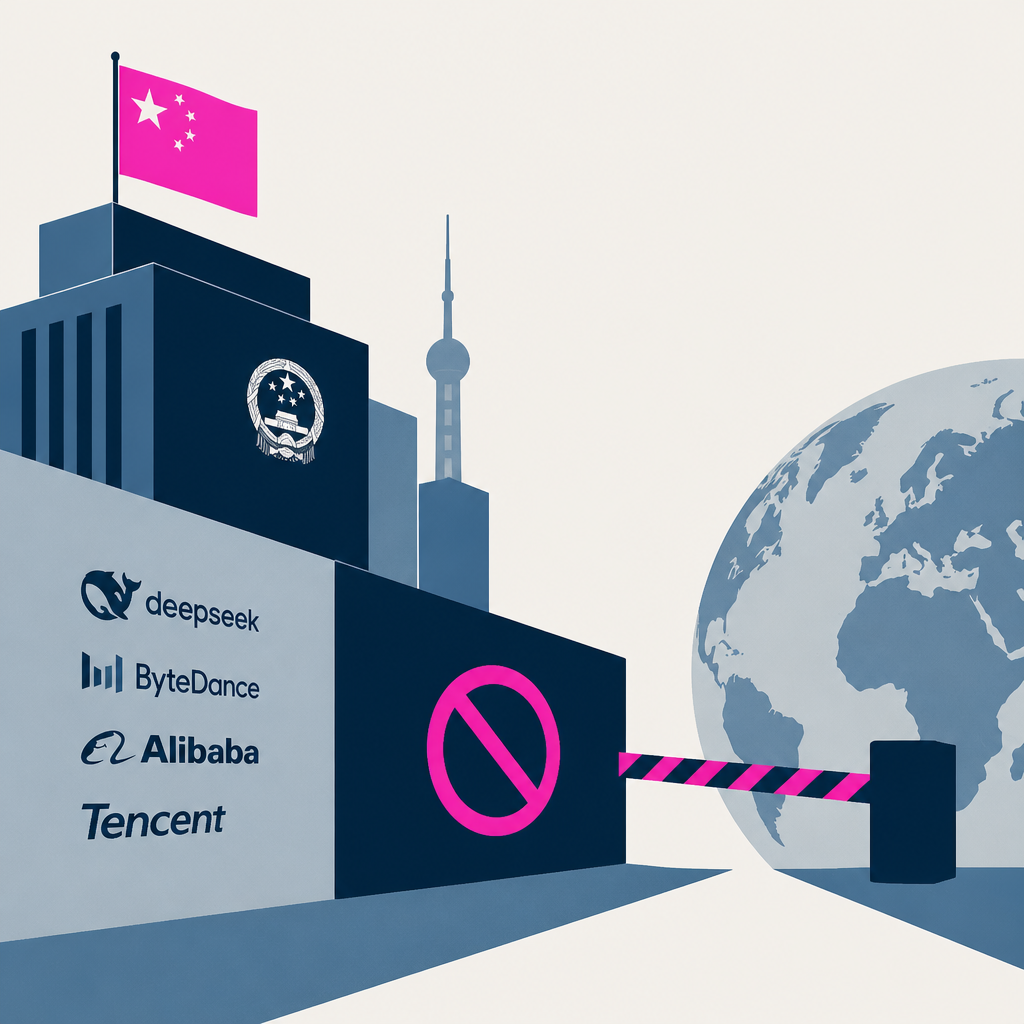
China's top AI firms got called in to talk about blocking overseas access to their newest models. Beijing's worried its own tech could get turned into a weapon against it.
Based on reporting by Reuters — read the original for the full story.
Summary, retelling and take written by AI under human oversight; images are AI-generated illustrations. How we work · Report an error
Chinese officials sat down with the country's leading AI companies recently, and the topic wasn't funding or chips. It was about pulling up the drawbridge. According to reports on the meetings, authorities want restrictions placed on overseas access to China's most advanced AI models, both the ones already released and whatever comes next.
The stated reasoning is national security. Beijing's concern, as relayed in these discussions, is that American interests could somehow weaponize Chinese AI technology against China itself. That's a notable flip from the usual framing, where Washington worries about Chinese models undermining U.S. tech dominance or slipping into the wrong hands. Here it's Beijing playing defense against its own exports.
What makes this interesting is the timing. Chinese labs like DeepSeek, Alibaba, and others have spent the better part of two years building global credibility, releasing open-weight models that developers everywhere could download, fork, and build on. That openness became a genuine strategic asset, a way to compete with OpenAI and Google without matching their compute budgets dollar for dollar. Clamping down on overseas access risks undoing some of that goodwill just as it started paying off.
And there's an obvious tension baked into all this. China has leaned on open access as a soft-power play, positioning itself as the alternative to Silicon Valley's closed, paywalled approach. If the government now starts gatekeeping who outside its borders gets to use these models, it blurs the line between
My take — AI-written commentary, not fact-checked reporting
Export controls always sound smart in the meeting room and messy in practice. If Beijing locks down its open-weight models, it hands the openness narrative right back to whoever's still willing to ship weights freely, and I don't think that ends up being American labs either. Security theater has a cost, and open models were China's best marketing.
Read more about this at: Reuters
Related stories
 Silicon Valley Splits Over Closing the Borders to Chinese AI
The New York Times · 1 month ago ·
30
Washington Is Looking to Keep China From Training Its AI on US Models
CSET Georgetown · 2 months ago ·
16
Why Silicon Valley is divided over China’s powerful, cheap AI models
Rest of World · 1 month ago ·
53
Silicon Valley Splits Over Closing the Borders to Chinese AI
The New York Times · 1 month ago ·
30
Washington Is Looking to Keep China From Training Its AI on US Models
CSET Georgetown · 2 months ago ·
16
Why Silicon Valley is divided over China’s powerful, cheap AI models
Rest of World · 1 month ago ·
53