Anthropic is reportedly targeting a Nov. 9 IPO launch, aiming to start marketing the offering in the week of that date even as it warns about “existential risks” from AI. The reported target date is Nov. 9, meaning shares could begin trading before Thanksgiving. If the timeline holds, the company would proceed with a pre-Thanksgiving IPO despite internal timing discussions and possible broader market effects for AI stocks.
Halluminate raised a Series A to build AI training environments for financial workflows and is using benchmarks to identify where AI agents fail on deal due-diligence tasks. The round brought in $30 million and increased its total funding to $38.5 million. The company will turn benchmark failure modes into reinforcement-learning environments and focus first on frontier model labs rather than enterprise customers.
Dynatrace closed its acquisition of Arize to combine full-stack observability with tracing, evaluation, and debugging for AI models and agents. The deal was for $915 million. The integration shifts observability toward agent-driven analysis and action across both the AI layer and the underlying software stack, with Arize continuing to be supported alongside Dynatrace.
NetApp framed its storage business around “Intelligent Data Infrastructure” to target AI-driven data buyers and described how it is preparing architecture for AI data activation. NetApp reported that website traffic from net-new names rose about 50% year over year after its keynotes. The company is pushing new “AI factory” storage design with NetApp Novus and aiming to help customers access data wherever it already resides rather than lock them into one stack.
Y Combinator added Vivian Midha Shen and Raphael Schaad as new general partners. Vivian helped build Acely to a $10 million run rate. They will work with startups throughout their YC batches, from early weeks onward.
Snyk laid off more than 200 employees earlier this year, according to a new Companies House filing. The filing says the reduction in force involved approximately 203 employees, about 20% of its global workforce, and Snyk reported 2025 revenue of $309m. Despite revenue rising 11% to that level, losses increased and the company took an expected $13.8m financial hit, while it continued investing in operations and expense streamlining.
Arceus Legal disclosed it raised $17 million to expand beyond the commercial contract work it began with. The firm said a standard contract review is typically completed in 3 to 5 days and clients are not charged if it takes longer than 8 hours. It will use the funding to hire more staff across San Francisco, aiming to broaden into additional legal areas like employment and privacy.
Ken Griffin announced a $3 billion gift to Carnegie Mellon University to create a new CMU Miami campus in Wynwood. $2 billion will fund the Miami campus, with plans to enroll its first students in 2028. Florida says the funding shifts competition from attracting companies to generating innovation by building research labs and venture partnerships tied to industry priorities, supported by the university’s AI foundations.
Photon held an in-person “app funeral” in San Francisco as it argues agents will replace mobile apps, and the company also announced a seed funding round. Photon said it raised $4.5 million, after reporting that developer sign-ups exceeded 40,000 and revenue grew 10x in four months. The funding supports a hosted agent platform with tools like a unified API, channel framework, CLI, and observability, aiming to help developers deploy agents over messaging channels such as iMessage and WhatsApp.
Good Tape, an AI transcription company, received investment from Nordic Makers and launched Explore, a feature that links each new recording to prior transcriptions to help users trace changes and contradictions. Explore launched this week, and Good Tape reports completing more than 15 million transcriptions across over 100 languages. Users can now navigate an interview “organizational memory” with safer access controls, shifting the product from plain transcription toward searchable contextual recall across months of audio.
Satlyt, founded by a former Google and SpaceX product manager, raised an $8M seed round to build software that runs AI models on satellites instead of building spacecraft. The funding amount was $8 million, and Satlyt’s software is scheduled to launch Thursday on a SpaceX rocket alongside Google’s Project Suncatcher prototype. The company will apply its platform onboard a satellite for AI-driven tasks that cut expensive downlink and aims next to demonstrate shared computing across two satellites as an in-orbit compute cloud.
Belgian tech companies raised €1.09 billion in H1 2026, with Kpler contributing about 79% of the total. Kpler’s investment was €859.2 million. Funding stayed active across early and later stages and multiple industries, but the headline total was dominated by a small number of large deals.
Ceer Motors, Saudi Arabia’s first homegrown electric-vehicle maker, unveiled two electric models in September and plans to deliver them in March 2027 while being backed by the same sovereign wealth fund that holds a controlling stake in Lucid. The deliveries are promised for March 2027. The setup creates an awkward overlap in the PIF portfolio as Ceer’s premium push targets the same luxury-EV niche Lucid sells into, amid Lucid’s sharp market and sales declines in Saudi Arabia.
The Verge reports that Kevin O’Leary’s Utah data-center project for “Wonder Valley” (also called Stratos) collapsed after county officials and local residents learned late in the process and mounted backlash that stopped the plan. The proposed site was a 40,000-acre campus billed with nine gigawatts of power, and it was approved by MIDA two days after a late-April county meeting. The investigation says the fallout reshaped Utah politics, triggered lawsuits tied to O’Leary’s remarks about critics, and highlighted local-government consent as the bottleneck for AI infrastructure buildouts.
ElevenLabs closed a $300M employee tender at a $22B valuation, up from its February valuation. ElevenLabs said its AI agents now handle more than 15 million conversations per week, three times February’s level. The shift is that employees are selling vested shares to investors for liquidity, and the higher valuation is tied to expanded agent usage rather than a new funding raise.
Osavul, a startup that uses an AI platform to detect hostile activity before attacks materialize, raised €8.5m in a Series A funding round to expand its enterprise and government/defence work. The round was led by 33N Ventures and included participation from Balnord, G+D Ventures, and existing investor 42CAP. Its funding brings its total raised to around €12 million and supports growth of its clients and expanded government and defence deployments.
Osavul raised a €8.5M Series A to expand its hybrid threat AI beyond governments into airports and banks. The funding was led by 33N Ventures and Osavul says total contract value grew fourfold in 2025. As a result, it plans to fund R&D and a sales push to sell early, evidence-traced threat assessments that can run on-premises.
The article argues that UK growth policy and investment are overfocused on high-profile, venture-backed companies while a profitable group of “invisible middle” SMEs is being overlooked. AI is cited as driving the shift, with AI companies making up 44% of UK smaller-business equity investment in 2025 while representing 26% of deals. The proposed change is to redefine which businesses qualify for support by prioritizing demonstrated profitability, job creation, and growth potential rather than glamour, sector, or unicorn prospects.
Headline closed Headline EU VIII, its eighth early-stage Europe fund, and will invest in Seed and Series A companies with an AI focus. The fund is $400 million. It will back more early-stage European startups and can lead first rounds and then follow with $100 million or more via Headline’s Global Growth Fund.
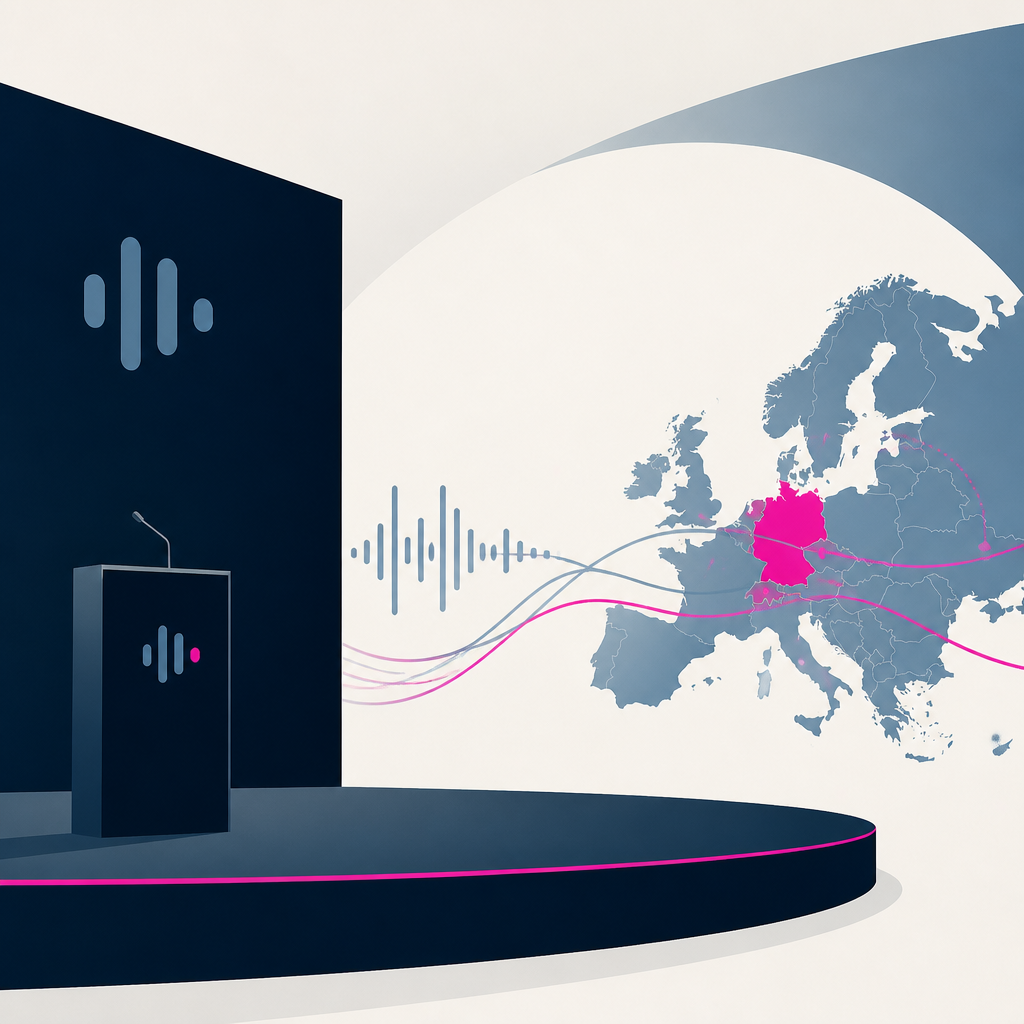
Deepslate raised €7.7M in a seed round to expand its European speech-to-speech voice AI models that process audio directly. The funding came in a €7.7 million round led by 42CAP. The company plans to grow training and European data collection (including German names and dialects), lower latency, improve voice quality, and scale production and sales.
Deepslate raised €7.7 million to build a speech-to-speech AI model and is operating its system on servers in Germany. The model’s time to first audio was measured at 0.44 seconds by Artificial Analysis. Deepslate’s funding supports faster real-time voice responses while positioning the company to offer customers a locally deployable, sovereignty-focused model.
DIG Ventures closed Fund III to invest in early-stage AI-native enterprise and cloud infrastructure startups in Europe. The fund totals $120 million and aims to back about 30 companies at the pre-seed and seed stages. DIG plans to deploy capital immediately and focus on infrastructure areas like data, identity, compliance, and orchestration as AI makes enterprise software easier to build and distribute.
DIG Ventures closed its third fund to invest in European pre-seed and seed startups building AI-native enterprise infrastructure. It raised $120 million with plans to make about 30 investments of roughly $1 million to $5 million each. The fund is now beginning deployments, aiming to lead most rounds and back portfolio companies that provide control points like data, compliance, identity, and orchestration.
FRANK secured €2.9 million in seed financing from Armilar and Start Ventures for its AI Operator that automates insurance brokers’ portal and paperwork tasks. The product supports more than 350 brokerages and, on average, each broker saves about 10 administrative hours per week while the system runs 70,000 back-office tasks per month. The funding will be used to attract new clients, expand international operations (with plans for 2027), and continue R&D on the AI assistant.
Dig Ventures raised a $120m third fund to invest in early-stage startups building AI infrastructure in Europe. The fund totals $120 million. The new capital will expand its backing for AI infrastructure startups at the early stage.
Bank of England governor Andrew Bailey warned that heavy investment in AI could lead to financial market shocks in the UK. He cited Nvidia’s $5.5tn market valuation as an example of how AI expectations can push asset prices higher. The Bank of England says it is watching AI funding closely and preparing for possible asset-price corrections and other shocks to keep the financial system resilient.
Nate Bargatze discussed skilled-trades shortages and how Ford is promoting hands-on careers while connecting his own move from door-to-door water-meter reading to major live events and a theme park. The Alliance for America’s Skilled Trades estimates the U.S. needs 1.7 million skilled-trades openings each year through 2035. The story frames AI as a way to make learning more accessible while reinforcing the idea that workers are still needed for physically installing, maintaining, repairing, and building things, with more demand shifting toward live experiences.
Verizon CEO Dan Schulman forecast rapid AI progress, saying AI model capability will step up every two months and that AGI could arrive within 6 to 18 months. He also predicted the “era of quantum” would begin about two years after that. Verizon plans to shift its workforce from fixed roles toward a more fluid structure and to expand training, including a $70 million initiative for American workers.
The U.S. SEC filed charges against private fund advisers it says misled investors by claiming they held pre-IPO stakes in high-profile companies like OpenAI and SpaceX while misappropriating investor money. In one case, the SEC alleges Owen Meyer raised at least $18.5 million and used more than $18,000 of fund capital for strip club payments in April 2023. The SEC is seeking industry bans, disgorgement, and penalties, and the companies named are not accused of wrongdoing.
Metaview Labs raised $60 million in a Series C to automate recruiting tasks with AI agents that conduct interview workflows and turn responses into notes for human reviewers. The funding round brought Metaview’s total raised to $110 million and its agents have conducted more than 6 million interviews. The company is expanding its agentic recruiting platform, hiring to grow its team from about 80 people toward 250 by the end of next year, and launching additional autonomous features like a Slack-based recruiting agent called fillmore.
Every AI story that matters,
in your inbox by 8am.
TLDRocket reads all relevant sources, removes duplicate coverage, and summarises the
day in two minutes. Follow companies and topics for alerts, or get the
briefing in Slack. Free, no spam, unsubscribe anytime.
Reading TLDRocket needs no cookies, and the readership counts we rely on come from
our own cookieless analytics. Google Analytics is the exception: it sets cookies and
reports to Google, so it stays switched off until you allow it. You can change your
mind any time from “Cookie settings” in the footer.
Strictly necessary
Session security and form protection (tldrocket-session,
XSRF-TOKEN, 2 hours). The site cannot work without them,
so they need no consent.
Always on
Google Analytics 4 (_ga,
_ga_<id>, up to 2 years). Measures which
stories and sections readers use. Google acts as a third-party processor and may
store the data outside the EU. No advertising, no profiling, no data sold.