
Deepslate secures €7.7M for its European voice AI platform
Tech.eu Tamara Djurickovic ● Covered by 4 sources
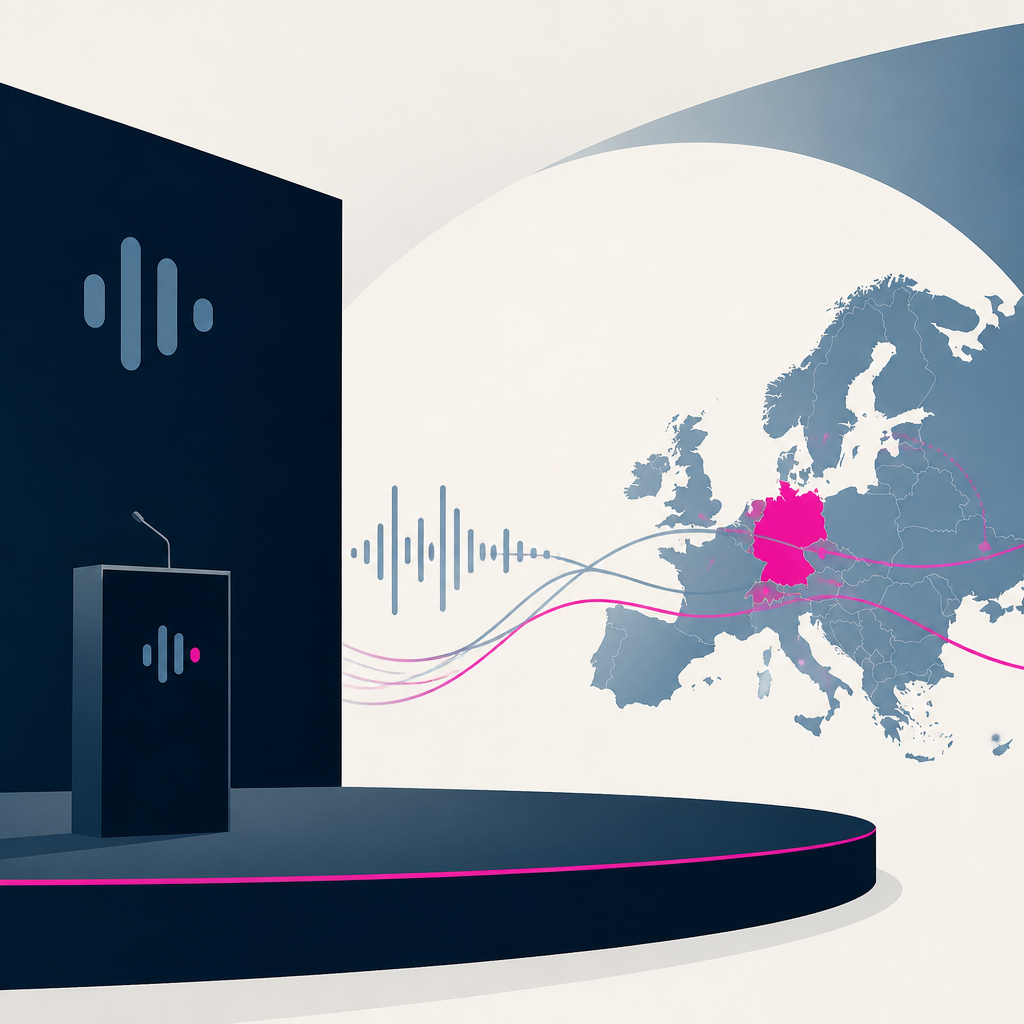
Deepslate raised €7.7M for voice AI that speaks directly, not through text. It says the EU-hosted setup keeps tone and dialect better, and it's already in use.
Based on reporting by Tech.eu, Tamara Djurickovic — read the original for the full story.
Summary, retelling and take written by AI under human oversight; images are AI-generated illustrations. How we work · Report an error
Berlin-based Deepslate has picked up €7.7 million in seed funding, led by Munich investor 42CAP. Alstin Capital, SIVentures and several business angels also joined the round.
The company is building speech-to-speech AI for European languages, with all of its technology hosted inside the EU. That matters because the usual setup still breaks speech apart into text, runs it through a language model, then turns the answer back into audio. Deepslate skips that detour and processes audio end to end.
That design is meant to preserve things most text systems flatten away: tone, emphasis, dialect and other quirks of how people actually talk. Deepslate says its stack has three in-house pieces: a speech encoder, a reasoning core built on an open-weights language model that it post-trains for specific languages, and a speech decoder that produces the reply. It also says the underlying language model can be swapped out without retraining the whole system.
The company is leaning hard on speed and language coverage. It says an independent Artificial Analysis benchmark measured a 440 millisecond response time, which it claims made it the fastest speech-to-speech model in that benchmark as of September 2026. Deepslate also says it posted the best error rate in the comparison field for European languages on CoVoST2. The company is ISO 27001 certified, and its technology is already running in production with insurers, contact centres and platforms.
Deepslate sells access through a self-service platform and API, with volume and self-hosting options for platform providers and enterprise buyers. The new money will go into model training, a bigger European data programme focused on German street names, personal names and dialects, plus sales, marketing and more production infrastructure in European data centres as call volumes rise.
My take — AI-written commentary, not fact-checked reporting
Deepslate is playing the right card: privacy, European languages and real deployment, not another demo that only works when nobody interrupts it. The bigger story is that voice AI is starting to look less like a chatbot feature and more like infrastructure, which means the boring stuff like data centres and certification suddenly matters more than splashy product videos.
Read more about this at: Tech.eu