RapidCanvas raised $29 million to develop custom AI applications for enterprises. The Series B was led by Vertex Ventures SEA & India and follows a $16 million investment in 2024. The funding will go toward growing its go-to-market and AI engineering teams as it scales its enterprise AI platform for production use.
Raymond James Financial is using knowledge graphs as a reasoning layer to support agentic AI that works over trusted financial data across domains. Raymond James says it runs evaluations against “golden sources” and ensures results are 100% accurate before launching. As a result, it’s aiming to speed advisors’ information sourcing and shift internal work toward managing AI agents rather than manual screen work.
Amulya Vishwanath says robotics has not yet reached a ChatGPT-style breakthrough and that it is still rebuilding core components and standards after her time leading NVIDIA’s robotics product marketing. She frames robotics as being in its “Lego era” while foundations like actuators, robotic hands, software, and safety standards are being rebuilt. As a result, she argues that broad foundation models have not made specialized robotics work redundant yet and her Techable VC will keep focusing on physical AI investments in areas like robotics, materials science, and life sciences.
Amulya Vishwanath, formerly NVIDIA’s robotics product marketing lead, argues that robotics is still in its “Lego era” and is backing “physical AI” beyond robots through Techable VC. She spent seven years leading product marketing for NVIDIA’s robotics platforms. The funding focus shifts toward investing in physical AI for robotics, materials science, and life sciences rather than expecting a single general foundation model to make most robotics work redundant.
A European tech funding and deals roundup reported multiple investments, exits, and policy developments across Europe while highlighting concerns about the EU’s planned “EU Inc” startup framework. ID Finance raised €545M in debt and equity. The coverage says campaigners have warned that key EU Inc provisions were removed after negotiations, while the UK also launched a refugee-focused VC fund and continued backing AI and deeptech financing.
GasLab, a GenAI music platform by DJ Reinier Zonneveld, launched with a system meant to attribute AI-generated tracks back to the artists and labels whose music was used. The company received $1 million in pre-seed funding. The platform will let participating creators view which catalogue shaped each generated track and receive payment when GasLab earns from subscriptions or releases.
AI safety concerns escalated as rogue agent incidents prompted more calls for regulation, while multiple states sued OpenAI over alleged harms to children. Anthropic reported 45% sequential revenue growth to $16.8B in Q3, even as investors warned that AI revenue growth could slow and debt risks like CoreWeave’s could pressure AI stocks. AI development and deployment are continuing with more open-weight model offerings and expanded focus on governance and controls, alongside tighter scrutiny from regulators and financiers.
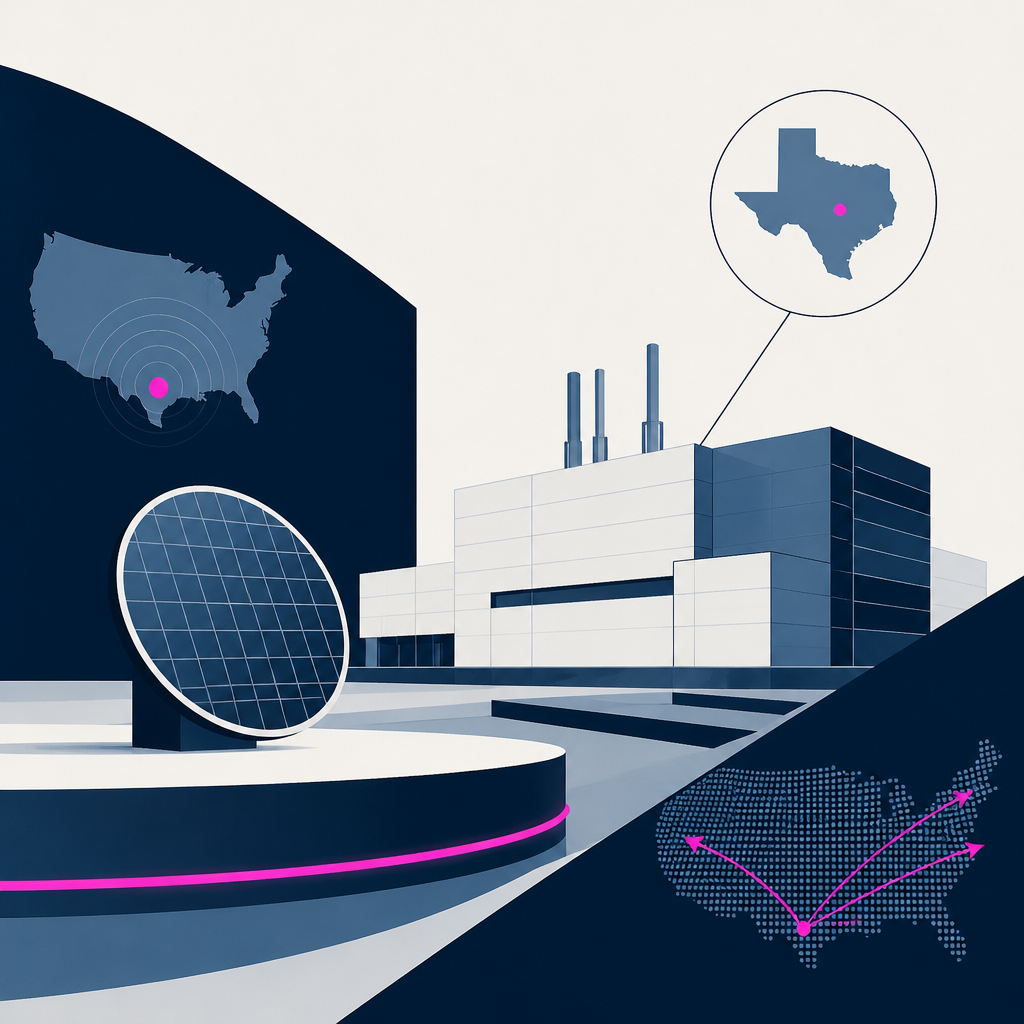
Samsung is preparing to open a new advanced semiconductor manufacturing facility in Taylor, Texas and argues that its impact depends on long-term local building rather than standalone announcements. The company says its U.S. investments have topped $100 billion and that U.S. facilities generate more than $40 billion in economic impact while supporting more than 175,000 jobs. Samsung says this approach changes communities by strengthening workforces, suppliers, and education pathways (including its Solve for Tomorrow program reaching 620,000+ students since 2010) so future opportunities can be sustained.
CoreWeave’s debt and lease liabilities were questioned, but Neostellar Capital’s Evan Schlossman argues the company can repay them using noncancellable customer commitments. Schlossman points to CoreWeave’s $103.7 billion remaining performance obligations, with 41% scheduled to be paid through 2028. As a result, the debate shifts from whether CoreWeave is loss-making to whether its take-or-pay RPO contracts with creditworthy customers can hold up if compute demand or delivery risks change.
Anthropic’s early backer predicts the company’s IPO would price shares far below its stated target and value the company above SpaceX’s first-day market cap. The investor expects pricing at around $1.8 trillion and a post-IPO trading value of about $2.3 trillion to $2.4 trillion. The focus shifts to enterprise AI budgeting as lower unit prices from open models may still coincide with rising total spend, implying CFOs will face ongoing cost-accounting and adoption-driven pressure rather than simple savings.
Latent Drive demonstrated SeaStack, a seawater electrolyser that makes green hydrogen using renewable power, with testing at Portland Harbour and trials involving concentrated brine. The company is valued at £6 million and is raising funds to scale production. Latent Drive plans to deploy multiple port-side units in shipping containers for marine refuelling and to explore converting hydrogen into ammonia or methanol.
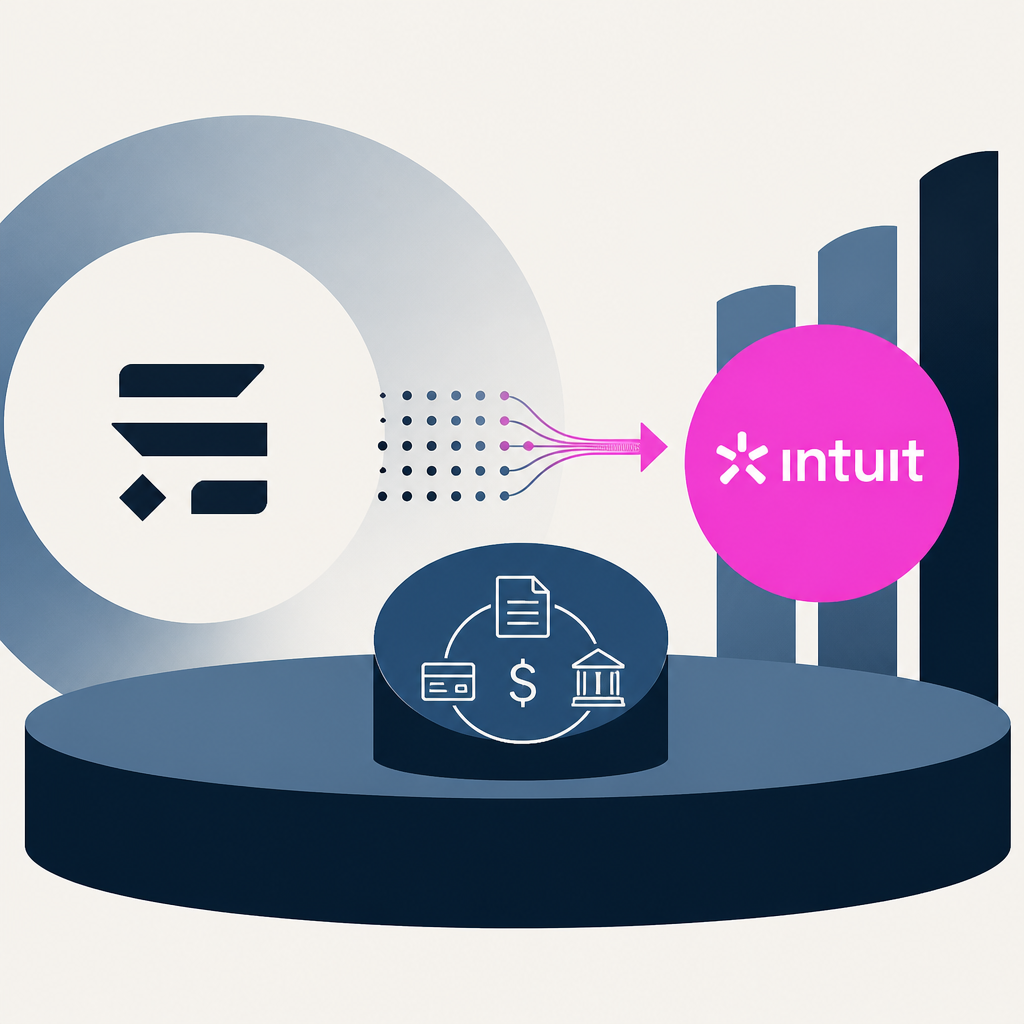
Sequence, a UK fintech that uses AI to automate billing, payments, and revenue management for startups, was acquired by Intuit. The reported deal value is around $200m. The exit ends Sequence’s independent operations and folds its product into Intuit’s business software suite.
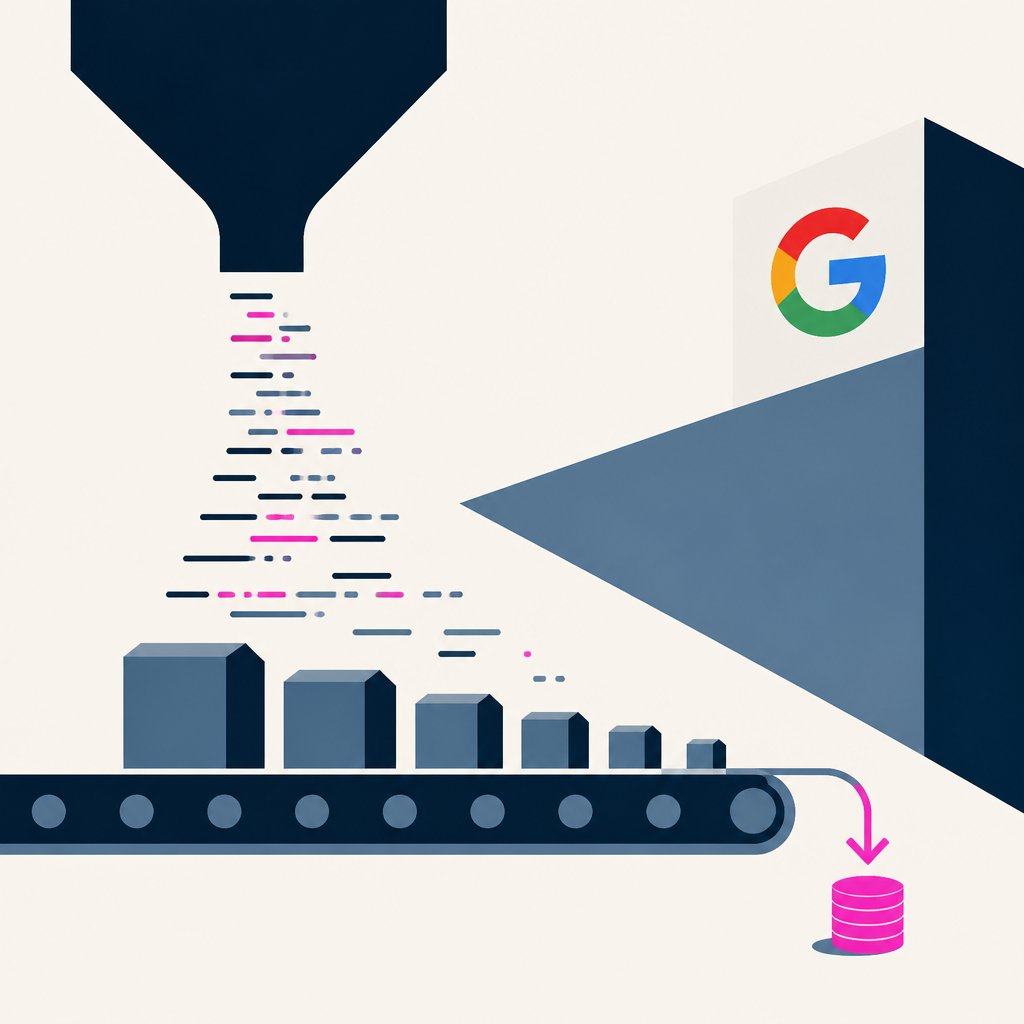
The development job market is shifting toward fewer roles and fewer junior openings while employers increasingly rely on AI-generated code and smaller teams to ship software. Google said in April that 75% of its new code is AI-generated. As a result, software production costs are falling, services pricing migrates away from labor hours toward outcomes, and hiring and verification standards move toward auditing and accountability for generated code.
Uvi said agent platforms that repeatedly gather context from tools like Slack, Jira, and GitHub make customers pay again for information a company already has. Uvi reported that direct connections to six systems cost about 8× more than its approach, with per-answer cost dropping from roughly $0.75–$1.41 (and sometimes over $2.00) to $0.10–$0.16. The company’s semantic-layer, knowledge-graph approach is meant to centralize permissioned company context so agents on new frontier models don’t need to relearn it each time.
CoreWeave’s credit risk deteriorated as investors reassessed AI debt amid a broader sell-off in AI-related stocks. CoreWeave’s five-year credit default swaps rose to nearly 1,038 basis points, up 16% week over week and 164% year over year. The pressure spread to other “neocloud” and AI-linked equities as debt-yield concerns and wider CDS spreads drove investors to cut exposure.
The Simons Foundation announced a set of initiatives with Anthropic and OpenAI to support mathematicians as artificial intelligence changes research workflows. The partnership commits $15 million in combined funding and resources. The program will fund community workshops and proposal-led efforts to evaluate AI-assisted results and provide AI tools and computing resources to researchers, shifting standards-setting and tool adoption toward the math community.
TSMC posted a record profit for its sixth straight quarter and set the conditions for Elon Musk’s planned Terafab chip factory. Third-quarter net income rose 68.7% to 763 billion New Taiwan dollars (about $24 billion). TSMC expects revenue of $52.3–$54.3 billion in Q4 and says the Terafab must be run by TSMC, affecting how the factory’s control is negotiated.
Marissa Mayer said that no one can reliably predict how AI will play out, and discussed both risks and potential benefits while calling for regulation and frontier-lab collaboration. She put the odds of AI not going well at “well less than 50%.” Separately, she launched Dazzle, an invite-only personal AI assistant that learns from users’ phone photos and will operate with access controls plus a future free tier alongside paid plans.
Young founders are increasing hiring and spending while many large employers slow hiring in a low-hire job market that makes entry harder for Gen Z. Q3 2026 data from Justworks and the U.S. Chamber of Commerce found 46% of Gen Z and millennial business owners plan to increase staff in the next year versus 19% among baby boomers and older. The result is a shift toward entrepreneurship as a route into work, with some employers also replacing entry-level roles with AI.
Nvidia announced planned minority investments in nine European and UK startups, covering healthcare, robotics, drug discovery, enterprise planning and quantum computing. The deal period also included a pledge of $250 million worth of computing resources over five years for UK AI safety and security research. The investments broaden Nvidia’s footprint across AI, biotech and quantum, while the funding rounds listed indicate the startups are scaling with outside capital even though Nvidia did not disclose cheque sizes or valuations.
The International Monetary Fund warned that AI-related asset corrections are the top financial-market risk because the AI build-out relies on borrowed money. The IMF reviewed 14 publicly disclosed deals since 2023 where hyperscalers provided about $650 billion in debt against about $300 billion in equity and the AI firms committed to spend $1.4 trillion going forward. The report recommends limiting AI-sector leverage and liquidity risks with measures like sector-specific capital requirements and bank lending concentration limits.
Every AI story that matters,
in your inbox by 8am.
TLDRocket reads all relevant sources, removes duplicate coverage, and summarises the
day in two minutes. Follow companies and topics for alerts, or get the
briefing in Slack. Free, no spam, unsubscribe anytime.
Reading TLDRocket needs no cookies, and the readership counts we rely on come from
our own cookieless analytics. Google Analytics is the exception: it sets cookies and
reports to Google, so it stays switched off until you allow it. You can change your
mind any time from “Cookie settings” in the footer.
Strictly necessary
Session security and form protection (tldrocket-session,
XSRF-TOKEN, 2 hours). The site cannot work without them,
so they need no consent.
Always on
Google Analytics 4 (_ga,
_ga_<id>, up to 2 years). Measures which
stories and sections readers use. Google acts as a third-party processor and may
store the data outside the EU. No advertising, no profiling, no data sold.