I.M.F. Warns of a Debt Spiral in the A.I. Build-Out
Trending Topics Jakob Steinschaden ● Covered by 8 sources
The I.M.F. says the A.I. boom is now a debt risk, not just a stock story. It put an A.I. correction above bond yields and cyberattacks as markets’ biggest threat.
Based on reporting by Trending Topics, Jakob Steinschaden — read the original for the full story.
Summary, retelling and take written by AI under human oversight; images are AI-generated illustrations. How we work · Report an error
The International Monetary Fund has started treating the A.I. boom less like a clean growth story and more like a leverage problem. In its new Global Financial Stability Report, the fund puts a correction in A.I.-linked assets at the top of the risk list for financial markets, ahead of rising bond yields and cyberattacks. The accompanying blog post from Athanasios Vamvakidis and Jason Wu says there is “no room for complacency.”
That warning matters because A.I. is no longer just a theme on trading screens. The report says the sector now supports the global economy and markets through spending on data centers, chips and infrastructure, as well as through the earnings of the companies pushing the build-out. If that spending proves weaker than expected, or if the profits people are betting on never show up, A.I. stocks and related assets could get hit hard. And because so much money has been borrowed into the story, the selloff could feed on itself.
The leverage data in the report are hard to ignore. Hyperscalers now make up 10 percent of all global investment-grade bond issuance, up from less than 1 percent, according to a summary by Unite.AI. Their free cash flow is shrinking even as A.I. outlays rise. Borrowing has also spread to investors: single stocks now account for 28 percent of leveraged ETFs, up from 16 percent, while hedge funds’ equity positions plus margin loans have climbed from about 10 percent to about 15 percent of advanced economies’ GDP.
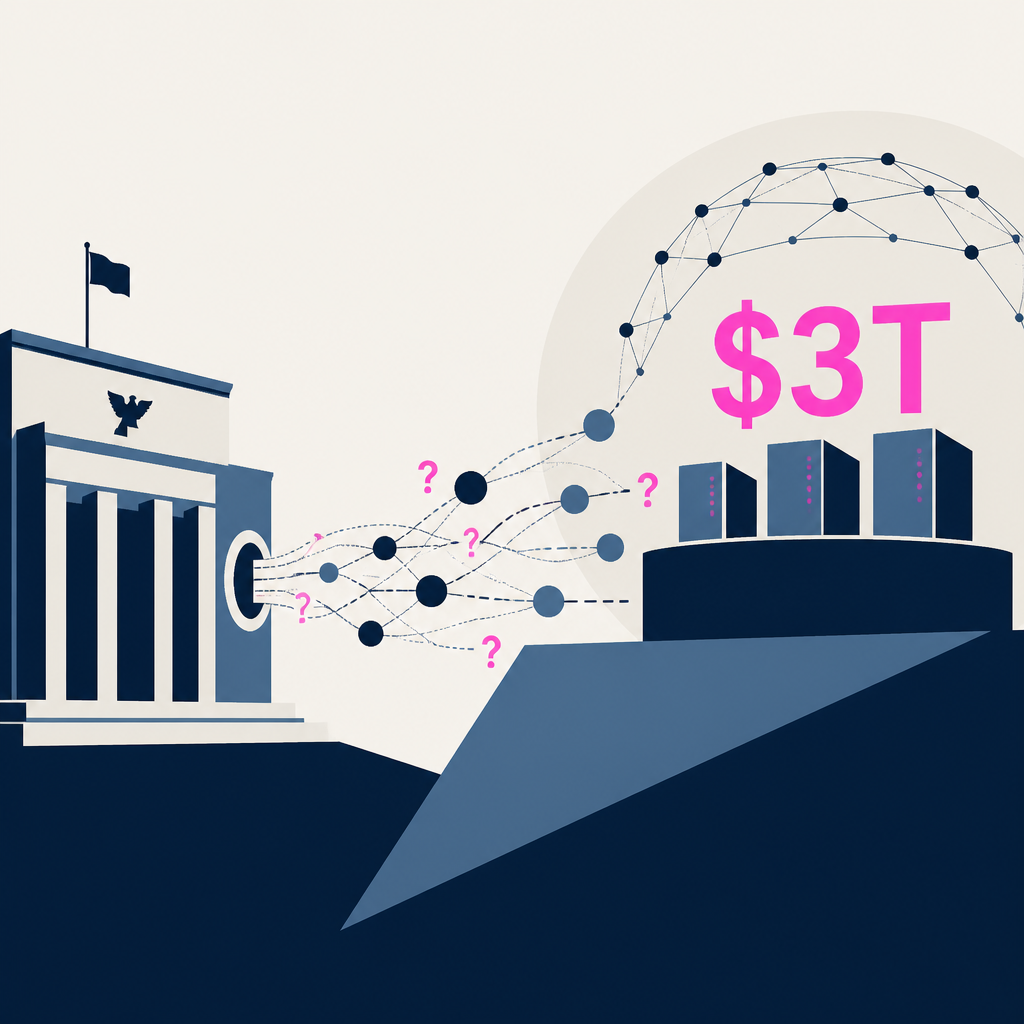
The I.M.F. is also uneasy about the plumbing behind the boom. It looked at 14 publicly disclosed deals since 2023 and found about $300 billion in equity from hyperscalers and about $650 billion in debt tied to A.I. companies. In return, those companies committed to spend $1.4 trillion with their backers later, including on data centers, computing power and cloud services. About $320 billion of that debt sits with the funded companies themselves, some of it backed by guarantees or kept off balance sheet. The fund calls the setup “wrong-way risk”: the loans and equity lose value just when the revenue linked to them starts to vanish.
The I.M.F. is not calling the whole thing a fraud or a fantasy. It says the big cloud companies still have strong profits, solid cash flow and good credit ratings, and notes that A.I. earnings have kept beating forecasts. That helps explain why price-to-earnings ratios have fallen rather than ballooned. Even so, the fund wants tighter controls on leverage and liquidity, including sector-specific capital requirements and limits on how much banks can lend into one crowded trade.
My take — AI-written commentary, not fact-checked reporting
This is the part of the A.I. boom nobody loves to price honestly: the debt. When even the I.M.F. starts talking about wrong-way risk, the market has probably confused “strong demand” with “infinite collateral.” Wall Street can call it premature all it wants; the bond market has a way of ending the debate with paperwork.
Read more about this at: Trending Topics