Code Is a Commodity Now
efpasia
Code is getting cheaper to produce, and tech hiring is shrinking with it. The big shift isn’t “AI kills jobs” — it’s software work being pushed toward a commodity.
Based on reporting by efpasia — read the original for the full story.
Summary, retelling and take written by AI under human oversight; images are AI-generated illustrations. How we work · Report an error
The job data is already moving. On Djinni, Ukraine’s largest tech board, frontend openings fell from 5.1% of all vacancies in January 2025 to 1.6% in August 2026, while applications per frontend listing rose from 59 in March to 112 in September. Across the market, developers went from 67% of all hires a decade ago to 36% now. And this isn’t just a wartime distortion: Indeed Hiring Lab says US software-development postings are still roughly 70% below their 2022 peak and about a quarter below pre-COVID levels.
The rebound is narrow. Over the past year, 71% of the modest recovery in US postings came from senior roles, while Stanford’s read on ADP payroll data shows employment for software developers aged 22 to 25 down about 20% since late 2022. Older engineers in the same roles grew. That’s the labor market telling a pretty blunt story: the bottom end is getting squeezed while the people who can steer the work are still getting pulled in.
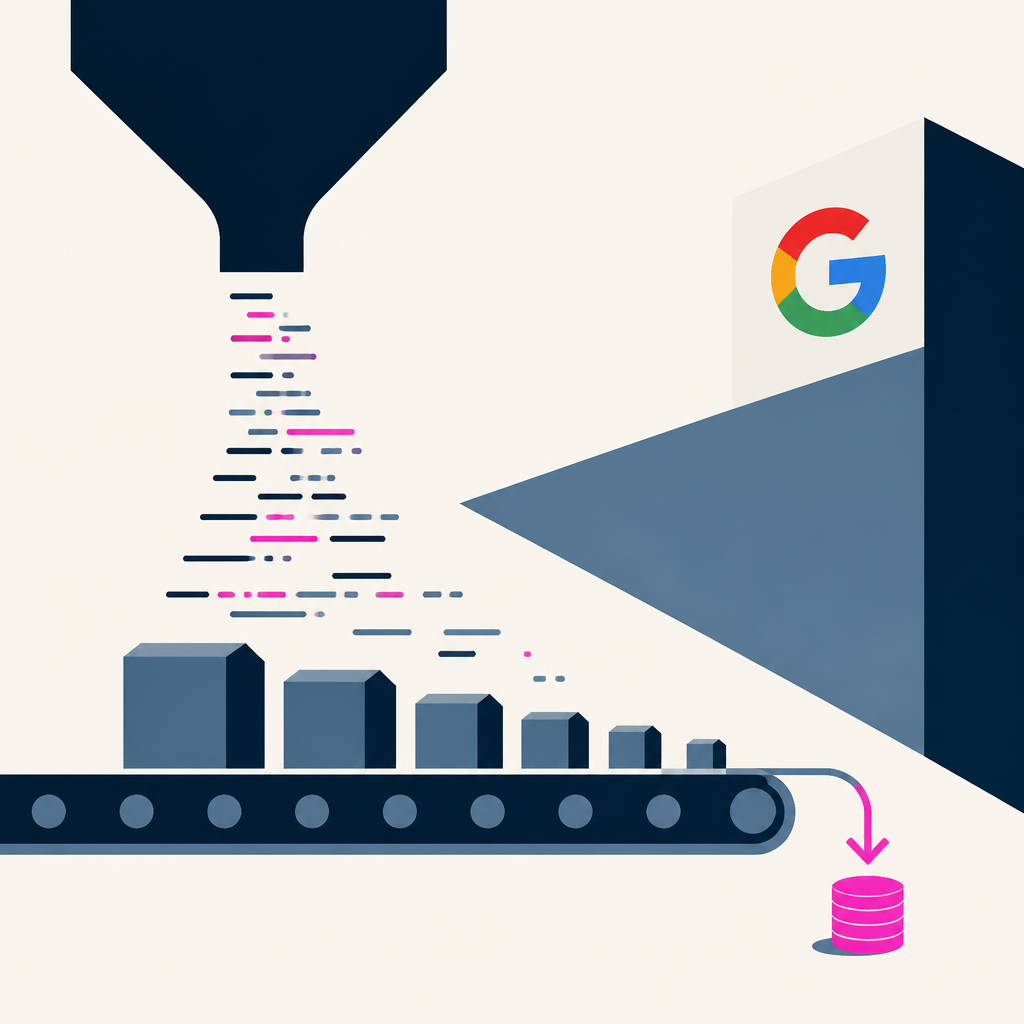
On the supply side, the code itself is getting cheaper to make. Sundar Pichai said in April that 75% of Google’s new code is AI-generated, up from 25% in 2024 and 50% last fall. Once that number moves that fast inside Google, it stops being a novelty and starts being a cost curve. Clients can feel it too: prospects now show up with Lovable prototypes that already run, and the awkward part is explaining why finishing them costs more than the subscription that produced them.
That is why the old agency pitch is wobbling. For years, “we can build software” was enough because building was the scarce thing. Now the scarce thing is shifting toward judgment, trust, and the ability to say what should not be built. A lot of pricing basis is disappearing at once: hours, ramp-up, and the assumption that a team is needed just to get to something working.
The likely winners are either scaled commodity shops that can sell default development at volume, or firms that move up a layer and sell outcome, accountability, and taste. Even regulated industries only buy time. The same pressure shows up there too, just later, which is a comforting thought if postponing the problem counts as a strategy.
My take — AI-written commentary, not fact-checked reporting
The useful scandal here isn’t that AI writes code; it’s that so much software work was always priced like craftsmanship when plenty of it was assembly. That trade is ending, and the people who still think “more developers” is the default answer are about to discover how expensive nostalgia can be. The new moat is owning the decision, not typing the tickets.
Read more about this at: efpasia