
Meet the innovator producing green hydrogen with seawater
Startups Magazine Mike Walter
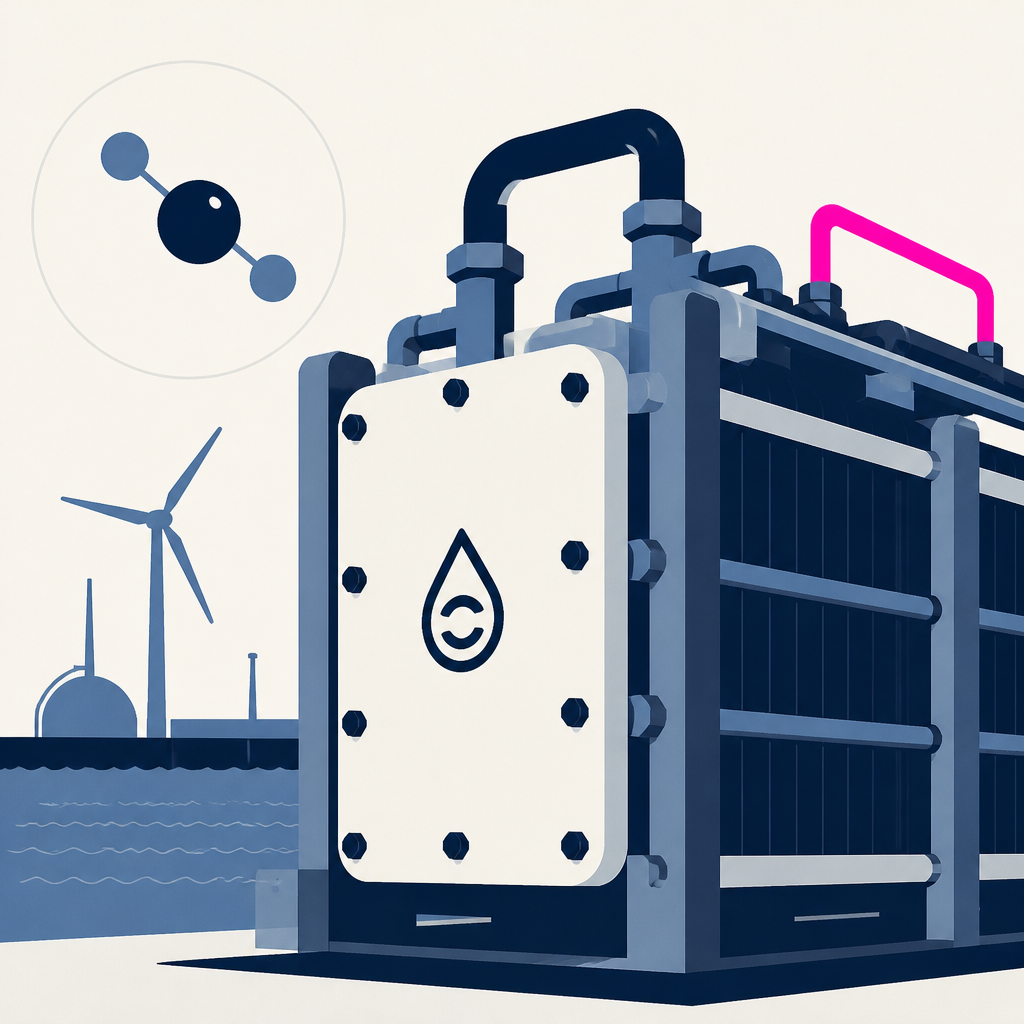
Latent Drive says its SeaStack turns seawater into green hydrogen. That could help ports and water-stressed countries make fuel without ultra-pure water.
Based on reporting by Startups Magazine, Mike Walter — read the original for the full story.
Summary, retelling and take written by AI under human oversight; images are AI-generated illustrations. How we work · Report an error
Joseph Ely’s latest startup bet is a long way from the hospital ventilator work that helped shape it during Covid. His Dorset company, Latent Drive, is now building SeaStack, a seawater electrolyser that makes green hydrogen when it’s paired with renewable power. The company is valued at £6 million, already generating revenue, and is raising money to scale production, with the South West Investment Fund leading the round.
SeaStack is designed to do what conventional electrolysers usually can’t: work with seawater, wastewater and concentrated brine instead of demanding ultra pure water. That matters in places where water is scarce and desalination would add cost and complexity before the hydrogen project even starts. The hydrogen can be used directly for maritime fuel, or turned into ammonia and methanol for use on ships or on land.
The technology has been pushed forward with help from Connected Places Catapult through the Hydrogen Innovation Initiative, led by the High Value Manufacturing Catapult and funded by Innovate UK. Latent Drive says the trial took SeaStack from Technology Readiness Level four to five, which is a meaningful jump from lab testing to a real-world system. The demonstration took place in a shipyard at Portland Harbour, and also tested concentrated brine, an industrial by-product four times saltier than seawater.
There’s a lot of engineering inside the stack. Latent Drive says its catalysed electrodes, or catrodes, improve performance and cut cost, while the trial also examined hybrid bipolar plates meant to stop corrosive chlorine compounds forming during electrolysis. Ely’s pitch is simple: split water without splitting salt, and you avoid the safety and corrosion problems that make seawater electrolysis so awkward.
The company’s immediate plan is to put multiple SeaStack units in shipping containers at ports and use them to refuel marine vessels. After that, it wants to explore turning the hydrogen into liquid fuels such as methanol or ammonia for storage and longer voyages. Ely is also talking to water-stressed countries about pilots, and says wastewater-fed electrolysis could help UK hydrogen projects that are stuck waiting for a mains water connection.
My take — AI-written commentary, not fact-checked reporting
This is the kind of climate hardware story that deserves more attention than another glossy app launch. Seawater electrolysis sounds obvious until you remember most industrial systems are fussy, expensive and allergic to reality. The boring part — salt, corrosion, water access — is exactly where the real market is hiding.
Read more about this at: Startups Magazine
Related stories
 French deeptech HyLight raises €13M to industrialise autonomous hydrogen-powered airships
Tech.eu · 3 days ago ·
32
French deeptech HyLight raises €13M to industrialise autonomous hydrogen-powered airships
Tech.eu · 3 days ago ·
32
 The top four underwater and extreme‑environment data centres
Startups Magazine ·
43
Cambridge startup Neela Biotech raises £2.1M from Elbow Beach to turn waste into jet fuel with AI
Tech Funding News · 1 week ago ·
11
The top four underwater and extreme‑environment data centres
Startups Magazine ·
43
Cambridge startup Neela Biotech raises £2.1M from Elbow Beach to turn waste into jet fuel with AI
Tech Funding News · 1 week ago ·
11