
CoreWeave investor explains how the loss-making AI ‘neocloud’ provider will claw its way out of debt
Fortune Jim Edwards
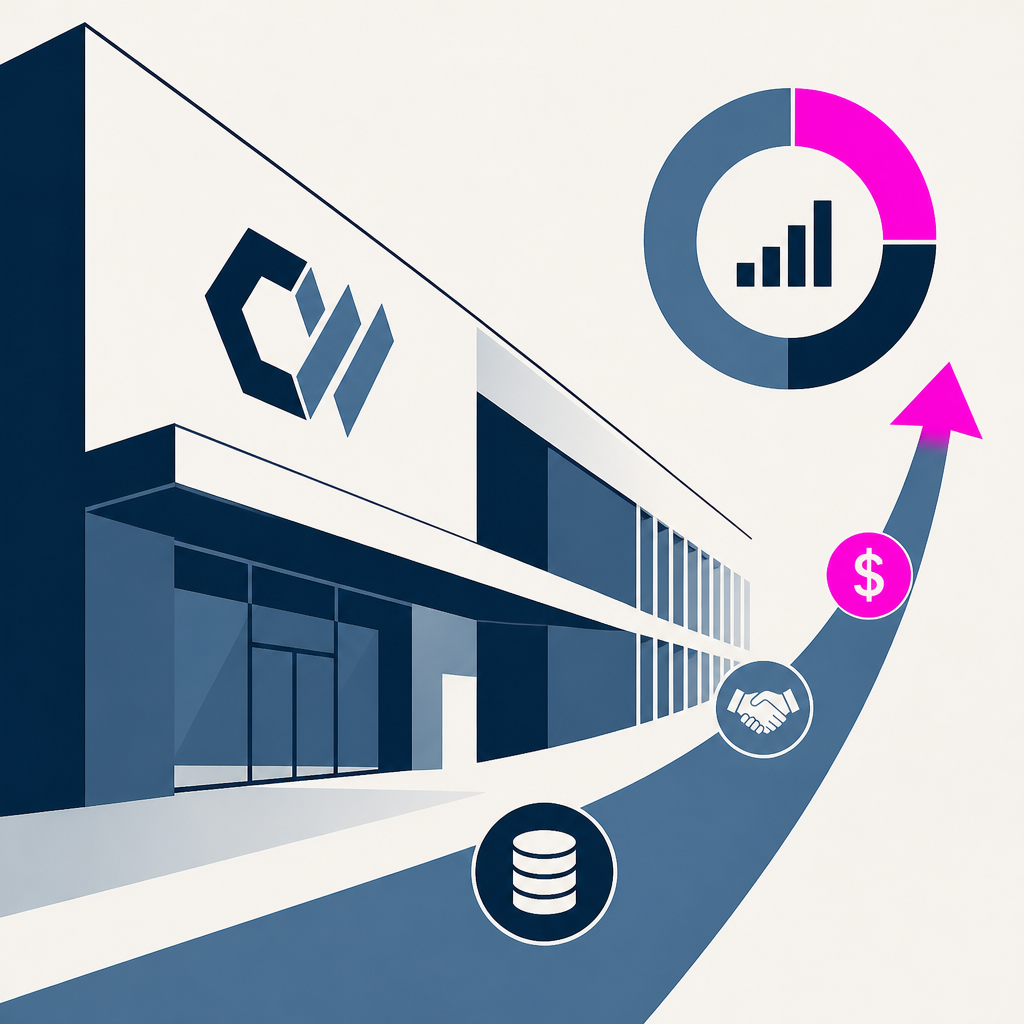
CoreWeave is piling up debt, but one investor says its customer contracts are the real backstop. The bet is that Microsoft- and OpenAI-linked “take-or-pay” deals keep the money flowing.
Based on reporting by Fortune, Jim Edwards — read the original for the full story.
Summary, retelling and take written by AI under human oversight; images are AI-generated illustrations. How we work · Report an error
CoreWeave’s critics have been busy. The AI infrastructure company has loaded up on debt and leases, posted a net loss in the first half of the year, and still sits in the middle of a market that already has its own warning signs. Oracle’s force majeure citation to Blue Owl over a New Mexico data center due in 2028 was one of them. Gartner’s estimate that 80% of neocloud providers will be out of independent business by 2030 was another.
Evan Schlossman of Neostellar Capital says that skepticism misses how CoreWeave is actually financed. Neostellar bought a $25 million stake in CoreWeave in 2024 and sold 40% of it for a $15 million gain in the second quarter of 2025. Schlossman’s argument is simple: CoreWeave’s debt is matched by contracts that are already signed, noncancellable, and meant to be paid whether or not the buyer uses every last bit of capacity.
The numbers are still huge. CoreWeave said in its second-quarter earnings release that it had $16.3 billion in operating lease liabilities and $35.6 billion in total debt. In the first six months of the year, it brought in $4.6 billion of revenue, but operating expenses ran ahead of sales and the company ended up with a $1.4 billion net loss. By the ordinary logic of finance, that looks ugly. Schlossman’s answer is the backlog: $103.7 billion in remaining performance obligations, with 41% due through 2028.
That backlog matters because CoreWeave says those are take-or-pay contracts. Microsoft and OpenAI are major customers, and CoreWeave said its top three customers accounted for 72% of Q2 revenue. If the counterparty is Microsoft, Schlossman argues, lenders can treat the contract stream as a form of credit support. CoreWeave told Fortune that 98% of its revenue comes from committed take-or-pay contracts and that it structures most of its financing so customer cash flow repays the related debt.
Not everyone buys that calm reading. Francine McKenna, an accountant and investigative journalist, told Fortune she does not think Microsoft will keep paying if demand for compute softens. Her view is blunt: if CoreWeave is counting on Microsoft to save it from heavy debt and losses, that is a dangerous assumption. Microsoft declined to comment. And that is really the whole argument here: in AI infrastructure, the quality of the customer may matter as much as the quality of the code.
My take — AI-written commentary, not fact-checked reporting
This is the new AI finance religion: call it “backed by contracts” and hope nobody looks too hard at the fine print. CoreWeave may have real revenue attached to real customers, but the industry is already teaching everyone that a signed deal is not the same thing as a safe business. The market loves to confuse occupied servers with invincible balance sheets; accounting usually gets the last laugh.
Read more about this at: Fortune
Related stories
 CoreWeave CEO Michael Intrator cites ‘sold out’ capacity as revenue more than doubles and backlog swells to $104 billion
Fortune ·
33
CoreWeave makes the case for an open, full-stack AI cloud
SiliconANGLE · 1 week ago ·
43
CoreWeave targets AI inference bottlenecks with full-stack optimization
SiliconANGLE · 1 week ago ·
23
CoreWeave CEO Michael Intrator cites ‘sold out’ capacity as revenue more than doubles and backlog swells to $104 billion
Fortune ·
33
CoreWeave makes the case for an open, full-stack AI cloud
SiliconANGLE · 1 week ago ·
43
CoreWeave targets AI inference bottlenecks with full-stack optimization
SiliconANGLE · 1 week ago ·
23