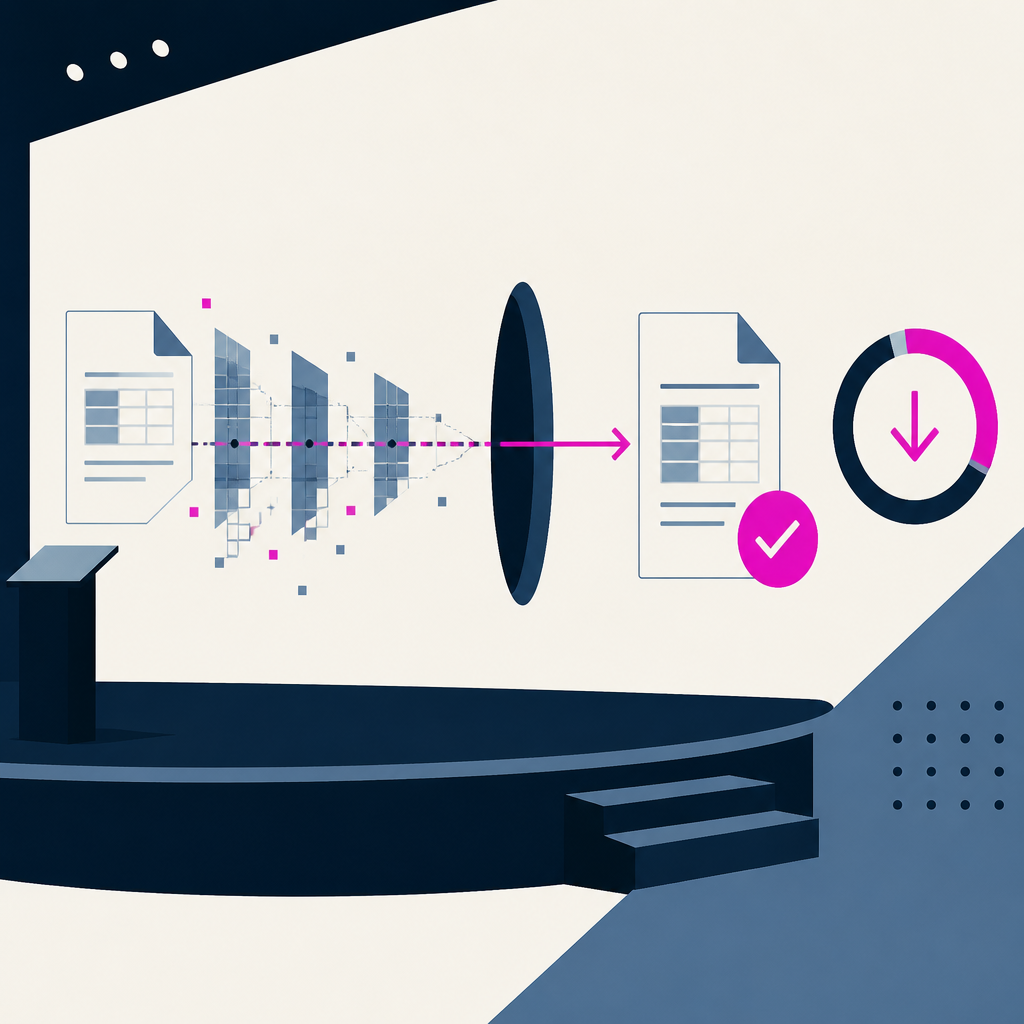
Perplexity launched Hybrid Compute in its Mac app, splitting AI work between cloud and the user’s Mac. It requires a minimum of 24GB RAM and is available for Pro, Max, and Enterprise. The cloud handles research and reasoning while local processing keeps anything that touches private files on-device instead of uploading it.
Maximem Synap launched as memory and context infrastructure for AI agents so conversations do not start from zero. It reports 92% on LongMemEval, 93.2% on Locomo, and sub-15ms P75 recall. The release adds a native integration layer across 22 frameworks and includes a free tier with no credit card required.
Cognition AI raised more than $2 billion in late-stage funding at a $48 billion valuation. Revenue run-rate has moved from about $492 million at its May round to close to $900 million now. The company expands its agent-coding platform and investor base, including new Series E leads Andreessen Horowitz and Accel, while existing backers returned.
OpenAI released GPT-6 Astra and made it generally available on Amazon Bedrock, bringing deeper reasoning and judgment plus support for code and file work to production workloads. GPT-6 Astra can review contract documents in a context window of up to 1 million input tokens. It adds enterprise plugins for ChatGPT Work, strengthens Bedrock-based security and governance (including real-time misuse safeguards), and lets teams call Astra via Bedrock APIs or configure ChatGPT Work/Codex to use it on Bedrock.
Cognition raised $2 billion in funding for its coding assistant Devin at a $48 billion valuation. The company said its annualized revenue run-rate grew from $492 million to $900 million since its May round at a $26 billion valuation. Investors’ backing and the new funding should let Cognition expand and train its own model to reduce reliance on costly third-party AI models and target breakeven.
Mistral AI SAS closed a €3 billion funding round led by Samsung Electronics, bringing its valuation to more than €20 billion. The round raised €3 billion (about $3.49 billion). The new capital will be used to buy computing infrastructure for AI training projects and to expand internationally.
NVIDIA announced CUDA Rust to let Rust be used for writing GPU kernel bodies, filling the gap where Rust could already launch CUDA kernels but not define the kernel code. The cutile-rs Tile track is already on crates.io and runs on stable Rust 1.89+ (requiring CUDA 13.3), while cuda-oxide is in early alpha with a pinned nightly. Both projects use Rust ownership/borrowing to reject buffer aliasing at compile time, with Tile currently more deployable than SIMT due to alpha status.
China’s exports rose 25% year-on-year in August and expanded its trade surplus to $119.1 billion as shipments of autos and high-tech goods—especially semiconductors—increased. Exports to the U.S. reached $42.5 billion in August, up 34.4% from a year earlier. The report links the trade strength to China moving up the value chain in AI infrastructure and industrial automation, while U.S. and other officials intensify focus on imbalances ahead of late-September U.S.-China talks.
DeepSeek announced it is hiring about 150 engineers to build and maintain the server-side infrastructure for running and evaluating AI agent sandboxes, rather than doing AI model research. The hiring targets September 7, with roles focused on Agent Elastic Compute and related systems like scheduling, storage, and virtualization. As workloads scale to hundreds of thousands of concurrent sandboxes, DeepSeek plans upgrades and rewrites to its backend, including DSec and its sandbox environment and recovery mechanisms.
Amazon SageMaker Feature Store introduced the UpdateRecord API to update selected feature values in an existing feature record without performing a full read-modify-write cycle. The API limits updates to up to 100 features per call via a POST to /FeatureGroup/{FeatureGroupName}/Record. Updates are applied atomically (preserving omitted features), reducing latency, read/write costs, and preventing lost-update overwrites; it also requires Standard online stores to opt into the Standard_V2 storage format to use feature-level writes.
Google released version 3 of its WeatherNext AI weather forecast model with added satellite data ingestion to reduce forecast lag. The update’s biggest change is that it ingests satellite weather data (version 3). As a result, forecasts can be generated faster using a more up-to-date global atmospheric input, so forecast performance is improved while keeping compute requirements lower.
Managed MLflow on Amazon SageMaker AI expanded its automatic synchronization between MLflow registrations and the SageMaker AI Model Registry to include more governance-ready metadata for models leaving experimentation. The sync now carries lifecycle stage promotion using MLflow aliases named sagemakerlifecycle-{stage}-{status}, where stage is staging or production and status is pending or active. As a result, governance officers can review, approve, audit, and promote models from the registry without manually returning to MLflow, while data scientists can continue using MLflow for experimentation and still move models through staging to production via automated lifecycle updates.
Amazon SageMaker AI benchmarked and recommended GPU instance configurations for serving two 30B-class Mixture-of-Experts LLMs on SageMaker Inference, comparing G5, G6, and G7 (Blackwell) options. In the Qwen3-Coder-30B test on the ml.g7.12xlarge endpoint, output token throughput reached 391.3 tok/s with an average request latency of 1,315.8 ms. The results led the article to conclude that G7 can deliver better price-performance, so users can either run direct endpoint benchmarks or use SageMaker AI generative AI inference recommendations to pick a deployment configuration.
DiDi partnered with AWS to replace an opaque third-party contact center QA tool with a self-owned system built on Amazon Bedrock for its International Business Group CX team. In production validation, intent verification accuracy rose from 38% to 86% while compliance scoring accuracy exceeded 90%. The pipelines now generate auditable, structured results for intent checks, compliance evaluation, and Voice of Customer trend analysis, and manual summarization was compressed from hours to minutes.
Mistral AI raised €3 billion in a Series D round to support its sovereign AI strategy. The round valued the company at more than €21 billion post-money and was led by Samsung Electronics. Mistral plans to expand compute capacity and infrastructure in Europe, grow commercial and international operations, and further emphasize customer control over where and how AI queries are processed.
Dell Technologies reported a major earnings surge tied to record AI server demand and positioning it to support companies running AI on their own infrastructure. It booked $60.9 billion in AI server orders in a single quarter. The company raised its full-year outlook and its results point to accelerating enterprise shifts toward on-premise AI, boosting growth across servers and storage and expanding margins.
Green Eagle Solutions received majority investment from Copilot Capital to scale its automation software for renewable energy operations. Green Eagle’s ARSOS Automation Suite currently manages 90 GW of wind, solar, BESS, and hydro assets and runs more than 1 million automated actions each month. The funding is expected to accelerate international growth, especially into the US, and expand the company’s operational and go-to-market capabilities.
Dome Systems, founded by former HashiCorp CEO Dave McJannet, is building an enterprise platform to govern AI agents that can take variable tool-based routes and actions. Dome launched from stealth in April with $14 million in seed funding and is now opening the platform to self-serve users. This shifts agent governance from enterprises piecing together separate model/tool gateways to a single control layer with centralized permissions, response guards, quotas, and audit trails.
The talk “From S3 to GPU in One Copy” explains how SpiralDB’s Vortex columnar format enables training data to be streamed from S3 into GPUs with projection and filter pruning instead of decompressing/reprocessing everything. It reports S3-to-GPU scans at around 30 times faster than Parquet. As a result, only selected columns/segments are read and decompressed for each iteration, reducing movement and decision overhead during ML training.
XPeng started production of its IRON humanoid robot on a newly switched-on automated production line in Guangzhou. XPeng says more than 80% of the line’s core processes are automated. The effort moves IRON from R&D prototypes toward mass production, with production targeted to begin by the end of 2026.
Mistral raised €3B in a tech equity round at a valuation above €21B. The round values the company at over €21B. It signals a shift toward Mistral seeking more control of Europe’s AI infrastructure.
Taiwan highlighted its semiconductor role for AI at SEMICON Taiwan while signaling it will expand chip investment with partners amid US pressure to move more manufacturing to the United States. TSMC is investing $265 billion in Arizona, and Taiwan’s economy minister said Taiwanese firms plan an additional $20 billion of investment in the US. As a result, Taiwanese chipmakers are shifting toward making “with Taiwan” in partner countries and deepening ties with the EU to attract more investment through the bloc’s Chips Act 2.0.
Anthropic walked away from its plan to acquire Decart. The reported deal size was roughly $6 billion. As a result, the acquisition does not proceed, though the two companies may still work together.
Mistral raised €3 billion in a Series D round led by Samsung, taking its valuation to over €21 billion. The round lifts Mistral’s valuation to almost double its previous Series C valuation. As a result, Samsung and other backers become both suppliers and shareholders while Mistral expands research, training capacity, and international growth.
Carmen Alfonso Rico joined UK AI chip startup Fractile as VP of business operations and said it could become Britain’s first one trillion dollar company. Fractile is raising $600m at a $5.6bn valuation, according to Bloomberg. The company is positioning itself to compete with Nvidia in AI inference hardware, with specialized chips targeted for data centre deployment in 2027.
sci2sci raised €1.2 million in pre-seed funding to expand Integrity Cortex and VectorCat for organising and verifying data in regulated industries. The funding round is €1.2 million. It will expand the engineering team, deepen deployments, and extend the Integrity Cortex product beyond biopharma to other regulated sectors such as banking, focusing on traceability and auditable evidence for AI outputs.
Mistral raised a €3B Series D funding round led by Samsung Electronics to develop its sovereign AI models, infrastructure, and business products. The round valued the company at more than €21B post-money. The funding will expand Mistral’s AI research and computing capacity and drive growth in its infrastructure, products, and commercial and international expansion.
Veridue raised $4 million in pre-seed funding to expand its due diligence and M&A platform for renewable energy and data centre deals. The round was led by Episode 1 Ventures. The company will roll out its AI-powered platform to automate transaction workflows and speed up parts of the diligence process from weeks to hours.
Mistral AI announced a €3 billion Series D funding round at a post-money valuation of over €21 billion led by Samsung Electronics. The company plans to use the capital to expand its compute capacity for training larger models and to support international growth. The funding underwrites its shift from a pure model maker into a European neocloud with tools like regional processing and pre-financed data-center build-out.
Reducto released r-1, a document parsing model that replaces its multi-stage agentic OCR pipeline with a single full-page pass. Reducto reports a 20% reduction in error rate in a preview versus its own legacy pipelines while pricing it at $0.01 per page all-in. Teams can deploy it in preview via the V3 Parse API using settings.model:"r-1", with new Studio pipelines defaulting to r-1 and existing agentic processing only needed for specific advanced workflows.
Every AI story that matters,
in your inbox by 8am.
TLDRocket reads all relevant sources, removes duplicate coverage, and summarises the
day in two minutes. Follow companies and topics for alerts, or get the
briefing in Slack. Free, no spam, unsubscribe anytime.
Reading TLDRocket needs no cookies, and the readership counts we rely on come from
our own cookieless analytics. Google Analytics is the exception: it sets cookies and
reports to Google, so it stays switched off until you allow it. You can change your
mind any time from “Cookie settings” in the footer.
Strictly necessary
Session security and form protection (tldrocket-session,
XSRF-TOKEN, 2 hours). The site cannot work without them,
so they need no consent.
Always on
Google Analytics 4 (_ga,
_ga_<id>, up to 2 years). Measures which
stories and sections readers use. Google acts as a third-party processor and may
store the data outside the EU. No advertising, no profiling, no data sold.