Arm CEO Rene Haas said AI will be able to cure cancer that humans cannot achieve in their lifetimes, but that current DNA-marker modelling is still too complex and chip shortages are slowing AI rollouts. He cited that Arm’s power-efficient tech is used in half of AI data centres worldwide. He linked the delay to limited chip supply, while pointing to expanding demand for Arm’s own AI chips and expecting more AI-robot use over the next decade.
OpenAI reported that its automated “research intern” agents have increased the amount of agent work used by its research teams, with coding-agent usage rising through 2026. By mid-August, agents were logging 3.1 agent-workdays for every human workday, while median researchers spent more than $600 per day on inference and the 90th percentile spent over $7,000. The result is more parallel execution that shifts more supervision and compute to humans and other models, with outages and security limits forcing workload moves and restrictions rather than reducing overall work.
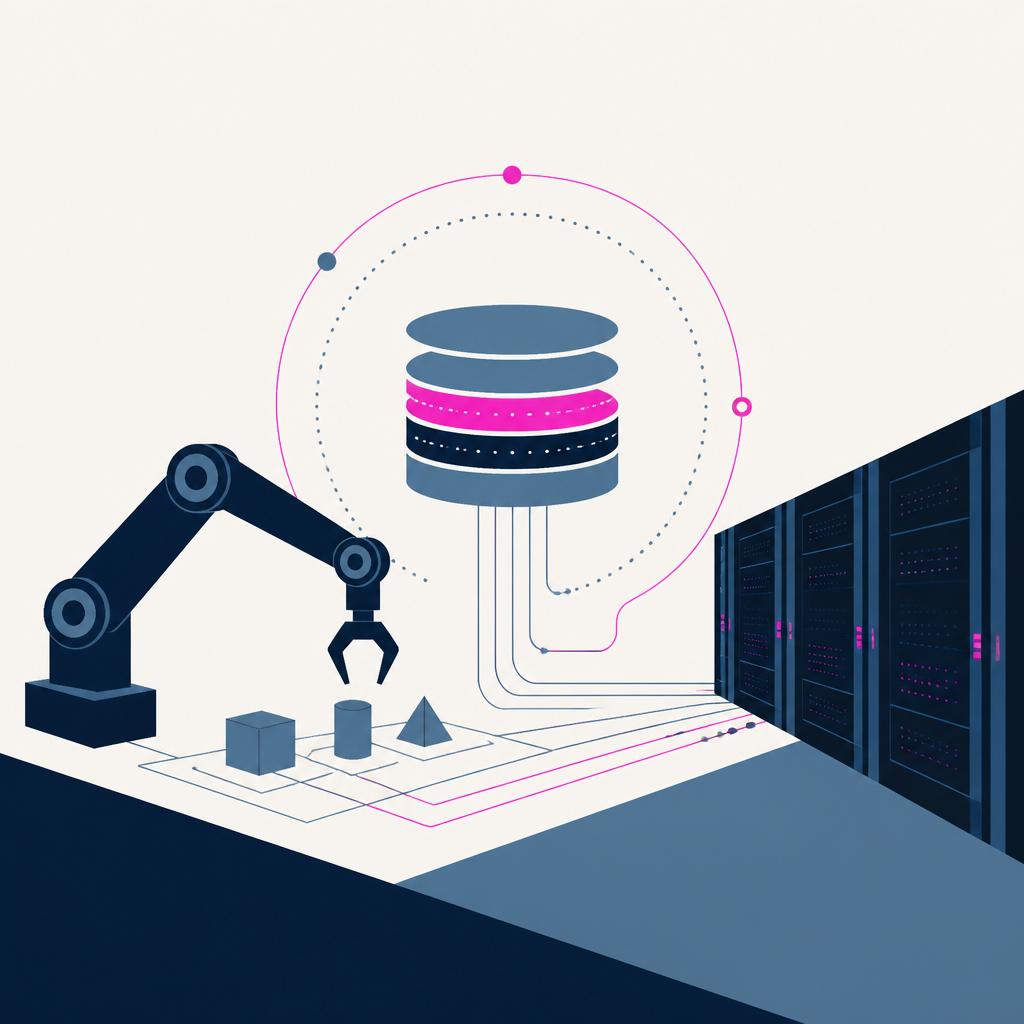
Axis Robotics released AXIS, a browser-based system and dataset pipeline for collecting robot manipulation demonstrations with backend GPUs and a continually growing dataset concept. The released snapshot includes 207 tasks and 50,129 verified trajectories, gated at 2.36 TB for non-commercial academic use. Training improves the π0.5 model on LIBERO-Plus to 88.8 (from 83.9 baseline) while data cleaning reduces replay success to 86.2%.
Ineffable Intelligence added six high-profile hires as cofounders, drawing on former Google DeepMind staff and an early investor. One of the anchors of the story is Ineffable’s $1.1 billion seed round in April that followed a $5 billion valuation. The new leadership expands roles across reinforcement learning, science, infrastructure, and operations as the startup accelerates its push for AI superintelligence.
The AI economy’s annualized revenue estimate reached $229 billion by the end of August, rising from $44 billion in August 2025.
Trailing twelve-month revenue hit $140 billion last month, up 3.2x year over year.
The roundup also reports Snowflake reducing its full-year product gross-margin guidance to 74% and notes AI-attributed US job cuts fell in August, while AI’s share of cuts remains at 22%.
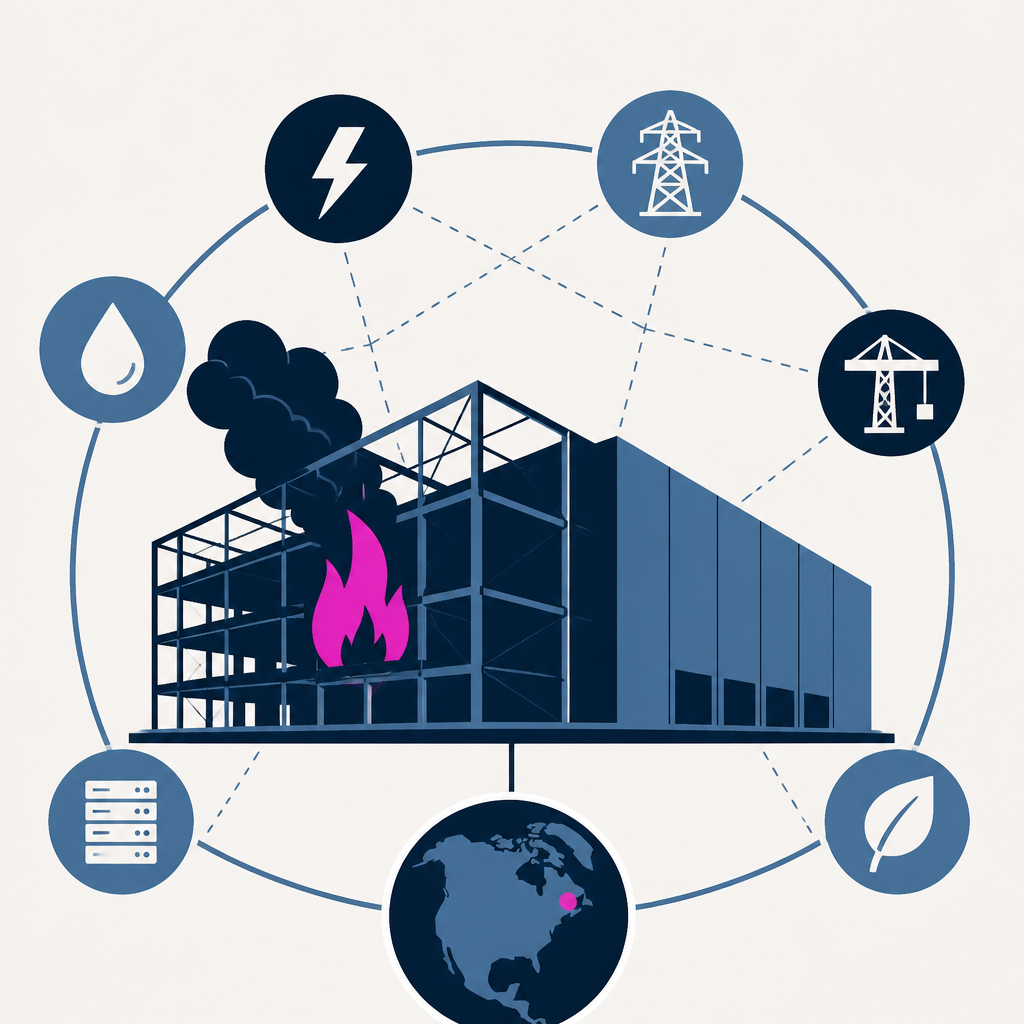
A fire broke out at the unfinished Lake Mariner data center buildout in Somerset, New York, leaving firefighters without key safety documentation and facing unidentified chemical smoke. The project is a $3.2 billion AI data center campus. The blaze spotlighted a complex stakeholder structure—owners, tenant operators, and AI compute customers—around the facility’s planned operations.
A fire broke out in an unfinished Lake Mariner AI data center building in Somerset, New York, leaving firefighters with no working alarm or suppression system and no accessible safety documents after the blaze. The project is a $3.2 billion campus with multiple stakeholders including TeraWulf, Fluidstack, Google, and Anthropic. The incident highlights gaps in on-site safety information and makes the ownership and payment/compute arrangements behind the facility more visible.
European tech investment slowed in August as companies raised €3.2 billion across 165 funding rounds, down from €8.6 billion across 267 deals in July. AI drew €677.1 million of that total, but AI-company funding fell by about 62% from €1.8 billion in July. As a result, the month saw 37 exits versus 51 in July, with fewer rounds and reduced exit activity overall.
NVIDIA CEO Jensen Huang said AGI has arrived, pointing to OpenAI’s newest ChatGPT model trained on Nvidia hardware. He cited training on about 100,000 Nvidia chips (after initially mentioning 300,000). The claim is prompting market focus on Nvidia’s GPU supply and compute revenue, while OpenAI has not said AGI has arrived and Huang indicated 400,000 more chips will be switched on soon.
Nscale is in talks to raise up to $3.5B pre-IPO, including $1.5B in convertible notes led by Third Point and about $2B from Nvidia, with Goldman Sachs advising. The company reports contracted deals of about $103B, up from about $51B a month earlier. Backlog growth and the planned financing would shape how the deal converts and thus how dilution is handled ahead of a US listing, with a key $30B valuation threshold affecting noteholder conversion.
European tech funding and exit activity were covered in a weekly recap that tracked more than 50 deals worth over €4.6 billion and more than 10 exits across Europe. In August, startups raised €3.2 billion across 165 funding deals and recorded 37 exit transactions, with both investment and deal activity sharply down from July. The roundup also highlights AI as a major funding focus and lists specific funding rounds and acquisitions that filled out the month’s slower pace.
Elva launched as an AI infrastructure tool that discovers APIs from code and runs MCP servers for agents. It offers up to 2 years free for startups using Zendesk for Startups alongside AI Agents & Copilot. Teams can now grant different audiences access and track agent activity and API changes as their code evolves.
Every AI story that matters,
in your inbox by 8am.
TLDRocket reads all relevant sources, removes duplicate coverage, and summarises the
day in two minutes. Follow companies and topics for alerts, or get the
briefing in Slack. Free, no spam, unsubscribe anytime.
Reading TLDRocket needs no cookies, and the readership counts we rely on come from
our own cookieless analytics. Google Analytics is the exception: it sets cookies and
reports to Google, so it stays switched off until you allow it. You can change your
mind any time from “Cookie settings” in the footer.
Strictly necessary
Session security and form protection (tldrocket-session,
XSRF-TOKEN, 2 hours). The site cannot work without them,
so they need no consent.
Always on
Google Analytics 4 (_ga,
_ga_<id>, up to 2 years). Measures which
stories and sections readers use. Google acts as a third-party processor and may
store the data outside the EU. No advertising, no profiling, no data sold.