
China on pace for 'new record-high trade surplus' this year as exports jump 25%—a part of its efforts to become a 'major player in AI infrastructure'
Fortune Chan Ho-Him
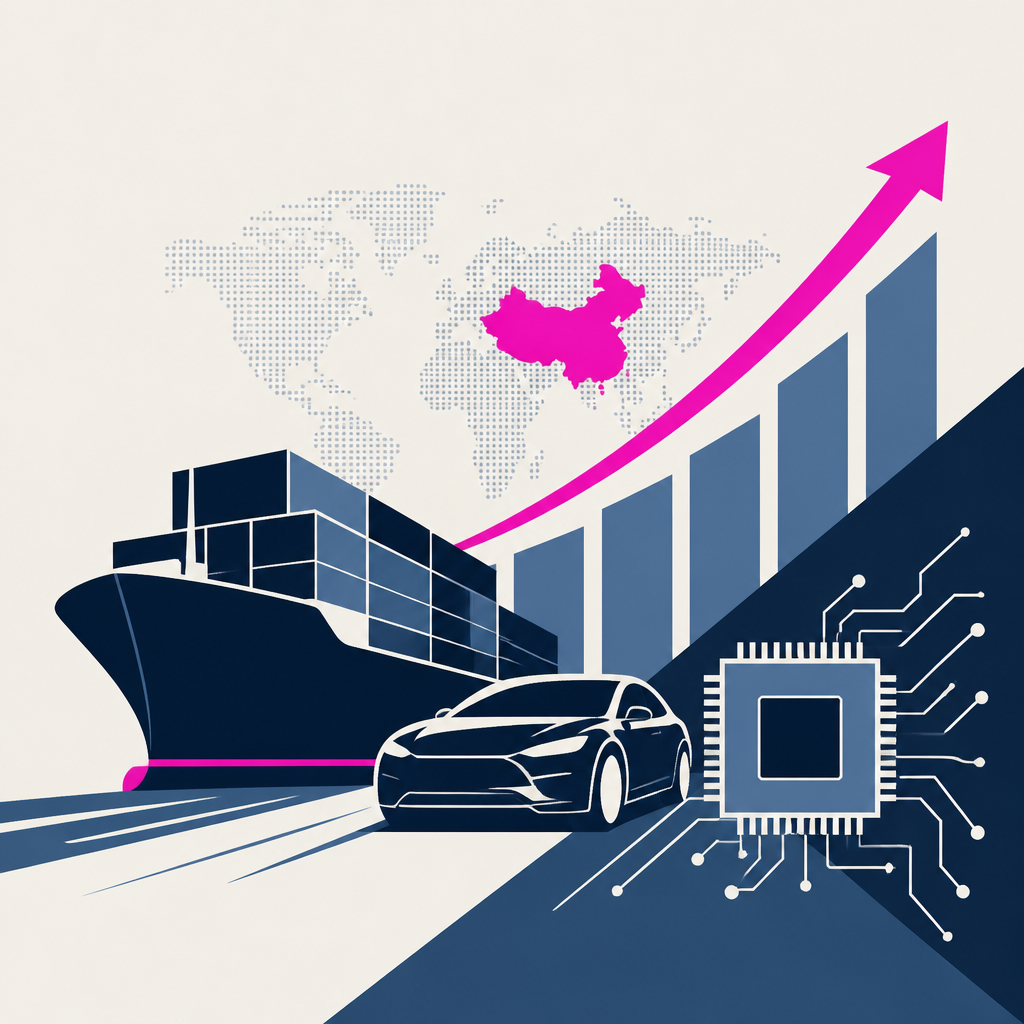
China’s exports jumped 25% in August, widening its trade surplus again. That’s putting Beijing on pace for another record, just as Trump and Xi are due to talk trade.
Based on reporting by Fortune, Chan Ho-Him — read the original for the full story.
Summary, retelling and take written by AI under human oversight; images are AI-generated illustrations. How we work · Report an error
China’s export machine kept running hot in August. Shipments abroad rose 25% from a year earlier, driven by demand for autos and high-tech goods, while imports also climbed 28.2%, the customs agency said Tuesday. The trade surplus widened to $119.1 billion from $112.5 billion in July, extending a run that has already pushed China’s surplus to record levels.
The timing is awkward, or maybe perfect, depending on where you sit. The data landed just before a planned meeting between Xi Jinping and Donald Trump in late September, though Beijing still hasn’t confirmed the exact date. Trade is expected to be one of the central topics when they meet.
China’s exports to the U.S. reached $42.5 billion in August, up 34.4% from a year earlier. Chinese imports from the U.S. were $13.3 billion, leaving China with a trade surplus of about $29.2 billion on that route. Shipments to the EU rose 6.6%, while exports to Southeast Asia and Latin America increased 30.2% and 17.5% respectively.
That geographic spread matters. China has been leaning harder on Southeast Asia, Latin America and Africa, which has helped cushion the hit from higher U.S. tariffs. Autos were a standout, with exports up 43%, and semiconductor exports surged 129.8%. Economists at ING say exports are on track to produce a new record-high trade surplus this year.
The bigger picture is familiar and still unresolved: China’s external demand is strong, but its home economy remains soft. Consumption and investment are sluggish after the long real estate slump, and Beijing said Sunday it was putting about $54 billion into state banks and insurers to support growth. Abroad, the reaction is hardening too. G20 members recently agreed to address global economic imbalances, with China the lone dissenter after U.S. Treasury Secretary Scott Bessent called its trade surplus a drag on world growth.
My take — AI-written commentary, not fact-checked reporting
China keeps doing what China does best: turning trade into industrial strategy and then acting surprised when everyone else notices. The message from autos, semiconductors and AI infrastructure is pretty plain — this is not a temporary export bump, it’s a plan. The West can complain about imbalances all it likes; without a real industrial answer, that complaint is just expensive weather talk.
Read more about this at: Fortune
Related stories
 How America’s Dizzying AI Strategy Plays Into China’s Hands
CSET Georgetown · 1 month ago ·
23
How America’s Dizzying AI Strategy Plays Into China’s Hands
CSET Georgetown · 1 month ago ·
23
 The AI boom is lifting economies across Asia. But for Southeast Asia, it might just be a ‘short-term blip’
Fortune ·
28
The AI boom is lifting economies across Asia. But for Southeast Asia, it might just be a ‘short-term blip’
Fortune ·
28