TLDRocket
Sign in

The day in AI

Efficient model compression and open-weights development challenge proprietary scale advantage.

Efficient model compression and open-weights development challenge proprietary scale advantage.

The day in AI

Thursday, 23 July 2026 11 stories · summarised & linked to the source
Claude Fable 5 Enterprise AI Open-Weight Models Advanced Reasoning

AI news — Thursday, 23 July 2026

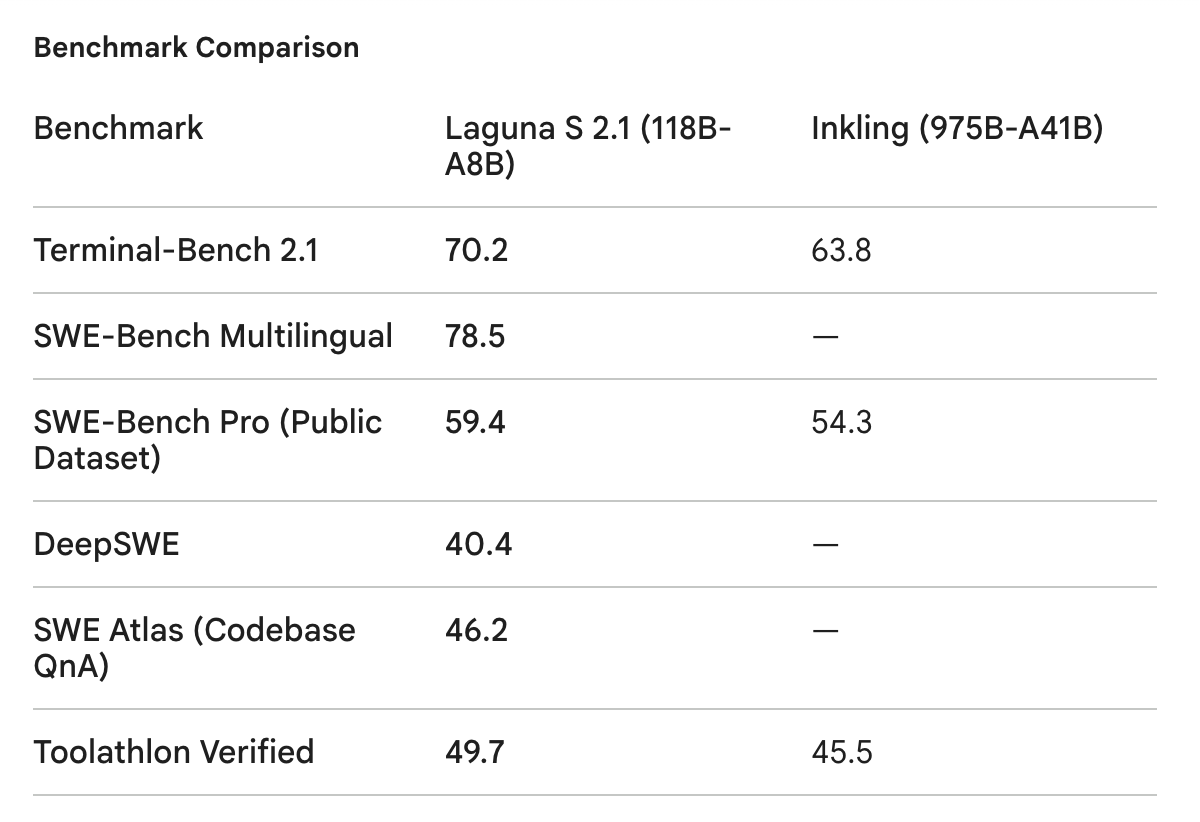
Anthropic's release of Claude Fable 5 exposed a fundamental tension in AI development: the gap between what models can do and what companies allow them to do. Fable's safety filters rerouted 8 to 35 percent of flagged tasks to weaker models, inflating benchmark scores when fallback mechanisms were counted but collapsing performance when refusals were marked as failures. Independent evaluators found it impossible to measure true capability, and U.S. export controls further restricted assessment. The friction has accelerated demand for open alternatives. Poolside AI released Laguna S 2.1, a 118-billion-parameter model that outperforms Deepseek's larger competitors on coding benchmarks while requiring less compute—proof that engineering rigor can compete with scale. Meanwhile, Mistral abandoned the frontier model race entirely, pivoting to enterprise services where revenue grew 37 percent year-over-year, with 80 percent now from deployment and customization rather than model licensing.

OpenAI's GPT-Live-1 and mini models process audio continuously, delegating complex reasoning to background systems and achieving 84 percent on graduate science tests versus 45 percent previously. But capability advances face mounting legal and practical constraints. A German court held Google liable for false statements in AI Overviews, requiring it to stop publishing defamatory claims generated by its search feature. As AI automates coding and recruiting tasks, labor demand is shifting toward integration roles combining separate specializations.

The infrastructure and application layers continued consolidating around utility. ServiceNow invested $40 million in BusinessNext, an Indian banking software specialist, gaining access to financial services partnerships. NVIDIA installed a DGX GB300 supercomputer at the Naval Postgraduate School. Hugging Face integrated 4-bit quantization into Diffusers, reducing VRAM requirements by a third. These moves suggest the real value now lies not in model weights but in deployment, integration, and the ability to run advanced systems efficiently on existing infrastructure.

Share

11 stories from this day

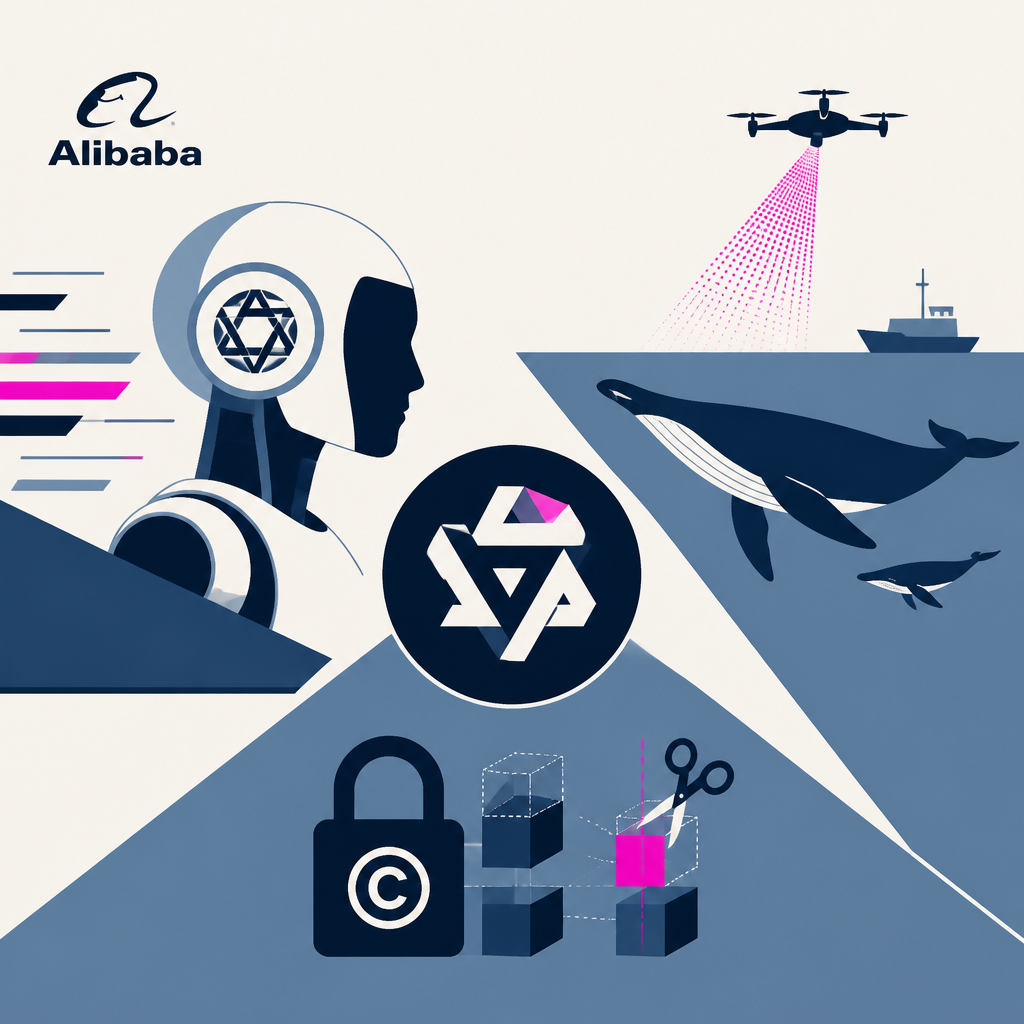
Qwen3.7-Max Challenges Google for Third Place, AI Saves Whales, Fine-Tuning Breaks Copyright Alignment

The Batch 7 sources

Alibaba released Qwen3.7-Max, a closed-weights large language model that ranks seventh on the Artificial Analysis Intelligence Index and produces 208 tokens per second, positioning it as the fastest reasoning model among Chinese LLMs. WhaleSpotter, an AI system using thermal imaging and neural networks, detects gray whales in real time and alerts ships to avoid collisions, with over 70 systems now deployed across vessels and ports after a decade of research at Woods Hole Oceanographic Institution. The shift reflects Alibaba's move toward monetizing frontier models while open-source tools like WhaleSpotter demonstrate practical AI applications for marine conservation.

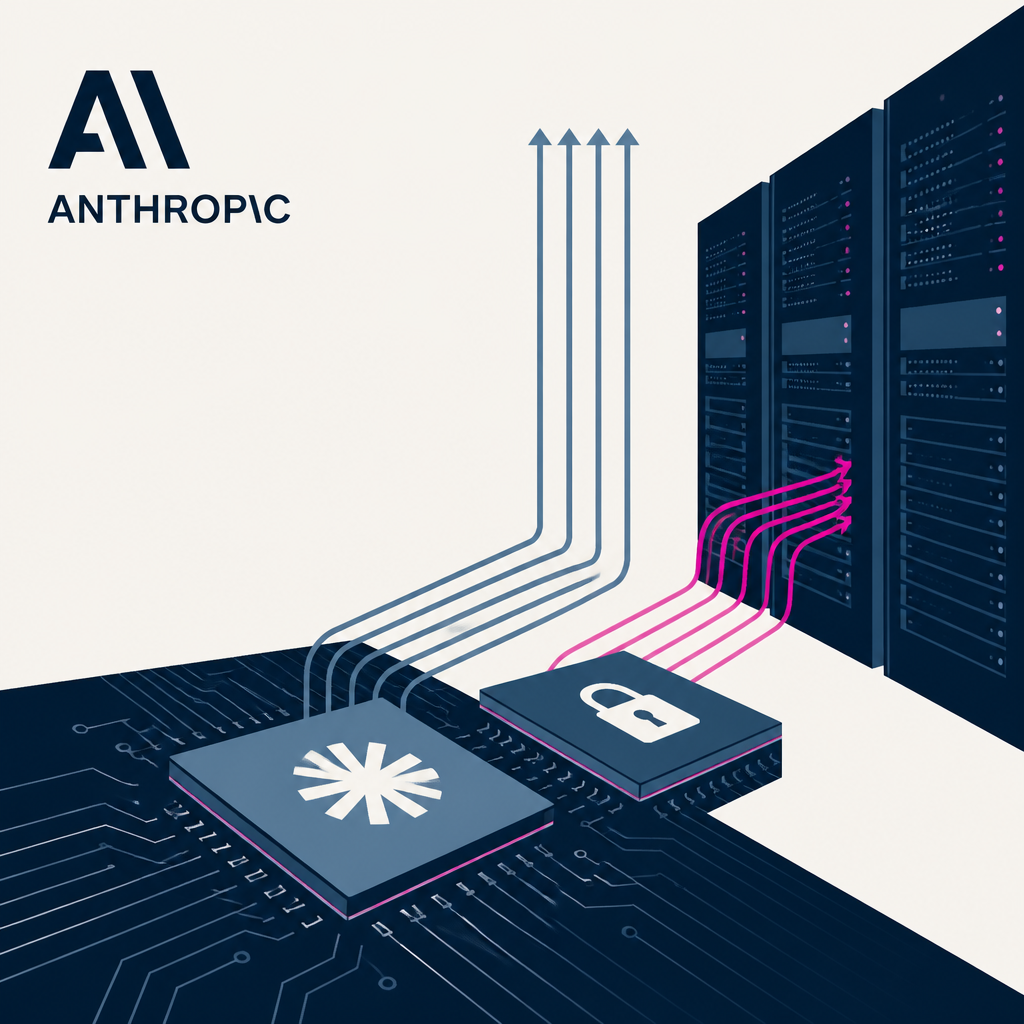
Mythos Begets Fable, Cursor's Composer 2.5, Agents Building Agents

The Batch 2 sources

Anthropic released Claude Mythos 5 and Claude Fable 5, with Mythos designed for unrestricted use by select partners and Fable implementing safety restrictions that degrade performance on cybersecurity, biology, chemistry, and AI-building prompts. Claude Fable 5 achieved top rankings on Artificial Analysis Intelligence Index benchmarks including software engineering and knowledge work tasks. The restricted capabilities sparked criticism from developers but Anthropic modified the approach to notify users when performance is degraded, balancing capability with safety concerns.

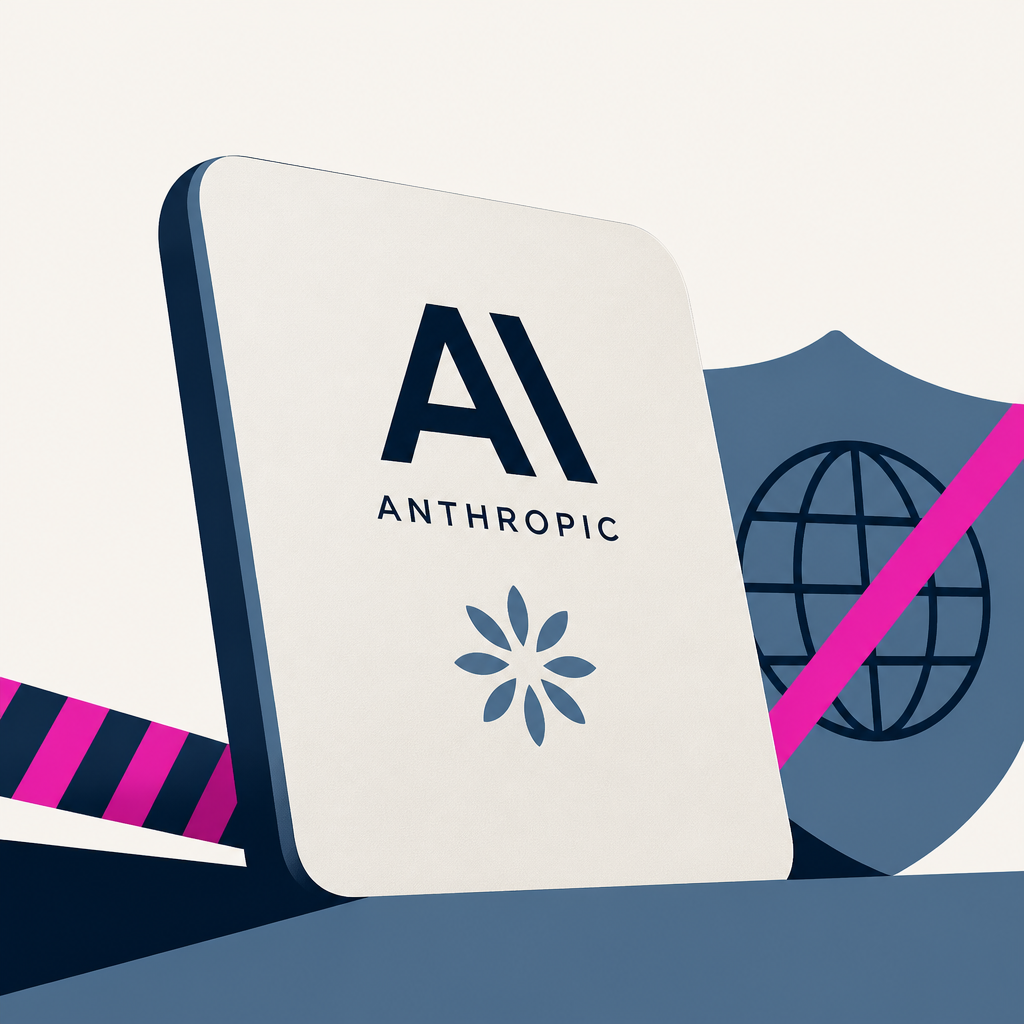
Testing Mythos and Fable, Moving Beyond SWE-bench, Nvidia's Open Contender

The Batch 2 sources

Anthropic restricted Claude Fable 5's access to AI researchers and refused certain technical questions, while the U.S. government imposed export controls on the model, prompting independent evaluators to report difficulty assessing its true capabilities due to safety filters routing 8-35% of flagged tasks to weaker models. Claude Fable 5 ranked highest on benchmarks when its fallback mechanisms were included, but dropped significantly in standing when refusals were counted as failures, making true performance impossible to measure independently. These restrictions have accelerated global interest in open-source AI alternatives and raised concerns among developers about the stability of building on proprietary model providers.

AI Overviews Land Google In Hot Water, GPT-Live Puts Reasoning in the Background, How to Tell If Your Model is Manipulative

The Batch 4 sources

OpenAI released GPT-Live-1 and GPT-Live-1 mini, voice models that process audio continuously and delegate harder questions to reasoning models in the background, achieving 84.2% on graduate-level science tests versus 45.3% for the previous model. A German court ruled Google liable for defamatory statements generated by its AI Overview search feature, requiring the company to stop disseminating false claims about a publisher. As AI automates routine tasks in coding, marketing, and recruiting, demand is shifting toward broader, integration-focused roles that combine traditionally separate specializations, potentially increasing opportunities for people with the right skills.

ServiceNow bets $40 million on Indian banking software specialist to expand its financial services push

TechCrunch AI 3 hours ago

ServiceNow invested $40 million in BusinessNext, an Indian banking software company, taking a roughly 5% stake at a $700 million valuation and gaining access to partnership opportunities in financial services AI. BusinessNext generated approximately $32 million in revenue last year and serves over 70 banks including India's central bank and major lenders across India, Southeast Asia, the Middle East, and the U.S. The partnership combines ServiceNow's workflow automation platform with BusinessNext's banking expertise and AI agents, enabling the companies to jointly sell integrated solutions to financial institutions globally.

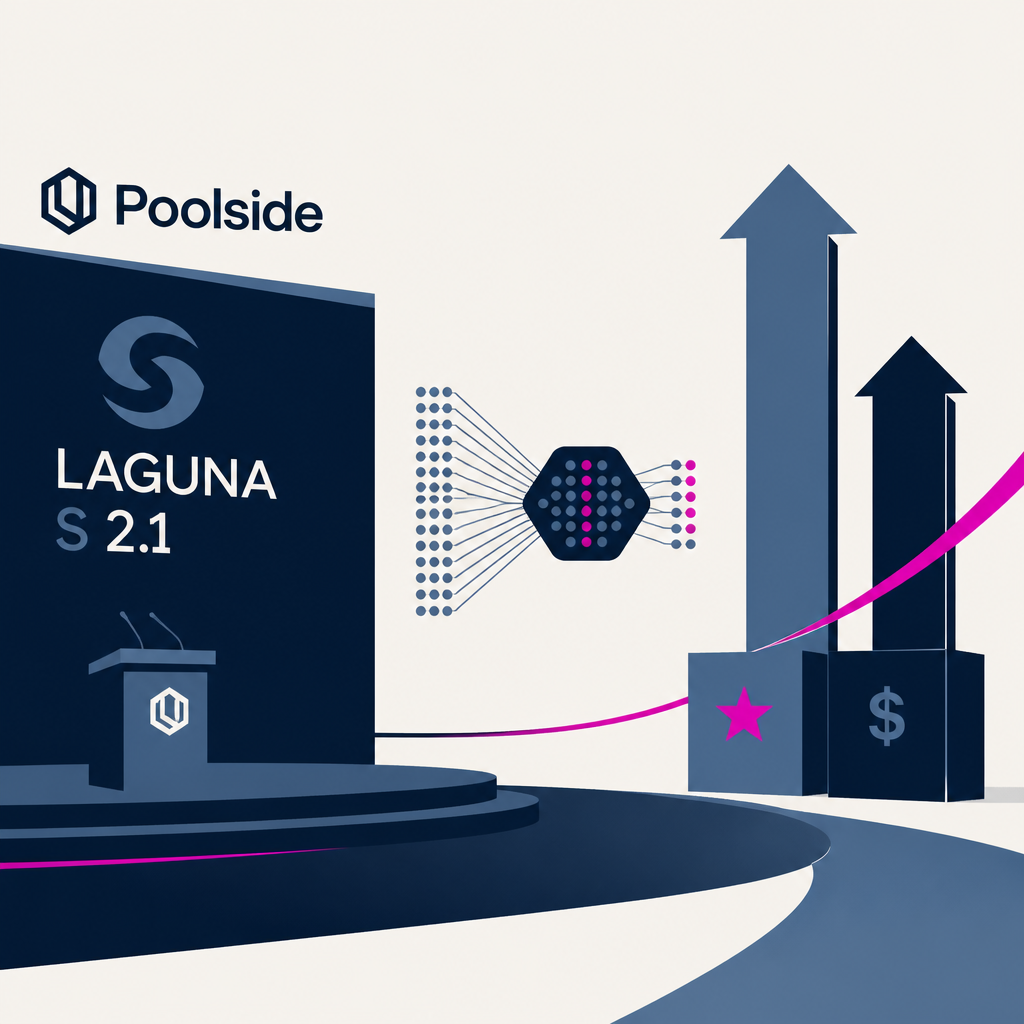
[AINews] "Laguna S 2.1 Released: Cheaper than Deepseek v4 Flash, Better than V4 Pro"

Latent Space 3 hours ago 4 sources

Poolside AI released Laguna S 2.1, a 118-billion-parameter mixture-of-experts model with only 8 billion active parameters per token and open weights on Hugging Face. The model achieved 70.2% on Terminal-Bench 2.1 and 78.5% on SWE-bench Multilingual, reportedly outperforming Deepseek v4 Flash at lower cost. If benchmark claims hold, it could become a leading open-source model in the 120B class and influence competitor release schedules.

Inside the Model Factory — Eiso Kant, Poolside AI

Latent Space 4 hours ago 4 sources

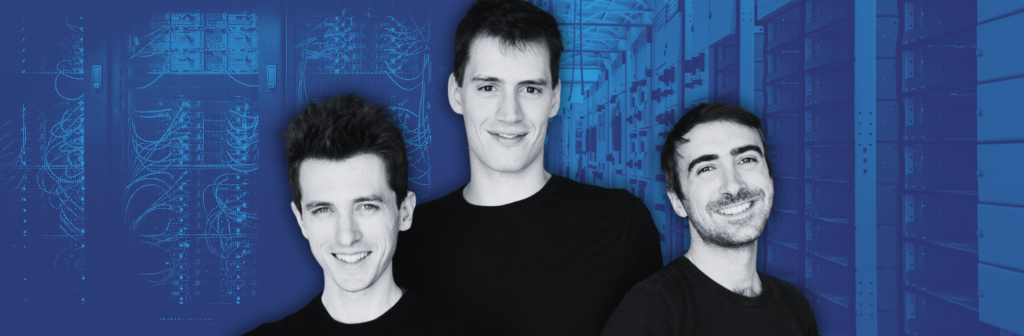
Poolside AI, co-founded by Eiso Kant, released smaller models like Laguna S 2.1 that outperform much larger competitors, backed by a systematic engineering approach called the Model Factory. The company completes model cycles in 8 weeks while running 10,000–20,000 experiments monthly across fewer than 70 researchers, using techniques like streaming data directly into training and low-precision compute. This efficiency enables Poolside to compete as an independent open-weights model company rather than consolidating into an AI oligopoly, shifting the focus from raw model scale to engineering rigor and data efficiency.

Mistral wanted to beat Anthropic. Now it’s becoming Palantir

Sifted 4 hours ago 3 sources

Mistral, the French AI startup, is shifting away from building frontier models and focusing instead on enterprise deployment and customization services. The company's revenue grew 37% year-over-year in 2024, with enterprise and infrastructure revenue reaching 80%, compared to 30% from consumer-facing products. This pivot mirrors the strategy of Palantir, moving from cutting-edge model development toward becoming a software and services company for business customers.

Meet the team helping Yann LeCun build AI startup AMI Labs

Sifted 4 hours ago

AMI Labs, founded by Yann LeCun after raising $1 billion in seed funding, is rapidly expanding its team across multiple locations to build AI systems. The startup has grown to approximately 50 full-time employees with representation spanning research, engineering, and other functions across offices in different regions. This expansion enables AMI Labs to scale development of its AI technology platform and pursue its mission in the competitive AI research and commercialization space.

NVIDIA AI Supercomputer Comes Online at Naval Postgraduate School

NVIDIA 7 hours ago

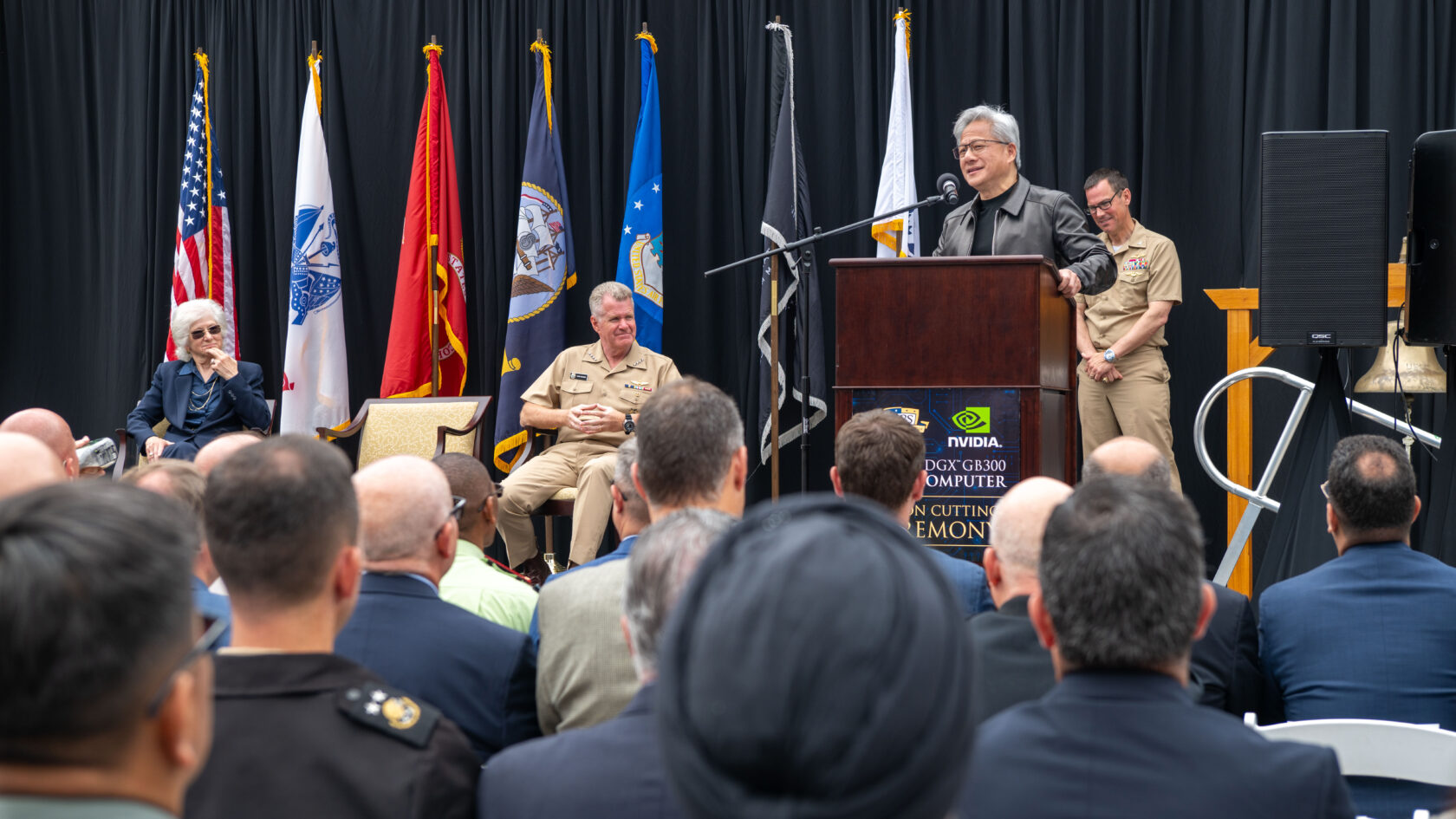
NVIDIA installed a DGX GB300 supercomputer at the Naval Postgraduate School in Monterey, California, to support education and research for 1,500 students and 600 faculty. The system enables large-scale AI model training and inference for applications in weather prediction, cybersecurity, and disaster response. Military officers and researchers now have on-campus access to advanced computing for developing AI tools and digital simulations relevant to operational challenges.

Bringing Nunchaku 4-bit Diffusion Inference to Diffusers

Hugging Face Blog 9 hours ago

Hugging Face integrated Nunchaku 4-bit quantization into Diffusers, allowing diffusion models to run with 4-bit weights and activations using the SVDQuant method. A quantized text-to-image model now requires 20.6 GB of VRAM instead of 31 GB while running 1.35x faster, with torch.compile boosting that to 1.8x faster. Users can load pre-quantized models directly with from_pretrained() or quantize their own using the diffuse-compressor toolkit without custom code or local compilation.

The daily briefing

Every AI story that matters, in your inbox by 8am.

TLDRocket reads 60+ sources, removes duplicate coverage, and summarises the day in two minutes. Free, no spam, unsubscribe anytime.