
Launching Health in ChatGPT
OpenAI ● Covered by 3 sources
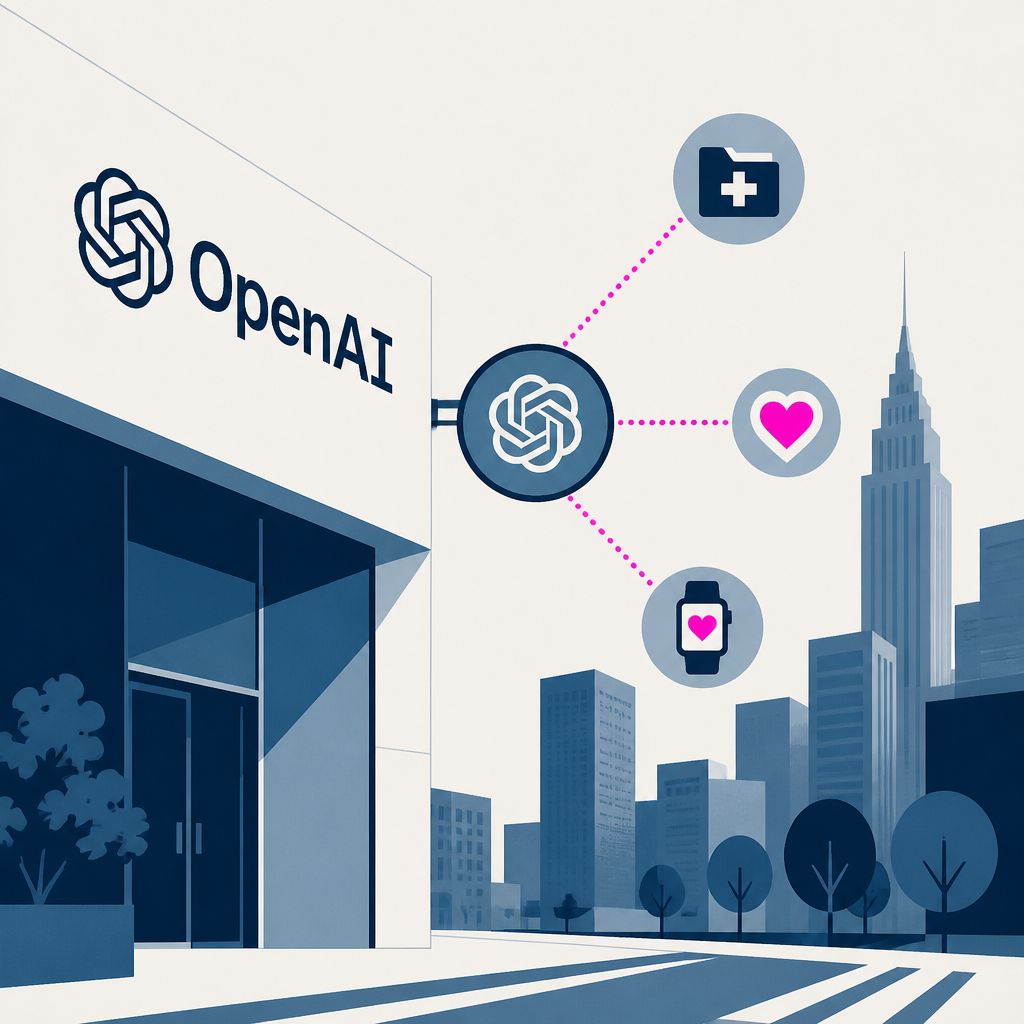
OpenAI just launched a Health feature in ChatGPT that lets US users link medical records and Apple Health data. It's meant to give you smarter, more personal answers about your own health.
Based on reporting by OpenAI — read the original for the full story.
Summary, retelling and take written by AI under human oversight; images are AI-generated illustrations. How we work · Report an error
OpenAI is pushing ChatGPT further into territory that used to belong strictly to doctors' offices and health apps. The new Health feature, rolling out to eligible users in the United States, lets people securely connect their medical records and Apple Health data directly to the chatbot. The pitch is simple: instead of typing out symptoms from memory or guessing at what a lab result means, you can let ChatGPT see the actual numbers and history behind the question.
That's a meaningful shift from how people have been using ChatGPT for health questions up to now, which was mostly generic and stripped of personal context. Connect your records, and suddenly the model can reference your actual cholesterol trend over three years, or cross-reference a new medication against conditions already logged in your chart. Apple Health integration adds another layer, pulling in daily metrics like steps, sleep, and heart rate that most people already track but rarely think to mention to a doctor, let alone an AI.
OpenAI is framing this as a way to help users understand their own health rather than replace clinical advice, and that distinction matters given how much scrutiny AI health tools get. Medical data is about as sensitive as personal information gets, and letting a general-purpose chatbot ingest it invites obvious questions about storage, access, and what happens if that data is ever mishandled. The company is emphasizing security around the connection process, though the specifics of how records are protected once inside ChatGPT will matter more to skeptical users than any marketing language.
Still, the underlying idea taps into something real. Most people leave a doctor's appointment with a printout or a portal login they never revisit, and health data sits scattered across apps, labs, and clinics that don't talk to each other. A tool that can actually read all of it and explain it in plain language fills a gap that exists mostly because the healthcare system itself never bothered to close it.
My take — AI-written commentary, not fact-checked reporting
I like the utility here more than I trust the execution, mainly because 'connect your medical records to a chatbot' is exactly the kind of feature that sounds great in a demo and terrifying in a data breach headline. OpenAI is betting people care more about finally understanding their own bloodwork than about who else might eventually see it, and honestly, given how badly the healthcare industry already handles this data, that bet might not be wrong. But I'd wait for the first real security incident before calling this a win.
Read more about this at: OpenAI