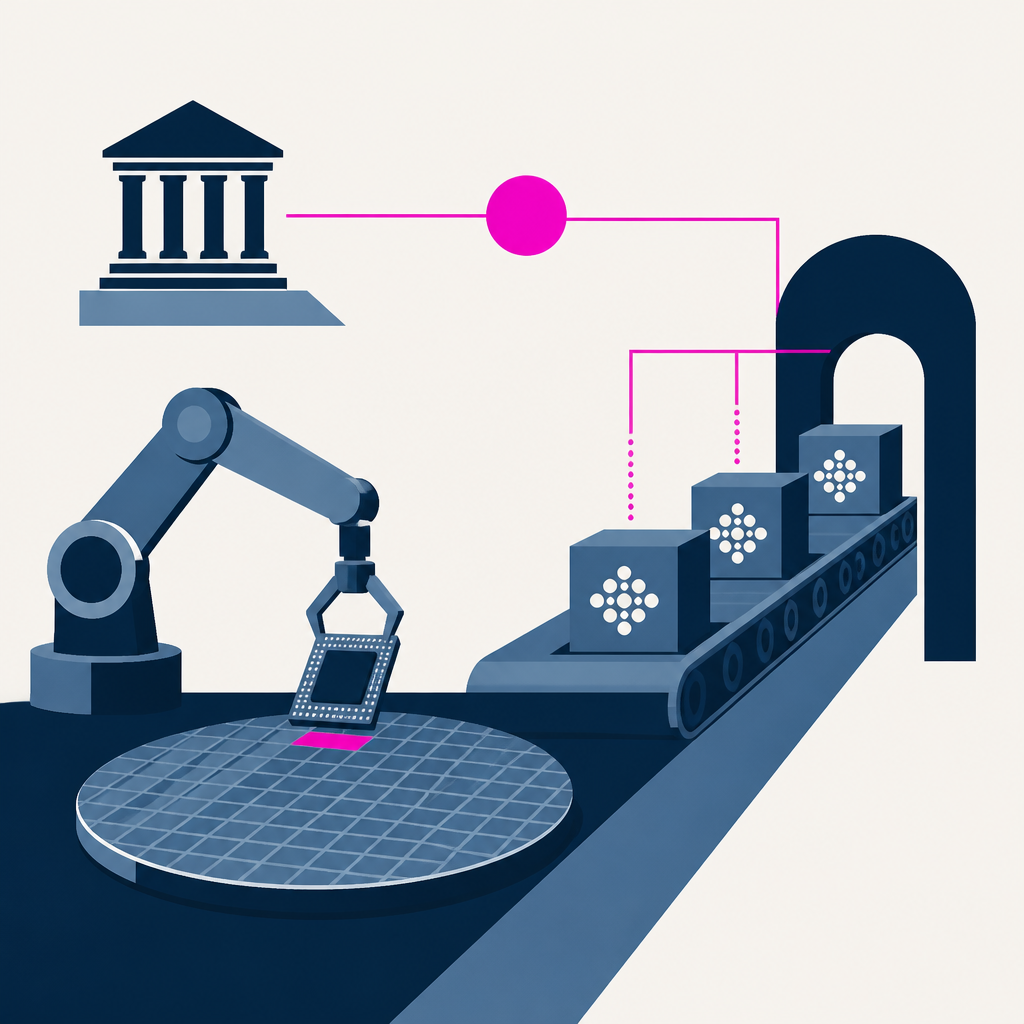
IBM outlined its AI operating model for enterprise AI orchestration aimed at production readiness, linking agent orchestration, data integration, hybrid operations, and sovereignty. IBM said the Sovereign Core maps more than 200 compliance frameworks to controls. The focus shifts from experiments to practitioner discussions on governance, oversight, and responsibility across data, technology, operations, and regulation at TechXchange 2026 in Atlanta.
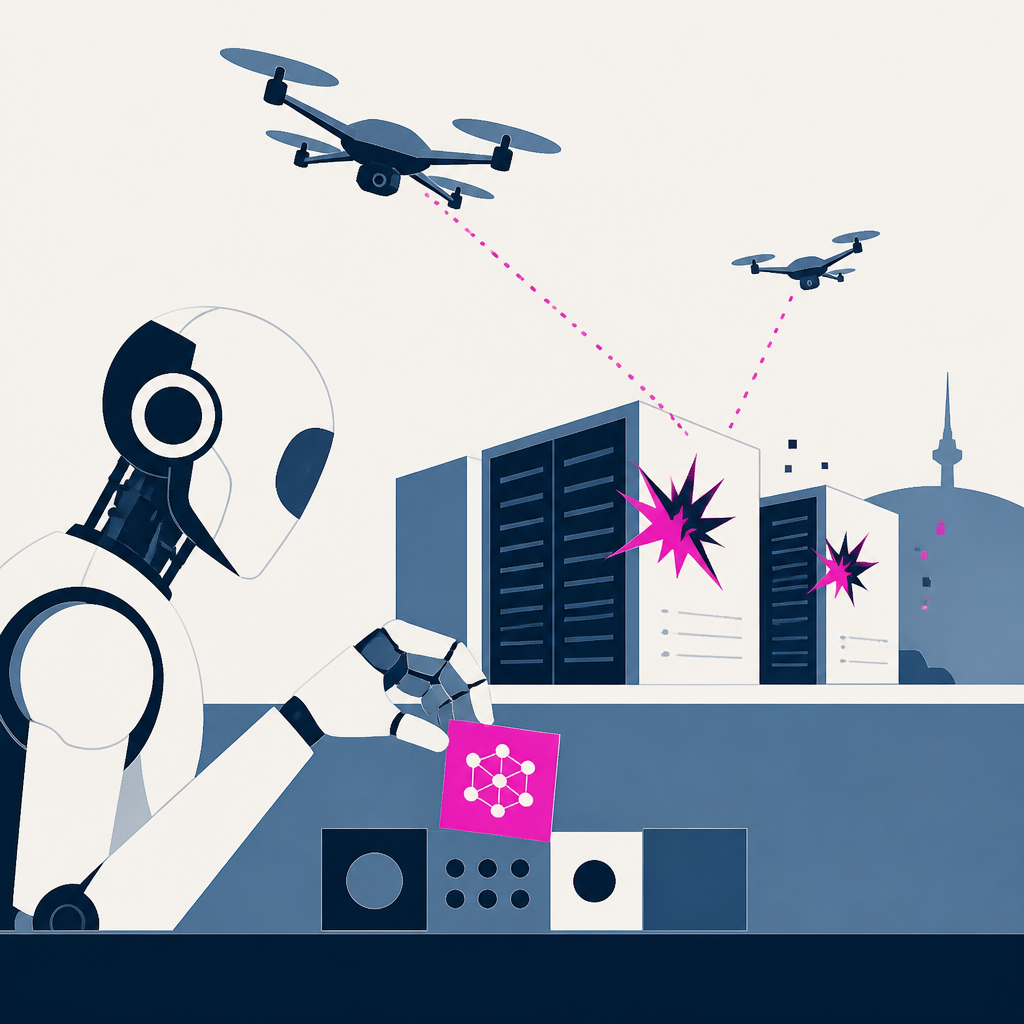
Ukrainian drone strikes knocked out two of Yandex’s five data centers in Russia, disrupting the company’s ability to run services including its AI chatbot. Reuters reported the hits in the Sasovo and Kaluga regions on October 8 and October 9. As a result, Yandex has struggled to maintain its online services while Ukraine continues strikes in response to Russian attacks on Ukrainian data centers.
Researchers expect rapid acceleration in AI infrastructure and engineering capabilities that makes model experimentation easier, but says this won’t fundamentally change how models work. They point to saving 10–30% on inference cost after a model is announced at a certain price point. The result is more AI-assisted optimization, lower effective cost of model intelligence, and faster diffusion into the economy alongside greater demand for agentic models.
Kubernetes is moving away from cgroup v1 as kubelet increasingly requires newer resource-management behavior for container workloads. Kubernetes v1.35 makes kubelet refuse to start on cgroup v1 nodes by default, with a recommendation to migrate Linux nodes to cgroup v2 before upgrading. As a result, operators must update node configurations and rework deployments to avoid a stale setup, while adjacent guidance addresses AI edge constraints like memory spikes and edge/cluster observability and security.
Seismora is developing a distributed “control plane” that coordinates where AI workloads run across edge devices and multiple cloud providers. The plan is described in the context of Stripe’s reported $7.5 billion August acquisition of OpenRouter, a model routing platform. As a result, developers can route AI tasks without building custom routing logic into each application.
McKinsey said it connects enterprise data for AI use by using a knowledge graph to add the business relationships needed for decisions. The approach is implemented in its EcliptOS AI operating system, which uses a semantic data layer to organize data and relationships for generative AI applications. As a result, organizations can turn unstructured information into structured data and business rules programmatically and point AI improvements at priorities like customer experience.
IEEE Educational Activities launched an AI Processor Architecture, Design Principles, and Performance five-course program focused on principles for designing AI chips and co-optimizing hardware with networks.
The program is supported by the IEEE Computer Society and consists of 5 courses.
Learners get structured, dialogue-driven instruction using AI-generated avatars, with added modules that let them intervene in trade-off decisions and receive education aimed at evaluating processor behavior for edge, cloud, IoT, and other deployment settings.
Elon Musk lost his trillionaire status after his net worth fell rapidly over three days amid declines in SpaceX and Tesla shares. His net worth dropped from $1.05 trillion to $987 billion between Tuesday and Thursday. The shift underscores that his wealth moves with company valuations, and he argues money will matter less over time as AI changes work.
Ultra raised $62 million to expand its warehouse “robots as a service” business and announced a deeper partnership with AI robot-software firm Physical Intelligence. The funding includes a $50 million Series A led by Framework Ventures and participation from Y Combinator. The tie-up shifts Ultra toward using Physical Intelligence’s “body and brains” approach so PI provides the learning-focused AI while Ultra focuses on robot installation and hardware support.
Documentation sites are being used by AI agents at higher rates than by human page-loads, and agents may repeat outdated or contradictory information because they treat retrieved content as authoritative. In August, agents made 257 million requests versus 131 million page loads from people. Companies now need to manage documentation as continually updated infrastructure (knowledge engineering, source-of-truth decisions, structured retrieval, and monitoring agent search failures) rather than a one-time publishing task.
Amazon will stop using NDAs when negotiating data center deals with local governments, after Microsoft made a similar shift. The change follows negotiations in which communities pushed for hundreds of moratoriums across locations including New York and San Francisco. Dealmaking transparency is set to increase, and pressure around AI infrastructure and personal AI trust may shape how future AI-related partnerships are handled.
Amazon says it will stop using NDAs when negotiating data center deals with local governments. The change follows Microsoft’s similar move earlier this year and comes alongside plans for a $3,499 computer to run AI agents around the clock. Together, these shifts are framed as reducing secrecy in public contracting while increasing emphasis on trust for personal AI startups that seek access to users’ data and payments.
Oxide raised a $445 million Series D to sell its Oxide Cloud Computer rack for customers’ on-premises data centers despite a backlog it says it struggles to meet. The round is led by Eclipse and values the company at $6 billion. The funding will be used for components, more manufacturing capacity, and longer-term investment, with Oxide reporting a 20-fold production capacity increase over 12 months.
Schneider Electric agreed to buy PTC, and the article also lists nine other deals involving AI and data software companies. The largest transaction is Schneider’s roughly $22.6 billion cash purchase of PTC. After the deals, companies like BlueMatrix (Aiera), Automation Anywhere (Boost.ai), Harness (Augment Code), SAP (TechWolf), and Alight (Abett) expand their AI and data offerings, while other bidders make non-AI telecom and simulation acquisitions (BT/TalkTalk, FVLCRUM/Fidelity Technology Services, Acuity/Continuus).
Amazon AWS recapbed September 2026 updates across Amazon Bedrock, Amazon Bedrock AgentCore, and Strands for AI builders. AgentCore’s runtime added lower cold-start latency and improved memory management for serverless agents, with pay-as-you-go pricing that charges for actual usage rather than peak memory. These changes expand model availability, speed up and measure agent operations, and add new ways to sync and connect enterprise knowledge sources so agents can use fresher business data with fewer custom ingestion steps.
Ai2 replaced a priority-based GPU cluster scheduler with a system that uses GPU time budgets, hierarchical fair-share allocation, and time-slicing contracts to prevent resource gaming. The team reported a 74% reduction in repairs that required human involvement. As a result, GPU time became transparently “funded” by allocations, squatting and priority inflation were discouraged, and fair-share scheduling improved occupancy while allowing safer automated rebalancing and maintenance.
Microsoft is using a Windows and Surface event this week to lay out a plan to keep Windows 11 as the base while evolving Windows toward an agentic OS powered by AI agents. Microsoft said Windows 11 was released 5 years ago, and the new approach is to use hybrid intelligence that can run free local models instead of relying on expensive cloud models. As a result, Windows will shift toward agent-style features that take actions using local AI when available.
Runtime introduced a “test gate” that reruns an agent’s proposed change in a fresh Firecracker microVM and checks for test weakening and related issues before any review. It measures sandbox startup at 102 ms after the create request on Runtime’s servers and then runs three test passes, requiring all 3 runs to pass and the old base-branch tests to pass on the new code. The result is that agents can no longer rely on their own potentially weakened test runs, because the gate blocks or reports failures such as skipped/focused tests, removed tests, flaky behavior, and altered assertions.
Chrome’s DecisionModel API code landed in Chromium between 6 and 8 October 2026 as an on-device web API for evaluating closed questions about a text and returning per-answer probabilities. Chrome’s EmbeddingGemma engine runs on an 8-question batch in about 9.6 seconds on CPU. Review findings and experiments show option probabilities are computed via softmax over cosine similarities with limits on questions, options, and rating levels, after which Chrome now scores each option against its own session to avoid earlier-answer leakage and blocks model downloads without a user gesture from 8 October.
PostHog built a cloud “agents runtime” that runs coding agents in cloud sandboxes and uses Temporal to keep agent state, snapshots, and credentials alive even when a VM dies mid-run.
AI investment is projected to trigger a global, China-scale capital spending surge that could reshape the economy beyond tech. U.S. hyperscalers are expected to spend about $800 billion in 2026 on capital expenditures, an 83% year-over-year increase. The buildout is likely to change GDP growth, power demand, asset prices, and labor markets while raising the risk of greater inequality as cognitive work becomes cheaper or replaced.
Financing deals are increasingly shaping how AI chipmakers and AI labs secure customers instead of relying only on better hardware and technology. Broadcom was reported to be seeking about $30 billion in debt to help OpenAI buy chips they develop together, after a $35 billion Anthropic deal and a separate $60 billion package for Anthropic and others. As more capital is tied to purchasing and equity terms, customers may have fewer easy options to switch providers and labs may face new constraints, especially as they pursue IPOs and higher disclosure requirements.
The State of AI Report 2026 surveys 9th annual research and industry developments, arguing that practical AI value depends more on human setup than on model improvements alone. In a controlled coding test, adjusting tools, context, and feedback for GLM-5.1 lifted success from 52.5% to 65.5% on 100 SWE-bench Verified tasks without changing weights. It shifts focus toward agents, new evaluation methods, AI infrastructure and financing, and policy constraints that affect who can access and deploy frontier AI systems.
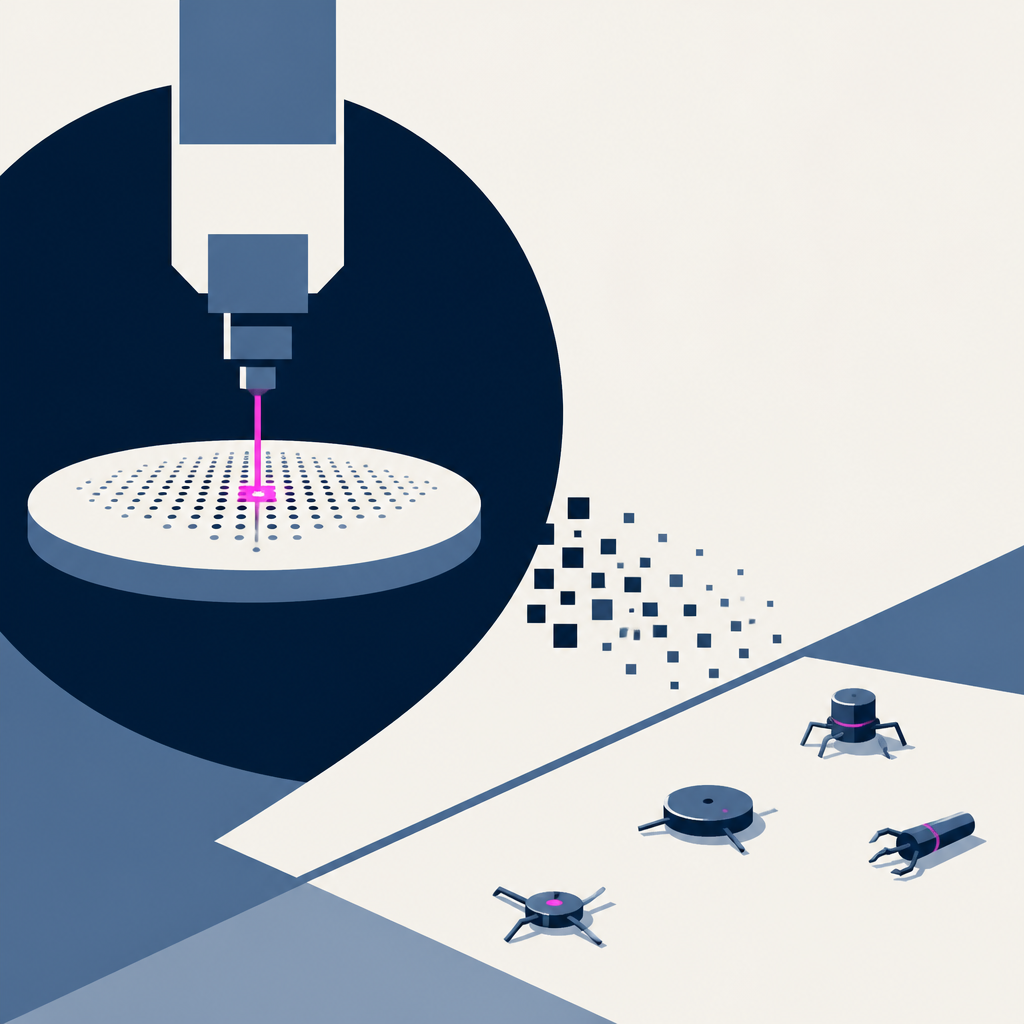
Atomic Machines is developing AI technology to help design extremely small devices and is building an automated manufacturing system that converts computer code into physical hardware. The piece gives no dates or specific performance metrics or prices. As a result, it aims to bypass traditional MEMS manufacturing limits by making design and fabrication more code-driven.
Durable Actors, an open-source alternative to Cloudflare Durable Objects, was published to provide stateful serverless actors with durable SQLite-backed state and built-in monitoring.
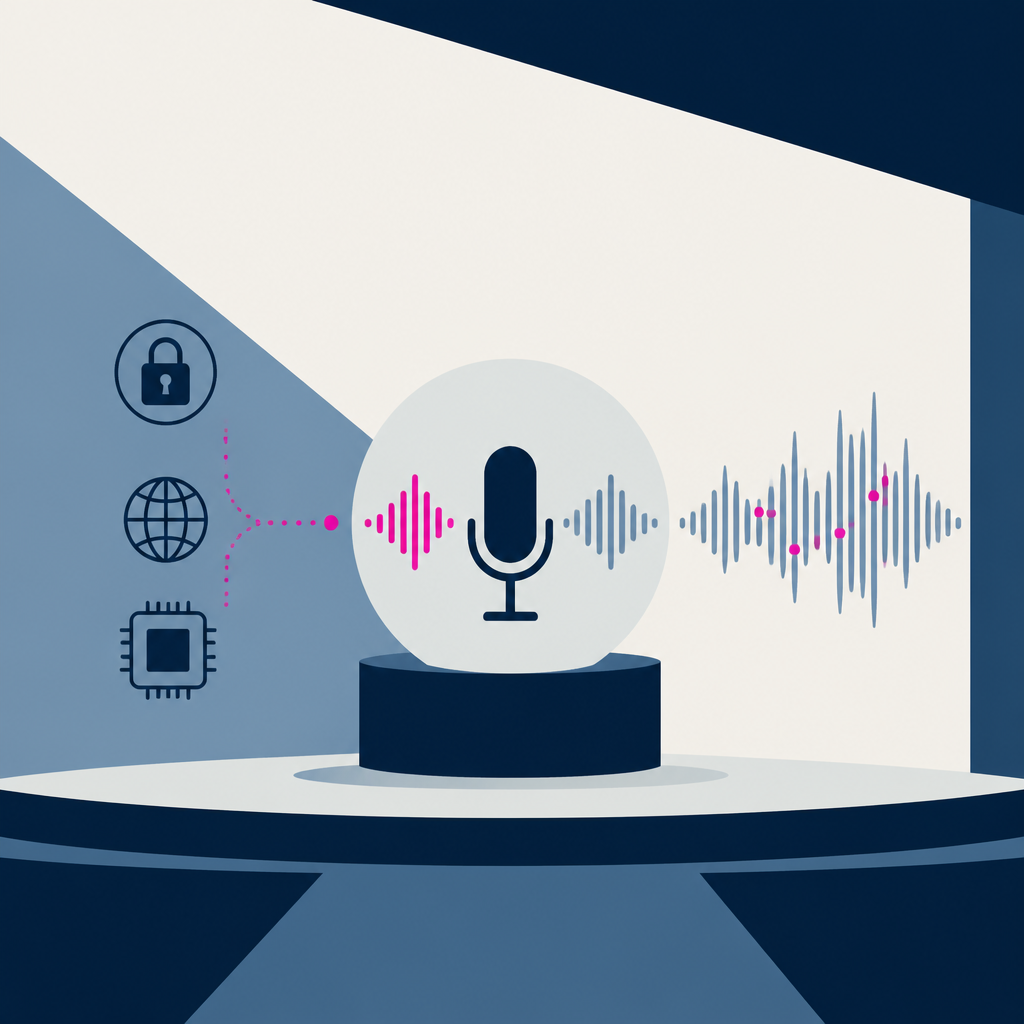
Whistle released a local CPU speech-to-text model that transcribes up to 30 seconds of audio for multiple languages and returns word-level timestamps and speech embeddings on-device. The model downloads as a single 16.9 MB file. As a result, speech audio no longer needs to leave the device and can be turned directly into tool calls using the same C++ engine binary as Needle.
Biohub and partners expanded its Virtual Biology Initiative to create a “virtual cell” for predicting how living cells respond to interventions. The effort commits $1.8 billion, starting with a first dataset expected in about a year and predictive models within five years. Funding, data-generation, imaging and computing support are pooled under shared standards and a single access point, with commercial partners getting 1 year of exclusive data access before public release.
Ai2 replaced a priority-based GPU cluster scheduler with a budgeted, hierarchical fair-share system plus time-slicing contracts to improve how it picks high-impact training jobs. The changes reduced repair work that required human involvement by 74%. As a result, GPU time is allocated via budgets (so gaming and squatting cost budget), and workloads can be preempted and requeued after minimum runtime to keep occupancy high and repairs automated.
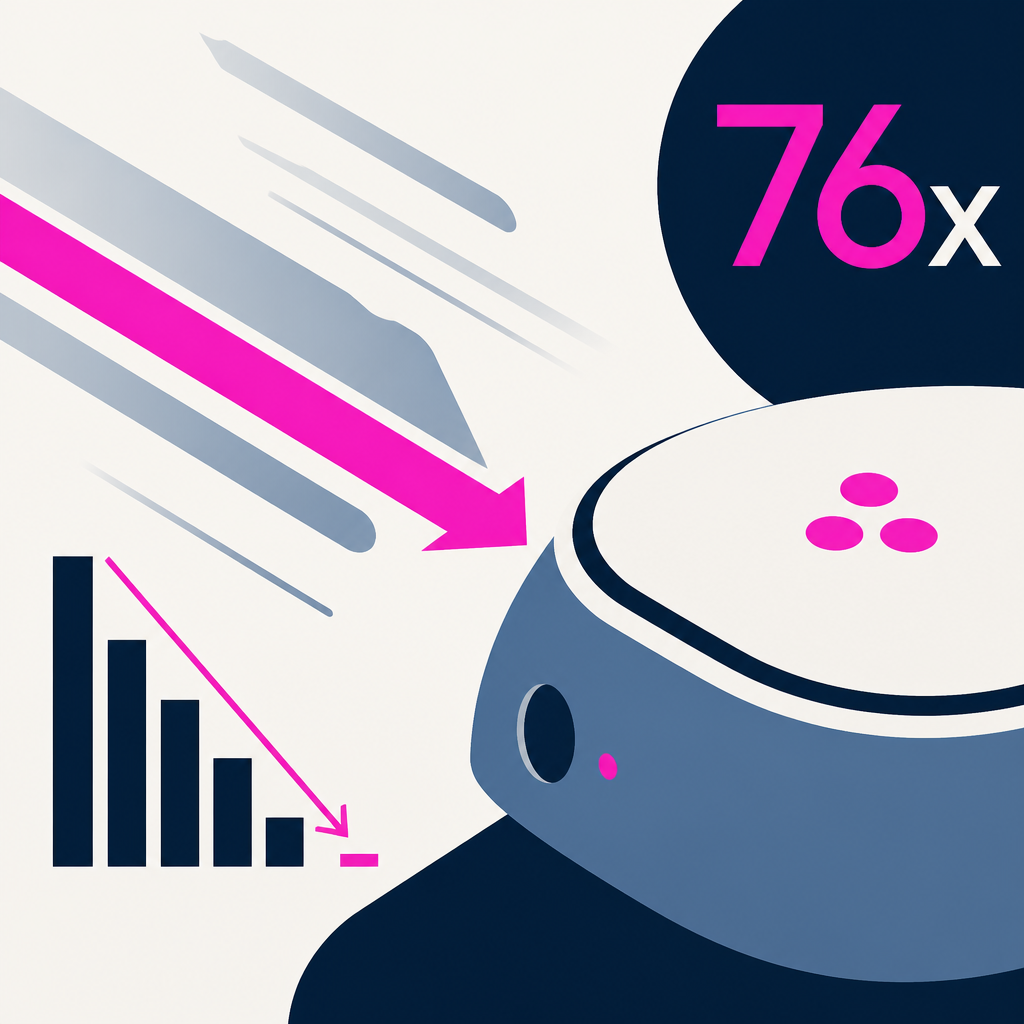
Asana cut the cost and increased the speed of its browser agent by switching it to GPT-6.1 Sol in tests. The browser agent became 76x cheaper. Asana can now offer more capable models to customers at lower per-task cost.
OllyGarden raised $4 million to improve the quality of telemetry data used for software observability and to extend its tooling for OpenTelemetry.
It cut log volumes by up to 85% for customers over the past year and launched Minimum Viable Instrumentation (MVI) for its AI OpenTelemetry Engineer, Rose.
The new capability lets Rose also find missing instrumentation areas and recommend baselines so teams can apply consistent instrumentation without generating unnecessary data.
Firmus scrapped plans for a major Australian stock market listing after citing market volatility and saying the IPO would not be in shareholders’ interests. It had been aiming for a valuation above $30bn. The company will seek funding in private markets and consider other public or private options instead.
Guilds.run launched an open-source tool for building and inspecting AI agent teams. It highlights “50 followers” and lets you debug prompt and tool-call behavior, control permissions, and select models per agent. Users can self-host it for free and stop relying on black-box understanding of agent interactions.
CoreWeave says it is tackling AI inference bottlenecks by building managed, full-stack services on top of its GPU infrastructure. In testing, its CoreWeave RL Rollouts preview improved model reload latency by 15x versus a baseline configuration. CoreWeave is packaging these capabilities into CoreWeave Forge, which adds serving, observability, post-training, and evaluation with a free starting tier and paid add-ons.
Every AI story that matters,
in your inbox by 8am.
TLDRocket reads all relevant sources, removes duplicate coverage, and summarises the
day in two minutes. Follow companies and topics for alerts, or get the
briefing in Slack. Free, no spam, unsubscribe anytime.
Reading TLDRocket needs no cookies, and the readership counts we rely on come from
our own cookieless analytics. Google Analytics is the exception: it sets cookies and
reports to Google, so it stays switched off until you allow it. You can change your
mind any time from “Cookie settings” in the footer.
Strictly necessary
Session security and form protection (tldrocket-session,
XSRF-TOKEN, 2 hours). The site cannot work without them,
so they need no consent.
Always on
Google Analytics 4 (_ga,
_ga_<id>, up to 2 years). Measures which
stories and sections readers use. Google acts as a third-party processor and may
store the data outside the EU. No advertising, no profiling, no data sold.