theCUBE will livestream the AI Data Pipeline Forum during the OCP Global Summit in San Jose and host executives to discuss system-level AI infrastructure bottlenecks in data movement, storage, memory, networking, and modular rack power/cooling. The coverage is scheduled for Oct. 13. The agenda shifts attention from optimizing individual components to coordinating entire AI systems, with open standards and modular designs presented as ways to reduce new infrastructure bottlenecks.
Firmus pulled its Sydney IPO after investors pushed back on the offer, canceling the listing one day after order books closed. The company had targeted a roughly $30 billion valuation, which equated to about 600 times its $51 million 2026 fiscal-year revenue. Firmus called off the IPO and plans a $2 billion to $3 billion private funding round, with a potential Nasdaq listing next year.
Big Tech companies including Microsoft, Alphabet, Meta, and Amazon are planning to spend more than $700 billion on AI infrastructure this year, aiming for productivity gains that justify the capital outlay in industries like healthcare. U.S. healthcare spending totaled $5.3 trillion in 2024, and CMS applied a 2.5% efficiency adjustment to certain physician payments for 2026. Providers need to deploy AI now to cut administrative work before reimbursement rules more fully reflect efficiencies, using freed clinician time to expand patient access rather than just shifting tasks.
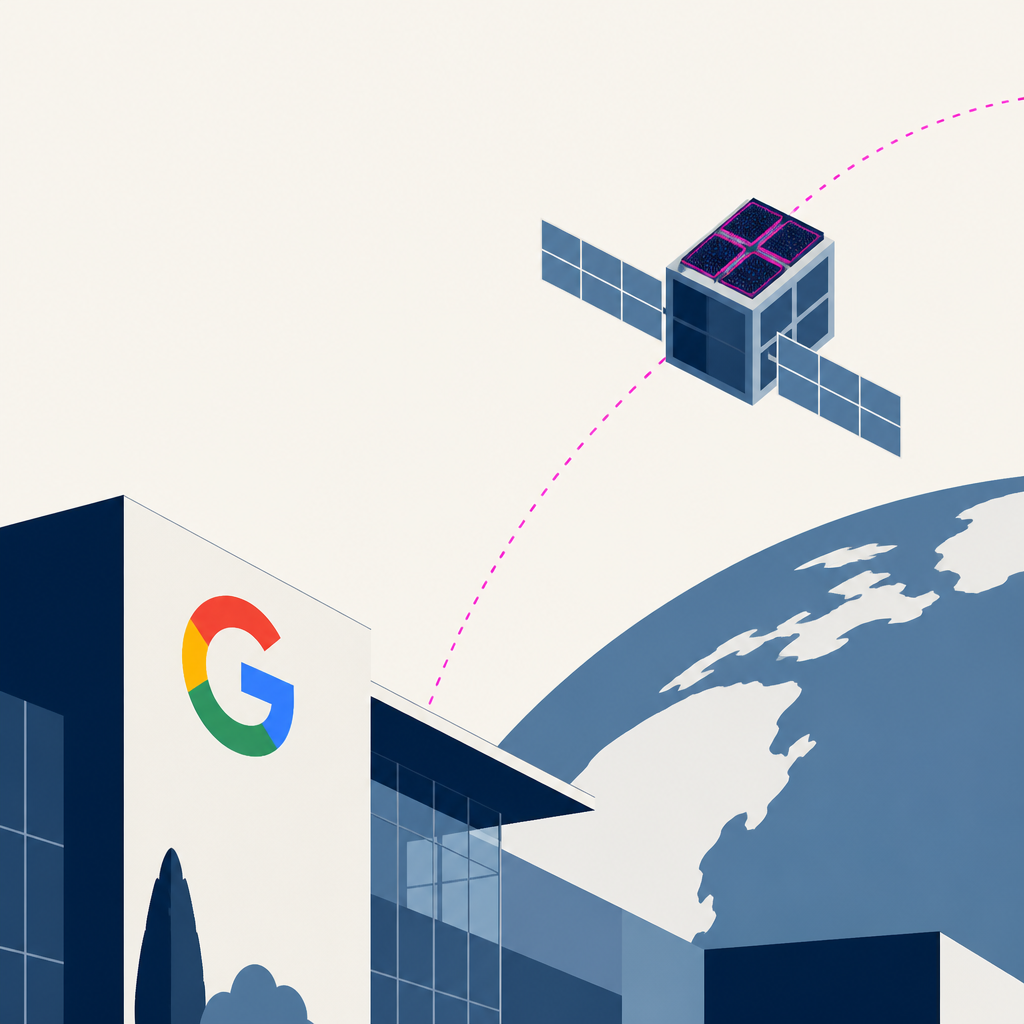
Google’s Project Suncatcher launched a refrigerator-sized satellite carrying 4 AI chips into orbit to test whether its TPU-based hardware can survive launch, radiation, and thermal conditions in space. The satellite lifted off on Oct. 1 and is expected to run experiments in low Earth orbit for about a year. Google will limit chip operation to 15-minute bursts to manage overheating while it gathers data, and plans two more laser-communication satellite launches in 2027.
CoreWeave Forge was introduced to connect production traces, curated data, improvements, and evaluations so AI agent answers can be measured and made better before release. The announcement says Agent Lens improved failure detection by 20% while fixing issues at half the cost. Teams can run a single end-to-end loop (run, observe, curate, improve, evaluate) with traceability, reducing handoff gaps and keeping evaluation evidence attached to each change.
Standard Bots says it is deploying an AI stack for industrial robot arms that uses shared base models adapted by demonstrations and fine-tuning, with perception handled by the model and motion/cell logic handled by conventional programming. Its backbone for machine tending was trained on over 1 billion images. The approach shifts development toward targeted data, local on-prem inference for factory reliability, and platform work (StandardOS) that makes it easier for developers to collect data, train, and deploy robot models.
TypeSafe launched its first runtime decision model, Jev, positioning it as software that returns typed answers with confidence scores. Jev became the fastest-adopted model in Vercel’s AI Gateway history within 24 hours of its September 15 launch. TypeSafe aims to shift automation toward models used at runtime, with developers adopting it for tasks like routing and triage.
Every AI story that matters,
in your inbox by 8am.
TLDRocket reads all relevant sources, removes duplicate coverage, and summarises the
day in two minutes. Follow companies and topics for alerts, or get the
briefing in Slack. Free, no spam, unsubscribe anytime.
Reading TLDRocket needs no cookies, and the readership counts we rely on come from
our own cookieless analytics. Google Analytics is the exception: it sets cookies and
reports to Google, so it stays switched off until you allow it. You can change your
mind any time from “Cookie settings” in the footer.
Strictly necessary
Session security and form protection (tldrocket-session,
XSRF-TOKEN, 2 hours). The site cannot work without them,
so they need no consent.
Always on
Google Analytics 4 (_ga,
_ga_<id>, up to 2 years). Measures which
stories and sections readers use. Google acts as a third-party processor and may
store the data outside the EU. No advertising, no profiling, no data sold.