
Nobody has been in charge for decades of the single most important part of the AI revolution: documentation
Fortune Han Wang
Opinion — commentary, not a factual news event.
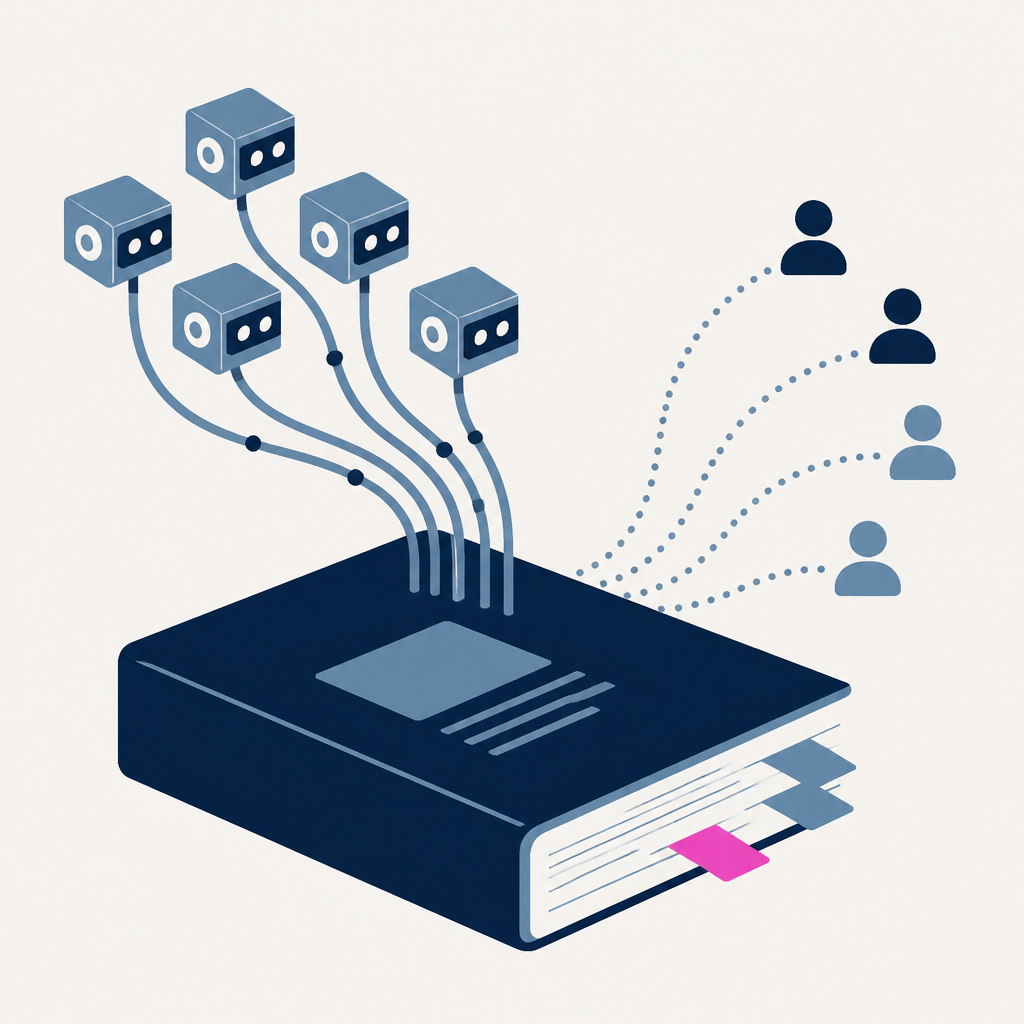
AI agents are hitting company docs almost twice as often as people on Mintlify. That means stale docs can now break code and support replies at machine speed.
Based on reporting by Fortune, Han Wang — read the original for the full story.
Summary, retelling and take written by AI under human oversight; images are AI-generated illustrations. How we work · Report an error
AI agents are now chewing through company documentation at a pace that would have looked absurd a year ago. In August, sites running on Mintlify logged 257 million agent requests, versus 131 million page loads from people. Human readers are still there. They’re just increasingly sending machines in their place.
That shift changes the job of documentation in a pretty brutal way. A developer asking an agent to wire up an API, a buyer asking for vendor comparisons, or a customer trying to figure out a failed payment all end up at the same place: the company’s docs, help center, or policies. And the agent doesn’t do the human thing of squinting at a page and sensing that something feels off. It takes the text as truth and runs with it.
That’s where the pain starts. A setup guide written a month ago and left untouched can look authoritative even when it’s stale. A pricing page can drift away from the help center. A person might ask around and catch the mismatch. An agent won’t. It can turn that one bad source into code or a support answer, then repeat the mistake over and over before anyone notices. Recent research found that 66% of developers said their biggest frustration was AI output that is close to correct but still wrong.
Mintlify’s argument is that this is no longer a publishing problem, even if documentation teams have been treated that way for years. It’s becoming infrastructure work. Someone has to decide which source wins when two conflict. Someone has to make sure product changes update the docs. Someone has to structure information so agents can retrieve it cleanly, and watch for the places they search and find nothing. Those gaps are now a live signal of where customers are getting bad answers.
The measurement has to change too. Page views and time-on-page still tell you something about human behavior. They tell you almost nothing about whether an agent got the right answer. The useful signals are different now: what queries agents run, where retrieval fails, where sources contradict each other, and how fast a product change shows up in the knowledge base. Documentation used to be something people consulted. Now it’s something machines act on, often without a human in the loop.
My take — AI-written commentary, not fact-checked reporting
This is the part of AI everyone keeps underpricing because docs sound boring, and boring doesn’t get keynote slots. But stale documentation is how companies quietly teach their own machines to lie with confidence. The future belongs to the teams that treat knowledge like plumbing, not prose.
Read more about this at: Fortune