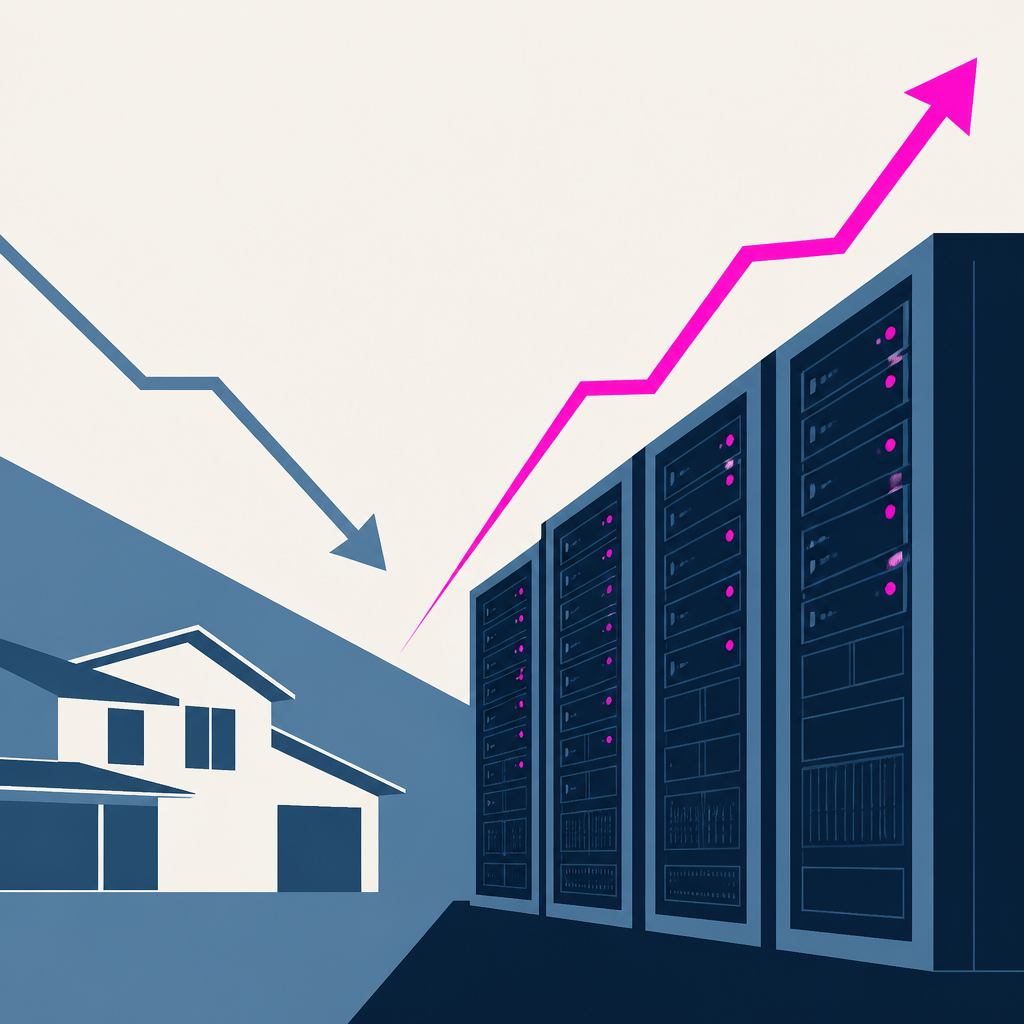
Is AI the new China Shock?
Fortune Jared Franz ● Covered by 5 sources
Opinion — commentary, not a factual news event.
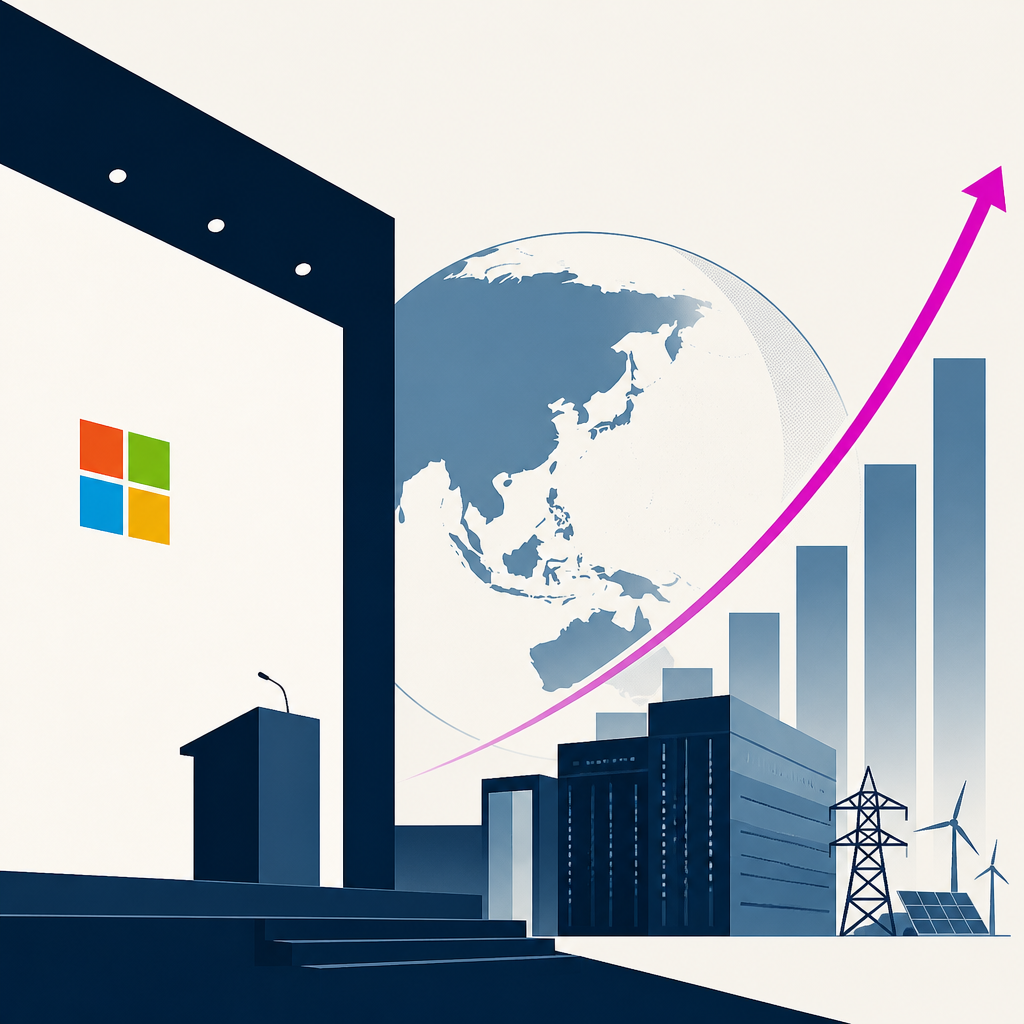
AI spending is exploding on a China-sized scale. That could reshape prices, jobs, power use, and politics far beyond tech.
Based on reporting by Fortune, Jared Franz — read the original for the full story.
Summary, retelling and take written by AI under human oversight; images are AI-generated illustrations. How we work · Report an error
When China entered the World Trade Organization in 2001, it kicked off a spending wave that kept rolling for years. Factory building, machinery, housing, and other long-term investment climbed from about $360 billion in 2000 to $3.2 trillion by 2010. That wasn’t just a China story. It changed trade, commodities, inflation, labor markets, and politics around the world.
The case here is that AI is now doing something similarly big, only in a different form. U.S. hyperscalers — Microsoft, Amazon, Alphabet, Meta and Oracle — are expected to spend about $800 billion on capital expenditures in 2026, up 83% from the year before. Gartner says global AI spending will top $2 trillion this year. And for the hard infrastructure side alone — chips, data centers, power, cooling, networking — estimates run around $10 trillion to $15 trillion over the next decade.
That’s why this can’t be treated as a narrow tech-cycle trade, or even as a story about Nvidia. Under the broader definition, total AI spending over 10 years could approach $30 trillion. On a hard-capex basis, AI is already at China scale. The scale matters because big capital waves don’t stay politely inside their own sector. They spill into GDP, interest rates, electricity demand, labor markets, and asset prices.
The analogy isn’t perfect, and the differences matter. China was a physical investment boom tied to manufacturing, trade, and mass urbanization. AI is a compute-and-cognition boom, with software, power, and data centers at its core. China’s peak fixed asset investment reached roughly 50% of GDP; AI is still around 2% of global GDP and is being driven mostly by markets, not the state. That could make it spread faster, since it doesn’t require moving hundreds of millions of people.
But the social risk may be sharper than the clean story suggests. China’s rise lowered the cost of physical goods and helped squeeze manufacturing margins. AI is starting to do the same to cognitive work, pushing down the cost of tasks like pattern recognition, language processing, and data synthesis. The International Energy Agency also projects data center electricity use will more than double by 2030 to 945 terawatt hours, about Japan’s current power consumption. This is not just a software upgrade. It’s a macro event with a power bill.
My take — AI-written commentary, not fact-checked reporting
This is the part that gets missed: every era loves calling its own boom “just tech” until the spillovers show up in wages, politics, and utilities. The open question isn’t whether AI is useful; it’s whether society is building rules for a capital shock before the bill arrives. So far, that seems optimistic in the way only markets can be.
Read more about this at: Fortune