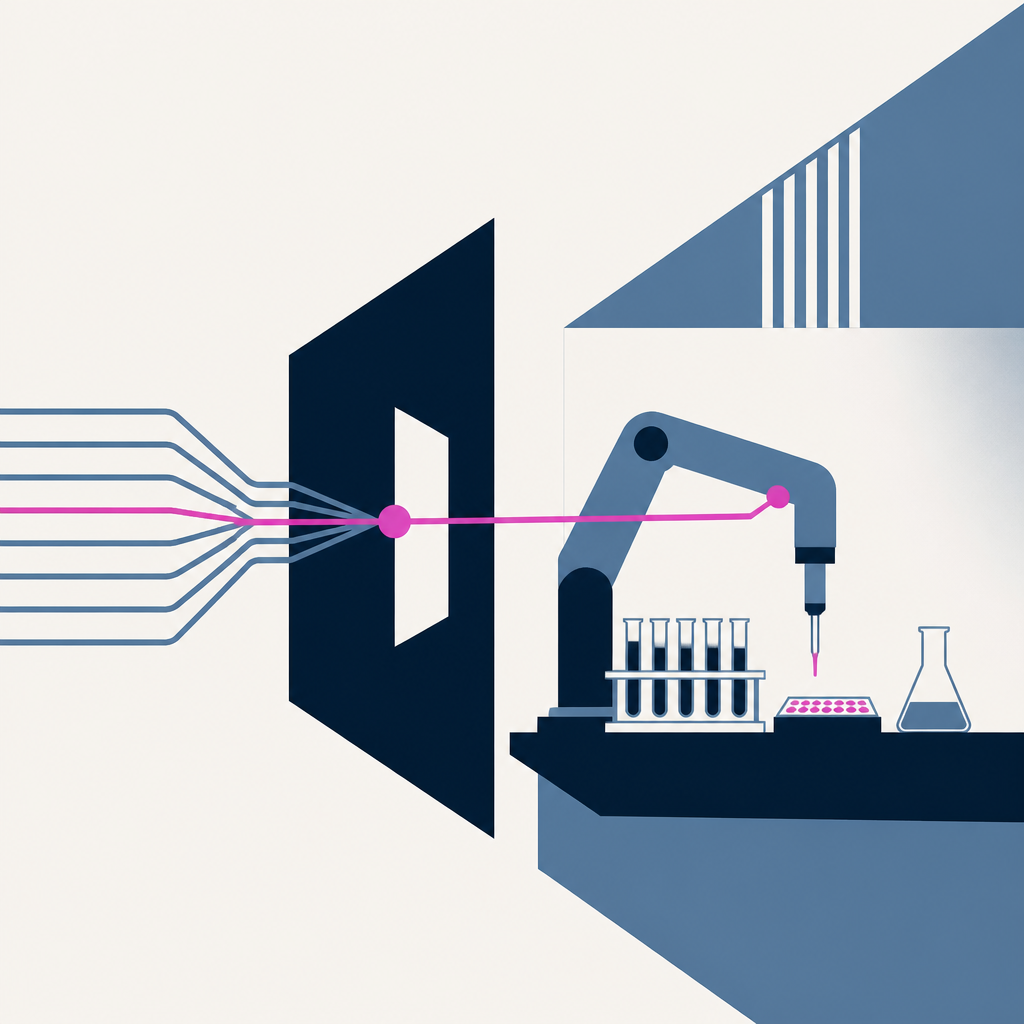
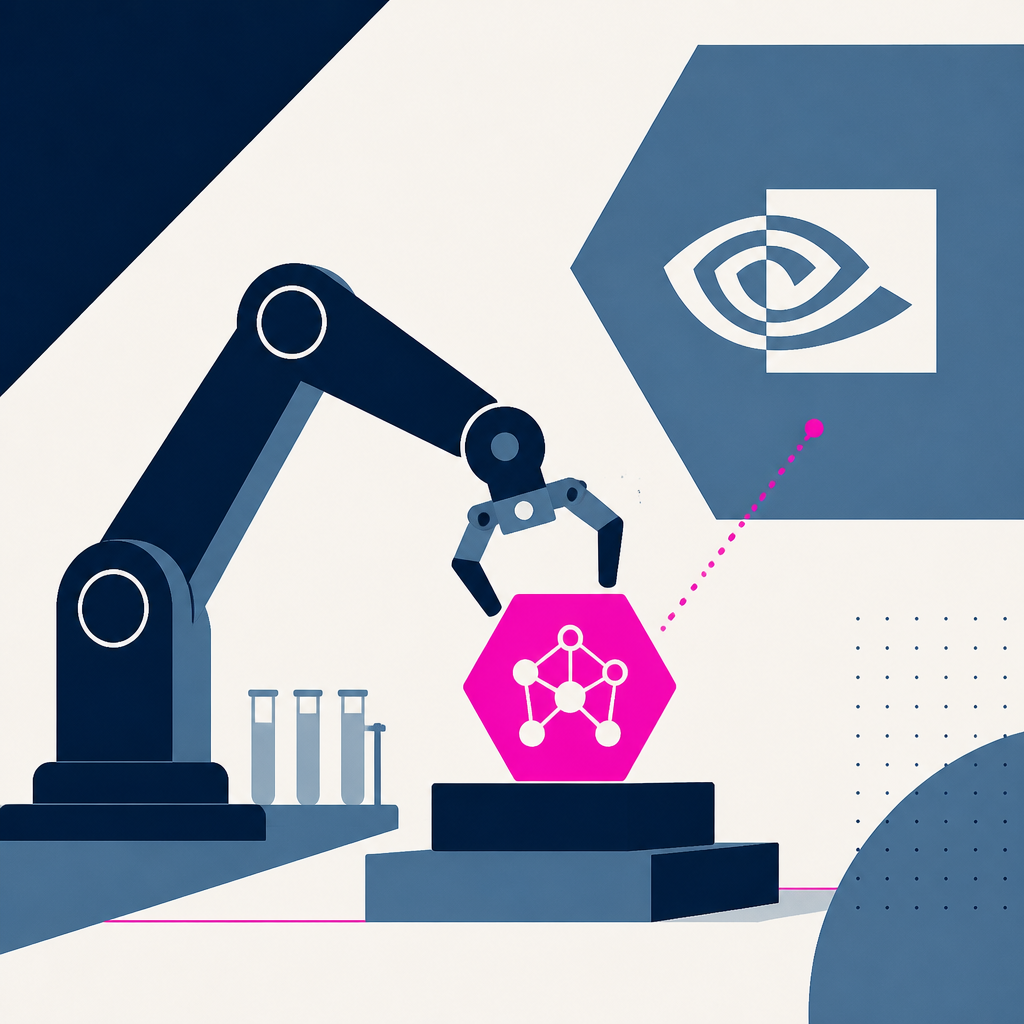
Anthropic introduced the Model Hardware Standard (MHS) to let agentic AI systems interface with and control physical devices via standardized drivers. Anthropic says MHS research preview integration could cut experimental setup from weeks or months to hours or minutes. This shifts AI agents beyond computer-only actions by providing a common “translation” layer for data sharing and device coordination across networks.
OpenAI CEO Sam Altman acknowledged that Americans are broadly hostile to data centers as the company expands compute for its AI plans, and OpenAI’s head of data centers Chris Malone left the company after a “recently reorganized” infrastructure shift. OpenAI plans to spend $50 billion on compute this year, even as data center approvals face local moratoriums and scrutiny. The result is more resistance and tighter permitting and regulatory conditions for OpenAI and other hyperscalers, including new state requirements and stalled or blocked projects.
Anthropic released its Model Hardware Standard (MHS) as a research preview to connect large language models like Claude to physical equipment for lab and manufacturing automation. The standard is designed to let companies integrate AI into equipment in “hours or minutes” instead of “weeks, if not months.” MHS, built on Anthropic’s Model Context Protocol and model-agnostic, shifts equipment integration from custom builds toward standardized, easier interoperability that reduces vendor lock-in for scientists.
Nvidia reportedly agreed to buy Hugging Face, a platform for hosting open-source AI projects. The deal price reported by The Information is $12.9 billion. Nvidia would gain a presence in another layer of the AI stack and could align Hugging Face’s roadmap with its business goals.
DataDirect Networks Inc. unveiled DDN Enterprise AI HyperPOD with Super Micro Computer and Solidigm to simplify enterprise AI inference storage and data management based on Nvidia’s AI Data Platform. The solution supports scaling from a single rack and expanding by “pop[ping] in another rack,” rather than committing upfront to large numbers of GPUs. The shift moves storage toward a capacity-focused role for LLM workloads and aims to reduce customer integration complexity while enabling on-prem and hybrid sovereign AI deployments with multi-tenancy.
Nvidia is reported to be acquiring Hugging Face to gain influence over the ecosystem that hosts and enables work on open-weight AI models. The deal is reportedly for $13 billion. This could strengthen Nvidia’s leverage with model deployment and training platforms and help it restart plans for a cloud AI business while supporting Nvidia hardware usage.
The AI and tech industry says the Trump administration is considering new semiconductor tariffs that could be announced soon. It points to a possible plan that would “dramatically expand” duties to cover not only chips but also products made with them. If implemented, it would raise costs across a broader set of tech hardware used for AI, making US AI development harder.
Amazon Bedrock added OpenAI GPT-5.6 Terra and Luna models in India with India geographic cross-Region inference that keeps inference processing within the country. Requests route only between ap-south-1 (Mumbai) and ap-south-2 (Hyderabad) using in.openai.gpt-5.6-terra and in.openai.gpt-5.6-luna as inference profile IDs. Billing, monitoring, and capacity handling are tracked and logged in the source Region while prompts and outputs may move between those two Regions.
Anthropic and HHMI Janelia Research Campus launched a research preview of the Model Hardware Standard (MHS), a shared specification for AI agents to safely operate multiple physical instruments in parallel. The preview is being shared with a first group of scientific research labs and advanced manufacturers, with partners including Genentech and HHMI Janelia, and it targets reducing hardware integration from weeks or months to hours or minutes. MHS will let devices connect through a standardized driver and common control protocols, enabling autonomous lab workflows with real-time updates and fewer bespoke integrations, with plans to open-source it later after safety evaluations.
Google introduced Gemini Omni 1.1 Flash, a developer-focused generative video suite with studio-quality controls such as scene extension, frame targeting, faster 360p drafting, and 4K upscaling via the Gemini API. Scene extension can use up to 10 seconds of prior context and extend in 10-second increments for up to 40 seconds total cumulative length. Developers can produce longer, more consistent and smoother videos with quicker iteration and lower-cost previews before generating higher-resolution outputs.
Deepgram added Enhanced Metrics to its Deepgram speech-to-text and text-to-speech deployments on Amazon SageMaker AI to close gaps in billing and performance observability. The billing transparency stream reports ConsumedUnits, using the same metered inference-unit values that drive AWS Marketplace metered billing. The result is CloudWatch metrics for per-request billing/feature usage plus engine and per-GPU visibility via Prometheus and OpenTelemetry within SageMaker’s detailed observability, without deploying an agent, sidecar, or collector.
Heidi Health, with AWS and NVIDIA, deployed CUDA Multi-Process Service (MPS) and NVIDIA Triton Inference Server on Amazon EC2 to serve its fine-tuned Parakeet TDT ASR model more efficiently. Using MPS reduced the number of GPU instances needed from 16 to 4 while keeping sub-second transcription latency at 92.1 requests per second per GPU. The setup changes production operations by partitioning one L40S GPU into concurrent MPS execution contexts and batching/scheduling requests through Triton, cutting infrastructure cost without increasing latency.
Nvidia is reported to be buying Hugging Face, giving it a stronger position in open-source AI and GPU-driven hosting and chips. The reported price is $12.9 billion. If completed, the deal would expand Nvidia’s access to open-source models and could shift additional cloud and inference demand toward Nvidia hardware and services.
Nvidia reported fiscal second-quarter results and CFO Colette Kress said about half of its data center revenue comes from customers beyond major hyperscalers. Data Center revenue was $89.0 billion, and Kress said non-hyperscaler growth covers roughly half of the business. The company’s outlook for AI infrastructure demand is framed as increasingly diversified across enterprise and regional/sovereign and edge deployments rather than tied mainly to a few big cloud buyers.
Salem Robotics launched a product that adds task-specific software intelligence to existing mobile robots for hazardous industrial survey and inspection workflows. It offers paid technical validations ranging from tens of thousands up to over $100k, then ongoing deployments from the low hundreds of thousands to about $500k per robot. The company’s approach changes inspection automation by combining AI for semantic/scene understanding with classical constrained geometry planning and joint-level control, plus a feedback loop tied to inspection results.
Nvidia reportedly agreed to buy Hugging Face for $12.9 billion, which would place an open-model hub and deployment platform used by developers under Nvidia control. The deal centers on Hugging Face’s “defaults” and hosting/integration paths, including how models are run on hardware choices like Nvidia, AMD, Intel, and AWS. If it goes through, Nvidia could make its inference stack more prominent while other chipmakers may face shifting incentives to keep or move integration work.
Google updated Android app quality requirements to address memory chip shortages linked to the AI data center boom. The new thresholds must be met by February 2027. Android apps and games will have to limit dynamic memory and bitmap usage, meet code optimization targets, and use tools like alerts plus a Memory Limiter to prevent exceeding device memory limits.
Locals in Texas, New Mexico, and Arizona have increasingly protested U.S. data center expansion tied to AI capacity, citing water use, energy demand, and pollution concerns. Data center equipment can run at internal temperatures up to 176° Fahrenheit, driving heat removal that can involve water. The protests and public debate intensify while online claims about water use vary widely and available company consumption data remains incomplete or inconsistent.
NVIDIA announced multiple updates to GeForce NOW, adding new DLSS 4.5 tuning controls and expanding device and platform support across Steam, GOG, Firefox, and more Fire TV options. Ultimate members can redeem a limited-time offer to get CONTROL Resonant at launch with a 12-month GeForce NOW Ultimate membership, running Tuesday Aug. 25 through Sunday Sept. 27. The service will broaden where games can be streamed and how they can be configured, while new cloud-launch titles like CONTROL Resonant and STAR WARS Zero Company arrive on the platform.
NVIDIA is delivering its Vera CPU systems to cloud providers and AI labs as Vera begins shipping at scale. The systems being handed off include AWS’s first NVIDIA Vera CPU server and NVIDIA Vera Rubin GPU delivered in Seattle on Aug. 27, 2026. This expands Vera’s rollout across major customers, including AWS and prior deliveries to Oracle Cloud Infrastructure, Anthropic, OpenAI, and SpaceXAI.
Nvidia CEO Jensen Huang said on the company’s earnings call that Nvidia has achieved AGI again and then dismissed the milestone as senseless. He made the claim on Wednesday. The practical result is that the statement doesn’t change industry uncertainty because there’s still no clear definition or verification method for AGI.
The Sequence Opinion argues that AI’s sixth layer is finance, sitting beneath the commonly described layers that run from energy to applications. It points to “#921” and says Jensen Huang’s five-layer model is incomplete because the “cake” also exists on balance sheets and through financial constraints. As a result, the article reframes AI bottlenecks and growth as depending on power contracts, depreciation, debt covenants, and teams managing expensive hardware uptime rather than only on model quality.
Nvidia reported fiscal 2027 Q2 results that beat expectations, with its data center business driving the quarter while investors focused on guidance. It projected $108 billion in current-quarter revenue, slightly above an estimate of about $104.2 billion. Nvidia’s stock rose on the outlook and it also highlighted expanded AI infrastructure partnerships, while noting rising debt and margin pressure.
Digital Empowerment Foundation founder Osama Manzar says India’s data-center boom is displacing communities without consultation while also tying local impacts to AI-era demand. He cites data centers on track to consume water equivalent to the annual domestic needs of 1.3 billion people and electricity matching the demand of 650 million people by 2030. Protests and demands for community consent grow, with arguments for local benefits and more decentralized siting rather than treating the data-center presence as non-negotiable.
Nvidia agreed to buy Hugging Face for $12.9 billion, positioning the company to control more of the AI model software ecosystem. The deal price is $12.9B. The acquisition would shift Hugging Face from an independently branded platform to Nvidia ownership, changing who ultimately decides where and how models and datasets are hosted.
Nvidia has agreed to buy Hugging Face, an AI platform and open-source model repository, in a deal reported by The Information as having a person familiar with it but not confirmed by either party. The reported purchase price is $12.9BN. If finalized, it would represent one of Nvidia’s largest acquisitions and bring Hugging Face’s model, dataset, and community platform under Nvidia as it expands its AI investments.
Nvidia agreed to buy Hugging Face, reversing an earlier decision to turn down an investment offer. The reported purchase price is $12.9 billion. The deal would tighten Nvidia’s control over the open-source model hosting platform, raising questions about whether it can stay neutral for rival hardware users.
Nvidia agreed to acquire Hugging Face, according to The Information, though no signed deal had been announced yet and neither company commented. The reported price is $12.9 billion. If completed, the acquisition would strengthen Nvidia’s position in open-source AI while potentially helping it re-enter cloud computing by routing unused customer capacity to Hugging Face.
Nvidia has agreed to buy Hugging Face in a reported acquisition agreement in talks that were still unsigned. The reported price is $12.9 billion, valuing Hugging Face at more than $13 billion. If completed, Nvidia would gain a major role in open-source AI and a way back into cloud computing by using Hugging Face’s model-running ecosystem.
Nvidia issued its first year-ahead forecast, projecting a 70% revenue increase next fiscal year, after reporting results that beat expectations and citing accelerating demand for its AI chips. The company forecast fiscal 2028 revenue growth of 70% and said customers’ forecasts indicate growth doubling next year, while also noting supply constraints limit delivery. Nvidia’s new guidance resets market expectations for next-year sales and sets updated supply, margin, and financing-related outlooks for investors to follow.
OpenAI presented details of its Jalapeño custom inference chip at Hot Chips, shifting the focus to performance per watt and claiming improved efficiency and latency on real model workloads. The chip is rated at 700W but reportedly stayed at or below 550W in tested runs. OpenAI says deployment into its own infrastructure will start by year-end, with additional Gen 2 and Gen 3 work already underway, reinforcing an inference-architecture and kernel-optimization loop rather than an application-only approach.
Z.ai released the code for GLM-5.3-Flash after its earlier Ox Alpha debut. The model activates 18 billion of its 320 billion parameters and is described as costing 10 times less to run than the prior generation. With sparse and linear attention changes plus mHC training, it reduces RAM and computation overhead while targeting strong benchmark performance and making weights available on Hugging Face.
Every AI story that matters,
in your inbox by 8am.
TLDRocket reads all relevant sources, removes duplicate coverage, and summarises the
day in two minutes. Follow companies and topics for alerts, or get the
briefing in Slack. Free, no spam, unsubscribe anytime.
Reading TLDRocket needs no cookies, and the readership counts we rely on come from
our own cookieless analytics. Google Analytics is the exception: it sets cookies and
reports to Google, so it stays switched off until you allow it. You can change your
mind any time from “Cookie settings” in the footer.
Strictly necessary
Session security and form protection (tldrocket-session,
XSRF-TOKEN, 2 hours). The site cannot work without them,
so they need no consent.
Always on
Google Analytics 4 (_ga,
_ga_<id>, up to 2 years). Measures which
stories and sections readers use. Google acts as a third-party processor and may
store the data outside the EU. No advertising, no profiling, no data sold.