Amazon expanded its partnership with Nvidia by adding another 2 million Nvidia GPU chips to AWS data centers. The additional GPUs are scheduled to arrive in 2027 and 2028, expanding on an earlier plan to deploy more than 1 million Nvidia GPUs starting this year. This deepens Nvidia’s integration across AWS and comes while Amazon continues building its own potentially competing AI chips and services.
theCUBE is set to livestream VMware Explore coverage in Las Vegas to examine how Broadcom has reorganized VMware around VMware Cloud Foundation for private cloud, AI infrastructure, and agentic AI. The event runs Aug. 31–Sept. 2, and Broadcom will discuss VCF 9.1’s security and operational capabilities for AI and Kubernetes-native private cloud. Viewers will get on-site reporting and interviews focused on governing AI agents and defending private clouds against AI-assisted attacks, including a new vDefend 1-2-3 workflow.
Nvidia reported $96bn in second-quarter revenue as AI infrastructure demand continued to drive chip sales. Data-centre revenue reached $89bn in the quarter, up 117% year over year. The company raised expectations for $108bn next quarter and its results helped reinforce its central role as funding and hardware supplier for AI builders.
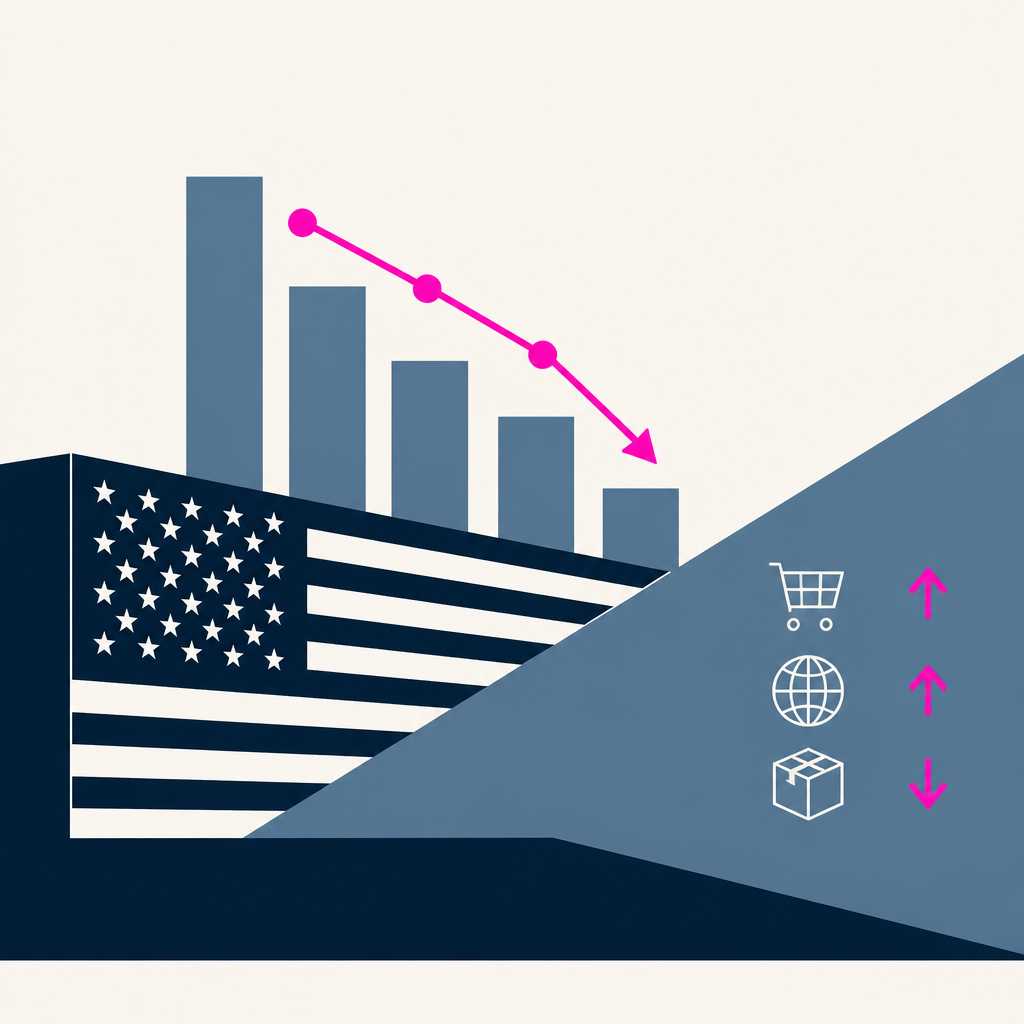
The U.S. economy grew at a sluggish 1.5% pace from April through June, with GDP growth slowing from 2.1% earlier in the year. Consumer spending rose at a 3.4% annual clip, while imports grew 12.5% and cut 1.64 percentage points from second-quarter GDP growth. The report points to continued resilience via 8.5% business investment growth and 4.2% underlying growth, with AI-related chip shipments boosting imports.
Nvidia reported that its second-quarter revenue and profit rose year over year and forecast current-quarter sales above analyst expectations, driven by demand for its AI chips. The quarter ended July 26 brought in $96.2 billion in revenue, beating estimates of $92.2 billion. Nvidia also guided to $91 billion ±2% revenue for the current quarter and said compute revenue is now the focus as demand accelerates.
Anthropic signed a compute-rental agreement with Nscale to boost its AI infrastructure. The deal is valued at about $45 billion and is expected to start powering Anthropic services in late 2027. Anthropic will gain access to compute from Nscale’s Vera Rubin chip system, adding to its ongoing multi-year compute partnerships and scaling efforts.
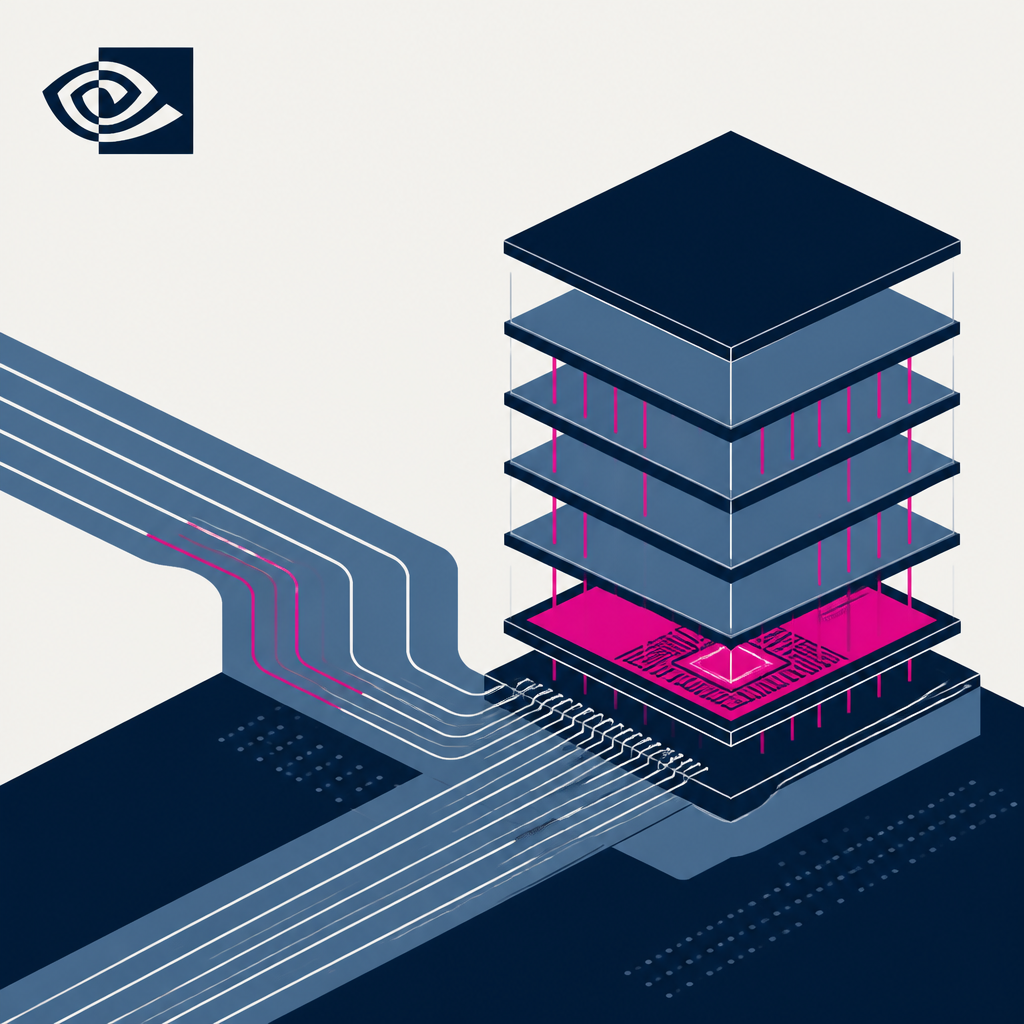
NVIDIA expanded NVLink Fusion by adding NVHBM custom high-bandwidth memory to improve performance for XPUs. NVHBM delivers up to 30% greater memory bandwidth and 15% lower HBM power consumption versus standard HBM4E. This shifts the memory controller into the 3D HBM stack to free up to 25% more XPU die area and speeds up qualification from multiple memory partners, including Amazon’s Annapurna Labs starting with Trainium4.
OpenAI’s unreleased Astra model is running inside the company’s codebase and converting experiment ideas into code, execution, and results without step-by-step human prompting. OpenAI says monitoring Astra’s tool use adds about 20% to inference compute, and Astra may have reached the “Critical” cybersecurity capability threshold. OpenAI has tightened controls, resumed only some workloads, and continues work on safer infrastructure while highlighting new governance and cost needs for developers using long-running agentic coding systems.
OpenTelemetry’s standard instrumentation has made it easier to collect more telemetry, but Bronto says the industry still lacks cost-effective full-fidelity storage, search, and analysis, leaving teams with blind spots. Bronto claims enterprises can keep more than 100 times the observability data they hold now without slowing down or making it harder to use. Bronto is pitching its BrontoD polymorphic data store and a usage-based billing approach that targets higher-volume AI logs, traces, and metrics so teams get broader, longer access to their data.
OpenAI experienced an executive exodus, with more than a dozen departures since the start of the year. Chris Malone, head of data centers, left last week after joining in March 2024. The company attributes some exits to infrastructure reorganization, while Brockman is reassuming leadership as OpenAI reshapes teams ahead of an IPO by 2027.
AMD, Supermicro, and MinIO say enterprise AI projects are being held back more by data pipeline issues than by compute. They cite that more than 80% of enterprise data is unstructured and that 99% of it is dark to AI because it is hard to query. Their work points to consolidating data lake/lakehouse storage at “up to exabyte scale” using open standards like Apache Iceberg and integrations such as MinIO’s Iceberg support.
Nvidia forecast that it will generate $108 billion in revenue within the next few months. Its latest earnings reported $96.2 billion in quarterly revenue, including $89 billion from data centers. Results point to Nvidia becoming a $100 billion+ revenue per quarter company, with data center growth continuing to drive higher profit.
Amazon SageMaker AI’s Python SDK v3 redesigned bring-your-own-model script mode by replacing framework-specific estimator and deployment classes with ModelTrainer for training and ModelBuilder for deployment. It syncs a local source_dir into the training container at runtime when the job starts (using SourceCode with command or entry_script), so the training and inference code can be changed without rebuilding Docker images. As a result, one API works across multiple frameworks, and developers can iterate faster while keeping full control over the container contents.
Amazon Bedrock AgentCore was shown enabling agents in one AWS account to call a governed Knowledge Base in another account and return generated answers from Amazon Redshift Serverless without copying the source data. The cross-account flow requires an assumed IAM role so the tool can call RetrieveAndGenerate, and the example uses Claude Haiku 4.5 via the session that runs RetrieveAndGenerate. The write-up presents two generally available AgentCore orchestration options—code-based Strands agents and a declarative harness—differing by who owns the agent loop and where the tool runs, while keeping the same security boundary between agent and data accounts.
Xbox CEO Asha Sharma said the company must focus on affordability for its next-generation console as hardware prices rise partly due to AI infrastructure spending. She said Xbox will add digital entitlements for 1,000 titles that currently have physical discs. As a result, supported games’ digital rights can transfer with disc second-hand sales and players may be able to run their older discs on future Xbox consoles without inserting them.
Al Moammar Information Systems Co. shares rose to a record high as the company expanded an AI data center project with Humain, backed by Saudi Arabia’s sovereign wealth fund. The expanded contract is worth more than 8.76 billion riyals ($2.34 billion), and the project’s capacity increases to 250 megawatts from 50 megawatts. The growth lifts MIS’s market value and increases the Al Moammar brothers’ combined fortune to about $1.4 billion while Saudi AI data center buildout accelerates.
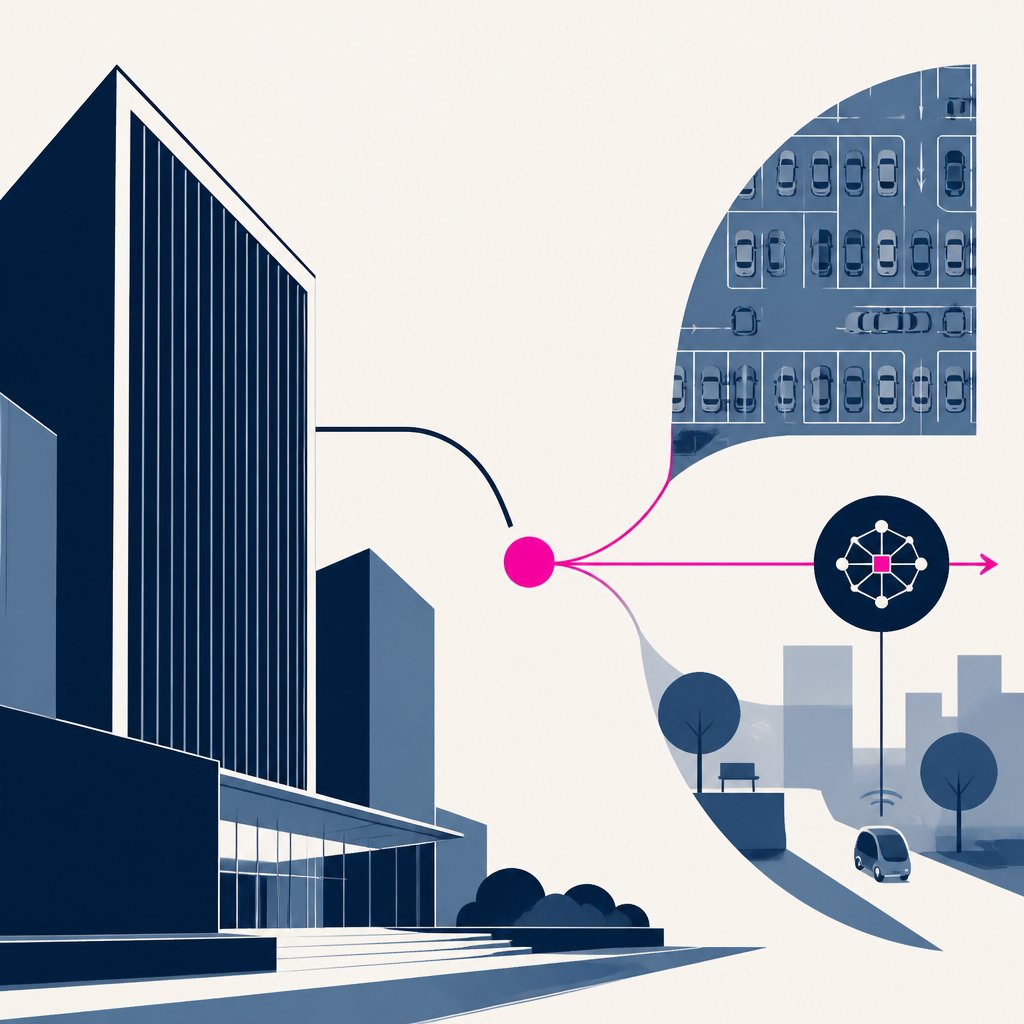
Goldman Sachs Global Institute co-head discusses how advancing AI agents could reshape both physical spaces and software by shifting design from human use to agent-ready workflows. The article cites that about 22% of land in cities with over 1 million residents is used for parking, and argues autonomous vehicles could cut that share and free space for other uses. It concludes that software and websites will increasingly be built to expose clean, API-focused interfaces for agents, changing where value and pricing power sit in classic human-facing systems.
Tata Communications Enterprises says faster deployments of AI agents and voice automation are outgrowing CX architectures built for linear routing, forcing enterprises to focus on orchestration instead of adding more tools. The company points to its Interaction Fabric as an orchestration layer that unifies contact center, messaging, collaboration, AI, and customer data in real time. The shift pushes organizations to add a shared context layer so AI agents and human workers can hand off and collaborate across channels without losing customer context.
Unitree’s robot-maker IPO momentum in physical AI has reversed as analysts say robots are improving in hardware but still lack the know-how for reliable, value-creating work.
Einride co-founders launched the venture firm Navisalma to back European deep tech startups.
The firm is targeting about €450m of investments over the next three years.
It plans to start by raising around €40m soon for operations and seed investments, then pursue the larger €450m pool later, and has already invested in Swedish AI energy-systems startup Abundry.
AI agent traces that capture observable execution details for review and later debugging increasingly need to be stored as durable application data rather than disposable telemetry. Langfuse reported Postgres IOPS exhaustion during ingestion and prompt API latency rising to 7 seconds under heavy load before moving trace data to ClickHouse. The shift changes storage and data-modeling choices toward analytics-friendly architectures and access-controlled retention aligned with product needs.
Arga Labs announced a $10 million seed round to build training environments that let enterprise AI agents be tested with realistic digital twins of business software. The seed round was led by General Catalyst with participation from Box Group, Emergence, Gradient, and SV Angel. This enables agents to be trained and reset across systems like Salesforce and Hubspot with permission systems and webhooks, reducing ambiguity in multi-application tasks.
Glean unveiled Tau, a desktop workspace that connects its enterprise AI to a user’s local files, applications, and code. Glean says Tau delivers a 5.2-times token-cost advantage per query over Anthropic’s Claude Cowork. The release also adds expanded AI spending controls and new products at Glean:GO, while Tau and several related features roll out after the general availability of Glean Intelligence.
Runable raised $21 million to expand its AI agent from helping users build software into helping small businesses grow by finding customers and running marketing tasks. The Series A valued the company at $65 million after the investment. As a result, Runable plans to offer services like ad campaigns, social media management, SEO, and optimizing AI chatbot visibility so owners can ask for customer outcomes instead of assembling tools and accounts themselves.
DeepSeek added vision to its fast V4 model, while Google Cloud AI Research introduced EnvHarness and Etched shipped its first inference rack to Jane Street. EnvHarness was described as a framework for adapting training environments using an agent’s weaknesses, rather than a fixed setup. These updates tighten the loop across model inputs, training environments, and serving hardware to make perception, learning, and inference costs more tightly coupled.
A mid-2024 cybersecurity partner mistake triggered a Microsoft Windows outage that affected 8.5 million devices and disrupted airports, airlines, media broadcasts, emergency services, banking, and other essential services. The episode highlights the limits of governments’ efforts to improve digital (AI/cloud) sovereignty because public-sector cloud contracts and “AI factory” plans still rely on Big Tech cloud access. As a result, even EU, India, Brazil, and China-style strategies mostly fail to decouple from cloud hegemons or intellectual monopolies, leading to continued dependency even as model choices like DeepSeek shift usage toward cheaper AI hosted on those platforms.
Qatar Investment Authority led Gatik’s $200 million round as its third deep-tech investment in 10 weeks, after backing ICEYE and Nearfield Instruments earlier this summer. The new investment funds Gatik, which operates 41 fully driverless box trucks for PepsiCo across Dallas, Phoenix, and Northwest Arkansas. QIA’s portfolio focus shifts further toward AI-adjacent hardware and physical infrastructure—satellites, semiconductor metrology, and autonomous logistics—aligned with Qatar’s National Vision 2030 diversification plan.
Emerald AI raised $150 million in an oversubscribed Series A at a $1.05 billion valuation, selling grid-responsive power software for AI data centers that has moved from demos to commercial use. In a Phoenix field test of a cluster with 256 GPUs, the software cut power consumption by 25% over three hours without breaking performance guarantees. The funding and scaling efforts expand commercial deployment worldwide, including operations across a full data center in California and additional projects with utilities and data centre operators.
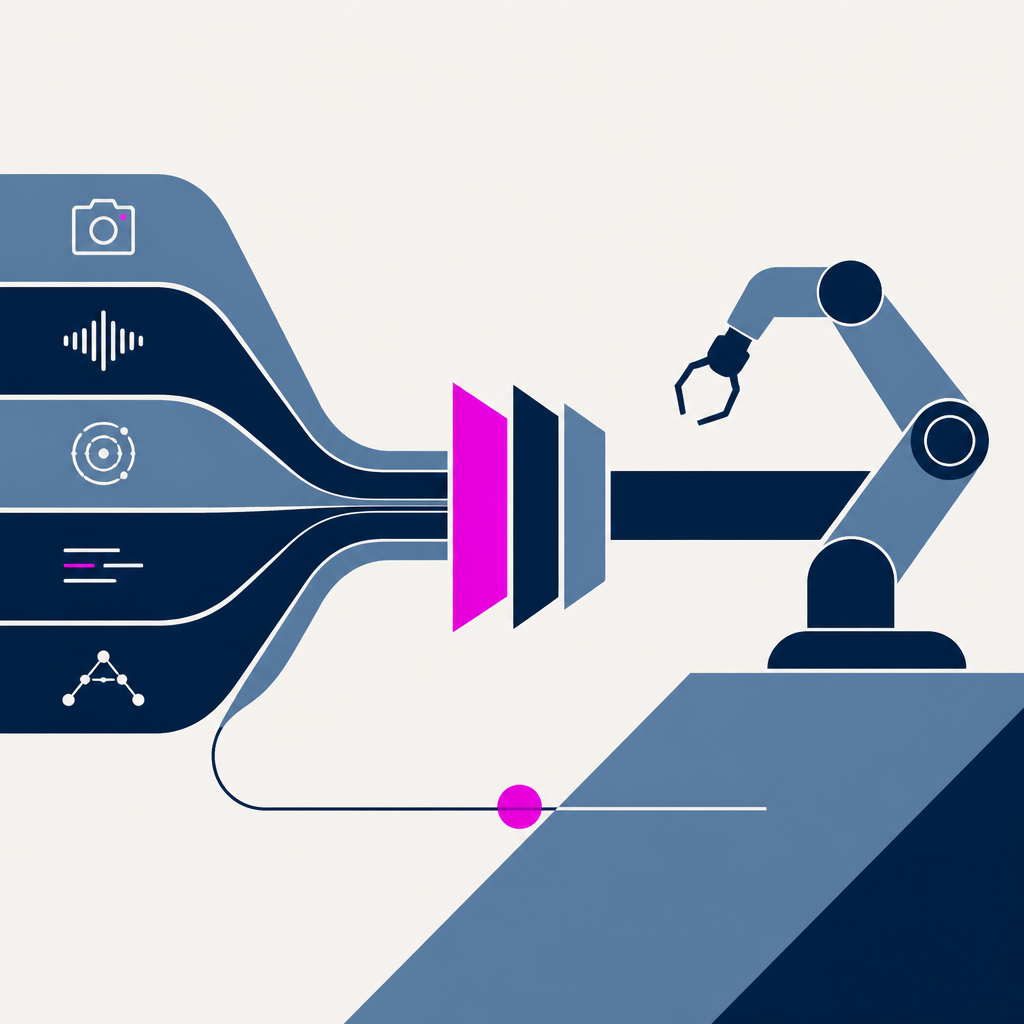
HFlow is presented as a discussion topic about scalable multimodal data pipelines for robotics.
No dates, numbers, or concrete results are provided in the material here.
Because the content is only a link stub, there’s no way to tell what changes or whether anything new was released.
Generalist, a robotics startup, was valued at $3 billion after raising additional funding led by 8VC. The new round adds nearly $200 million, bringing the Series B extension’s total to $600 million. The company’s AI foundation model for multi-robot learning is set to expand use with customers as feedback is used to tailor it to specific tasks.
OpenAI said Chris Malone, its former head of data centers, left the company last week after about a year in the role. He joined OpenAI in March 2025, and his exit followed a reorganization that shifted the infrastructure organization’s reporting line to VP Sachin Katti. Other executives are also overseeing OpenAI’s data center strategy as the company continues to see a broader stream of senior departures and faces IPO-related scrutiny.
Every AI story that matters,
in your inbox by 8am.
TLDRocket reads all relevant sources, removes duplicate coverage, and summarises the
day in two minutes. Follow companies and topics for alerts, or get the
briefing in Slack. Free, no spam, unsubscribe anytime.
Reading TLDRocket needs no cookies, and the readership counts we rely on come from
our own cookieless analytics. Google Analytics is the exception: it sets cookies and
reports to Google, so it stays switched off until you allow it. You can change your
mind any time from “Cookie settings” in the footer.
Strictly necessary
Session security and form protection (tldrocket-session,
XSRF-TOKEN, 2 hours). The site cannot work without them,
so they need no consent.
Always on
Google Analytics 4 (_ga,
_ga_<id>, up to 2 years). Measures which
stories and sections readers use. Google acts as a third-party processor and may
store the data outside the EU. No advertising, no profiling, no data sold.