Lambda secured $1 billion in private, short-dated debt to buy Nvidia AI chips it will lease to Microsoft. The financing is $1 billion and was reported on August 28, 2026. Lambda says the added GPU purchases let it deploy chips quickly to start revenue sooner and repay the debt, continuing its pattern of borrowing to fund customer-specific AI infrastructure.
Open-weight AI model companies in Silicon Valley have emerged as major acquisition targets after Nvidia and other large tech firms pursued deals tied to open model infrastructure. The biggest specific report cited is a $13 billion acquisition of Hugging Face. The result is more consolidation and investment in open-weight model platforms and tooling as companies seek control, cheaper inference for repetitive workloads, and leverage for self-hosting or routing.
Vercel open-sourced vgpu, the TypeScript WebGPU library it built to ship shaders on vercel.com. The full fullscreen effect described in the README is 25 KB gzipped, and the package is MIT-licensed and published on npm at v0.3.1. Developers can now import .wgsl modules, run the same code in the browser, headless Node.js, or a deterministic mock, and use CI snapshot tests via the provided tooling and CLI.
Decathlon selected Chronos-2 as the core model in its demand forecasting stack after benchmarking multiple time series foundation models on its retail data and testing it in production on AWS. Chronos-2 fine-tuned runs with inference under 2 minutes per cutoff for 25,000 products. Decathlon now forecasts weekly on 12-week replenishment and 52-week horizons with less retraining and faster region rollout, reducing WAPE versus its prior models and improving inventory savings and availability.
Salesforce used SageMaker Inference Components’ IC Placement controls to deploy Agentforce models with multi-AZ high availability instead of relying on default placement that could create single-AZ or single-instance failures. The approach uses SchedulingConfig with CopyCount=2 for strict 2-AZ support, enforced via MaxImbalance=0 and PlacementStrategy=SPREAD. As a result, model deployments and subsequent scale/update operations preserve balanced copies across Availability Zones, meet a 2-AZ compliance bar, and keep multi-model co-hosting cost efficiency while improving fault isolation.
Nvidia agreed to pay $12.9 billion for Hugging Face, according to The Information’s report. The deal price is $12.9 billion. Developers will continue using open-model downloads that typically run on Nvidia’s CUDA/software stack, making Nvidia’s platform a tighter dependency even as competitors offer alternative chips and model APIs.
Maritime launched a cloud platform to deploy and host AI agents, including OpenClaw, ZeroClaw, and custom agents, on isolated persistent VMs. Pricing starts at $1/month per agent. The platform shifts running and scaling agent infrastructure from customers to Maritime, with automatic sleep/wake and a simplified interface.
Nvidia and Salesforce earnings drove a week of AI- and enterprise-tech momentum while Nvidia signaled continued capacity limits and investors bid Nvidia shares up alongside Salesforce’s jump.
Modders used leaked code from Nvidia’s DLSS 5 “Neural Rendering” to apply AI upscaling effects in games including Skyrim, Cyberpunk 2077, GTA V, and Control. The code appeared in an early-access build of NBA 2K27. As a result, Control’s character facial details can be more or less defined by adjusting the modded DLSS 5 settings, and the effect spreads to additional games.
The Sequence Robotics discussed LeRobot as a unifying “stack” for open robot learning, arguing robotics has shifted from separate lab-by-lab tooling toward shared coordination.
Pasqal Holding SA began trading on Nasdaq under the ticker PSQL after completing a merger with Bleichroeder Acquisition Corp. II. Pasqal said it has about $360 million in cash after the closing. The funds will be used to expand manufacturing, roll out its quantum processing units, and invest in fault-tolerant development, cloud/software, HPC integration, and sales scaling.
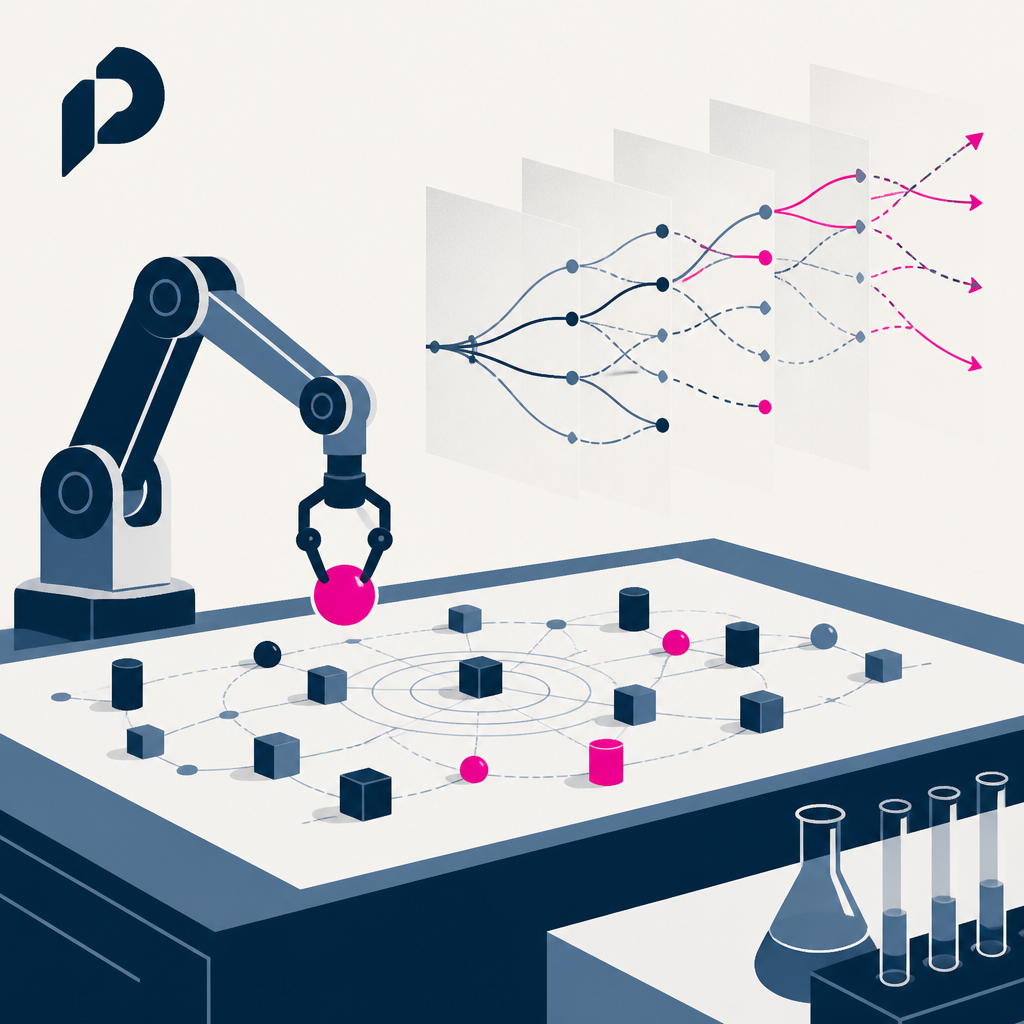
Principle launched an AI-powered strategic simulation platform that models companies, competitors, and regulators and then runs many plausible futures instead of making forecasts. Over five weeks, MacPaw mapped more than 500 strategic directions, ran 480 scenarios, and modeled 90 market actors. As a result, Principle’s users move from infrequent planning to continuous, simulation-backed decision-making (including monthly re-simulations and tracking competitive topics).
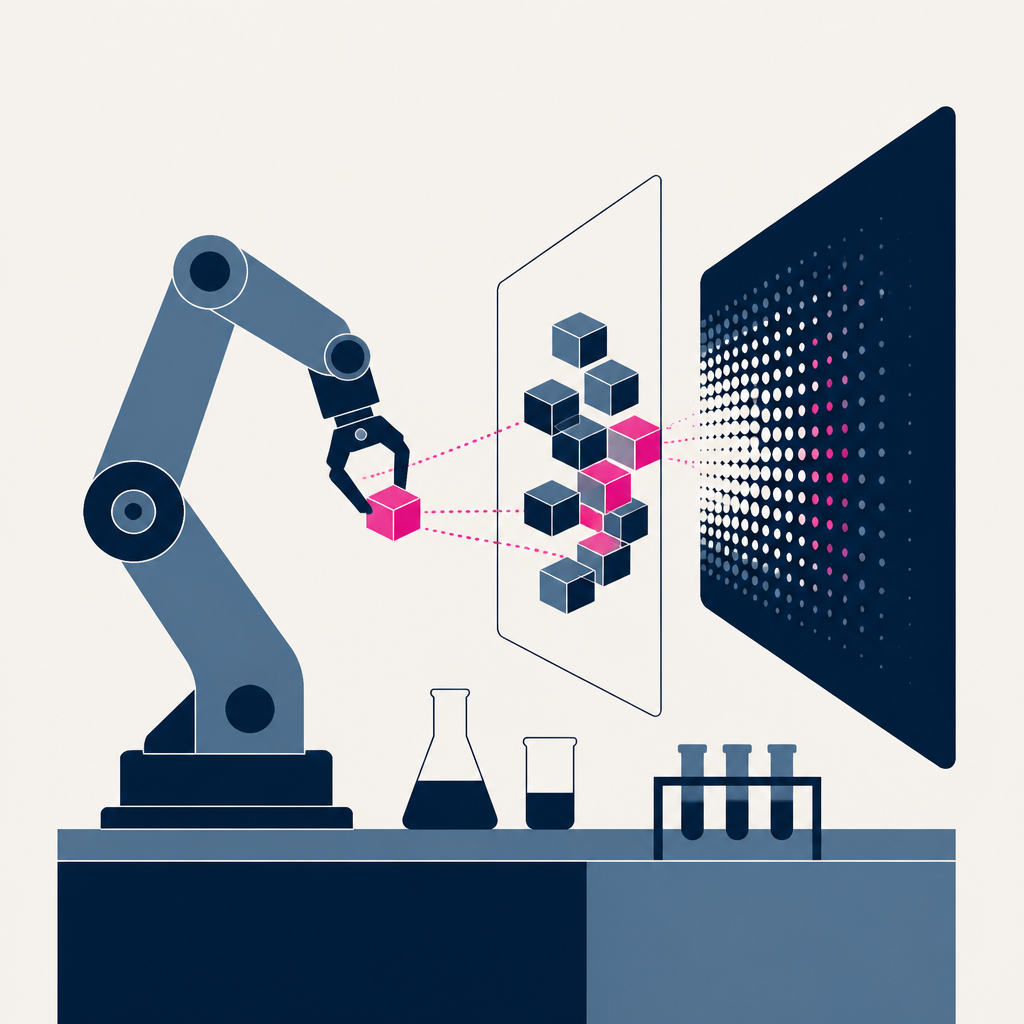
Anthropic previewed the Model Hardware Standard (MHS) to help AI agents control lab machines like microscopes via a unified interface instead of device-specific APIs. The standard is based on a collaboration with HHMI and is planned to be made available under an open-source license after early partners help develop safety features. MHS replaces incompatible configuration interfaces, enabling agents to generate instrument-control scripts and automatically fix certain experiment errors, with support from companies including AWS and Hugging Face.
Best Products launched a product listing for an agent-native, cookieless analytics site aimed at coding agents that measure deploys, flag changes, and suggest next moves. The page claims dictation works “4x faster.” The launch adds a promoted option for agent-style analytics with no dashboard or charts to review.
Every AI story that matters,
in your inbox by 8am.
TLDRocket reads all relevant sources, removes duplicate coverage, and summarises the
day in two minutes. Follow companies and topics for alerts, or get the
briefing in Slack. Free, no spam, unsubscribe anytime.
Reading TLDRocket needs no cookies, and the readership counts we rely on come from
our own cookieless analytics. Google Analytics is the exception: it sets cookies and
reports to Google, so it stays switched off until you allow it. You can change your
mind any time from “Cookie settings” in the footer.
Strictly necessary
Session security and form protection (tldrocket-session,
XSRF-TOKEN, 2 hours). The site cannot work without them,
so they need no consent.
Always on
Google Analytics 4 (_ga,
_ga_<id>, up to 2 years). Measures which
stories and sections readers use. Google acts as a third-party processor and may
store the data outside the EU. No advertising, no profiling, no data sold.